structure quiz 4
 Call Kai
 Learn
 Practice Test
 Spaced Repetition
 Match
 Flashcards
 Knowt Play
1/324

There's no tags or description
Looks like no tags are added yet.
325 Terms

What part of the pelvic girdle is this?
Humerus

What part of the pelvic girdle is this?
Scapula
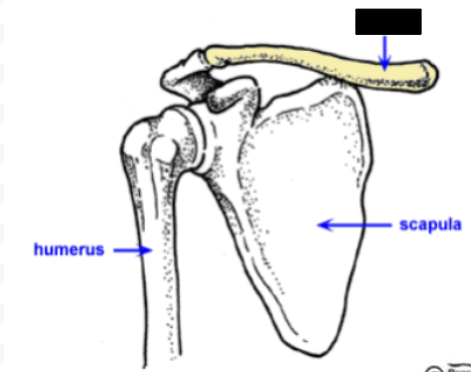
What part of the pelvic girdle is this?
Clavicle
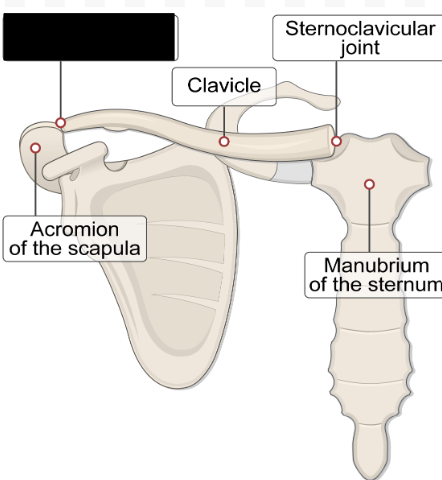
What is this key articulation on the clavicle with the scapula?
Acromial end; Lateral, flattened end (Facet) that articulates with the acromion of the scapula.

What is this key articulation on the clavicle with the scapula?
Sternal end; Medial, rounded end that articulates with the manubrium of the sternum.

What is this?
Subclavius
What is the origin of the subclavius?
First rib and its costal cartilage
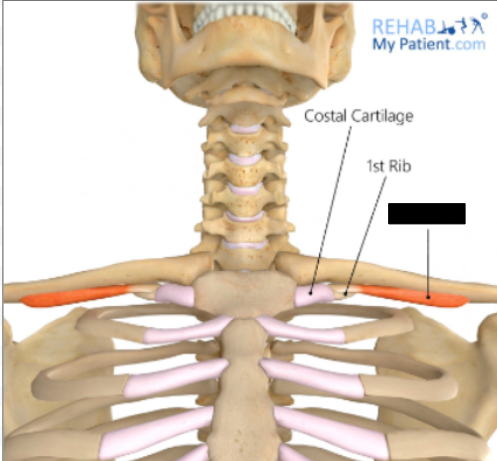
What is the insertion of the subclavius?
Inferior surface of clavicle (subclavian groove)
What is the action of the subclavius?
Stabilizes and depresses clavicle (especially needed during arm movement to hold clavicle in place).

What is this key marking on the scapula?
Spine; Muscle attachment; separates posterior fossae

What is this key marking on the scapula?
Acromion; Articulates with the clavicle.

What is this key marking on the scapula?
Coracoid process; Attachment for muscles and ligament,

What is this key marking on the scapula?
Glenoid cavity; Articulates with the humerus.

What is this key marking on the scapula?
Supraspinous fossa; Attachment for supraspinatus muscle.

What is this key marking on the scapula?
Infraspinous fossa; Attachment for infraspinatus muscle.

What is this key marking on the scapula?
Subscapular fossa; Attachment for subscapularis muscle
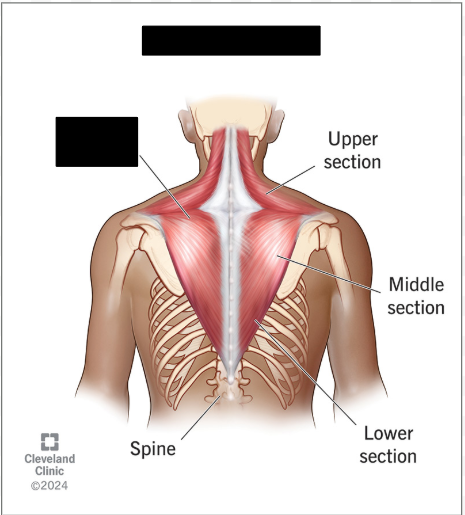
What is this main muscle responsible for the movement of the scapula?
Trapezius

What is the origin of the trapezius?
Occipital bone and spinous processes of C7–T12

What is the insert of the trapezius?
Lateral clavicle, acromion, and spine of scapula
What is the action of the trapezius?
Elevates, retracts, depresses, and upwardly rotates scapula; stabilizes shoulder girdle.

What forms the shoulder joint?
Glenoid cavity

What is this key feature of the Glenoid Cavity?
Glenoid labrum; Fibrocartilage rim that deepens the socket and improves stability.
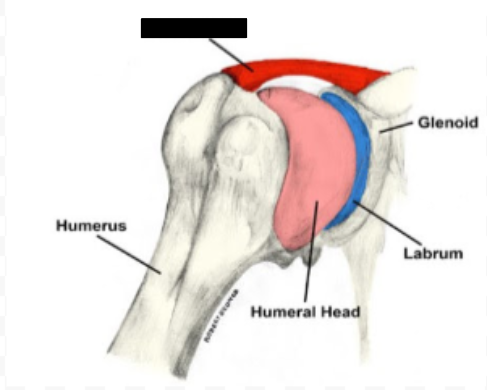
What is this key feature of the Glenoid Cavity?
Rotator cuff; Surrounding muscles stabilize the humeral head within the socket.

What is this tubercle of the Humerus?
Greater tubercle (also called greater tuberosity): Attachment for supraspinatus, infraspinatus, and teres minor
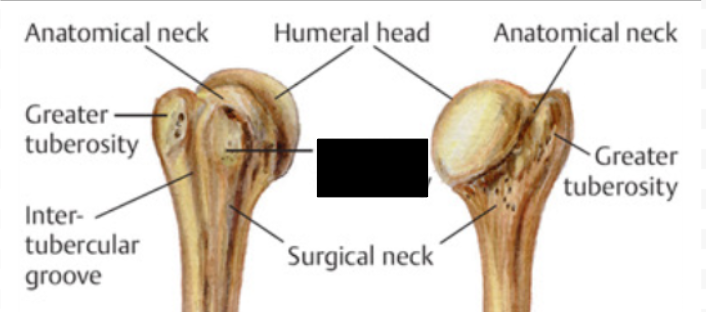
What is this tubercle of the Humerus?
Lesser tubercle (also called lesser tuberosity): Attachment for subscapularis

What is this tubercle of the Humerus?
Intertubercular groove: Provides attachment sites for the pectoralis major, latissimus dorsi, and teres major muscles.
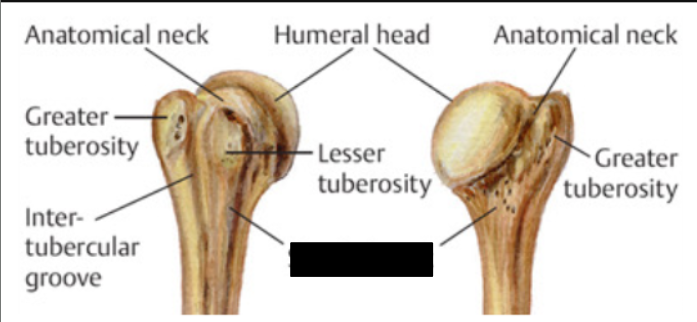
What is this tubercle of the Humerus?
Surgical neck: Common location for fractures which damage the axillary nerve (the axillary nerve near the surgical neck and innervates the muscles that move the arm).
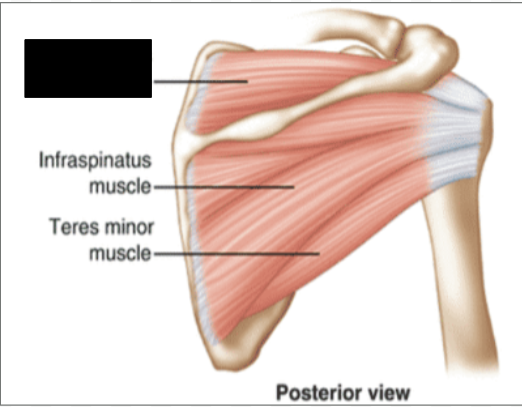
What is this genohumoral Joint (shoulder Joint) stabilizing muscle?
Supraspinatus

What is the origin of the Supraspinatus?
Supraspinous fossa of scapula

What is the insert of the Supraspinatus?
Greater tubercle of humerus
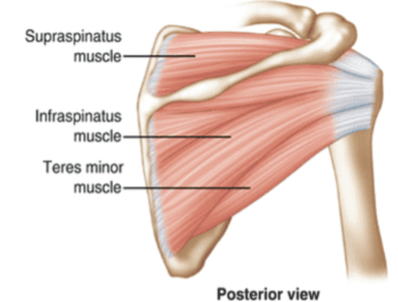
What is the action of the Supraspinatus?
Initiates arm abduction; stabilizes shoulder.

What is this genohumoral Joint (shoulder Joint) stabilizing muscle?
Infraspinatus

What is the origin of the Infraspinatus?
Infraspinous fossa of scapula

What is the insert of the Infraspinatus?
Greater tubercle of humerus
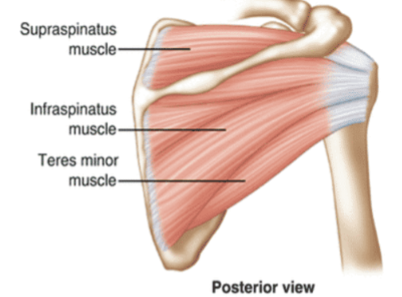
What is the action of the Infraspinatus?
Laterally rotates arm; stabilizes shoulder

What is this genohumoral Joint (shoulder Joint) stabilizing muscle?
Subscapularis

What is the origin of the Subscapularis?
Subscapular fossa of scapula
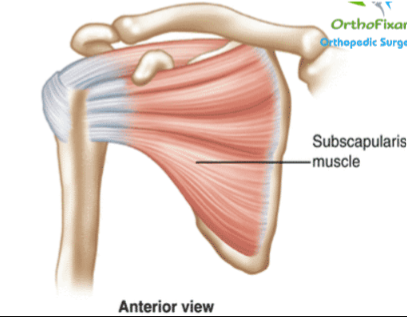
What is the insert of the Subscapularis?
Lesser tubercle of humerus

What is the action of the Subscapularis?
Medially rotates arm; stabilizes shoulder.

What is this genohumoral Joint (shoulder Joint) stabilizing muscle?
Teres minor
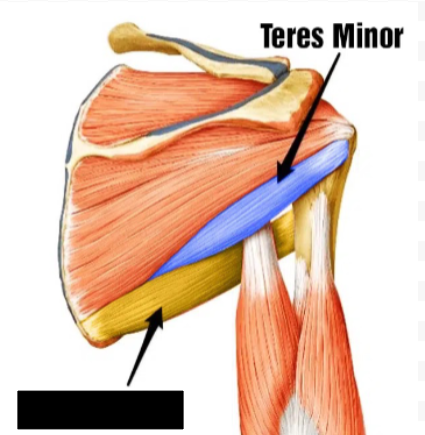
What is this genohumoral Joint (shoulder Joint) stabilizing muscle?
Teres major

What is the origin of the Teres minor?
Lateral border of scapula

What is the insert of the Teres minor?
Greater tubercle of humerus

What is the action of the Teres minor?
Laterally rotates arm; stabilizes shoulder.

What is the origin of the Teres major?
Inferior angle of scapula

What is the insert of the Teres major?
Medial lip of intertubercular groove/sulcus of humerus
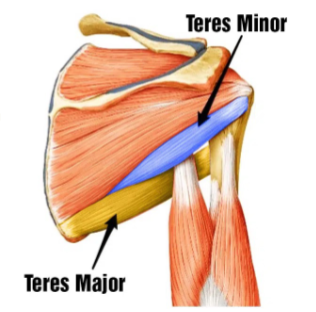
What is the action of the Teres major?
Medially rotates, adducts, and extends arm.

What is this muscle that helps to position the pectoral girdle?
Levator scapulae

What is this muscle that helps to position the pectoral girdle?
Rhomboid minor

What is this muscle that helps to position the pectoral girdle?
Rhomboid major

What is this muscle that helps to position the pectoral girdle?
Serratus anterior

What is the origin of the Levator scapulae?
Transverse processes of C1–C4

What is the insert of the Levator scapulae?
Superior medial border of scapula

What is the action of the Levator scapulae?
Elevates and downwardly rotates scapula.

What is the origin of the Rhomboid minor?
Spinous processes of C7–T1

What is the insert of the Rhomboid minor?
Medial border of scapula near the spine

What is the action of the Rhomboid minor?
Retracts, elevates, and downwardly rotates scapula.

What is the origin of the Rhomboid major?
Spinous processes of T2–T5

What is the insert of the Rhomboid major?
Medial border of scapula below the spine

What is the action of the Rhomboid major?
Retracts, elevates, and downwardly rotates scapula.
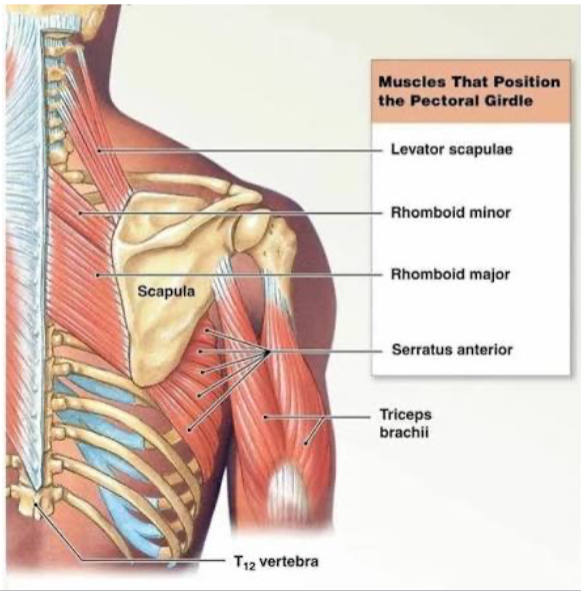
What is the origin of the Serratus anterior?
Lateral surfaces of ribs 1–8 (sometimes 1–9)
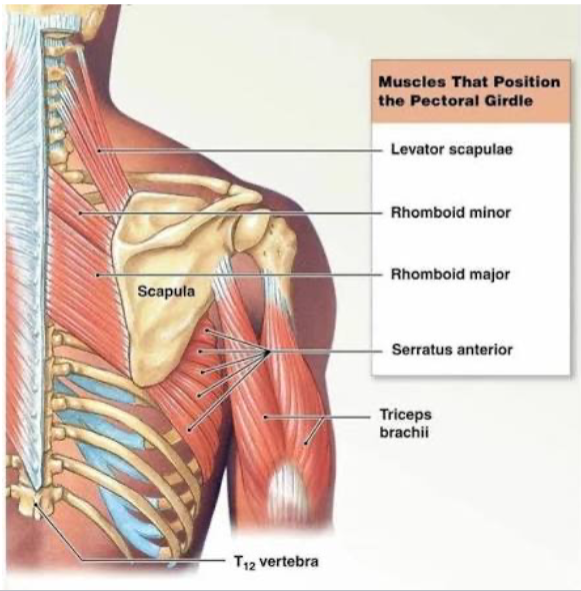
What is the insert of the Serratus anterior?
Anterior surface of medial border of scapula

What is the action of the Serratus anterior?
Protracts and upwardly rotates scapula; holds it against thoracic wall.

What is this muscle that helps to position the pectoral girdle?
Pectoralis minor
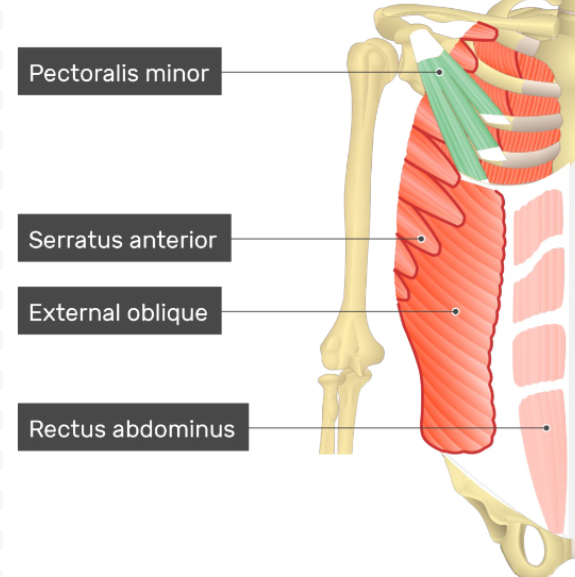
What is the origin of the Pectoralis minor?
Ribs 3–5

What is the insert of the Pectoralis minor?
Coracoid process of scapula

What is the action of the Pectoralis minor?
Protracts, depresses, and stabilizes scapula.

What is the origin of the Deltoid?
Clavicle, acromion, scapular spine

What is the insert of the Deltoid?
Deltoid tuberosity of the humerus
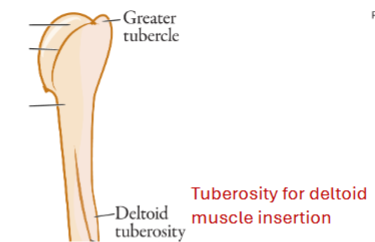
What is the action of the Deltoid?
Abducts arm; assists with flexion and extension
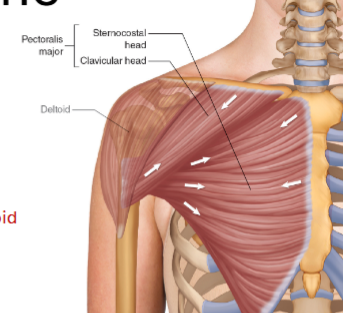
What is the origin of the Pectoralis major?
Clavicle (one head), sternum (second head), costal cartilages (second head)
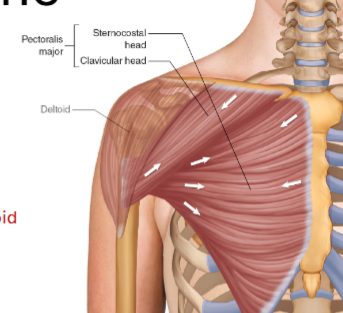
What is the insert of the Pectoralis major?
Intertubercular groove of humerus
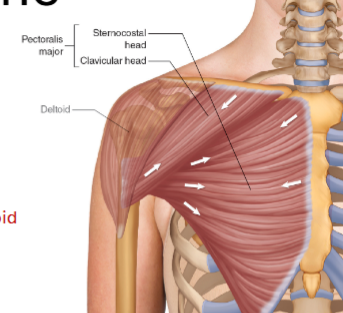
What is the action of the Pectoralis major?
Adducts, medially rotates, and flexes arm

What is the origin of the Latissimus dorsi?
Lower thoracic/lumbar vertebrae, iliac crest
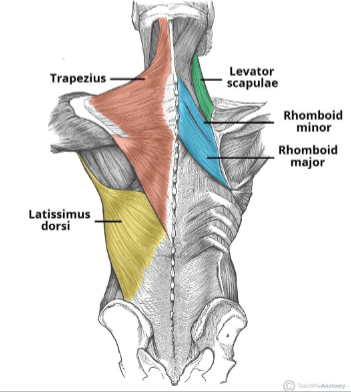
What is the insert of the Latissimus dorsi?
Floor of intertubercular groove

What is the action of the Latissimus dorsi?
Extends, adducts, and medially rotates arm
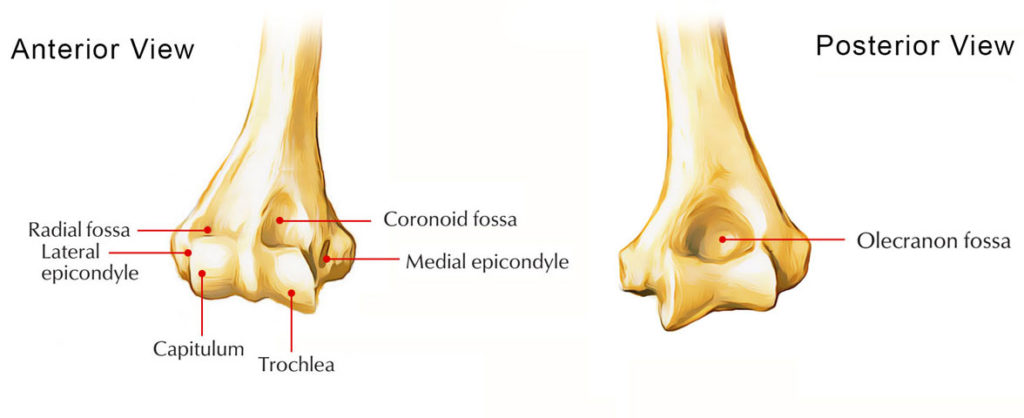
What are the two distinct articular regions of the Humeral condyle?
Capitulum (lateral): Articulates with the head of the radius.
Trochlea (medial): Articulates with the trochlear notch of the ulna.

What bone is this?
Radius

What bone is this?
Ulna

What is this?
Medial epicondyle; Attachment for forearm flexor muscles

What is this?
Lateral epicondyle; Attachment for forearm extensor muscles.

What is this articulation point with the humerus called?
Olecranon

What is this articulation point with the humerus called?
Olecranon fossa
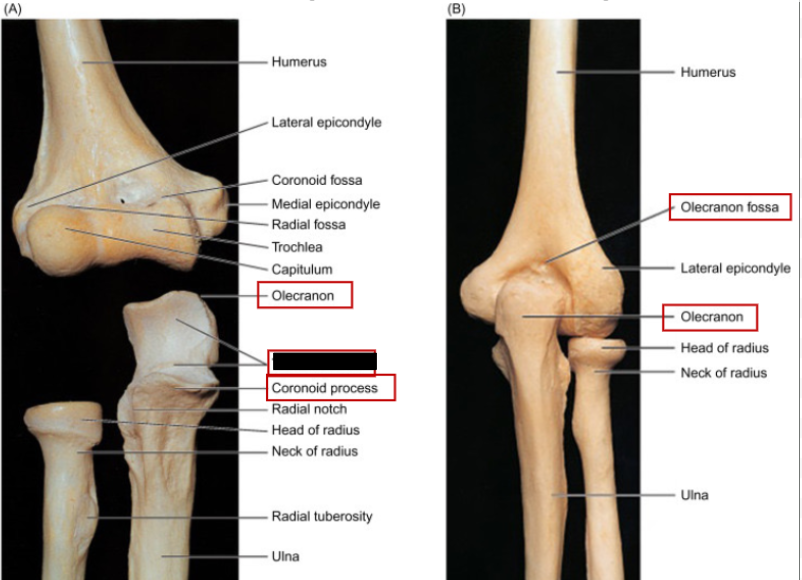
What is this articulation point with the humerus called?
Trochlear notch

What is this articulation point with the humerus called?
Coronoid process

What is this part of Proximal Radioulnar Joint?
Radial notch of ulna; Shallow depression that articulates with the head of the radius.
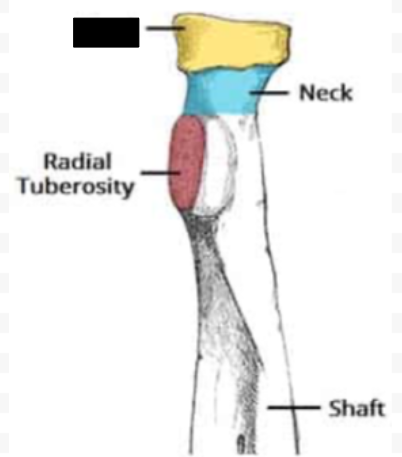
What is this part of Proximal Radioulnar Joint?
Head of radius; Rounded, disc-shaped structure that rotates against the radial notch of the ulna

What is this part of Proximal Radioulnar Joint?
Annular ligament; Wraps around the radial head, hold ing it against the radial notch while allowing rotation.

What is the purpose of the Interosseous Membrane?
A strong sheet of dense fibrous connective tissue connecting the interosseous borders of the radius and ulna.
What are the aspects/characteristics of the Interosseous Membrane?
Stability: Holds the radius and ulna together while allowing rotation.
Force transfer: Distributes forces between the two bones.
Muscle attachment: Provides attachment sites for forearm muscles.
Separation: Divides the forearm into anterior and posterior muscle compartments.

What part of the distal radius is this?
Styloid process; Ligament attachment; stabilizes wrist

What part of the distal radius is this?
Ulnar notch; Articulates with the head of the ulna
What is the carpal articular surface?
Articulates with the scaphoid and lunate bones (carpal bones of the hand).

What part of the distal ulna is this?
Head of ulna; Articulates with the ulnar notch of the radius

What part of the distal ulna is this?
Styloid process; Ligament attachment; helps stabilize wrist

What elbow flexing muscle is this?
Biceps brachii
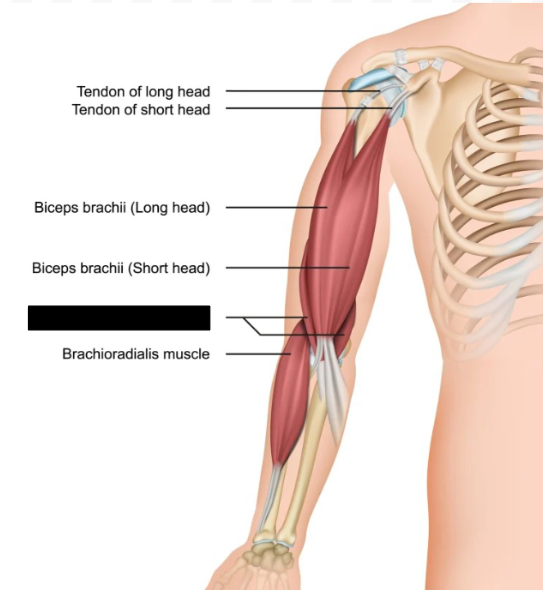
What elbow flexing muscle is this?
Brachialis (DEEP TO THE BICEPS BRACHII)

What elbow flexing muscle is this?
Brachioradialis

What is the origin of the Biceps brachii?
Short head: coracoid process; long head: supraglenoid tubercle of scapula.

What is the insert of the Biceps brachii?
Radial tuberosity