Tissues 1122
 Call Kai
 Learn
Learn Practice Test
 Spaced Repetition
 Match
Match Flashcards
 Knowt Play
1/49

There's no tags or description
Looks like no tags are added yet.
Name | Mastery | Learn | Test | Matching | Spaced | Call with Kai | Chat |
|---|
No analytics yet
Send a link to your students to track their progress
50 Terms
Tissues
groups of cells that
are similar in structure and
perform a common function
Epithelial Tissue
(Epithelium plural)
Sheets of cells that cover the body’s surfaces
or lines a body cavity, 2 types Covering and Lining & Glandular Epithelium
Epithelial Apical surface,
upper free side, is exposed to surface or
cavity
• Most apical surfaces are smooth, but some have
specialized fingerlike projections called microvilli
Epithelial Basal surface
ower attached side, faces inwards toward
body
• Attaches to basal lamina, an adhesive sheet that holds
basal surface of epithelial cells to underlying cells
Basement membrane
Between the epithelial tissue and CT
Epithelial Tissue is
Avascular, Innervated &
Regenerative
Simple
one layer
• Typically found at sites of
• Absorption
• Secretion
• Filtration
Stratified
multilayered or
stacked
• More common where
abrasion can occur
Simple squamous epithelium
Air sacs of lungs
• Blood vessels
• Lymphatic vessel
Simple Cuboidal
• Secretion & absorption
• Ducts of glands
• Kidney tubules
• Simple Columnar
• Digestive Tract has two distinct
modifications for
these functions
• Microvilli on apical surface (absorptive
cells)
• Tubular glands that secrete
mucus/intestinal juic
Pseudostratified Columnar Epithelium
• Many cells are ciliated
• Located mostly in upper respiratory tract,
ducts of large glands, and tubules in testes
Stratified squamous epithelium
Located in areas of high wear and tear
(example: skin)
• Keratinized cells found in skin;
nonkeratinized cells are found in moist
linings
Stratified cuboidal epithelium
Quite rare
• Found in some sweat and mammary glands
• Typically, only two cell layers thick
Stratified columnar epithelium
• Small amounts found in pharynx, in male
urethra, and lining some glandular ducts
• Only apical layer is columnar
Transitional epithelium
Forms lining of hollow urinary organs
• Found in bladder, ureters, and urethra
gland
one or more cells that produce and secrete a particular
substance, called a secretion
Endocrine
internally secreting (example: hormones)
Exocrine
externally secreting (example: sweat)
mucous cells and
goblet cells
unicellular cells that produce mucin
compound glands
have branched
ducts
tubular gland
secretory cells form a
duct,
alveolar glands
secretory
cells form sacs
Merocrine
most secrete products by
exocytosis as secretions are produced
(sweat, pancreas)
Holocrine
accumulate products within, then
rupture (sebaceous oil glands)
Connective tissue
the most abundant
and widely distributed tissue of the body
But connective tissue consists
largely of a…
nonliving extracellular
matrix (a protein-sugar mesh)
• Cells are suspended/embedded
in this matrix
• Separates the living cells of tissues
• Because of this CT can bear
weight, withstand A LOT of
tension, and endure abuse such
as trauma and abrasion
CT Vascularity
some CT is highly
vascularized, while
others are avascular
Ground
Substance
the unstructured gel-like material that fills the
space between cells and contains the fibers
• Acts as a medium through which solutes diffuse between blood
capillaries and cells
Collagen
CT fiber that is Strongest and most abundant type
• Tough; provides high tensile strength
Elastic fibers
CT fiber that has Networks of long, thin, elastin fibers that allow for stretch and recoil
Reticular
CT fiber that has Short, fine, highly branched collagenous fibers (different chemistry and form from
collagen fibers)
• Branching forms networks that offer more “give”
blast vs cyte
blast immature, cyte mature
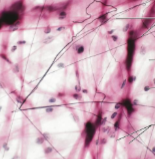
CT Proper Loose:
Areolar Connective
Tissue
Functions:
• Supports and binds other tissues
• Holding body fluids
• Defending against infection
• Universal packing material between other
tissues
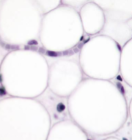
CT Proper Loose:
Adipose Tissue
Cells are called adipocytes, Functions in shock absorption,
insulation, and energy storage, has brown and white fat
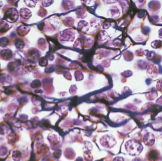
CT Proper Loose:
Reticular
Fibroblast cells are called reticular
cells
• Reticular fibers form a mesh-like
stroma that acts as a support for
blood cells in lymph nodes,
spleen, and bone marrow

CT Proper Dense:
Regular
Example: tendons and ligaments

CT Proper Dense:
Irregular
Forms sheets rather than bundles
• Resists tension from many
directions
• Found in:
• Dermis
• Fibrous joint capsules
• Fibrous coverings of some
organs

CT Proper Dense:
Elastic CT
Some ligaments are very
elastic
• Example:
• Ligaments connecting
adjacent vertebrae must be
very elastic
• Also found in walls of many
large arteries

Cartilage
a strong, flexible connective tissue that cushions joints, reduces friction between bones, and gives shape to structures like the ears and nose, secreted from chondroblasts
(during growth) and chondrocytes, Avascular: receives nutrients from
membrane surrounding it
(perichondrium)
Hyaline Cartilage
Most abundant; “gristle”
• Found at tips of long bones, nose, trachea,
larynx, and cartilage of the ribs, tip of nose
Elastic Cartalige
Found in ears and epiglottis
Fibrocartilage
Strong, so found in areas such as
intervertebral discs and knee
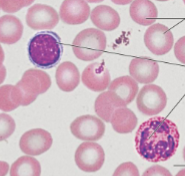
Blood
Most atypical connective tissue
because it is fluid
• Consists of cells surrounded by
matrix (plasma)
Cutaneous membrane
• Skin
• Organ system consisting of stratified
squamous epithelia (epidermis) attached
the CT (dermis)
Mucous membrane
Line all the cavities that open to the
outside world
• Digestive, respiratory, urogenital
• All wet membranes bathed by secretions
Serous
• Line body cavities
• Have a visceral and parietal layer
Three Steps to tissue repair
• Inflammation
• Organization
• Regeneration
Organization
restores blood supply, begins as the blood
clot is replaced with granulation
tissue (new capillary-enriched
tissue – restores vascular supply)
apoptosis
n orderly, regulated form of programmed cell death