BIO 208L Lab Exam 3
 Call Kai
 Learn
 Practice Test
 Spaced Repetition
 Match
 Flashcards
 Knowt Play
1/128

There's no tags or description
Looks like no tags are added yet.
129 Terms
subscapularis
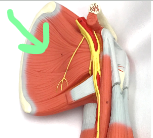
supraspinatus

infraspinatus
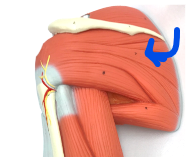
teres minor

teres major

deltoid

coracobrachialis

biceps brachii

triceps brachii

brachialis

brachioradialis
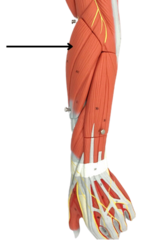
extensor carpi radialis longus
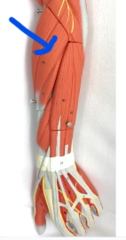
extensor carpi radialis brevis

extensor digitorum

extensor digiti minimi

extensor carpi ulnaris

gluteus medius

gluteus minimus
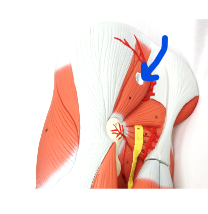
piriformis

sciatic nerve

gluteus maximus

biceps femoris

vastus lateralis
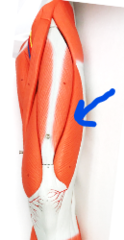
vastus medialis

rectus femoris

semitendinosus

semimembranosus

extensor digitorum longus

gastrocnemius
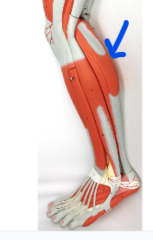
soleus

fibularis longus

fibularis brevis
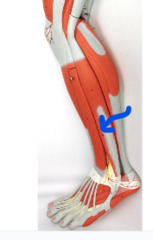
tibialis anterior

patellar tendon

tendocalcaneus

sartorius

gracilis

adductor magnus

adductor longus

Flexor carpi ulnaris

Brachioradialis

Palmaris longus

Flexor carpi radialis

Pronator teres

humerus and glenoid cavity; femur and acetabulum
What is an example of a ball and socket joint?
electromyogram
What does EMG stand for?
It measures the action potentials (electrical activity) in skeletal muscle fibers that cause muscle contraction.
What does an EMG measure?
It measures force generated during muscle contraction.
What does a dynamometer measure?
dynamometer
What instrument is used to test grip strength?
a single action potential leading to a muscle contraction
What is a muscle twitch?
all of the muscle fibers innervated by a single motor neuron
What is a motor unit?
by recruiting additional motor units
how can we increase the force of muscle contraction?
Muscle fatigue occurs when muscles use ATP faster than they produce new ATP.
What causes muscle fatigue?
muscle fatigue
What does this graph illustrate?

The foot moves a little or not at all.
Define hyporeflexic. What does it look like when the patellar reflex is hyporeflexic?
The foot moves extensively.
Define hyperreflexic. What does it look like when the patellar reflex is hyperreflexic?
an involuntary movement in response to a stimulus
What is a reflex?
patellar reflex
What reflex did you test in lab by tapping below the knee?
All muscle cells have been recruited and stimulated. No further motor units can be recruited.
What is happening at maximum contraction?
thick skin - has stratum lucidum, no hair follicles, no sebaceous (oil) glands
thin skin- no stratum lucidum, has hair, has sebaceous glands
Describe the differences between thick and thin skin.
the ability to differentiate 2 different points on the skin
What does the 2 point discrimination test test for?
The size of the receptive fields are associated with the density of the sensory receptors.
(increased size of receptive field= decreased density of sensory receptors;
decreased size of receptive field= increased density of sensory receptors
What is the relationship between the size of receptive fields and the density of sensory receptors?
tip of finger
You're doing the two point discrimination test. Are you more likely to feel 2 points first on the tip of your finger or your forearm?
The initial pressure or sensation of something on your skin becomes the new set point for receptor feeling. The weight "goes away" after awhile. Repeated stimuli causes temporary desensitization.
What is sensory adaptation?
wearing glasses/clothes and no longer feeling the sensation of wearing them
What is a real world example of sensory adaption?
capsaicin
What is the chemical responsible for causing spiciness?
Capsaicin binds to special nociceptors, unlike the molecules responsible for the 5 taste sensation.
How is "spicy" different from the taste sensations?
bitter, sour, salty, sweet, umami
What are the 5 taste sensations?
The sound will be louder in ear with hearing loss.
You're doing the Weber Test. If there is conductive hearing loss in one ear, which ear will perceive the sound as louder?
The sound will be louder in the normal ear.
You're doing the Weber Test. If there is sensorineural hearing loss in one ear, which ear will perceive the sound as louder?
both conductive and sensorineural hearing loss
What type of hearing loss does the Weber test test for?
forehead/top of head
Where do you place the tuning fork for the Weber test?
normal- equal hearing in both ears
conductive hearing loss- louder in ear with hearing loss
sensorineural hearing loss- louder in normal ear
What are the three possible results of the Weber test discussed in your lab manual?
the mastoid process and then in front of external auditory canal
Where do you place the tuning fork during the Rinne test?
conductive hearing loss
What type of hearing loss did the Rinne test test for?
normal- louder by the external auditory canal
conductive hearing loss- louder on the mastoid process
What are the two possible results of the Rinne test discussed in your lab manual?
Bone conduction is greater than air conduction.
In the Weber test, why does conductive hearing loss sound louder in the ear with hearing loss?
postural reflex
What reflex helps you regain your center of balance/equilibrium?
inner, middle, outer
What are the 3 parts of the ear?
malleus, incus, stapes
What are the 3 ossicles (bones) of the middle ear?
1. Extension
2. Flexion

1. hyperextension
2. extension
3. flexion

1. flexion
2. hyperextension
3. extension

lateral flexion

1. abduction
2. adduction

circumduction

1. medial rotation
2. lateral rotation

gliding

1. inversion
2. eversion

1. supination
2. pronation

1. protraction
2. retraction

1. dorsiflexion
2. plantar flexion

1. opposition
2. reposition

1. elevation
2. depression

1. lateral excursion
2. medial excursion

sensory reception
temperature regulation
excretion
protection
vitamin D synthesis
List the functions of the integumentary system.
stratum basale
stratum spinosum
stratum granulosum
stratum lucidum
stratum corneum
What are the 5 layers of the epidermis?
only the epidermis
What layer(s) of skin does a first degree burn affect?
all of the epidermis and part of the dermis
What layer(s) of skin does a second degree burn affect?
all of the epidermis and dermis
What layer(s) of skin does a third degree burn affect?