OIAN's for unit 3
 Call Kai
 Learn
 Practice Test
 Spaced Repetition
 Match
 Flashcards
 Knowt Play
1/15

There's no tags or description
Looks like no tags are added yet.
16 Terms
external oblique
O: outer surface of ribs 5-12 and the thoracolumbar fascia
I: linea alba, pubic tubercle and the anterior iliac crest
A:
compress abdomen
flex trunk
ipsilateral lateral flexion of trunk
contralateral rotation of trunk
N: ventral rami T7-L1

internal oblique
O: thoracolumbar fascia, iliac crest, lateral 2/3 of inguinal ligament
I: inferior border ribs 10-12 and linea alba, pubic crest, pectineal line
A:
compress abdomen
flex trunk
ipsilateral lateral flexion of trunk
ipsilateral rotation of trunk
N: ventral rami T7-L1

transversus abdominis
O: inner costal cartilages 7-12, thoracolumbar fascia, medial lip of iliac crest, lateral 1/3 of inguinal ligament
I: linea alba, pubic crest, pectineal line
A: compress abdomen, aids in active exhalation
N: ventral rami T7-L1
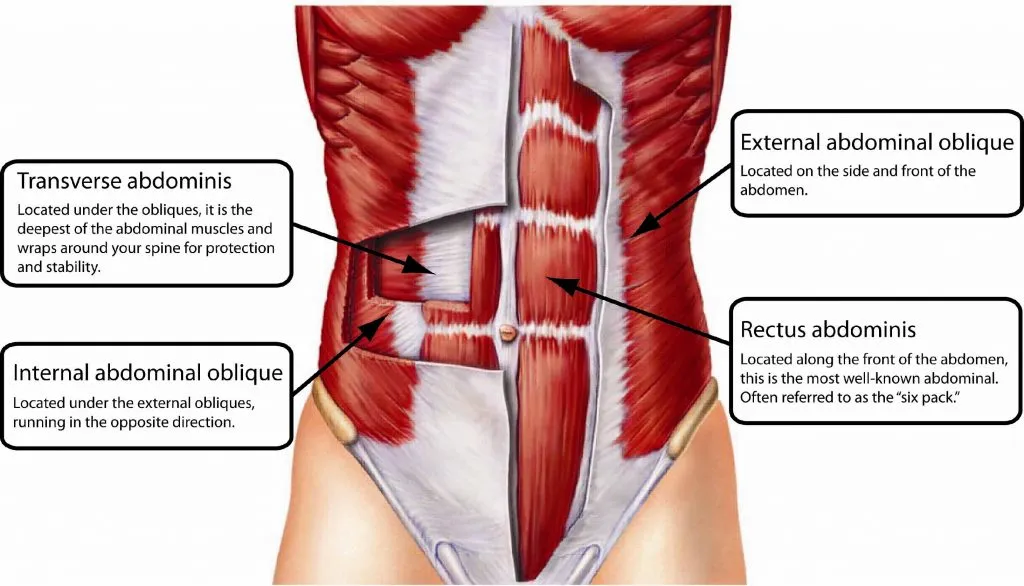
rectus abdominis
O: xiphoid process and costal cartilage of 5-7
I: pubic symphysis and pubic crest, pubic tubercle
A: compress abdomen and flex trunk
N: ventral rami T7-L1

external intercostals (focus on action and nerve)
O: inferior margin of the rib above
I: superior margin of the rib below (superficial)
A: elevates ribs during inspiration, provides support to the intercostal space
N: intercostal nerves T1-T11

internal intercostals (focus on action and nerve)
O: superior margin of the rib below (deep)
I: lateral edge of the costal groove of the rib above
A: depresses ribs exhalation, provides support to the intercostal space
N: intercostal nerves T1-T11

innermost (middle) intercostals (focus on action and nerve)
O: medial edge of the costal groove of the rib above
I: superior margin of rib below (middle)
A: assists the intercostal muscles
N: intercostal nerves T1-T11

transversus thoracis
O:
inferior, deep surface of sternum
depp surface of the xiphoid process
costal cartilages of ribs 4-7
I: inferior, internal surface of the costal cartilages of ribs 2-6
A: depresses the costal cartilages
N: related intercostal nerves

subcostals
O: internal surface of 2-3 ribs, below the insertion
I: internal surface of the angles of the lower ribs
A: assists in depressing and stabilizing the ribs
N: related intercostal nerves

psoas major
O: transverse processes, bodies and intervertebral discs of L1-L5
I: lesser trochanter of femur
A:
origin fixed: hip extension, hip ER
insertion fixed: trunk flexion, anterior pelvic tilit
unilaterally: lateral flexion of the trunk
N: anterior rami of L1-L3

quadratus lumborum
O: iliac crest, ilillumbar ligament and transverse process of L5
I: inferior border of 12th rib, transvrse porcesses of L1-L4
A: ipsilateral trunk flexion, depress and stabilize the 12th rib
N: anterior rami of T12, 1-L4

iliacus
O: upper 2/3 of the iliac fossa and anteiror lateral sacrum
I: lesser trochanter of femur
A: flexes the hip
N: femoral nerve

puborectalis
O: posterior surface of the pubis
I: bilaterally, blends to from midline of the pelvic floor
A: flexes anal canal anteriorly, creating the anorectal angle which contributes to maintaining fecal incontinence
N: pudendal nerve
pubococcygeus
O: posterior surface of the pubis
I: bilaterally, blends to form midline of the pelvic floor
A: stability and support of abdominal and pelvic organs
N: pudendal nerve
iliococcygeus
O: ischial spine bilaterally and the posterior tendinous arch of the internal obturator fascia
I: coccyx, perineal body and anococcygeal ligament
bilaterally, blends to from midline of the pelvic floor
A: elevates the pelvic floor and anorectal canal
N: pudendal nerve
coccygeus
O: ischial spine bilaterally
I: inferior aspect of the sacrum and coccyx
A: supports the pelvic viscera and flexes the coccyx
N: anterior rami S4-S5