Art History Exam #2 Etruria & Rome
 Call Kai
 Learn
 Practice Test
 Spaced Repetition
 Match
 Flashcards
 Knowt Play
1/14

There's no tags or description
Looks like no tags are added yet.
15 Terms
Arch
Curved Structure that spans an opening and supports weight above it
Barrel Vault
Long tunnel like ceiling formed by extending an arch through space
Lost-wax casting
Clay mold surrounds wax model and then wax melts away —> Creation of metal structures
Verism
People are portrayed realistically wrinkles, age and imperfections
Mosaic
Using small pieces of colored glass or tile
Illusionism
Technique making a flat image appear three dimensional
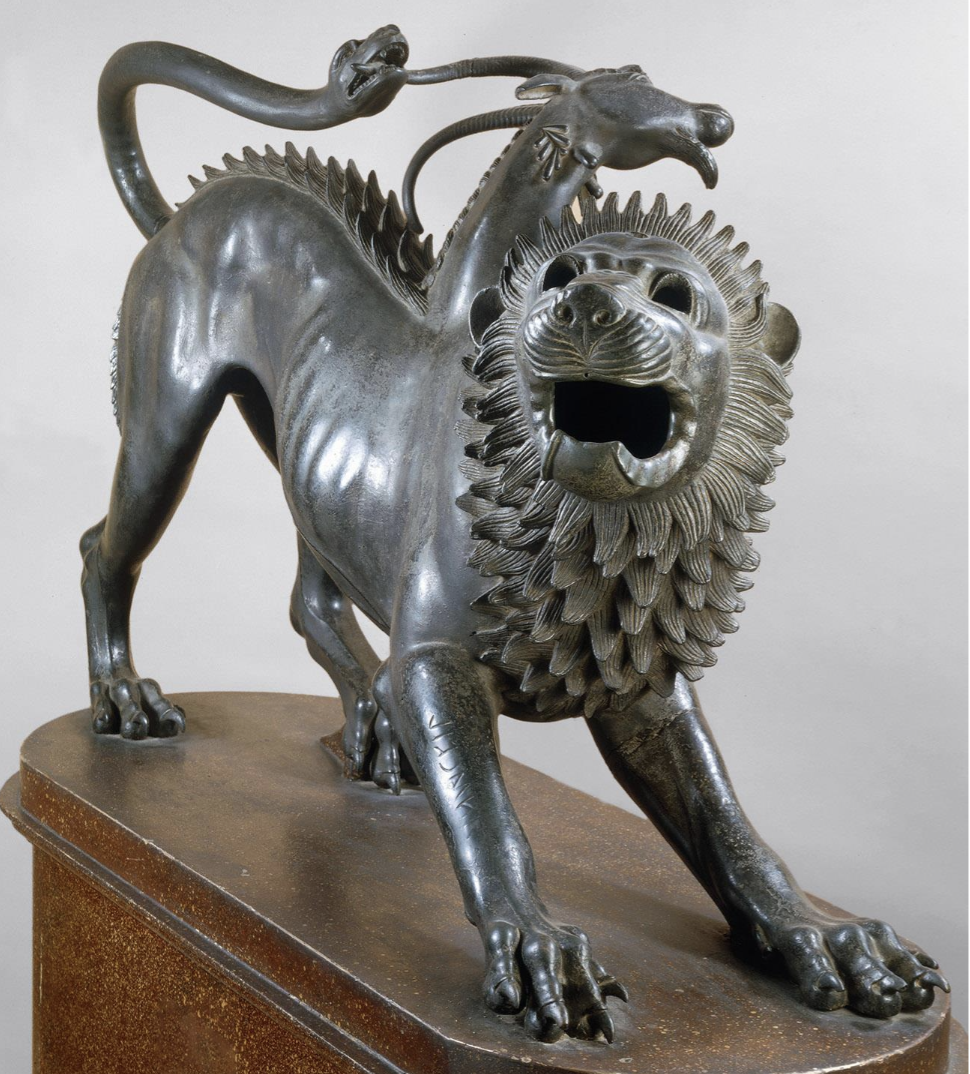
Chimera of Arezzo
Etruscan, Classical, c. 400 BCE. Bronze; Florence, Italy. Religious votive offering; bronze sculpture was a major achievement of Etruscan art. Bronze casting and the adoption of Greek mythology. Mythical monster with parts of a lion, goat, and serpent as its tail. Remarkable realism and an inscription on the leg identify it as a dedication to the Etruscan god Tinia.
The Orator
Recovered from the area of Lake Trasimeno, Italy, Etruscan, Roman period, early first century BCE. Bronze. Auele Metele wearing a Roman toga, indicating the growing influence of Roman culture on the Etruscans. The right arm is raised, addressing an audience; the figure is rendered realistically with individualized facial features and an aging face. Bronze casting is notable for the Etruscans. The growing influence of Rome made the sculpture an important symbol of the transition from Etruscan culture ot roman civilization

Tomb of the Rabirii
Appia, Republican, Rome, late first century BCE. Funerary relief depicting members of the rabirii family. Relief was attached to a family tomb along the Via Appia Romes most important roads. Wealthy families often commissioned tomb monuments and preserve family memory. Clothing signifying citizenship and socials status. Shows how freed person are able to attain wealth.

Augustus as imperator
From the Villa of Livia, Prima Porta, Italy, Augustan, Roman, early first century CE, perhaps a copy of a bronze original from the late first century BCE. Marble. Uses contrapposto; an idealized male body. Legitimized Augustus’s political power and promoted the stability of the Roman Empire.

Spear Bearer
Roman marble copy of a Greek bronze of c. 450–440 BCE. The embodiment of the ideal body, demonstrates contrapposto, polykleitos canon and became the standard for classical greek sculptures.

Gardenscape, Garden Room
Prima Porta, near Rome, late first century BCE. Augustan period; uses second-style fresco wall painting (a technique that made walls appear to open into another space). Roman appreciation of nature's abundance, symbolizing prosperity, fertility, and stability. Wealthy Romans created idealized environments within their homes. Peaceful and leisurely environment and mastery of the pictorial space

Altar of Augustan Peace
Rome, 13–9 BCE. Carrara marble. This celebrtaed Augustus eturn from military campaigns in Spain and Gaul. Enclosed marble structure surrounding a sacrificial altar. Imperial family members in a religious procession in a frieze; Augustus propaganda celebrating Pax Romana stability and prosperity under Augustus.

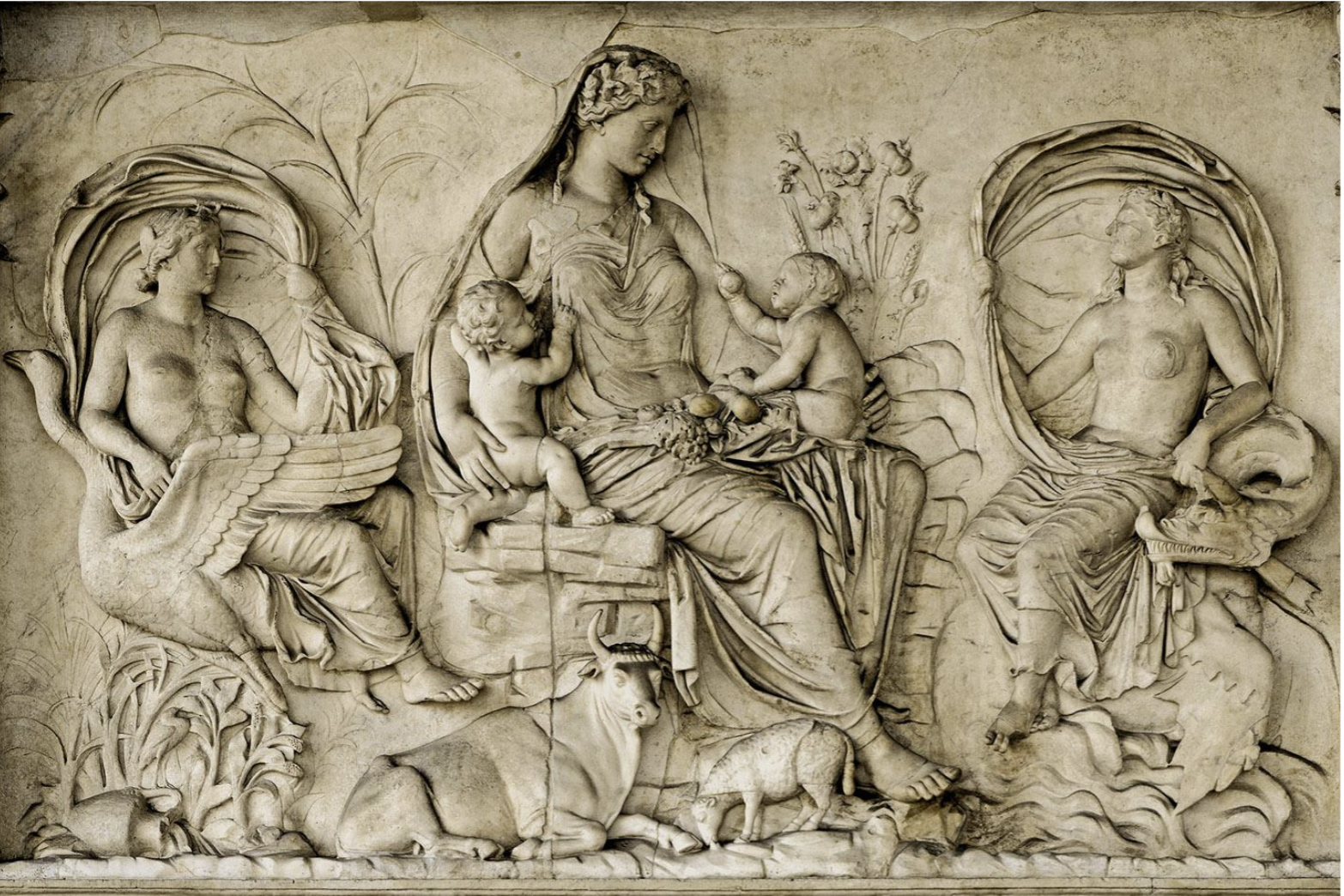
Relief of Tellus or Pax
Detail from the enclosure wall of the Ara Pacis Augustae, Rome, 13– 9 BCE. Marble. Female nurturing figure Pax, who is surrounded by two infants symbolizing fertility and abundance. Plants, flowers, and fruit surround the figure. Idealized environment showcasing the fertility brought by the Pax Romana.
Alexander Mosaic (Tessera)
Perhaps a late 2nd- or early 1st-century BCE copy of a panel painting of the Battle of Issus by Philoxenos of Eretria, late fourth century BCE. Mosaic. Battle of Issus between Alexander the Great, who defeated the Persian king Darius III. Roman mosaic art: Roman admiration for Greek culture and history.
