L24- peptide delivery
 Call Kai
 Learn
 Practice Test
 Spaced Repetition
 Match
 Flashcards
 Knowt Play
1/22

There's no tags or description
Looks like no tags are added yet.
23 Terms
what factors is the stability of peptide and protein formulations dependant on
choice of excipients
storage conditions- liquid, frozen
delivery route and vehicle
chemical modification to affect PK and stability
what is the main things that drives the folding of the proteins
mainly hydrophobic interactions

what are the two types of changes that can cause irreversible protein inactivation

how does aggregation of therapetic proteins mainly occur
through hydrophobic residues on the proteins which can interact with each other if they are exposed due to patrial unfolding of the proteins leading to aggregation
list the type of operations that may denature or aggregate proteins

list some of the consequences of proteins aggregation/denaturing

what are the different ways proteins can be chemically changed
deamidation
oxidation
hydrolysis
disulphide bond formation and exchange
describe deamidation and the effect it has on proteins
its a chemical reaction in which an amide group in an amino acid is converted intp a carboxyl group
it mainly occurs in asparagine and glutamine amino acids
it is favoured at low and high PH
what type of amino acids/proteins are affected by hydrolysis
most peptide bonds aren’t susceptible to hydrolysis except for aspartic acid
describe how disulfide formation and exchange can occur in protiens
cysteine gets converted into cystine which forms a disulfide bridge
thses can then cleave to form a thiocysteine under alkaline conditions
which can form crosslins between chains of a protein

what are some of the physical conditions that may cause the denaturing of a protein/ unfolding

list some of the things that can be added to a protein formulation to keep it stable and avoid unfolding

what are polysorbates + what are their effects on the formulation of proteins

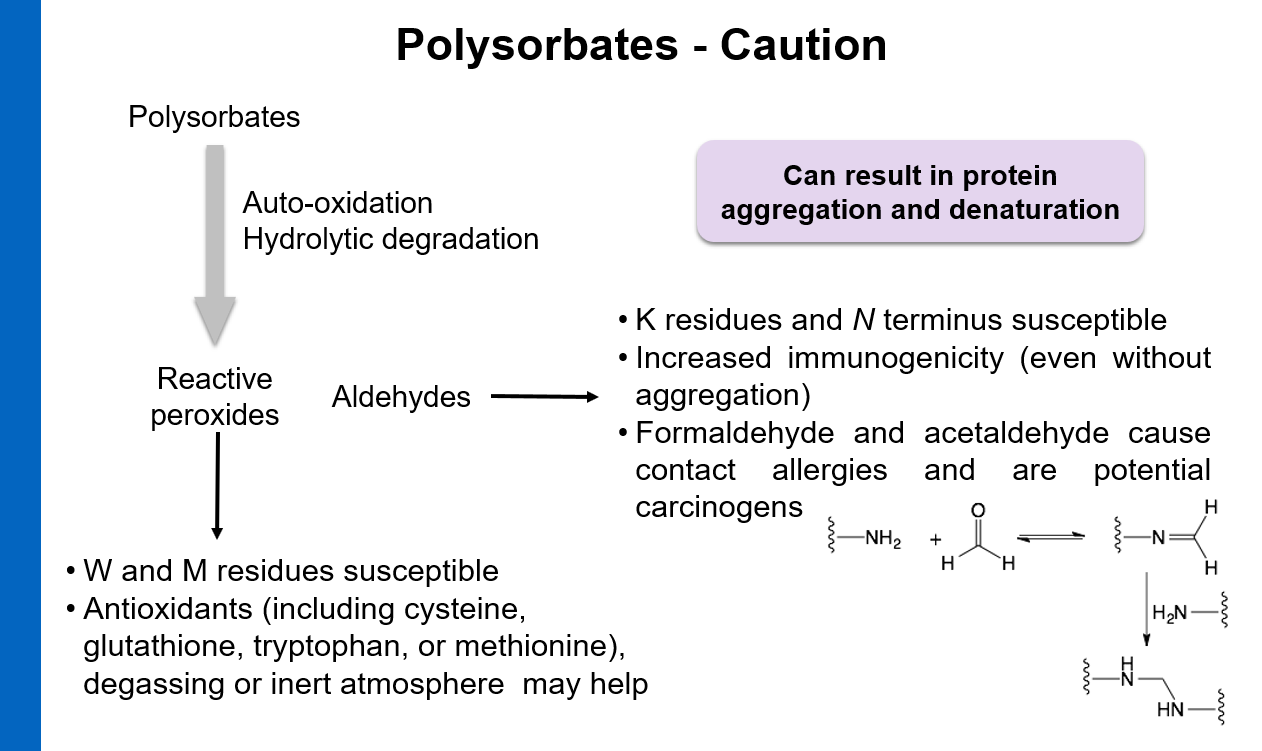
what are the cautions with using polysorbates
what are poloxamers + their effetcs on formulation of protiens
they are non-ionic triblock copolymer made up of three blocks of polymer chains
a hydrophilic section, hydrophobic and hydrophlic
they increase solubility and protect protins from aggregation and adsopbtion at interface
describe lypophilization ( freeze drying ) as a method of formulating proteins
completely removing the water froma proteins formylation by snap freezing it then put it under a vaccume

what are the two methods of delivery of protein drugs

what are the two main routes of administration for protein drugs

what are the pros and cons of administrating protein drugs intravenously

when considering protein drugs between saline and dextrose IV dilutents which is okay to use and why

whats the pros and cons of subcutaneous administration of protein drugs

what are the pros and cons of intravitreal and buccal administration of proteins drugs

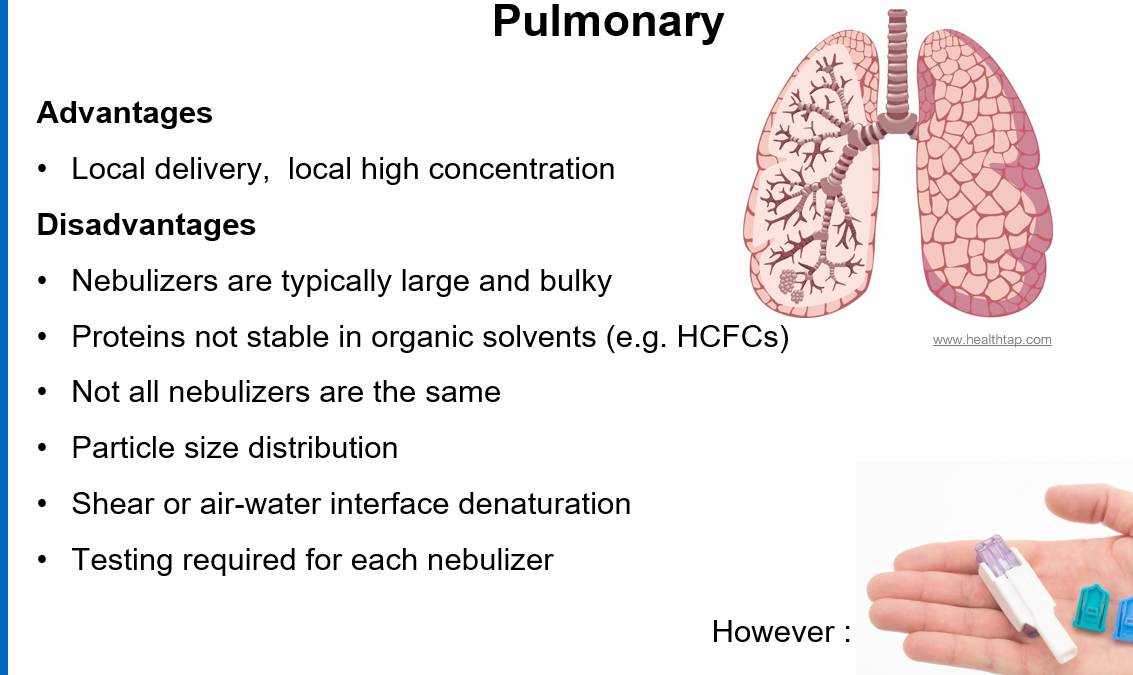
what are the pro and cons of pulmonary administration oof protein drugs