Lymphatic system
 Call Kai
 Learn
Learn Practice Test
 Spaced Repetition
 Match
Match Flashcards
 Knowt Play
1/83

There's no tags or description
Looks like no tags are added yet.
Name | Mastery | Learn | Test | Matching | Spaced | Call with Kai | Chat |
|---|
No analytics yet
Send a link to your students to track their progress
84 Terms
What are the general functions of the lymphatic system
-The production, maintenance, and distribution of lymphocytes that provide defense against infections and environmental hazards
.
-Returns excess interstitial fluid to the blood
.
-Absorption of fats and fat-soluble vitamins from the digestive tract and the subsequent transport of these substances to the venous circulation
Explain one
Lymph nodes and other lymphatic organs filter lymph to remove microbes and other foreign particles. The Lymphocytes destroy them
Returns excess interstitial fluid to the blood. explain
Lymph capillaries pick up excess interstitial fluid and proteins and return them to the venous blood. Lymph re-joins blood at the right and left subclavianveins
function 3 Absorption of fats and fat-soluble vitamins from the digestive tract
-Absorption of fats and fat-soluble vitamins from the digestive tract and the subsequent transport of these substances to the venous circulation
.
-Done by blood capillaries (lacteal)
.
.-The lacteals absorb the fat and fat-soluble vitamins from the intestinal tract
structure of lacteal

What are the main components of the lymphatic system?bk
Lymph; lymphatic vessels (lymphatics); lymphoid tissues and lymphoid organs; lymphocytes, phagocytes, and other immune system cells.
What is lymph?
A fluid similar to plasma that enters lymphatic capillaries after tissue fluid is formed from blood plasma; it does not have plasma proteins
How is tissue fluid related to lymph?
Tissue fluid is formed from blood plasma. When this fluid enters lymphatic capillaries, it is called lymph.
Lymphatic capillaries

How are lymphatic vessels formed?
Lymphatic capillaries merge to form larger lymphatic vessels.
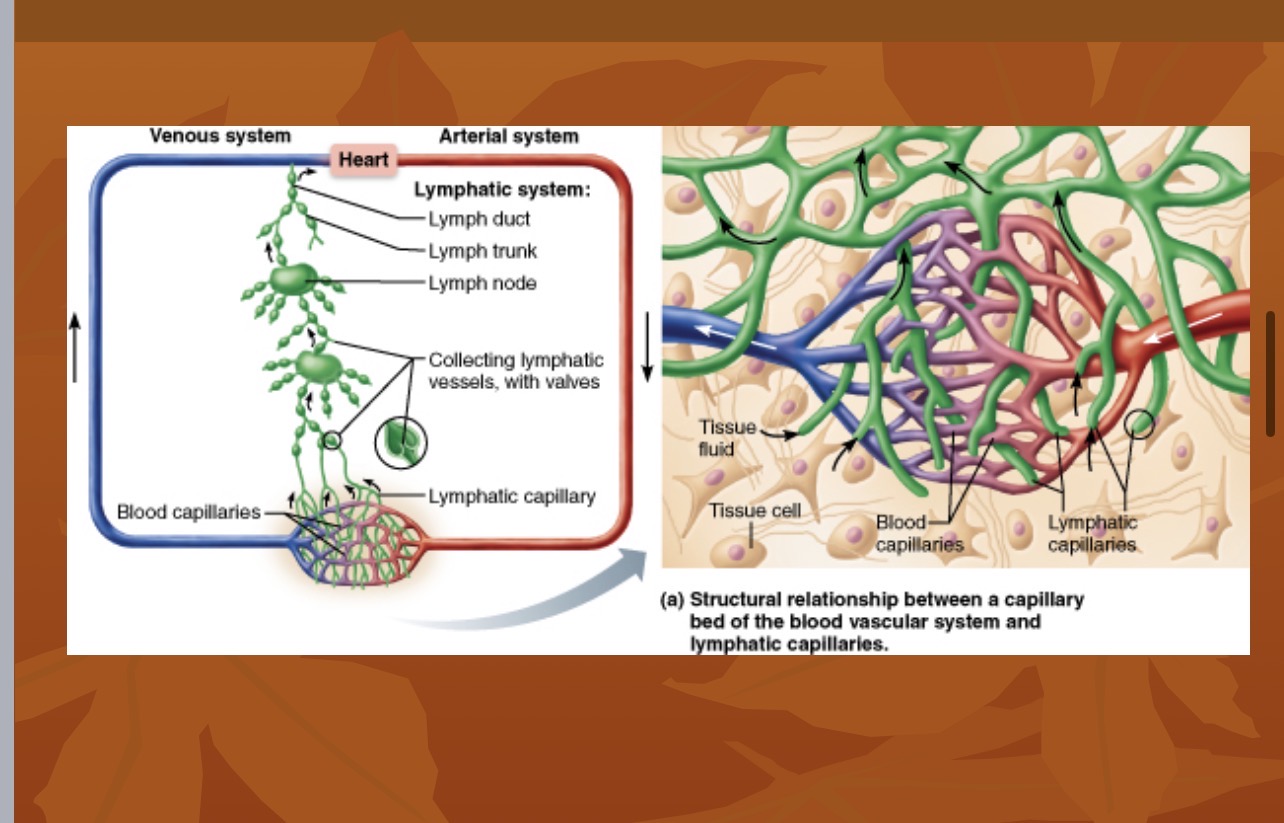
What are the characteristics of lymphatic vessel walls?
Their walls are similar to those of veins and contain valves visible as surface bulges.


Lymphatic Filariasis
Tropical parasitic disease caused by microscopic, thread-like roundworms

Lymph Nodules within the Wall of the Digestive Tract
