Mass Lab rvw
 Call Kai
 Learn
 Practice Test
 Spaced Repetition
 Match
 Flashcards
 Knowt Play
1/229

There's no tags or description
Looks like no tags are added yet.
230 Terms

What is number 1 (squiggly lines)?
Gyrus (gyri)

What is number 2?
visual area

What is number 3?
auditory area

What is number 4?
sulcus (sulci)

What is number 5?
motor area
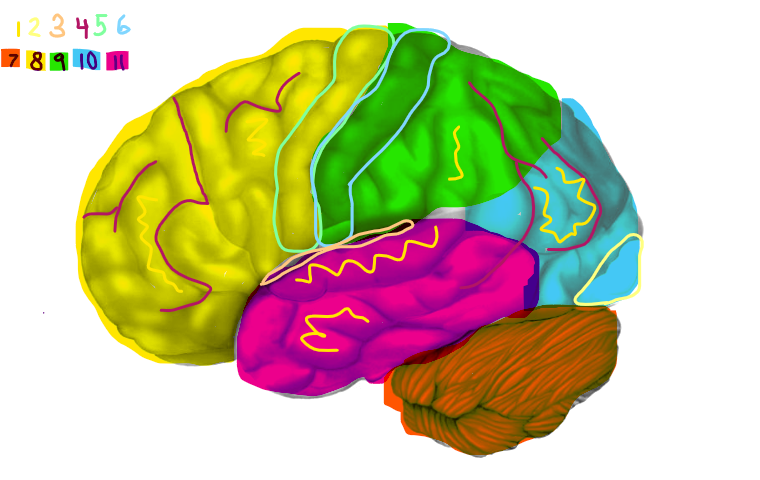
What is number 6?
sensory area
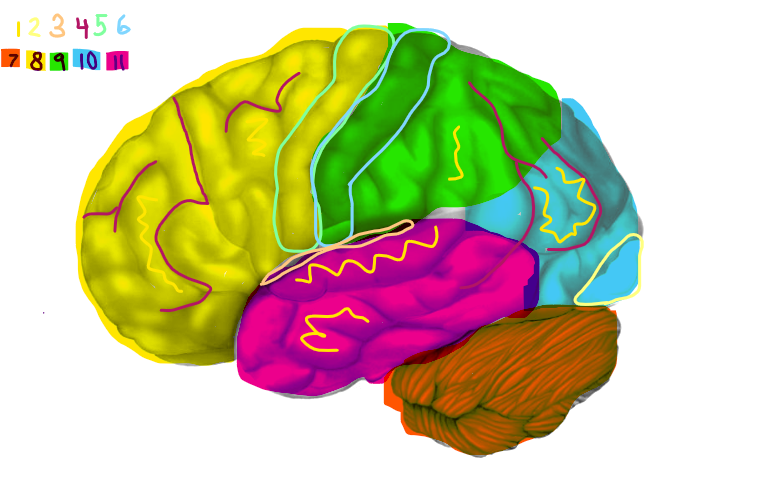
What is number 7?
cerebellum

What is number 8?
(left) frontal lobe

What is number 9?
(left) parietal lobe
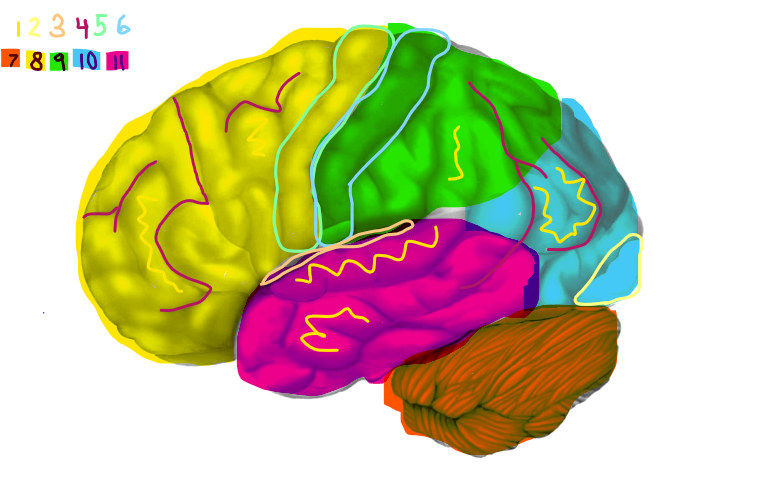
What is number 10?
(left) occipital lobe
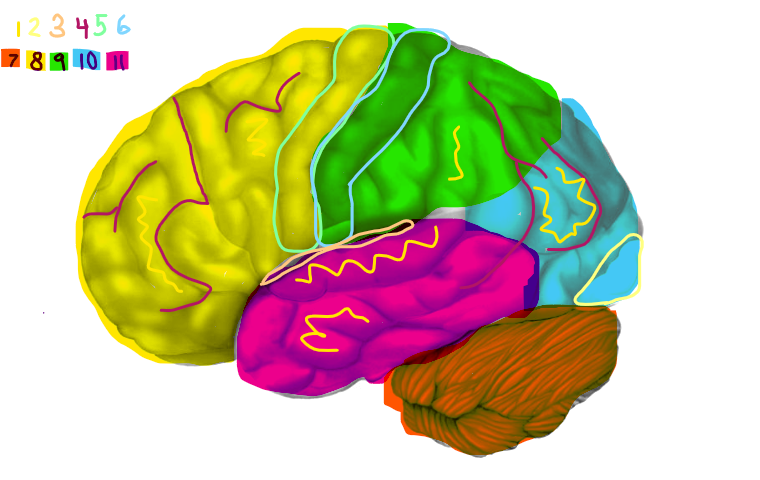
What is number 11?
(left) temporal lobe

What is number 1?
medulla oblongada

What is number 2?
midbrain

What is number 3?
corpus callosum

What is number 4?
pons
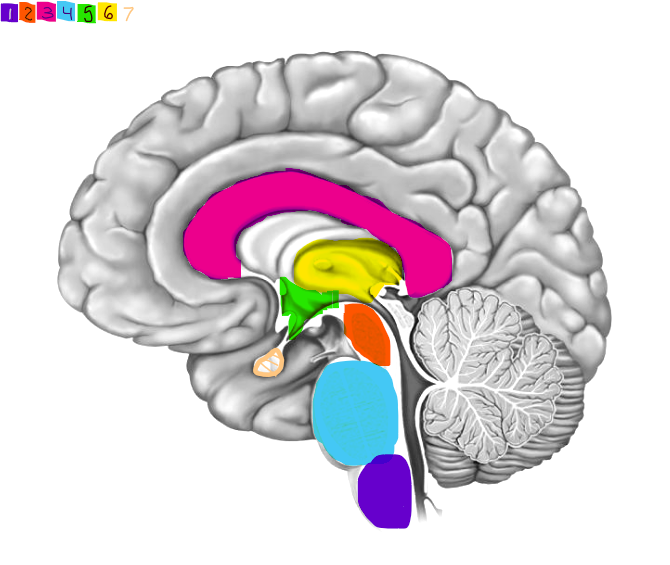
What is number 5?
hypothalamus
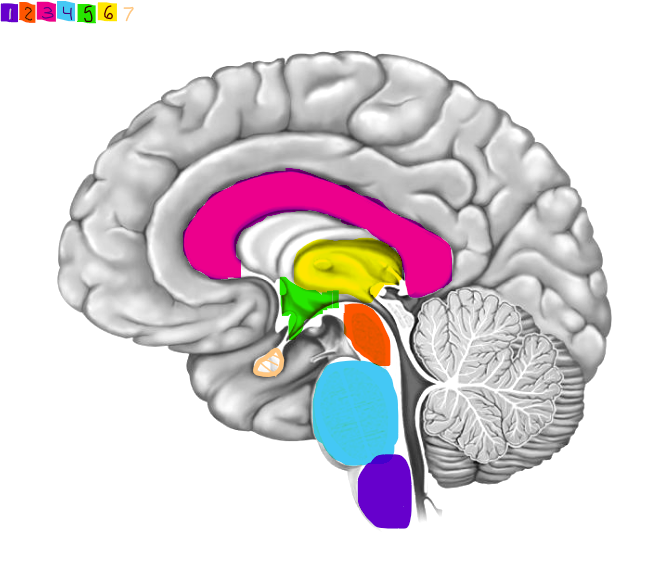
What is number 6?
thalamus

What is number 7?
pituitary gland

What is number 1?
dura mater
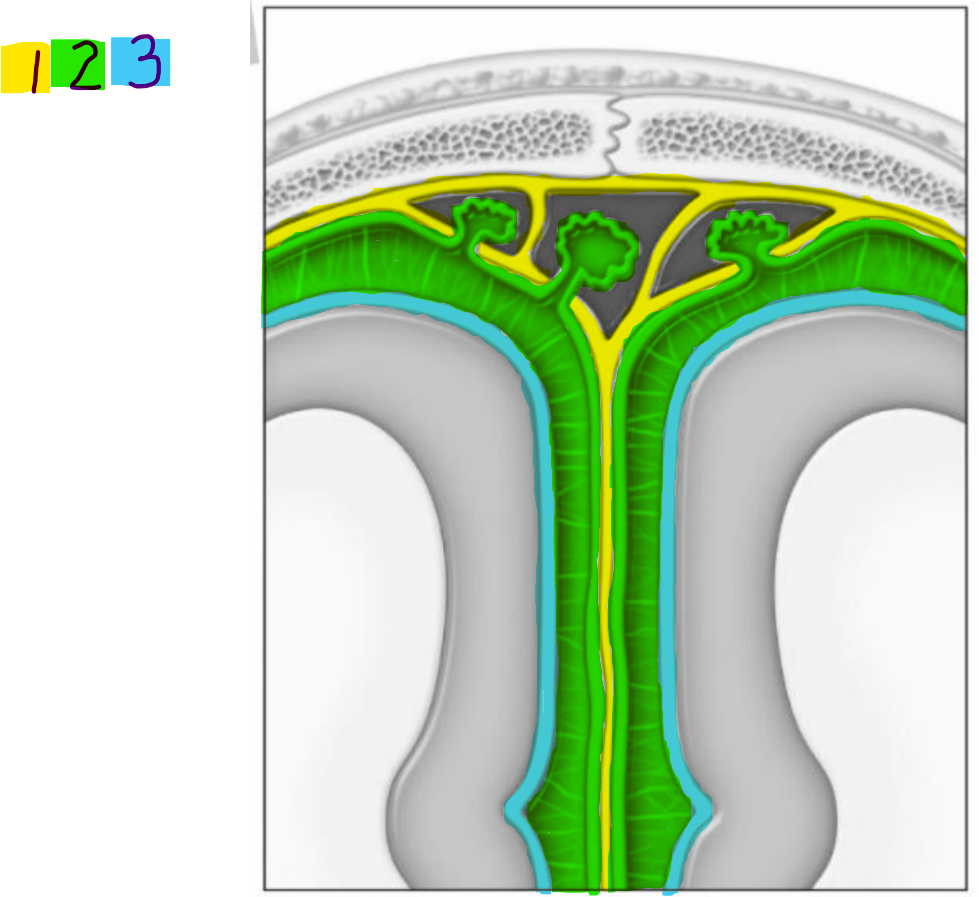
What is number 2?
arachnoid mater
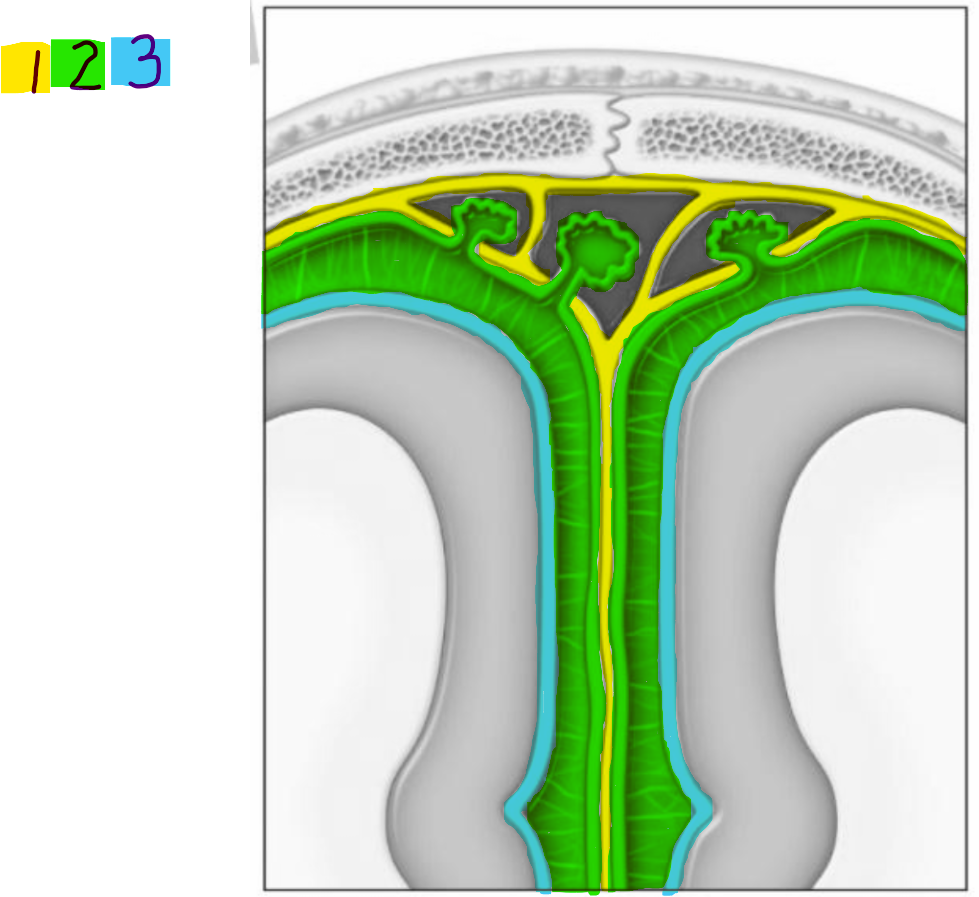
What is number 3?
pia mater

What is number 1?
lateral ventricles

What is number 5?
third ventricle

What is number 6?
fourth ventricle

What is number 1?
spinal nerves

What is number 2?
spinal cord

What is number 3?
caudal equina
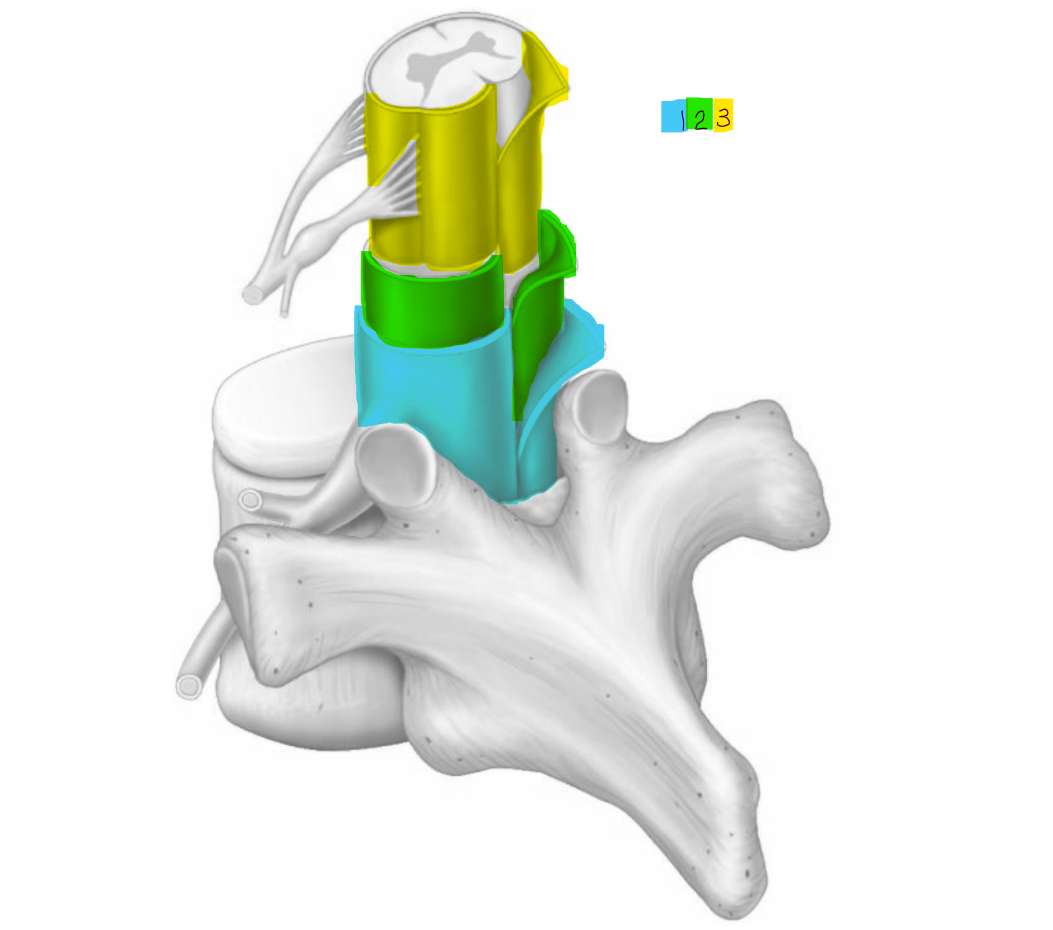
What is number 1?
dura mater

What is number 2?
arachnoid mater

What is number 3?
pia mater

What is number 1?
stimulus

What is number 2?
afferent sensory neuron

What is number 3?
receptor

What is number 4?
efferent motor neurons

What is number 5 (points to those entire muscles)?
effector

What is number 6?
interneuron
Describe the meninges of the brain and spinal cord.
Dura mater: the thicker outer layer of the meninges, arachnoid mater: delicate middle layer of meninges with a spiderweb sort of structure to the inside of it, pia mater: fragile, innermost layer
Explain the difference between a neuron and a nerve.
A nerve is a bundle of neurons
Cranial nerve I - olfactory nerve
sense of smell (sensory only)
Cranial nerve II - optic nerve
vision (sensory only)
Cranial nerve III - oculomotor nerve
controls the movements of the eye (both)
Cranial nerve V - trigeminal nerve
senses touches to the face and helps muscles with chewing (both)
Cranial nerve VII - facial nerve
motor control of face for expression and helps taste (both)
Cranial nerve VIII - vestibulocochlear nerve
Hearing and equilibrium (sensory only)
Cranial nerve IX - glossopharyngeal
Swallowing, salivation, gagging, sensations from posterior ⅓ of tongue (both)
Cranial nerve XI - accessory nerve
Some swallowing, movements in head, neck, and shoulders (motor only)
Identify the major structures of the spinal cord and spinal nerves.
The spinal cord runs down the spine to around L1/L2, where it frays into fibers/becomes the cauda equina, the spinal nerves branch off of the spinal cord and caudal equina.
Define the term reflex and explain why reflexes are tested.
A reflex is when the body/spine responds to a stimulus without consulting with the brain, so the action is very quick and not consciously controlled, and it’s in order to protect your body and move it away from dangerous situations as quickly as possible.
Identify and describe the functions of each part of a reflex arc.
A stimulus happens, it gets noticed by a receptor, the info travels down an afferent sensory neuron, goes through the interneuron (in the spinal cord), then a response travels down the efferent motor neurons, and causes the effector to do something.
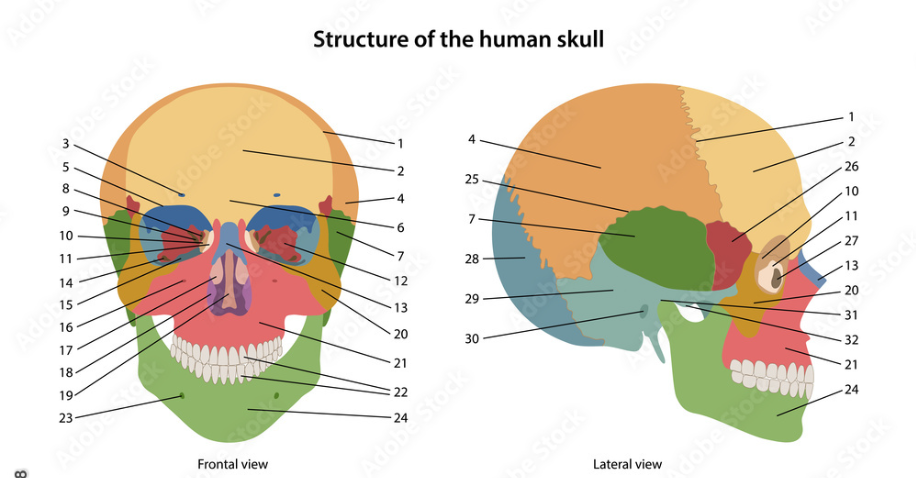
What is number 2?
frontal
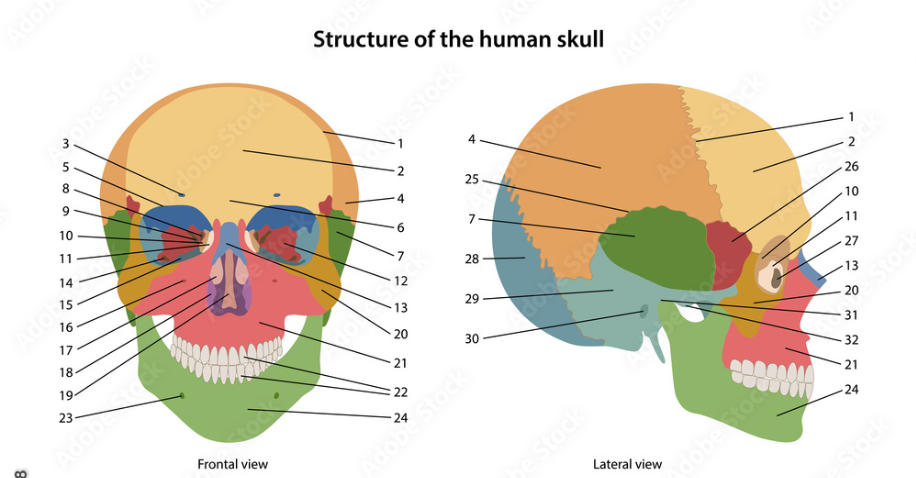
What is number 4?
parietal (there’s 2, right and left)

What is number 7?
temporal (there’s 2, right and left)
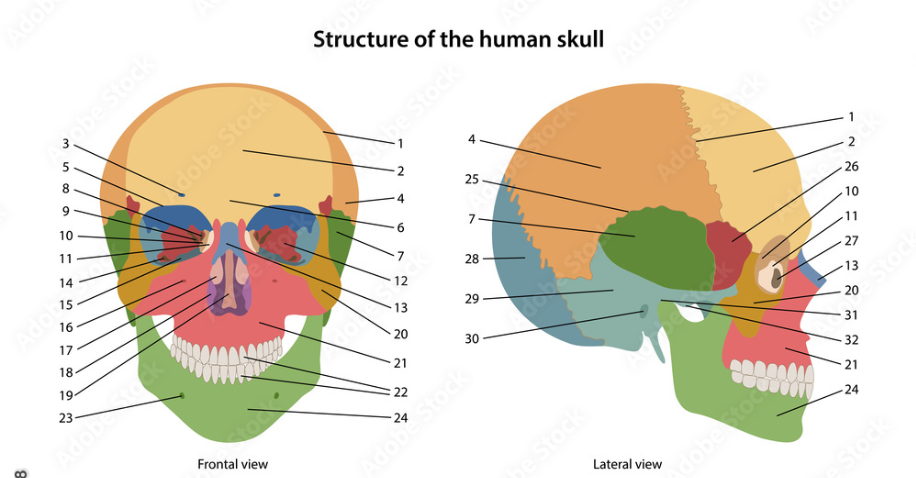
What is number 12?
sphenoid

What is number 24?
mandible

What is number 21?
maxilla (there’s 2, left and right)

What is number 11?
lacrimal (there’s 2, left and right)

What is number 20?
zygomatic (there’s 2, right and left)

What is number 13?
nasal (there’s 2, right and left)

What is number 18?
inferior nasal conchae (there’s 2, right and left)

What is number 19?
vomer

What is number 10?
ethmoid
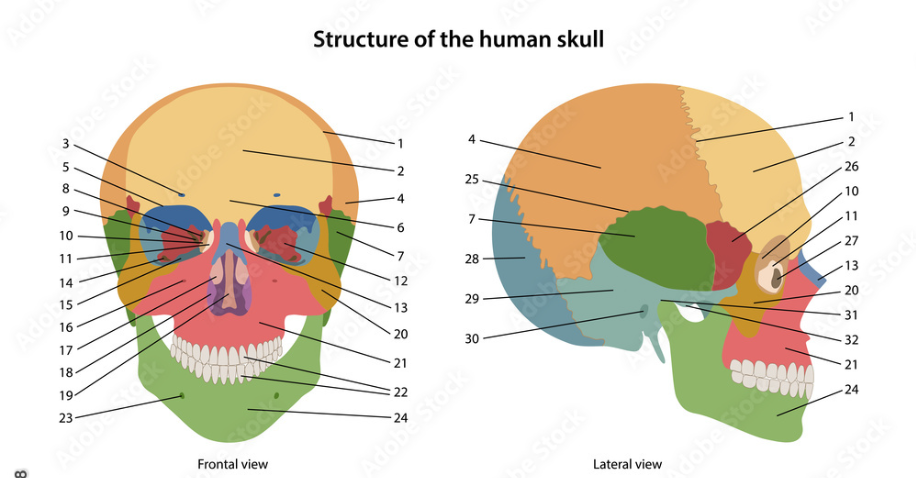
What is number 28?
occipital

What is number 1?
coronal suture

What is number 25?
squamous suture
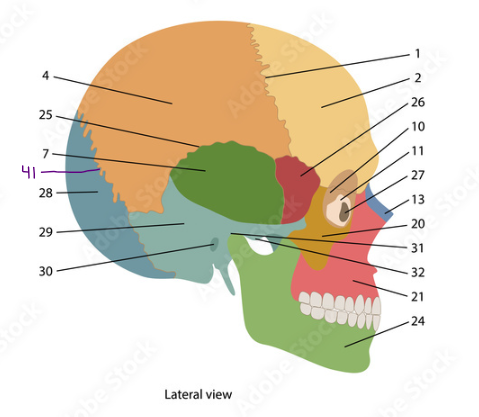
What is number 41?
lambdoid suture

What is number 4?
occipital

What is number 8?
foramen magnum

What is number 3?
temporal (there’s 2, right and left)

What is number 6?
sphenoid

What is number 2?
palatine (there’s 2, right and left)

What is number 1?
maxilla (there’s 2, right and left) (inferior view)

What is number 5?
zygomatic (there’s 2, right and left)
List the 8 cranial bones
frontal, parietal, temporal, occipital, sphenoid, ethmoid
List the 14 facial bones
nasal, maxillae, zygomatic, palatine, lacrimal, inferior nasal conchae, vomer, mandible
What is the name for the soft spots on a baby’s skull?
fontanelles
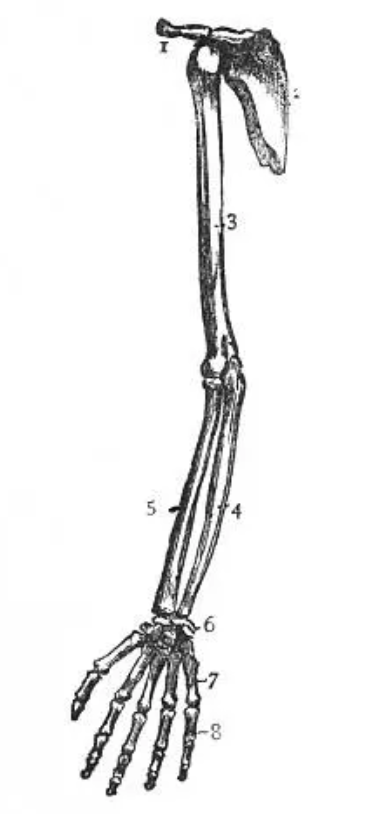
What is number 3?
humerus
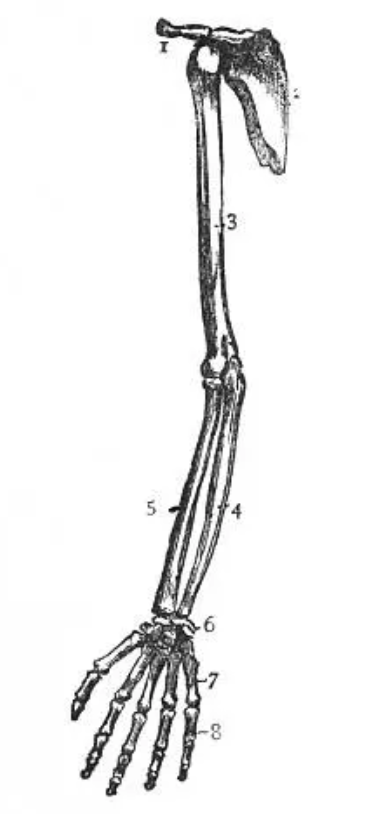
What is number 4?
ulna

What is number 5?
radius

What are number 6?
carpals

What are number 7?
metacarpals

What are number 8?
phalanges
How do you name the bones of the hand?
Identify the digit, which starts with the thumb as #1, and identify if it’s the proximal, medial, or distal phalanx, or if it’s the metacarpal

What is number 1?
illium

What is number 2?
greater sciatic notch (of illium)

What is number 3?
pubis

What is number 4?
ischium

What is number 5?
pubic symphysis

What is number 6?
acetabulum
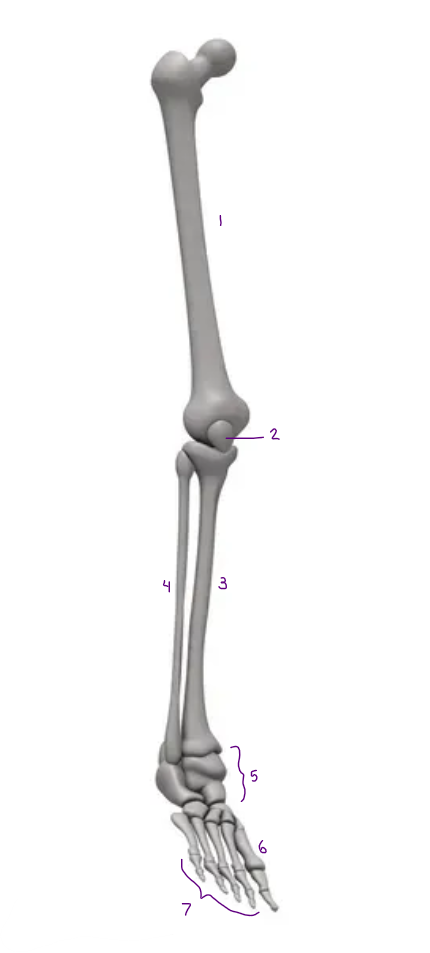
What is number 1?
femur
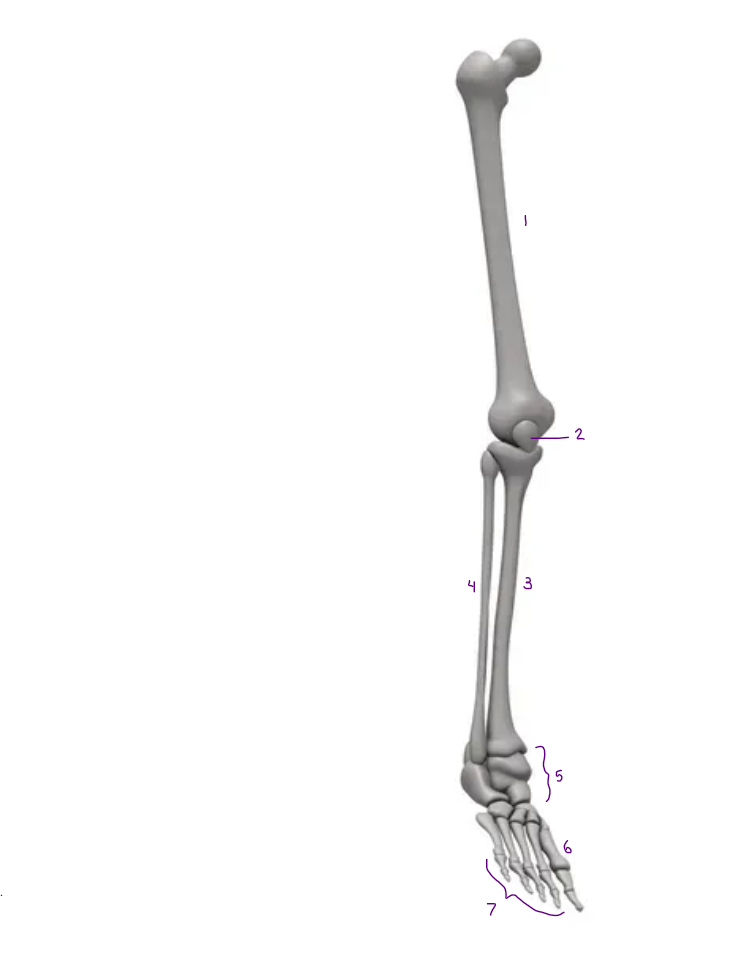
What is number 2?
patella

What is number 3?
tibia

What is number 4?
fibula

What are number 5?
tarsals

What are number 6?
metatarsals

What are number 7?
phalanges (of the feet)

What is number 1?
osteon

What is number 2?
osteocyte
Osteon
circle of rings of osteocytes
Central /osteonic canal
in the center of an osteon
Lamellae
rings of the osteon made by the osteocytes