Week 1-4 Quiz
 Call Kai
 Learn
Learn Practice Test
 Spaced Repetition
 Match
Match Flashcards
 Knowt Play
1/128

Earn XP
Description and Tags
Color key: orange = origin, ivory = insertion, amethyst = action, indigo = innervation.
Name | Mastery | Learn | Test | Matching | Spaced | Call with Kai | Chat |
|---|
No analytics yet
Send a link to your students to track their progress
129 Terms

anterior scalene

external oblique

iliacus

internal oblique

iliocostalis lumborum

Intertransversarii

Ligamentum nuchae OR nuchal ligament

longissimus capitis

longissimus cervicis
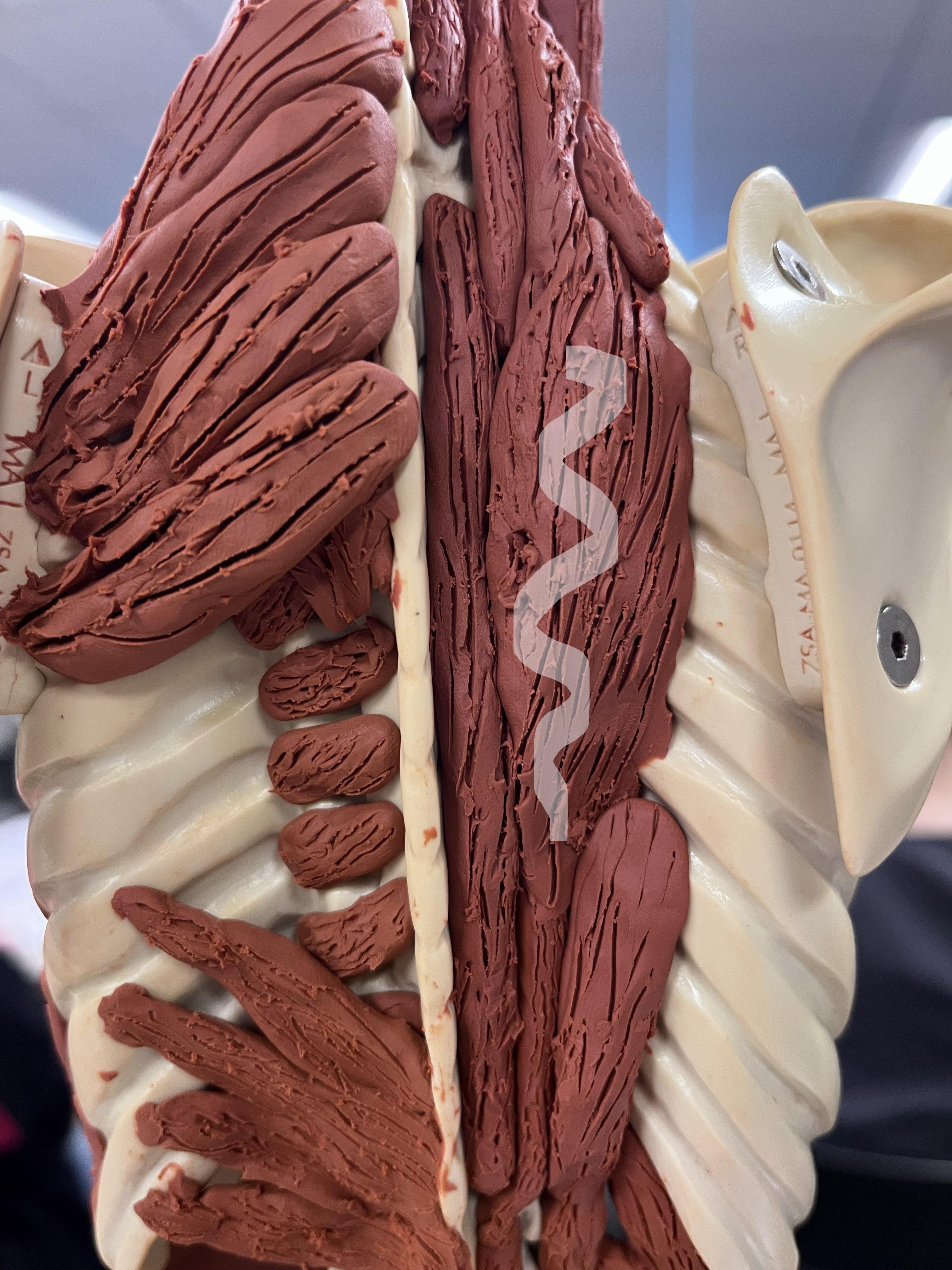
Longissimus thoracis

masseter

middle scalene

multifidi

Obliquus capitis inferior

Occipitalis
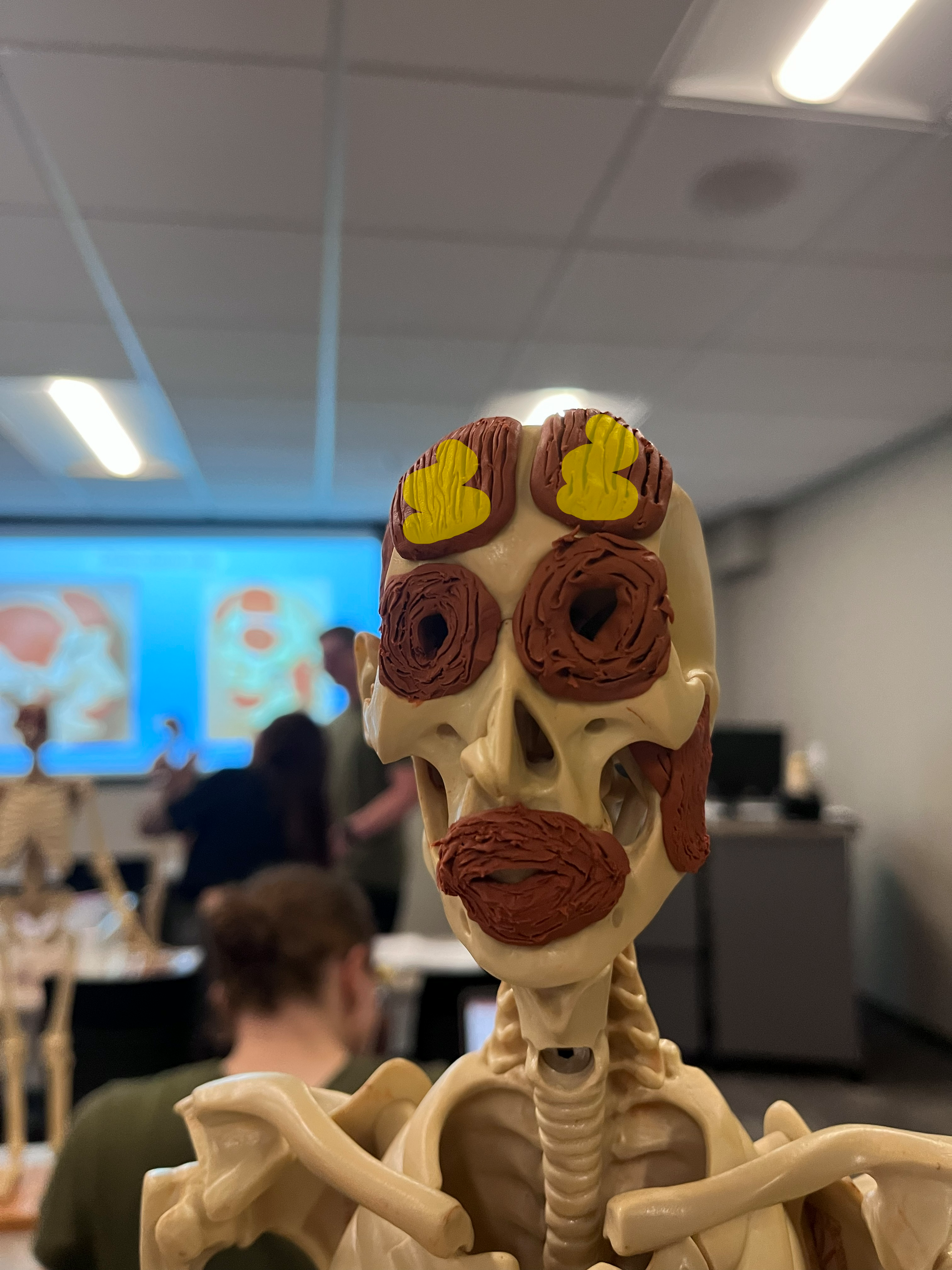
Frontalis

Obliquus capitis superior

Orbicularis oculi

Orbicularis oris

posterior scalene

psoas major

quadratus lumborum
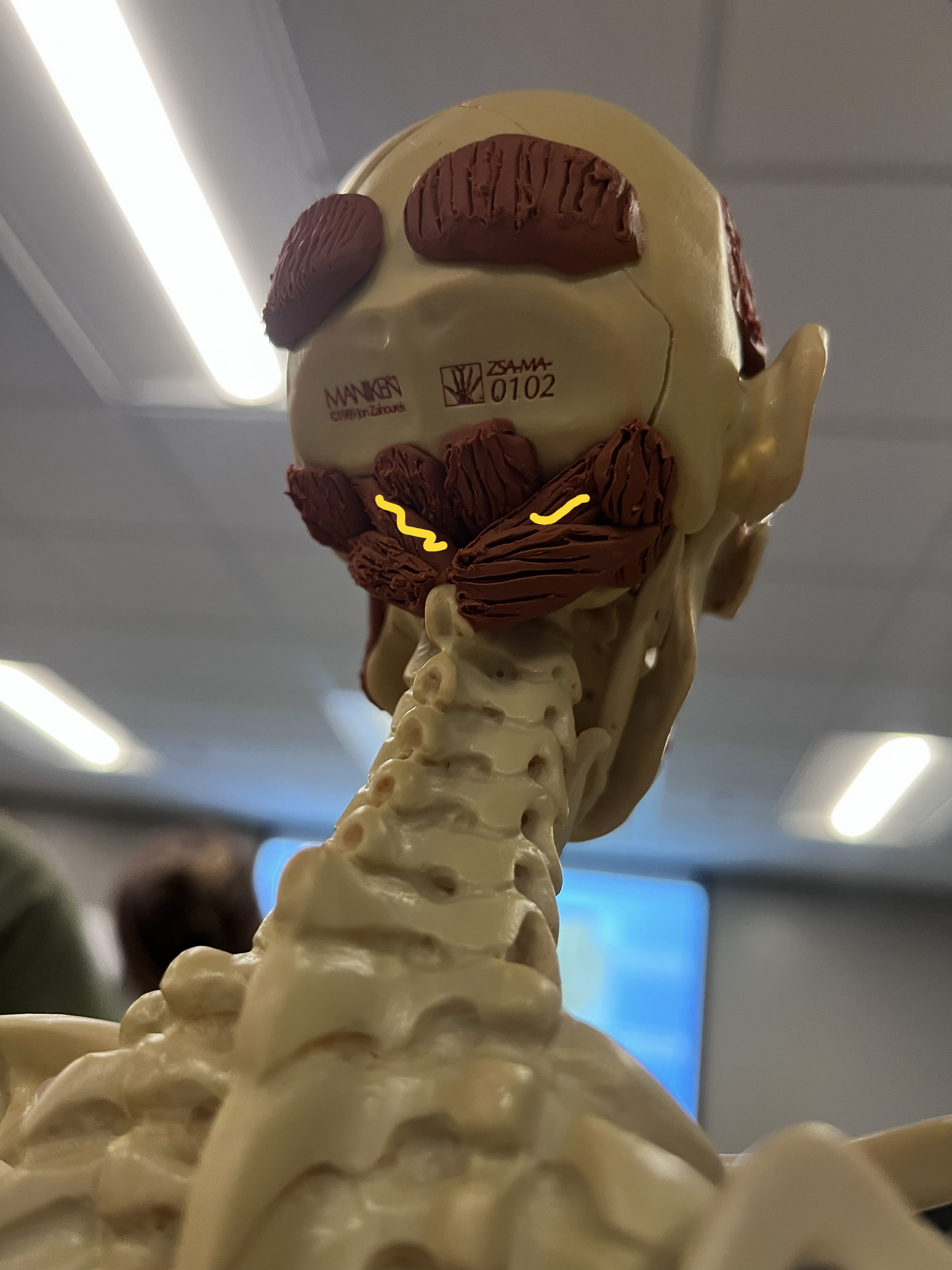
Rectus capitis posterior major

Rectus capitis posterior minor

Rectus abdominis

rotatores

Sternocleidomastoid

Semispinalis capitis

Serratus posterior inferior

Serratus posterior superior

spinalis cervicis

spinalis thoracis
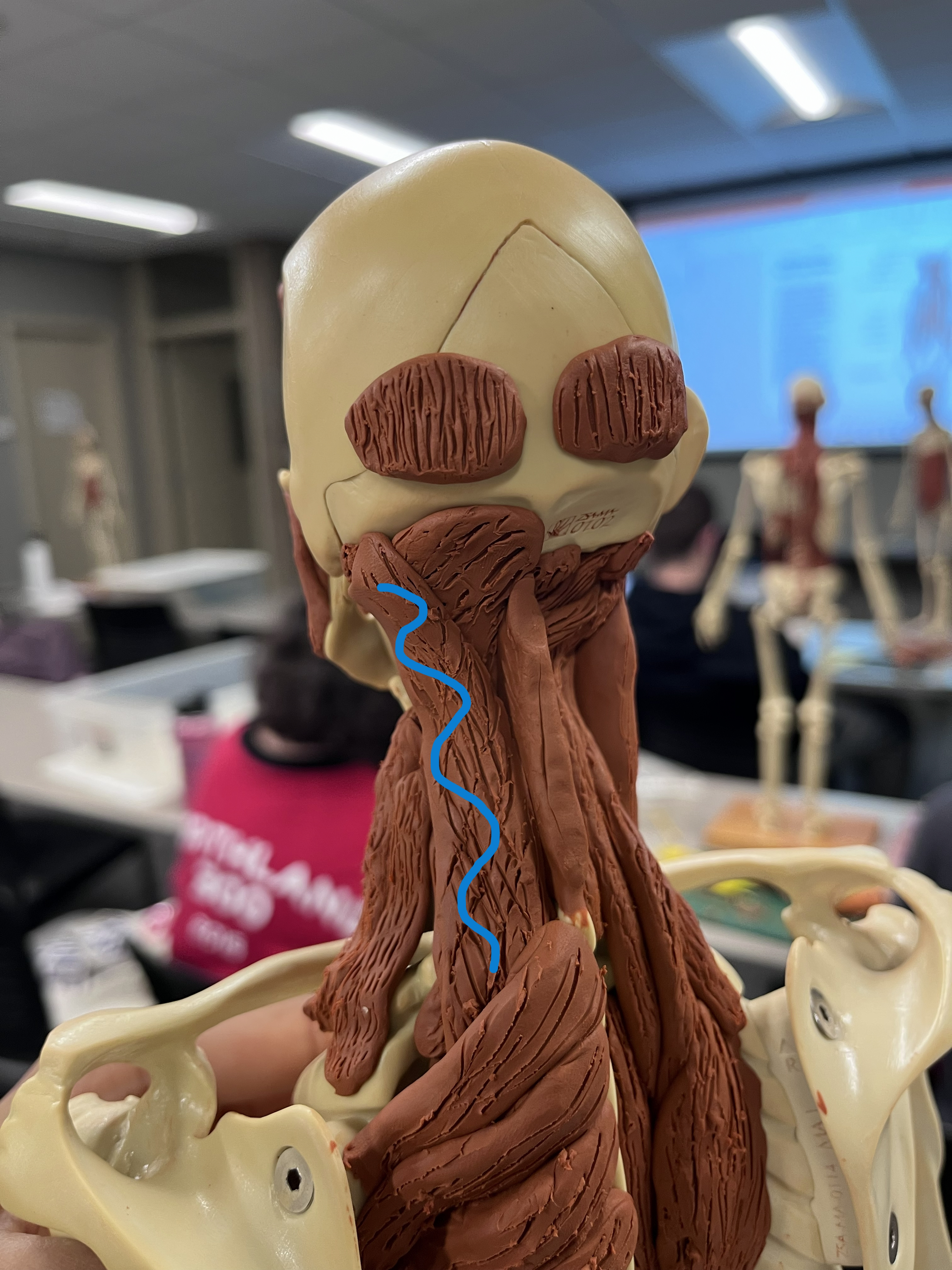
splenius capitis

Temporalis
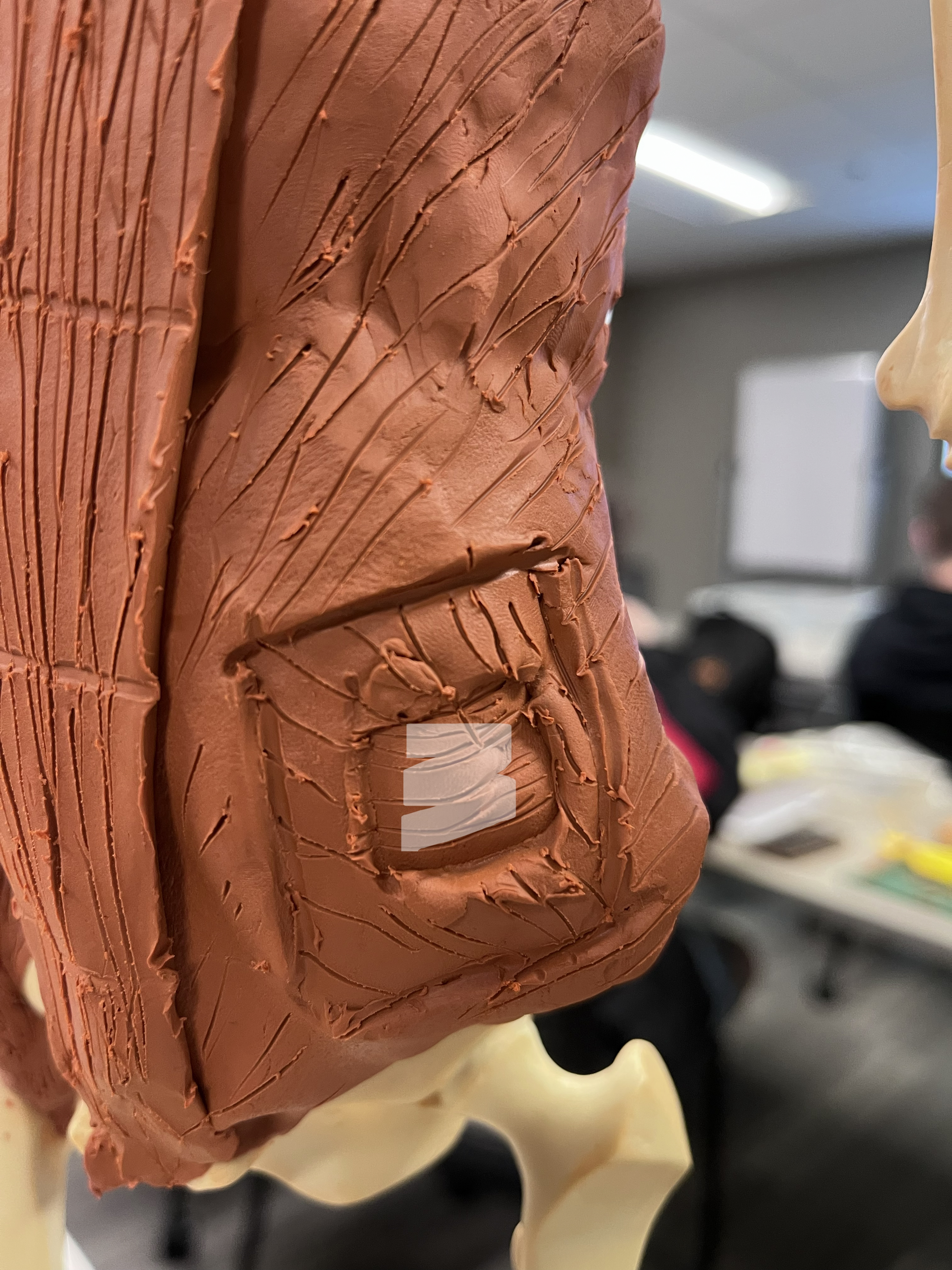
Transverse abdominis
Anterior scalene OIAI
Origin: Cervical vertebrae TPs (C3-C6)
Insertion: Rib 1
Action: lateral flexion and flexion of the neck. Elevation of rib 1
Innervation: Spinal (C)
Middle scalene OIAI
Origin: Cervical vertebrae TPs (C2-C7)
Insertion: Rib 1
Action: Lateral flexion of the neck, elevation of Rib 1
Innervation: Spinal
Posterior scalene OIAI
Origin: Cervical vertebrae TP (C4/C5-C7)
Insertion: Rib 2
Action: Lateral flexion of the neck, elevation of Rib 2
Innervation: Spinal
Sternocleidomastoid OIAI
Origin: Sternum, clavicle
Insertion: Temporal (mastoid process)
Action: Flexion of head (BL), lateral flexion, and contralateral rotation
Innervation: Accessory
Diaphragm OIAI
Origin: Ribs 7-12, L1-L3
Insertion: Central tendon
Action: Inhalation
Innervation: Phrenic
Quadratus lumborum OIAI
Origin: Ilium (posterior crest)
Insertion: Rib 12, L1-L4/L5
Action: Lateral flexion and extension of the trunk, elevation of the pelvis while walking
Innervation: Spinal nerves
Iliacus OIAI
Origin: Ilium
Insertion: Femur
Action: Flexion of the thigh at the hip
Innervation: Femoral
Psoas major OIAI
Origin: L1-L5
Insertion: Femur
Action: Flexion of the thigh at the hip and trunk
Innervation: Spinal
Transversus abdominis OIAI
Origin: Ribs (7-12)
Insertion: Linea alba
Action: Compress/support abdominal viscera, exhalation
Innervation: Spinal
Internal oblique OIAI
Origin: Ilium, inguinal ligament, and thoracolumbar fascia
Insertion: Linea alba
Action: Flexion, lateral flexion, and same side rotation of trunk
Innervation: spinal
External oblique OIAI
Origin: Ribs 4/5-12
Insertion: Linea alba, inguinal ligament, and ilium
Action: flexion, lateral flexion, and opposite side rotation of the trunk, assists in forcible exhalation
Innervation: Spinal nerves
Rectus abdominis OIAI
Origin: Pubis
Insertion: Sternum and costal cartilages
Action: Flexion, lateral flexion of trunk, assists in forcible exhalation
Innervation: Spinal
Serratus posterior superior OIAI
Origin: C7-T2/3
Insertion: Ribs 2-5
Action: Elevates ribs to assist inhalation
Innervation: spinal nerves
Serratus posterior inferior OIAI
Origin: T11-L2/L3
Insertion: Ribs 9-12
Action: Depresses ribs to assist expiration
Innervation: Spinal nerves
List 5 deep muscle groups in the posterior spine
Suboccipital muscles
Intertransversarii
Transversospinalis
Erector spinae
Splenius muscles
What is the nuchal ligament’s purpose?
It stabilizes the cervical spine and serves as an attachment site for several superficial muscles
Which muscles run between the transverse processes of adjacent vertebrae?
Intertransversarii
Intertransversarii OIA
Origin: Transverse process of an inferior vertebra
Insertion: Transverse process of a vertebra immediately superior
Action: Lateral flexion of the spine
What 3 subgroups make up the transversospinalis?
Rotatores
Multifidi
Semispinalis
Which subgroup of muscles crosses 1-2 levels of vertebrae?
Rotatores
Which subgroup of muscles crosses 2-4 levels of vertebrae?
Multifidus
Which subgroup of muscles crosses 5+ levels of vertebrae?
Semispinalis
T/F: The deep muscles (semispinalis and multifidi) are consistently present throughout the vertebral column.
False, they can be inconsistent. Rotatores are often in the spine, semispinalis reside in the head and cervical region, and multifidi are in the lumbar region.
Rotatores OIA
Origin: Transverse process of an inferior vertebra
Insertion: Spinous process, crosses between 1-2 levels of the spine
Action: Contralateral rotation
Multifidi OIA
Origin: Transverse process of an inferior vertebra
Insertion: Spinous process, crosses between 2-4 levels of the spine
Action: Contralateral extension and rotation
What are the three muscles in the semispinalis?
Capitis
Cervicis
Thoracis
Semispinalis capitis OIA
Origin: TP/AP’s of C4-T6
Insertion: Occipital bone
Action: Extension, lateral flexion, and contralateral rotation
What are the 3 subgroups of the erector spinae?
Iliocostalis
Longissimus
Spinalis
(From lateral to medial)
Spinalis Cervicis OIA
Origin: C7-T1 or T2 Spinous processes, lower nuchal ligament
Insertion: C2-C3 or C4 spinous processes
Action: Extension of the region of the spine they cross
Spinalis thoracis OIA
Origin: T11-L2 SPs
Insertion: T4-T8 SPs
Action: Extension of the region of the spine they cross
Longissimus capitis insertion and action
Insertion: Mastoid process
Action: Extension, lateral flexion, and rotation of the head and cervical spine
longissimus cervicis action
Extension, lateral flexion, and rotation of cervical spine
Longissimus thoracis action
Action: Extension, lateral flexion, and rotation of thoracic spine
Iliocostalis cervicis action
Action: Extension, lateral flexion, and rotation of lower cervical spine
Iliocostalis thoracis action
Extension and lateral flexion of upper thoracic spine
Iliocostalis lumborum action
Extension and lateral flexion of the lower thoracic and lumbar spine
What two muscles are present on each side of the spine?
Splenius capitis and splenius cervicis
T/F: The splenius muscles are part of the erector spinae and transversospinalis groups
False, the splenius muscles are a separate group.
Splenius cervicis action
Extension, Lateral flexion, and rotation of cervical spine
Splenius capitis insertion and action
Insertion: Occipital bone and mastoid process
Action: Extension, Lateral flexion, and rotation of head
A small portion of the __ __ is superficial in the __ __ of the neck
splenius capitis, posterior triangle
List some of the 7 muscles in the head and face
Temporalis
Masseter
Pterygoids
Occipitofrontalis
Orbicularis Oculi
Orbicularis Oris
Suboccipitals
Temporalis OIAI
Origin: Temporal bone
Insertion: Mandible (coronoid process and ramus)
Action: Elevation of mandible
Innervation: Trigeminal nerve (CN V)
What blood vessel is in the temporalis?
Superficial artery
Masseter OIAI
Origin: Zygomatic and temporal bones (zygomatic arch)
Insertion: Mandible (ramus and angle)
Action: Elevates the mandible
Innervation: Trigeminal nerve (CN V)
The ___ gland and duct are superficial to the masseter
Parotid
Pterygoids Insertion and Action
Insertion: Medial pterygoid on the mandible
Action: Movement of the mandible (medial and lateral!)
Occipitalis OIAI
Origin: Occipital bone
Insertion: Galea aponeurotica
Action: Elevates the eyebrows
Innervation: Facial nerve (CN VII)
Frontalis OIAI
Insertion: Fascia/skin above the eye and nose
Action: Elevate the eyebrows
Innervation: Facial nerve (CN VII)
What are some differences between the occipitalis and frontalis?
Their origins and insertions are different.
The occipitalis’s origin is the occipital bone, and its insertion is the galea aponeurotica
The frontalis’s origin is the galea aponeurotica, and its insertion is the fascia/skin above the eye
Describe the galea aponeurotica
It’s a broad, flat tendon uniting the muscle fibers of the frontalis and occipitalis.
Orbicularis action and innervation
Action: Closes the eye
Innervation: Facial nerve (CN VII)
Orbicularis oris action and innervation
Action: Closes the lips
Innervation: Facial nerve (CN VII)
List the 4 suboccipital muscles
Rectus capitis posterior minor
Rectus capitis posterior major
Obliquus/oblique capitis superior
Obliquus/oblique capitis inferior
Rectus capitis posterior minor OIAI
Origin: C1
Insertion: Occipital bone
Action: Extends the head at the atlantooccipital joint
Innervation: Suboccipital nerve
Rectus capitis posterior major OIAI
Origin: C2
Insertion: Occipital bone
Action: Extends the head at the atlantooccipital joint. Also LF and R
Innervation: Suboccipital nerve
Obliquus capitis superior OIAI
Origin: C1
Insertion: Occipital bone
Action: Extends and laterally flexes the head on the atlantooccipital joint
Innervation: Suboccipital nerve
Obliquus capitis inferior OIAI
Origin: C2
Insertion: C1
Action: Rotation to the same side at the atlantoaxial joint
Innervation: Suboccipital
What muscle group contributes to tension headaches?
Suboccipitals
What two muscles are closest to the superficial temporal artery?
Temporalis and masseter
What two muscles are closest to the facial artery?
Orbicularis oculi and oris.
Where is the parotid salivary gland and duct?
Superficial to the posterior portion of the masseter and temporalis insertion
Where is the submandibular gland?
The inner surface of the mandible
Where are the superficial lymph nodes located?
Masseter and temporalis
Anterior scalene OIAI
Origin: Cervical vertebrae TPs (C3-C6)
Insertion: Rib 1
Action: lateral flexion and flexion of the neck. Elevation of rib 1
Innervation: Spinal (C)