Comfort, Rest, and Sleep
 Call Kai
 Learn
 Practice Test
 Spaced Repetition
 Match
 Flashcards
 Knowt Play
1/58

There's no tags or description
Looks like no tags are added yet.
59 Terms
four major regions:
cerebrum
diencephalon
brainstem: midbrain, pons, and medulla oblongata.
cerebellum

diencephalon
controls body temperature and the autonomic nervous system. consists of the
thalamus,
hypothalamus
pineal gland.
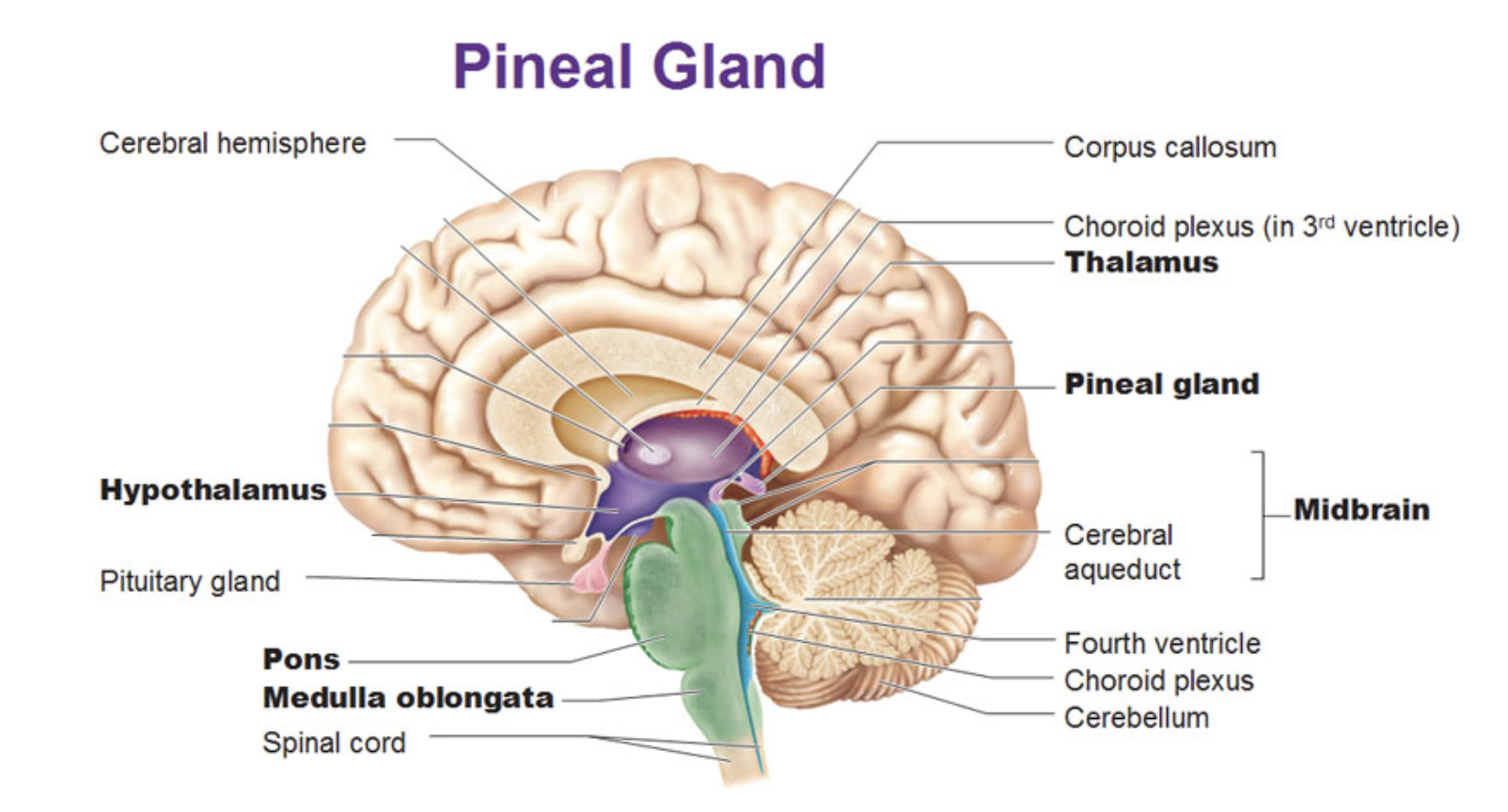
thalamus’s primary function
to process sensory information and regulate sleep.
The nurse should include that the thalamus transmits images, sounds, and sensations to the cerebral cortex, which are used to develop dreams during rapid eye movement (REM) sleep.
The thalamus transfers information from the senses to the cerebral cortex, which then processes the data and transfers it from short-term memory to long-term memory. Through most of the stages of sleep, the thalamus’s function is to allow the individual to block out external distractions. However, during REM sleep, the thalamus transmits images, sounds, and sensations, which influence the content of dreams.
hypothalamus
acts as the control center for the autonomic motor system
responsible for releasing hormones and regulating the body’s temperature (part of the diencephalon, which regulates body temp)
the suprachiasmatic nucleus located inside the hypothalamus assists in the regulation of the circadian rhythm.

what is the suprachiasmatic nucleus responsible for?
circadian rhythm, influencing sleep-wake cycles and hormonal release.
controls a client’s behavioral rhythm directly from the eyes through light exposure
Clients with a damaged SCN can experience an erratic sleep cycle since they are not able to regulate their circadian rhythm during light–dark cycles.
pineal glad
produces melatonin, a sleep hormone that regulates sleep-wake cycles.
located inside the diencephalon
brainstem
midbrain - controls many motor functions
pons - REM regulation
medulla oblongata - REM regulation
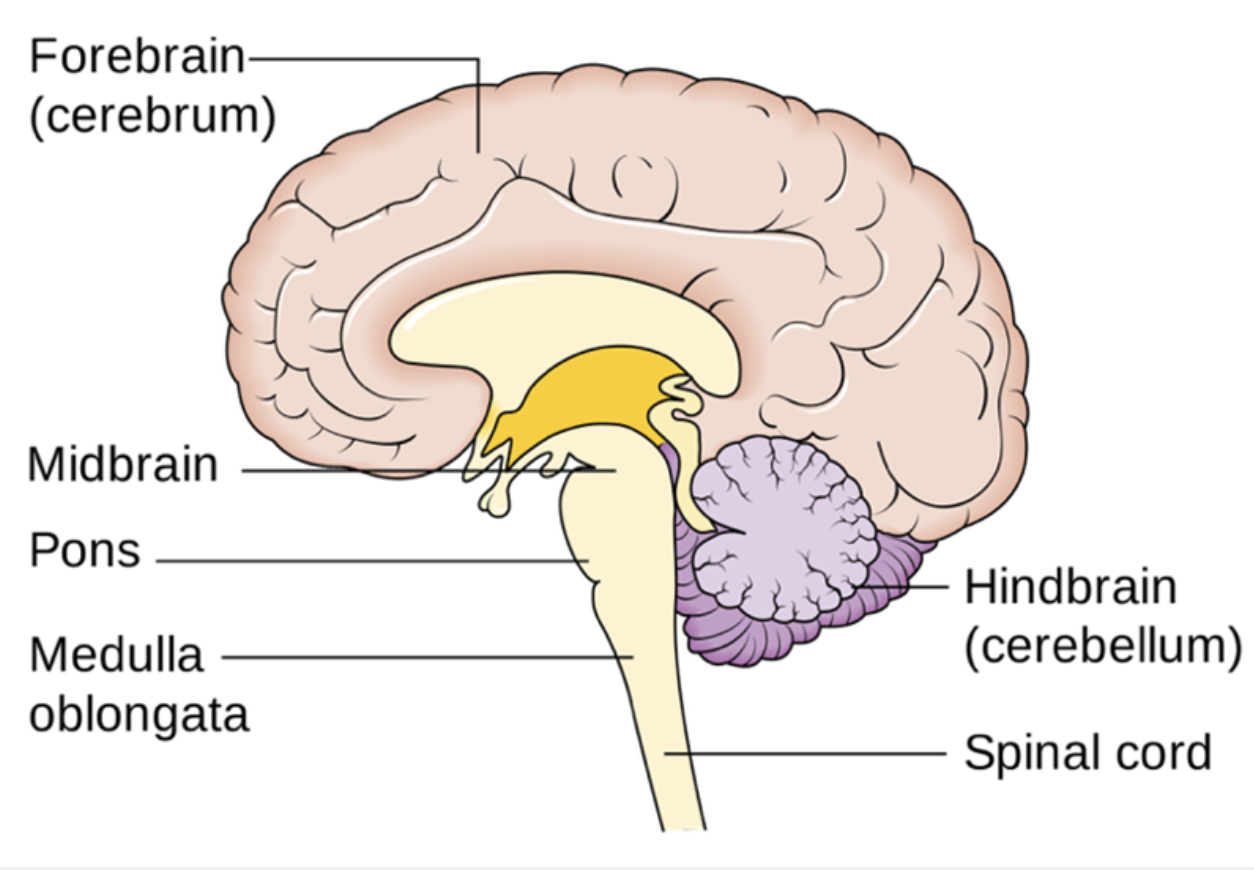
cerebral cortex
the outer layer of the cerebrum.
It controls the perception of sensory information and processes information to transfer it from short- to long-term memory
Two internal biological mechanisms involving physiology of sleep
the circadian rhythm and sleep–wake homeostasis
circadian rhythm
WHEN you feel sleepy
Internal Clock
Tells your body when it's time to sleep.
internal process that controls the sleep–wake cycle, reoccurring approximately every 24 hours. The circadian rhythm regulates a person’s biological clock, causing the individual to be sleepy at night and to wake on their own in the morning. Circadian rhythms synchronize with environmental cues such as light and temperature. However, the body can generally maintain circadian rhythms without prompts.

Sleep–wake homeostasis
HOW MUCH you need sleep
Sleep Pressure
Tells your body how much it needs sleep based on time awake.
assists the body to remember to sleep after a given time. The level of sleep is also controlled by, and will deepen according to, the amount of sleep deprivation that a client experiences.
gamma-aminobutyric acid (GABA)
a neurotransmitter that promotes sleep by inhibiting neural activity in the brain, helping to regulate sleep patterns and reduce anxiety.
sleep-promoting cells produce gamma-aminobutyric acid (GABA) within the hypothalamus and brainstem. GABA reduces the activity of the arousal centers.
SLEEP
necessary for developing and maintaining new pathways for learning and memorization
The brain and cells (neurons) continue to communicate with each other while a person is sleeping to assist in removing the toxins that build up in the brain while the individual is awake.
The brain and cells (neurons) continue to communicate with each other while a person is sleeping to assist in removing the toxins that build up in the brain while the individual is awake.
neurons
The brain and cells (neurons) continue to communicate with each other while a person is sleeping to assist in removing the toxins that build up in the brain while the individual is awake.
glymphatic system
a system that facilitates the clearance of waste from the brain during sleep, using cerebrospinal fluid to help flush out toxins.
main two stages of sleep
Non-Rapid Eye Movement (NREM) sleep - AKA The wake stage - first stage of sleep. Consists mostly of alpha and beta waves
Rapid Eye Movement (REM) sleep- associated with dreaming stage and has low muscle tone
each pattern cycling through approximately four to six times each night.
WAKE STAGE
the initial stage of sleep characterized by alpha and beta brainwave activity, marking the transition from wakefulness to sleep.
Consists mostly of alpha and beta waves
STAGE 1 of sleep (slowing down phase)
Non-Rapid Eye Movement (NREM) sleep
begins when greater than 50% of the alpha waves are exchanged for low-amplitude,
can last from 1 to 5 minutes
accounts for approximately 5% of the total sleep cycle.
can be easily awaken/lightest stage of sleep
sleep spindles
Sudden burst of oscillatory activity in a frequency range of 11 to 15 hertz lasting approximately 0.5 to 1.5 seconds.
helps with consolidation of memory
K-complex
Electrical waveform on an electroencephalogram seen mainly during stage 2 sleep cycle. '
plays a role in sleep cycle stability (maintains sleep)
STAGE 2 of sleep
Non-Rapid Eye Movement (NREM) sleep
Characterized by sleep spindles and K-complexes
Lasts about 20 minutes and accounts for approximately 50% of total sleep time.
Heart rate and body temperature decrease.
lasts for approximately 25 minutes
Stage 3 (NREM)
is the deepest sleep
characterized by delta electrical waves
If a person is awoken in stage 3, they may have mental cloudiness that persists for 30 to 60 minutes.
the immune system strengthens, and the muscles, tissues, and bones repair and regenerate.
Pulse and respirations are at their lowest rate.
As clients age, they have fewer stage 3 cycles and more stage 2 cycles. Stage 3 is very deep sleep and lasts up to 40 minutes.
Stage 4 (REM)
the dreaming stage - beta waves.
skeletal muscles remain atonic (loss of muscle tone) and do not move (which protects the individual from acting out their dreams).
Breathing is irregular and erratic, and heart rate may be elevated.
90 minutes after falling asleep. The initial cycle lasts 10 minutes
This stage can last up to 1 hour. As clients age, they have fewer REM cycles.
Stages of Sleep
Stage 1
Nonrapid eye movement (REM) sleep
Breathing remains regular and muscle tone is present
Body temperature starts to decrease
5% of a person’s total sleeping time
Stage 2
Non-REM sleep
50% of a person’s total sleeping time
No eye movements detected, heart rate and breathing decreases, and muscles relax
Stage 3
Non-REM sleep
The brain activity, through an EEG, shows the delta wave
Body’s short-term hibernation period
Immune system strengthens
Muscles and tissues relax
25% of a person’s total sleeping time
REM sleep
The heart rate and blood pressure increase
Muscle mobility and body temperature decrease further
Brain activity, as noted in an EEG, increases
20% to 25% of a person’s total sleeping time
how many times do sleep stages cycle?
During a typical night, sleep stages cycle approximately 4 to 6 times,
electroencephalogram (EEG)
Measurement of the brain's electrical activity.
Brain wave frequencies and amplitudes can be detected
how are the stages of sleep defined?
based on a client’s brain wave frequencies and amplitudes, together with eye and body movements and changes in vital signs.
alpha waves
Electrical brain waves in the frequency range of 8 to 12 hertz.
show that a client is awake but relaxed with closed eyes
When a person becomes drowsy and closes their eyes, the alpha waves dominate over the beta waves, breathing is normal, and skeletal muscle tone is present
Beta waves
have a frequency range of 13 to 30 hertz, indicate alertness and engagement
sleep patterns in older adults
Older adults’ (age 65 years and older) sleep patterns demonstrate a decrease in stage 3 sleep and an increase in stage 2 sleep. They wake up more frequently and take longer to fall asleep. Sleep disturbances can contribute to the development of chronic physical and mental health conditions, memory loss, and decreased quality of life.
SLEEP
helps prevent weight gain by decreasing production of ghrelin (the hunger hormone) and leptin (the decreasing-hunger hormone)
stengthens immune system
helps reduce the risk of type 2 diabetes by lessening the release of cortisol (the stress hormone):Increased levels of cortisol make it difficult for insulin to move sugar into cells.
sleep deprivation
When the body does not meet its biological sleep requirement, either chronically or acutely.
Total sleep deprivation
is caused by losing a night of sleep or staying awake for 24 hours or just for a lengthy period
Partial sleep deprivation
occurs when the client has decreased their sleep hours
if maintained the client can progress into a chronic sleep deprivation state.
Selective sleep deprivation
refers to the intentional or unintentional reduction of specific stages of sleep, typically impacting REM or deep sleep, while not affecting overall sleep duration significantly.
purposely strips the client of a cycle of sleep.
nonpharmacological interventions to improve sleep:
Avoid stimulants, such as caffeine, alcohol, and nicotine, at least 4 to 6 hours before bedtime.
Remove any unnecessary light and noise. Substitute calming white noise if necessary.
Establish a bedtime routine, such as taking a warm shower or bath before bedtime.
Keep the room dark, quiet, and at a comfortable, cold temperature.
Only go to bed when tired. If the client feels restless while attempting to sleep, they should go to another room and do a simple activity such as reading or listening to preferred music.
Keep a consistent sleep–wake cycle by going to bed and waking at the same time, which allows the body to fall into a biological rhythm.
Keep naps short.
Engage in a regular exercise routine, but avoid exercise within a few hours of bedtime, and maintain a healthy diet.
Remove all work items and televisions from the bedroom when possible. The bedroom should be associated with sleep and sexual activity only.
sleep disturbances during menopause
The overall prevalence of sleep disorders among females who are menopausal is highest during postmenopause and lowest during premenopause.
common sleep disorders that create poor sleep patterns
Insomnia, sleep apnea, narcolepsy, restless legs syndrome, hypersomnolence, and night terrors
insomnia
it can present as difficulty falling asleep or staying asleep, waking up early, or feeling tired when waking. There may or may not be an underlying mental or physical disorder present.
examples of some chronic illnesses have been associated with insomnia
heart disease, hypertension, endocrine dysfunction, and arthritis
apnea
condition in which inspiratory airflow ceases for at least 10 seconds
Hypopnea
lasts 10 seconds or longer and is associated with a decrease in oxygen saturation
central sleep apnea (CSA)
The reduction of the brain's transmission to the respiratory muscles resulting in the cessation of breathing.
happens from opioid overdose and heart failure
obstructive sleep apnea (OSA)
Recurrent episodes of upper airway collapse and obstruction while sleeping combined with waking from sleep.
polysomnography, a technology most likely to be applied in a sleep lab
associated with obesity, enlarged tonsils or inactive tongue
causes interrupted sleep, resulting in excessive daytime sleepiness, low energy, and lack of motivation
drowsiness even when sleeping a good amount of hours
Sleeping on the back, smoking, alcohol consumption can worsen condition
CPAP is a common treatment option for maintaining open airways during sleep. (continuous positive air pressure)
polysomnography
used to diagnose Obstructive sleep apnea in a lab
A test that documents heart rate, blood pressure, breathing, oxyhemoglobin saturation, brain wave patterns, body movements, and snoring patterns.
narcolepsy
Chronic sleep condition characterized by sudden sleepiness and sudden periods of sleep and difficulty staying awake
can experience nocturnal hallucinations, paralysis while asleep, and vivid dreams
cataplexyis a sudden loss of muscle tone triggered by strong emotions such as laughter
Cataplexy is
a sudden, brief episode of voluntary muscle weakness or loss of muscle tone while a person stays fully awake and conscious
Hypocretin,
a hormone responsible for maintaining alertness, is produced in the hypothalamus
Two types of narcolepsy are distinguished:
narcolepsy (NT1) with cataplexy - lack hypocretin in their nervous system & low muscle tone episodes
narcolepsy without cataplexy (NT2) - less clear what causes it
hypersomnia
A disorder of excessive daytime fatigue without improvement after more sleep.
some cases result from a dysfunctional autonomic nervous system, trauma to the central nervous system, and possibly genetic factors.
causes poor memory, depression, a short attention span, and irritability.
Restless legs syndrome (RLS), also called Willis-Ekbom disease
neurologic sensorimotor disorder that causes uncontrollable urge to move the legs, which is often accompanied by an uncomfortable sensation
worsens at night/bedtime and with inactivity affecting sleep
more present in older adults but can happen at any time
it can occur with iron or vitamin deficiencies and other medical conditions such as multiple sclerosis
runs in families/ could be genetic
Avoiding caffeine, nicotine, and alcohol
night terrors/sleep terrors
non REM sleep (most commonly in the first third of a night’s sleep)
particularly for children, and usually lasting 10 to 40 minutes
tends to go away in adolecense
patients act erratically during sleep but cannot recall when they wake up
associations can be genetics, presence of other sleep disorders, sleep apnea; anxiety, separation anxiety in child, PTSD in adults; sleep deprivation; and fever.
involve sleep waking & can happen a few times a week or month
do not wake them
Classes of pharmacological medications used for sleep therapy include
GABA agonists, nonbenzodiazepine hypnotics, melatonin, antidepressants, and antihistamines
GABA agonists or benzodiazepines, such as alprazolam, clonazepam, and lorazepam, can cause drowsiness, relax muscles, lessen anxiety, and cause retrograde amnesia
the most commonly prescribed sleep medications
Nonbenzodiazepine hypnotics (can cause hallucinations), such as zolpidem, zaleplon, and eszopiclone (also known as the z-drugs),
Melatonin may be the first-line medication recommended for those of all ages. It is cost-effective, non-habit forming, and has few adverse effects. However, its effectiveness may be limited.
over the counter medications that can help with sleep
doxylamine succinate and diphenhydramine can help clients sleep
can cause daytime drowsiness, dry mouth, visual disturbance, difficulty urinating, and constipation.
risks of massage therapy
Although the risks of massage therapy are low, side effects such as blood clots, nerve injury, or bone fractures, may occur, particularly with vigorous massage in those at risk for injury, such as older adults
comfort
obtaining relief from pain, negativity, and emotional and physical distress. Being comforted allows one to feel accepted, safe, stronger, and valued.
hand massage
non-pharmacological intervention that has been shown to reduce hand pain from neuropathy, lessen anxiety, improve sleep, increase hand strength, and decrease agitation and aggression in clients with dementia.
These positive responses are due to physiological events such as improvement of circulation, relaxation of muscles, and reduction in fatigue.
leptin
HUNGER REDUCING HORMONE
A hormone produced by adipose (fat) tissue that helps to regulate energy balance by inhibiting hunger, thereby helping to control body weight.