Chapter 4: Organization of the Cell, part2
 Call Kai
 Learn
 Practice Test
 Spaced Repetition
 Match
 Flashcards
 Knowt Play
1/20

Earn XP
Description and Tags
LIU, EENG304
21 Terms
Lysosomes
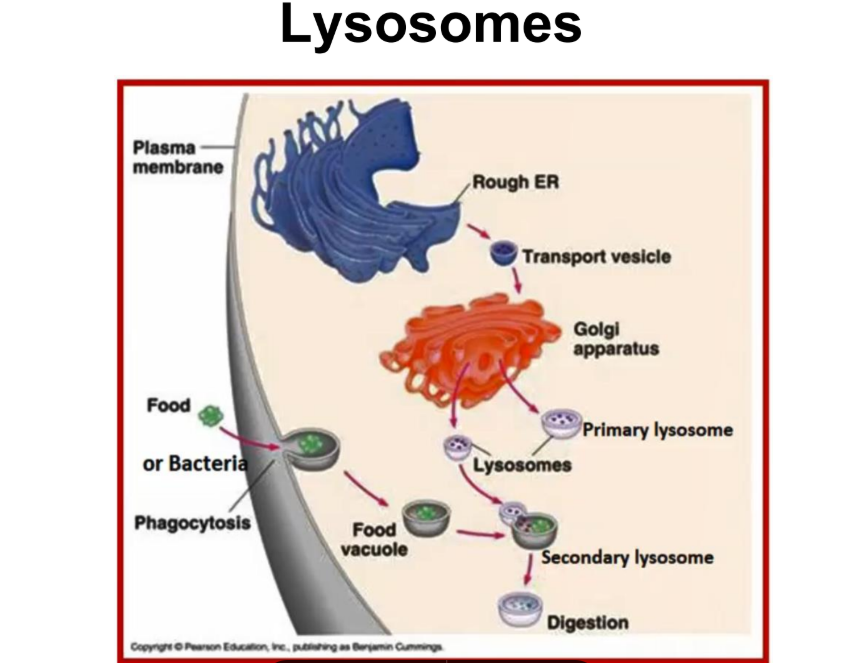
• Are organelles, sacs of hydrolytic digestive enzymes.
• Enzymes are made in rough ER, and protected by the membrane of the lysosome.
• Has 40 enzyme types, missing one enzyme can cause disease.
• Act in acidic pH (4.5–5.5).
• Have a sugar molecule, added in the lumen of RER, that acts as a signal for Golgi to send the enzymes to the lysosome and not to the outside.
•Function: break down engulfed bacteria(mainly by secondary lysosomes) , food, and debris.
Lysosomes: primary vs secondary
Primary: Bud off from Golgi, enzymes inactive, small in size.
Secondary: Forms when the primary lysosome fuses with another vesicle, enzymes activated, larger in size.
Pathway of lysosome
1.Rough ER synthesizes hydrolytic enzymes and adds a sugar tag
2. Enzymes are packaged into transport vesicles, then bud from the RER and travels to Golgi.
3. Golgi reads the sugar tag and sorts enzymes accordingly.
4. primary lysosome buds off from Golgi containing inactive enzymes.
5. Cell engulfs food or bacteria → forms a food vacuole (phagosome).
6. Primary lysosome fuses with the food vacuole, to become a secondary lysosome (enzymes activated).
7. Digestion occurs.
Peroxisomes
Are organelles found all eukaryotic (only) cells, floating in the cytoplasm mainly near mitochondria and chloroplasts.
Contains catalase (fastest enzyme in the body), which catalyzes the break down hydrogen peroxide (H2O2) into oxygen+water.
Functions: 1) Detoxifies Ethanol or other alcohols, which produces H2O2, 2) Detoxifies H2O2 using catalase, 3) breaks down fatty acids, 4)metabolise small organic compounds ,5) Absorb nutrients
What reactions happen in peroxisomes?
metabolising small organic compounds: RH₂ + O₂ → R + H₂O₂
detoxification(catalase): 2 H₂O₂ → 2 H₂O + O₂(simple) or H₂O₂ + AH₂ → 2 H₂O + A (for alcohols, the AH2 is the alcohol )
In which cells is peroxisome found in large numbers ?What happens if some H2O2 escapes the peroxisomes?
In cells that metabolise lipids
Membranes of the cell will be damaged.
Mitochondria
Site of aerobic respiration
2 to 8 micrometers in size
Is important in apoptosis (programmed cell death)
Has a double membrane: inner(has folds inwards to form cristae) and outer (smooth) membranes.
The space inside is called the matrix (fluid-filled), and the space between the inner and outer is called the intermembrane space
Aerobic Respiration
is the process by which cells use oxygen to break down glucose (or other fuels) to store energy as ATP. The by-products of this are CO2+H2O.
What is the purpose of cristae ?
To increase surface area of the inner membrane.
What only other organelle that has DNA?and why?
Mitochondria has identical 5 to 10 circular DNA (1% of the whole DNA), to perform subsequent division (multiply inside the cell and increase their number).
What are the structures and functions of the cytoskeleton?
Only Eukaryotic cells have the cytoskeleton
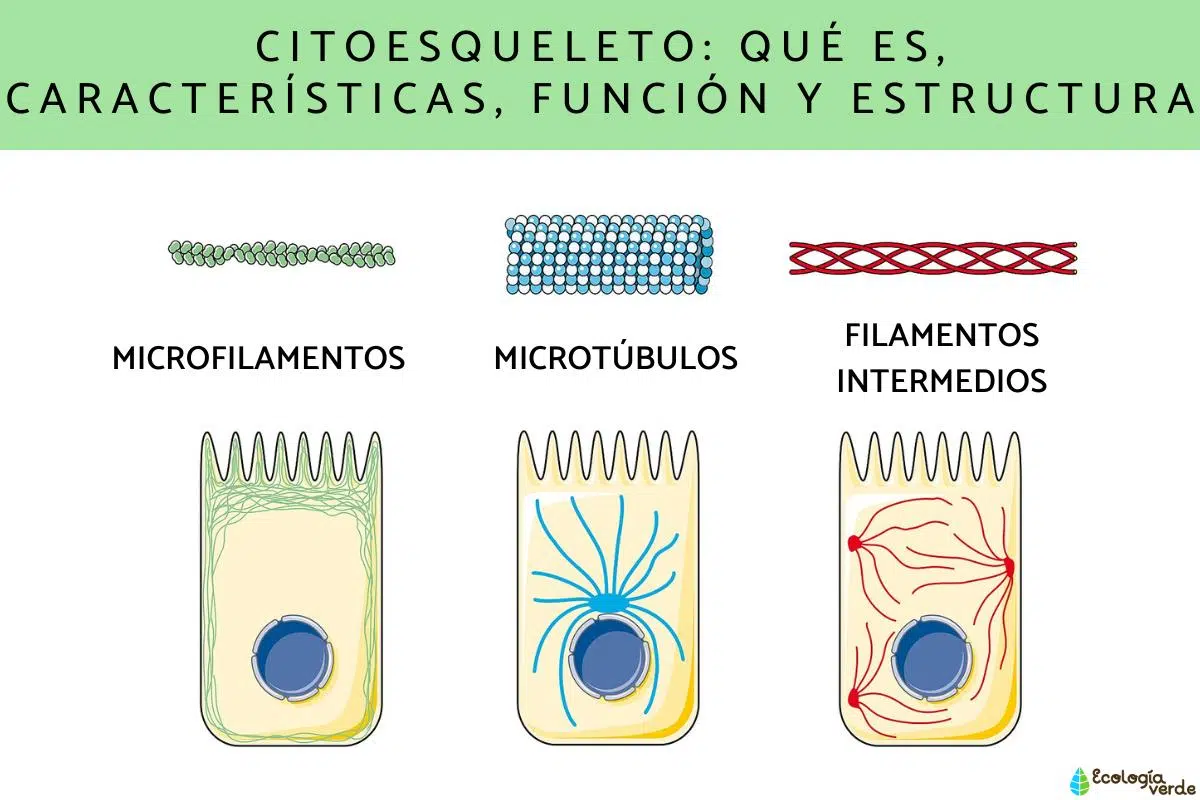
Made up of 3 types of protein filaments (cytoskeletal polymers): microtubules, microfilaments (both can be assembled and disassembled rapidly), and intermediate filaments (more stable). (note: All 3 are connected by proteins called cross-linkers which make the cytoskeleton into 1 big network.)
Function: Gives the cell its shape, strength,and movement ; Enables division and transport of material within the cell.
Microtubules
hollow tubulin cylinders (25 nm).
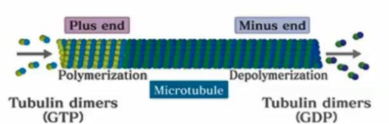
made of tubulin dimers, which are 1 α‑tubulin + 1 β‑tubulin.
1 turn around the spiral requires 13 dimers.
mt have two ends:
• Plus end → grows fast (new dimers added).
• Minus end → shrinks or stays anchored (dimers removed).
• This makes them dynamic: they can grow and shrink.
Proteins that are important for mt function: MAPs (Microtubule-Associated Proteins), has two main types: 1.Structural MAPs: Helps regulate mt assembly, cross link mt to other cytoskeletal polymers
2. Motor MAPs: Use ATP energy produce movement
MTOC (Microtubule-Organizing Center)
Motor MAPs
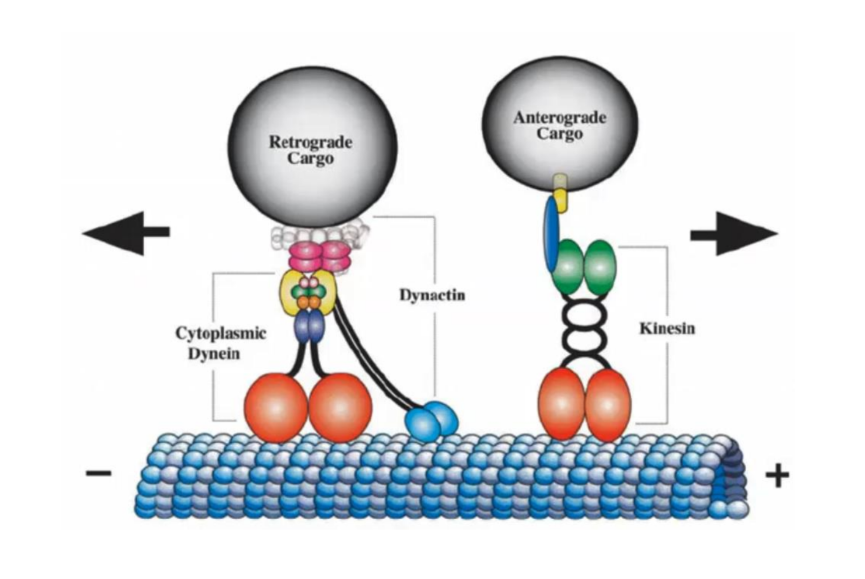
• Two motor proteins: Kinesin → walks toward the plus end (outward, - —> +, anti-retrograde)
Dynein ← walks toward the minus end (inward, + —> -, retrograde)
(both need ATP)
• Dynactin protein assures retrograde movement by linking the dynein to mt and the cargo.
MTOC
MTOC (Microtubule-Organizing Center): Main one in animal cells is the centrosome (important in cell division), acts like an anchor that holds the minus end.
Centosome contains 2 centrioles each having a 9 x 3 arrangement of microtubules.
Intermediate Filaments
Are tough, flexible, fibers about 10 nm in diameter
Abundant in regions of a cell that may be subject to mechanical stress applied from outside the cell.
Stabilize cell shape and strengthen cytoskeleton.
Microfilaments
• Consists of 2 intertwined strings of bead-like actin molecules (diameter=7 nm)
• important in cell movement
Is the cytoskeleton dynamic or static?
It is highly dynamic, cte change
Glycocalyx
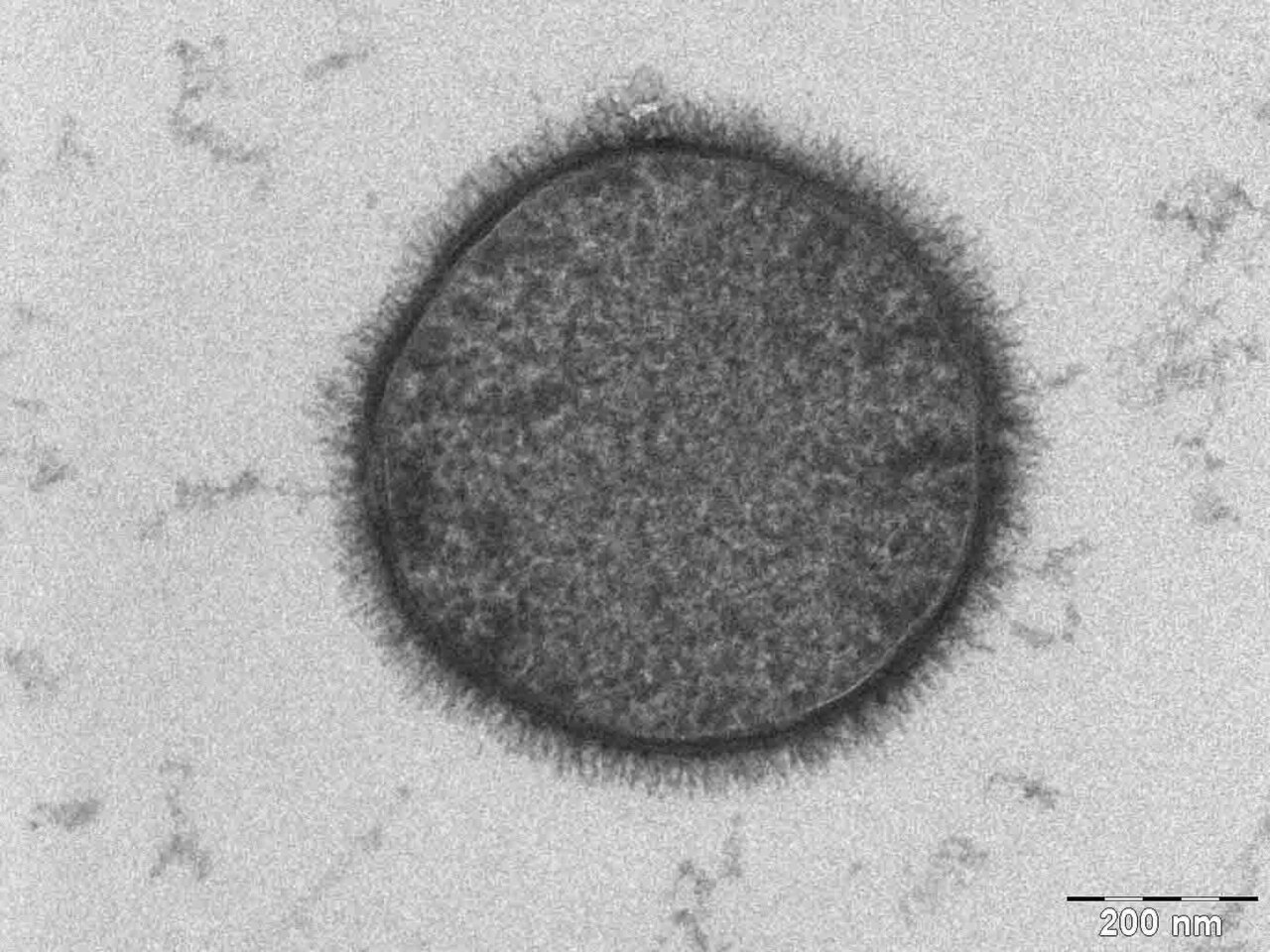
Polysaccharides that surround the cell (Sugar Coat), and extend from plasma membrane, by which they branch off (moieties) the membrane glycolipids and glycoproteins.
Functions: cell-cell \ self- nonself recognition, communication, and intercellular adhesion.
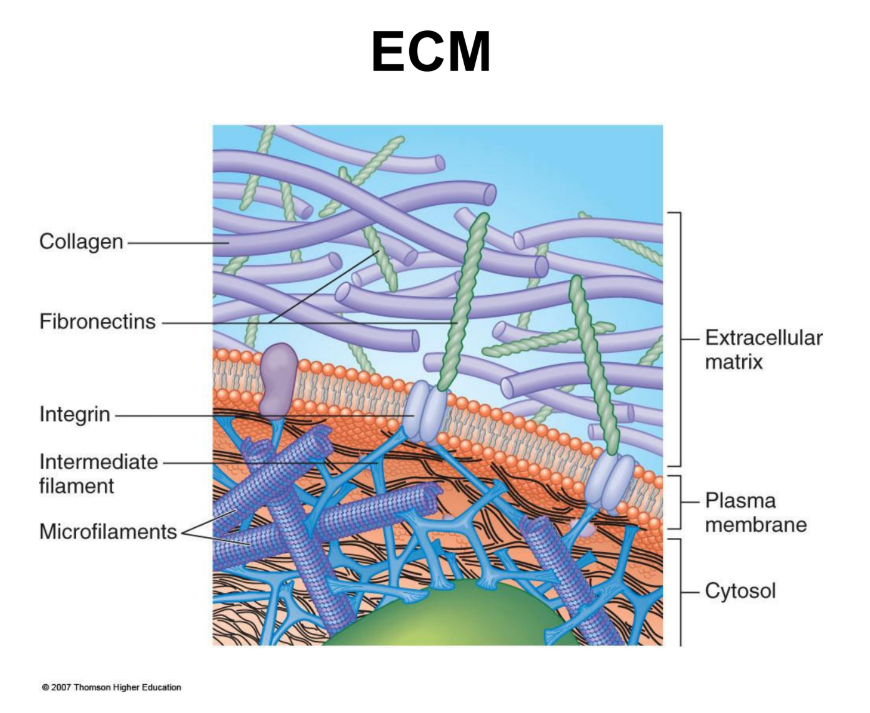
ECM
Extracellular Matrix: Surrounds many animal cell, made of carbohydrates and proteins
Integrins
Receptor proteins in the plasma membrane.
Fibronectins
Glycoproteins in the ECM that bind to integrins.