CHAPTER 14: EXAMINATION, DIAGNOSIS, TX PLANNING OF THE INFANT-TODDLER
 Call Kai
 Learn
 Practice Test
 Spaced Repetition
 Match
 Flashcards
 Knowt Play
1/38

Earn XP
Description and Tags
sas + ppt
39 Terms
infant oral health
in 1986, the american academy of pediatric dentistry recommended that the first visit occur within 6 months of the eruption of the first primary tooth, since many children by age 3 had already experienced dental caries
Goals or pillars of INFANT ORAL HEALTH
Break the Cycle of Early Childhood Caries
-Early childhood caries progresses rapidly and by the time treatment is sought, the disease can be extensive enough to warrant the use of sedation or GA. -high cost
2. Disrupt the Acquisition of Harmful Microflora
- Vertical transmission of MS from caretakers,primarily mothers.
Can be prevented by:
- establishing a low-sugar diet
- adequate flouride exposure
-effective oral hygiene practices
Prenatal counseling coupled with maternal oral health and infant oral health form the chain in prevention of bacterial acquisition.
3. Manage the Risk/Benefit of Habits -Nonnutritive Sucking habits
The goal would be a gentle waning of the habit, which would negate the need to correct habit- related malocclusions.
4. Establish a Dental Home for Health or Harm
-The dental home should be established no later than 12 months of age and includes referral to dental specialist when appropriate(AAPD)
5. Impart Optimal Fluoride Protection
-Fluoride remains dentistry’s best preventive tool, and optimal fluoride exposure is the foundation of early intervention
-no more than a smear or rice-sized amount of toothpaste for children under age 3
6. Arming the Parents Through Anticipatory Guidance
-Parental involvement has become a cornerstone of child health care.
risk assessment
anticipates caries progressions or stabilization
fosters the treatment of the disease process instead of treating the outcome of the disease according to AAPD
individualizes, selects, determines frequency of preventive and restorative treatment for a patient
gives an understanding of the disease factors for a specific patient and aids in individualizing preventive discussions
fish-owns multifactorial model
time
child (host, teeth, biology)
family (socioeconomic status)
community (dental care system, physical environment)
anticipatory guidance
it is the complement to a risk assessment
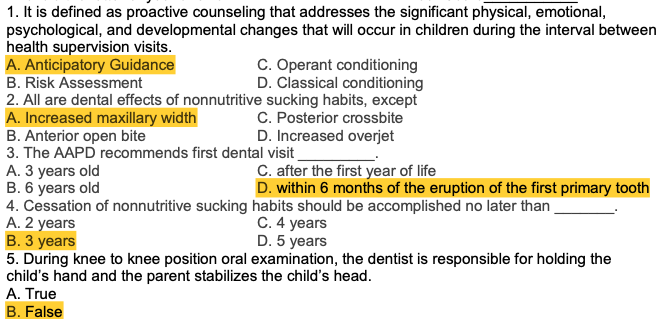
defined as proactive counseling that addresses the significant physical, emotional, psychological, and developmental changes that will occur in children during the interval between health supervision visits
common topics discussed:
teething
caries prevention
anticipatory guidance of 6-9 months
the sitter/roller
rolls over, opens for a spoon, fear of separation
manage teething symptoms, transition to open cup begins, never sleep with a bottle
6 months → fear of separation (mawala siya ig 19 months)
anticipatory guidance of 12-13 months
the walker
stands/walks, feeds self, fear of strangers
extreme trauma, fall risk, transition off bottle completely, establish dental home
7-13 months (fear of strangers)
anticipatory guidance of 24 months
the toddler
3-4 word sentences, runs, kicks ball
limit snacking to 3 structured times/day
active habit management (prepare for cessation by 36 months)
teething
parents should be advised not to use teething products under 2yo that contain benzocaine because it can lead to methemoglobinemia (a condition which reduces the amount of oxygen carried in the bloodstream and can result to death)
safe, non-toxic teething toys, avoid homeopathic teething tables (associated with seizures and respiratory issues)
can cause a slight temp rise, but a true robust fever indicates a medical illness
symptoms:
gingival irritation
irritability
drooling
oral examination and assessment triage of 0-3 years
use of dental chair is unnecessary and the least preferred approach
crying is a normal response and clinically useful as it affords a wide-open mouth for the exam
preferred approach to infant examination is the KNEE TO KNEE POSITION in which a parent and a dental provider sit facing each other
knee to knee position
knees should touch and create a flat surface on which the child can rest
the infant initially is held facing the parent and then reclined into the lap of the dentist
the parent is responsible for holding the child’s hand and the dentist stabilizes the child’s head
lift the lip technique
recommended periodically based on the child’s risk to developing caries.
instruct parents to check their child’s teeth for initial signs of early childhood caries by lifting the child’s lip to look for white spot lesions
establishing the normal clinical baseline
head/scalp → disproportionately large, open fontanels
temporomandibular joint → short condyles, flat fossae
neck → weak musculature, soft airway cartilage
oral cavity → high frenula placement on alveolus; prominent median raphe/rugae on palate
infant oral pathology and unusual clinical findings
ankyloglossia (tongue-tie)
natal or neonatal teeth
riga-fede disease
ankyloglossia (tongue-tie)
may be associated with breastfeeding difficulties
failure to thrive, swallow, articulation
tx: frenotomy
natal vs neonatal teeth
can be aspiration risk, nursing obstacle
90% are primary (left if not highly mobile)
10% supernumerary (extract)
85% occurs on the mandible
natal → present at birth
neonatal → present within 30 days of birth
riga-fede disease
traumatic ulcer of ventral surface of tongue from tooth
may cause active bleeding and discomfort
tx:
observation
cessation of breastfeeding
smoothing/removal of the offending tooth
nonnutritive sucking habits
normal developmental characteristic
according to psychoanalytical theory, these habits (such as pacifier, thumb or finger sucking) arise out of erotic pleasure derived from oral simulation
persistence beyond oral phase (3y.o) reflects psychological disturbances suggestive of an inability to manage stress or anxiety → deleterious dental problems
effects of nonnutritive sucking habits
reduced overbite, increased overjet
protrusion of the maxillary incisors (anterior overbite)
narrowing of the maxillary posterior arch width (posterior crossbite)
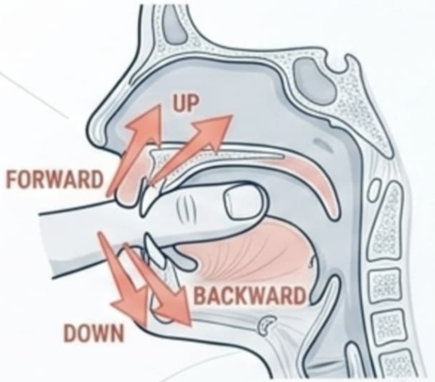
digit sucking
weight of the arm applies upward/forward pressure on mx incisors & downward pressure on mn incisors
results to:
increased overjet
ant. open bite
may produce greater severity of malocclusion
harder to break
pacifier habits
easier to discontinue, usually less severe effects
forces tongue down (outward pressure on lower arch)
sucking activates cheek muscles (medial squeezing force on upper arch)
results to:
narrowed mx arch
wider mn arch
post. crossbite
more associated with class II canine relationship
less likely to self-correct

malocclusion problems of nonnutritive sucking habits
anterior open bite
increased overjet
class II canine relationship
decreased maxillary arch width
increased mandibular arch with
recommendations for nonnutritive sucking habits
elimination of habits before 12 or 24 months is unrealistic
cessation of nonnutritive habits no later than 36 months of age to prevent lasting malocclusion
collaborative efforts and effective communication between medical and dental homes is essential to prevent oral disease and promote oral and overall health, especially among young high-risk children.
4 approaches to stop thumbsucking habits
counseling
age 2-3 yo
promoting spontaneous cessation
substituting pacifier for a thumb if necessary
reminder therapy
appropriate for those who want to stop the habit but need some help to stop completely
an adhesive bondage taped to the offending finger can serve as a constant reminder not to place the finger in the mouth
reward therapy
a contract is agreed upon between the child and parent or between the child and dentist. the contract simply states that the child will discontinue the habit for a specified period of time and in return he/she receive a reward if the requirements of the contract are met.
the reward does not need to be extravagant but special enough to motivate the child
appliance therapy
age 4-6 yo
the child should be given an opportunity to stop the habit spontaneously before the permanent teeth erupt
if treatment is selected as an alternative, it is generally undertaken between the ages 4 and 6 years.
should only be used when reminder and reward therapy have failed
fluoride size for <3y.p
smear sized / rice-sized amount
brush twice daily, esp bedtime
fluoride size for >3y.o
pea sized
brush twice daily, esp bedtime
dietary transitions
limit juice to 4-6 oz daily at meals only
transition to an open cup as soon as motor skills allow
breastfeeding is optimal, but prolonged breastfeeding (>12mos) combined with other carbohydrates increases caries risk
abnormal oral habits
tongue thrusting
lip sucking
thumb sucking
[lip & thumb sucking can cause ant. open bite]
lip sucking
labioversion of mx anterior
thumb sucking
anteriors → mx incisor labially pushed and mn incisor lingually deepening of the palatal vault
[mx incisors have mamelons (lobes) [smallest is in the middle]
oral screen
appliance for cheek or lip biting
tongue guard (crib)
appliance for tongue thrusting (blue grass → spin bead roller)
bite block
appliance for class III
lip bumper (plumber)
appliance for hyperactive mentalis muscle
night guard / bite plate
appliance for bruxism
oral vestibule screen (shield)
appliance for mouth breathing
palatal crib
appliance for thumb sucking
appliances for abnormal oral habits
oral screen
tongue guard (crib)
bite block
lip bumper (plumber)
night guard / bite plate
oral vestibule screen (shield)
palatal crib
practice question in sas