1 Connective tissue/Types of connective tissue
 Call Kai
 Learn
Learn Practice Test
 Spaced Repetition
 Match
Match Flashcards
 Knowt Play
1/28

There's no tags or description
Looks like no tags are added yet.
Name | Mastery | Learn | Test | Matching | Spaced | Call with Kai | Chat |
|---|
No analytics yet
Send a link to your students to track their progress
29 Terms
Con tiss. Collagen
glue- like protein( gelatin is derived from collagenous tissues)provides both structure and flexibility to a tissue
compressive strength(resists crushing)
Con tiss. Reticular
netlike fibers are very small collagenous fibers arranged in a loose irregular configuration to provide supprt to a tissue
Con tiss.vElastiin
elastic material allowing a tissue both stretch and to recoil(tensile strength)
Connective tissue??
characteristics- considerable intercellular material(matrix) binding cells
supporting and binds structures together
Tendons
attach muscles to other things ( typically bone, some cartilage or other muscles)
composed of dense connective tissue and broad sheets of tendinous material
Aponeuroses- may cover a muscle or connect muscles with structures they move
Ligaments
typically elastic cords that joins bones and cartilages.
ligament term applied to membranes refers to epithelial tissue*
Fasciae/ Fascia
dense fibrous tissue that can’t be identified as tendon, aponeuroses, or ligament
-more irregularly arranged fibers - typically encases organs and muscles
Subcutaneous fascia
covers the body beneath epidermis , where fat accumulates
Types of cont tiss Loose cont tissue
soft, viscous matrix material
binds parts together while allowing some movement between them
Types of cont tiss Areolar tissue
loose, elastic, mesh-like connective tissue without internal organization
-forms a bed for skin and mucous membranes, supports organs and fills interstitial spaces(spaces between organs)
Types of cont tiss Adipose tissue (fat tissue)
high concentration of fat cells
-found just beneath the skin and between muscles and organs

Types of cont tiss Vascular tissues(fluid tissues)
specialized connective tissue that exists in fluid form
two types
Blood blood cells (corpuscles) and platelets suspended in a matrix of plasma (fluid)
Lymphoid tissue tissue containing lymph cells (lymphocytes). Found in lymph nodes.adenoides and tonsils
Types of cont tiss Dense connective tissues
more closely packed matrix material, and a higher proportion of fibers,especially collagen
Types of cont tiss White fibrous tissue
tightly packed collagen fibers arranges parallel to eachother
-compressive strength
often found in ligaments joining bone and cartilage and as a covering to bone (periosteum) or muscle (fascia)

Types of cont tiss Yellow elastic tissue
contains higher proportions of elastic fibers then whit fib tissues so more flexible
-tensile strength
occurs in regions where recoil properties are needed such as respiratory system
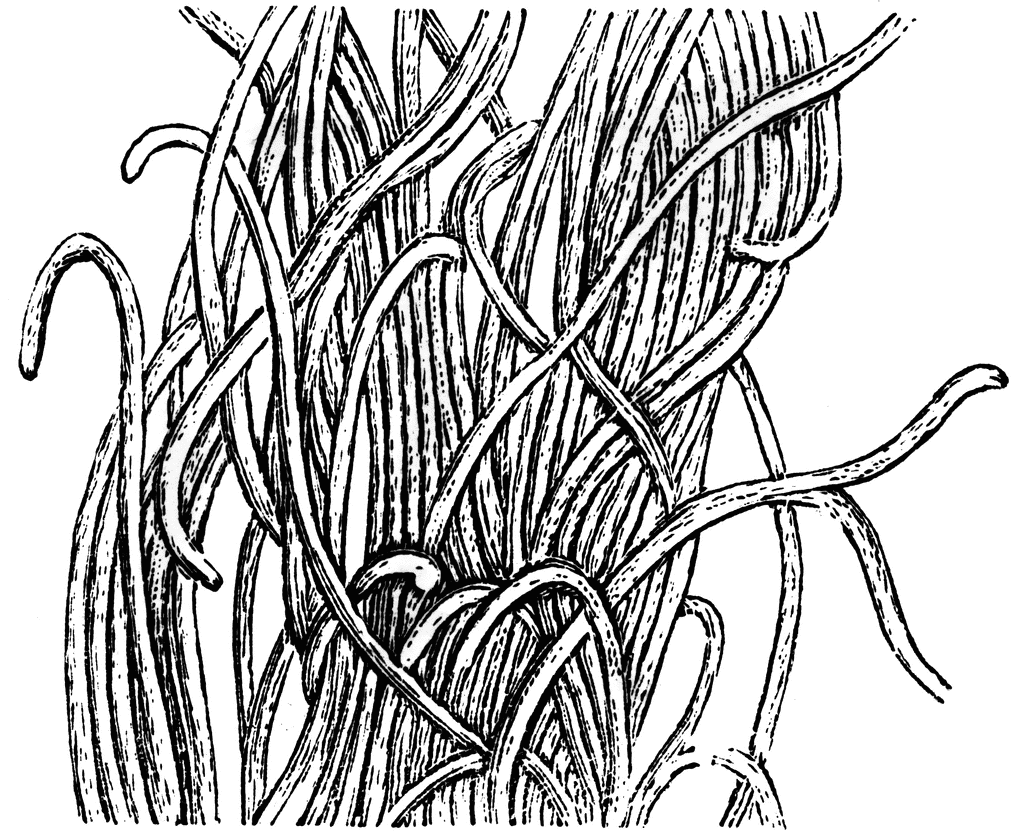
Types of cont tiss Cartilage
provides strength and flexibility
-matrix contains regions of lower density (lacunae) in which cartilage cells ( chondrocytes) and collagen fibers are suspended
perichondrium- tough fibrous membrane covering the non- articulating surfaces of cartilage
Types of cartilage Hyaline cartilage
smooth,glassy cartilage with high proportion of cartilage
-found at joints between bones and respiratory tract and may go calcification (hardening) with age
Types of cartilage Yellow (elastic) cartilage
more rubbery than hyaline bc it contains elastin fibers in addition to collagen
-found inexternal ear, epiglottis and some small laryngeal cartilages
Types of cartilage Fibrocartilage
densely packed collagen fibers and provides cushion at some joints especially intervertebral disk
Bone
%30 collagen and matrix is calcifies
-resists stretching and compression and covered in fibrous membrane the periosteum extends along the bone proper and tightly bound to the bone at tendinous junctions
types of bone Compact/dense
bone tissue forms the cortex(outer shell) of most bones.
contains microscopic channels( the Haversian canals) permits passage of blood and nerves
matrix and tissue fibers form layers (lamellae) within which the bone cells ( osteocytes and osteoblasts) are found in lacunae
types of bone Spongy or Cancellous
appears porous to naked eye and contains bone marrow which produces blood cells and plasma
osteoblasts
building and adding bone mass
osteocyte
bone cells
osteoclasts
consume
Musc tissue Striated (skeletal, somatic)
long cross striped fibers, attaches to the skeletal system and can respond to voluntary processes
Musc tissue Smooth(visceral)
sheet like, spindle shaped cells without lateral striations
-tissue associated with organs(not heart)
responds to autonomic(involuntary) stimulation and shows slow, steady contractions, found in stomach, intestines, blood,vessels and bronchial tubes
Cardiac muscle( myocardium)
heart, combo of smooth and striated muscle under autonomic control
Muscular tissue
Long slender cells that have ability to contracts in response to electrochemical stimulation stimulation(from nerves)