Atoms, Acids, Bases
 Call Kai
 Learn
Learn Practice Test
 Spaced Repetition
 Match
Match Flashcards
 Knowt Play
1/29

There's no tags or description
Looks like no tags are added yet.
Name | Mastery | Learn | Test | Matching | Spaced | Call with Kai | Chat |
|---|
No analytics yet
Send a link to your students to track their progress
30 Terms
formula for orbitals in a shell
n²
electron config. for trans. metals cations
take from 4s before 3d
the first ionization energy
is always smaller (less) than the second and so on and so forth
electron geometry is
the one I like; it’s easier
combustion rxns form
CO2 and water
ammonium

nitrate

sulfate

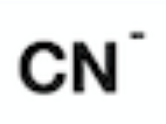
cyanide
phosphate

carbonate

acetate

permanganate

chromate

dichromate

diatomic atoms acronym
B R I N Cl H O F

highest electronegativity atoms acronym
F O N Cl Br I S C~H

relationship b/w charge and lattice energy
directly proportional
relationship b/w size and lattice energy
inversely proportional
relationship b/w bond strength and lattice energy
directly proportional
relationship b/w atomic radius and bond length
directly proportional
coordination covalent bond (someone is a simp in this bond)
bond where a non-metal with a lone pair donates both electrons to form the bond
strong acids: halogens
HCl, HBr, HI
strong acids: oxygen heavy
H2SO4, HNO3, HCLO4
strong bases: Group 1 hydroxides
ALL OF THEM, ex: NaOH, CsOH
strong bases: Group 2 hydroxides
ONLY 3: Ca(OH)2, Sr(OH)2, Ba(OH)2
strong bases: Group 1 oxides
ALL OF THEM, ex: Li2O, Na2O
strong bases with amides
a metal bonded to an amide (NH2)
the polyprotic acid version of itself with the most protons is
the most acidic and has the higher Ka

purposes of Henderson-Hasselbalch
used to solve for pH of a buffer & tells you relative amounts of A- and HA needed to maintain a pH