The normal microbial flora and pathogens
 Call Kai
 Learn
Learn Practice Test
 Spaced Repetition
 Match
Match Flashcards
 Knowt Play
1/32

There's no tags or description
Looks like no tags are added yet.
Name | Mastery | Learn | Test | Matching | Spaced | Call with Kai | Chat |
|---|
No analytics yet
Send a link to your students to track their progress
33 Terms
what is microflora and why is it important?
100 trillion microorganisms live in our bodies and on average 1500 species of microorganism inhabit the gut of animals and humans.
These microbes have numerous beneficial functions relevant to supporting life such as
digesting food
preventing disease-causing pathogens from invading the body
synthesising essential nutrients and vitamins.

types of pathogens
Bacteria, fungi, yeast, viruses and parasites
Pathogens can be divided into two main groups:
• Opportunistic pathogens
• True pathogens
opportunistic pathogens
• Under certain circumstances, members of the commensal microflora can result in endogenous or opportunistic infections.
• Some microorganism that are not normally members of the “normal microflora” can provoke exogenous infections when introduced into normally sterile sites of the body.
• Commensals of the mucosal surfaces may also cause disease if body defences are compromised due to viral infections (secondary infection) or following trauma, surgical interventions, immunosuppression or other environmental stress.
• Changes in diet or use of certain antibiotics can result in disruption of the normal flora, thus causing clinical disease
true pathogens
• True pathogen are infectious agents that can cause disease in virtually any susceptible host.
• Also known as primary pathogens.
• Satisfy Koch’s postulates.
• Possess some virulence factors (fimbriae-lil hairs allow stick to host cells, flagella-swim through mucus, toxins-break down tissue etc.).

Koch’s postulates
1. The organism must be found in abundance in animals suffering from the clinical disease, but not from healthy animals.
2. The organism must be isolated from the diseased animals and grown in pure culture.
3. The disease must be reproduced when a pure culture of the organism is introduced into healthy, susceptible animals.
4. The same organism must be re-isolated in pure culture from the experimentally infected animals.
N.B. There have been a number of updates to Koch’s postulates – The original postulates are not appropriate for all pathogens! 1984

Beneficial roles of the normal microflora
• Useful for the enzymatic breakdown of feed in ruminants.
• Certain vitamins or their precursors are synthesised by the normal flora (e.g. B complex, vitamin K by E. coli and Bacteroides fragilis).
• By-products – Butyrate from commensals improves enterocyte health.
• The normal flora plays a role in controlling the multiplication of pathogens:
- Competitive Exclusion (CE)
- Bacteriocins
- Immune stimulation
- Physical disruption


protexin/probiotics given to rabbits and rodents-theyre very susceptibel to antibiotic induced diarrhoea - so you can give probiotics at the same time and after
rabbits and horses - hindgut
ruminants - foregut

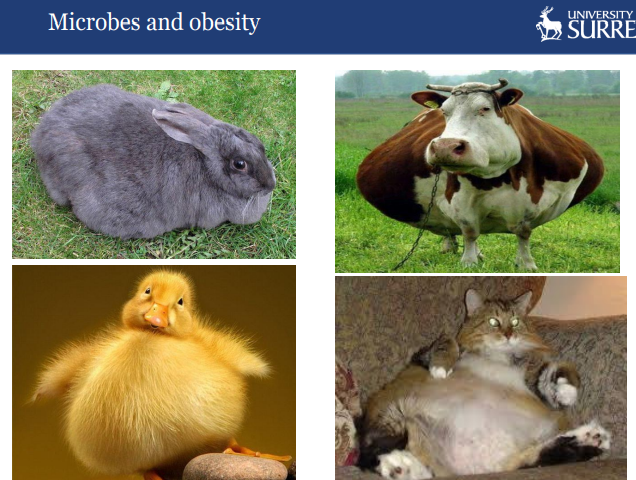
there may be a link between microbes and obesity - like dry feeds have probiotics and prebiotics(food for probiotics)

role of bateria in gut health
Mainly in the Foregut
• The bacteria in the gut breakdown cellulose and use the glucose for their own metabolic needs (fermentation).
• As a waste product of fermentation, the bacteria release volatile fatty acids – VFAs (e.g. acetate, butyrate & propionate) which the animal utilises for energy.
Mainly in the Hindgut
• Bacteria ferment carbohydrates into short-chain fatty acids (SCFA).
• Bacteria convert dietary and endogenous nitrogenous compounds into ammonia and microbial protein, and synthesise B vitamins.
• Absorption of SCFA provides energy for the gut epithelial cells and plays an important role in the absorption of Na and water.
For every one human genes we have
there are 100 associated genes within our microbiome.
Antimicrobial resistance and the normal flora
pathogenic bacteria can have same antibiotic resistance as the gut bacteria reservoir

microflora of the skin
The skin acts as a barrier that limits invasion and growth of pathogenic organisms
BUT
• A variety of microorganisms reside on the skin (bacteria, fungi, yeast, viruses, mites, etc.).
• Bacterial components of the skin flora can be commensal, symbiotic (mutualistic) or pathogenic.
• Commensals play a protective role – competitive exclusion e.g. against bugs tryna cause infection
• Common bacterial skin flora: mainly Gram+ve (Staphylococci, Streptococci, Corneybacterium), but occasionally also Gram-ve; some are pathogenic - Dermatitis.

microflora of the oral cavity and upper respiratory tract
• The oral cavity and the upper respiratory tract support a diverse microflora (sooo much oxygen prsent right - aerobic microbes present)
• Microflora varies from species to species (e.g. cow regurgitating introduces bacteria in that area, also caecotrophs like rabbits introducing other bacteria)
• Age, nutrition, environment, gender, etc.) can all influence the microflora.
• The lower RT is normally free of bacteria, but when compromised it can be colonised by bacteria normally resident in the upper RT.
• Pasteurella multocida, Mannheimia haemolytica, Haemophilus somnus, Mycoplasma bovis, histophilus somni and Mycoplasma bovirhinis all important components of the microflora of the URT.
• Oral cavity: Streptococci, Staphylococci and various anaerobic and aerobic bacteria – Treponemes.


microflora of the GIT
• Diverse microflora - bacteria, yeasts, viruses, fungi, protozoa, etc. • Bacterial components of the gut flora can be commensal, symbiotic (mutualistic), or pathogenic.
• Flora may vary from species to species.
• Flora may vary depending on age and the specific anatomical location.
• Enterobacteria (E. coli, Proteus spp., Klebsiella spp., Citrobacter, Yersinia, etc.).
• Anaerobic bacteria (e.g. Clostridium spp., Bacteriodes spp., Fusobacterium spp.).
• Lactic acid bacteria are important component of the GIT flora – Lactobacillus, Enterococci etc.
• Some aerobes such as Bacillus can inhabit the gut and gain oxygen from the enterocytes (bacillus is a good bacteria given to us for health)

microflora of the hoof
Fusobacterium necrophorum and Bacteroides melaninogenicus, Dichelobacter nodosus. Treponema spp., Peptococcus and Campylobacter – Cattle and sheep Digital dermatitis.
• Commonly isolated from the environment in which cattle and sheep inhabit.
• Organisms can survive in the soil for several months.
• F. necrophorum is present as a commensal in the rumen and faecal matter.
• D. nodosus is a commensal of the interdigital space in sheep, causing foot rot only under certain conditions.
• F. Necrophorum – Commensal in the horse foot - implicated in thrush in horses


microflora of the eyes and ears
Ear
The ear wax (cerumen) prevents the flora of the skin and outer ear (e.g., Staphylococci, Streptococci, Pseudomonas spp., etc.) from entering the inner ear canal.
• The diversity of the flora varies from species to species.
• Flora consists of bacteria, yeasts, fungi, viruses and protozoa.
• Bacterial flora of the upper ear: Mainly Gram +ve (Staphylococci, Streptococci, etc.), sometimes Gram-ve (e.g. E. coli, Branhamella (Moraxella), Pseudomonas spp. - on the skin of the ear).
• Pseudomonas is not normally part of the predominant normal flora of the ear (normally associated with infection). Mites are also not part of the normal flora.
Eye
• A microflora is normally present on the conjunctiva (Streptococcus and Staphylococcus). - caution giving antibiotic to eye

what happens if the flora is disrupted?
Dysbiosis (dysbacteriosis) is a term for a microbial imbalance or maladaptation on or inside the body
• Long term or excessive use of antibiotics disrupts the microflora and facilitates the overgrowth of fungi/yeast (Candida albicans) - resulting in infections (thrush in the oral cavity or the reproductive tract).
• Damage to skin (burns, trauma, etc.) resulting in infections.
• Enterocolitis (inflammation of both the small intestine and the colon) due to overgrowth of Clostridium difficile (Clostridioides difficile) following the long term/excessive use of some antibiotics.
• Excessive use of feed concentrates in young ruminants may result in enterotoxaemia due to overgrowth of Clostridium perfringens.
• Certain types of feed (fish meal) can result in overgrowth and displacement of C. perfringens – Necrotic enteritis (fatal bacteria disease in intestines) in poultry.
the microflora in health and disease
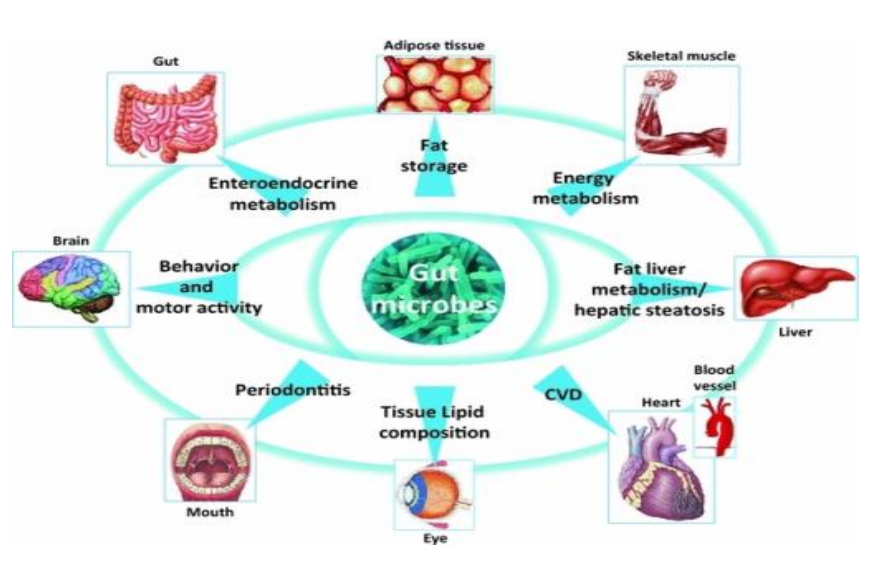

work they do at uni
relationship between microflora and immune system?
does giving probiotic strengthen them?
The microflora and diabetes
It is increasingly evident that gut microbes may shape the host metabolic and immune network activity and ultimately influence the development of obesity and diabetes

changes in the microflora influence gut health
Gut permeability changes with diabetes – Link to change in microflora
71pre - more permeable - diseased - diabetes may make the gut more permeable to bugs - infection risks?
control - more resistance in the gut - less permeable

CRGV in dogs; do microbes play a role? another work they do
dont know the cause - linked to bugs?


haylage - fermented grass
horses fed haylage developed equine metobolic syndrome more quickly cos change in type of microflora and nutrient availability
first month of life - microflora is so important - otherwise afffects future success
affects training, how likely they won a race etc

why modulate the microflora?
• Livestock are often exposed to stressful conditions, which can unbalance their intestinal flora.
– This results in:
• Low weight gain
• More frequent diarrhoea
• High morbidity and mortality rates.

benefits of modulating the microflora?
• Novel methods of controlling diseases
• Reduce pathogen carriage (e.g. Campylobacter)
• Improve feed conversion ratios
• Improve environmental conditions for animals
• Improve welfare standards for animals
• Alternative to antimicrobials
how can we modulate the microflora?
• Probiotics
• Prebiotics
• Synbiotics
• Postbiotics
• Next generation growth promoters
• Metals
• Phage therapy
• Natural plant extracts (Phytochemicals)
• Vaccines
• Acidifiers
• Enzymes
• Faecal transplants
what are probiotics?
• “Live microorganisms which when administered in adequate amounts confer a health benefit to the host”
• E.g. Lactobacillus, Bifidobacteria, Enterococci, Streptococcus.
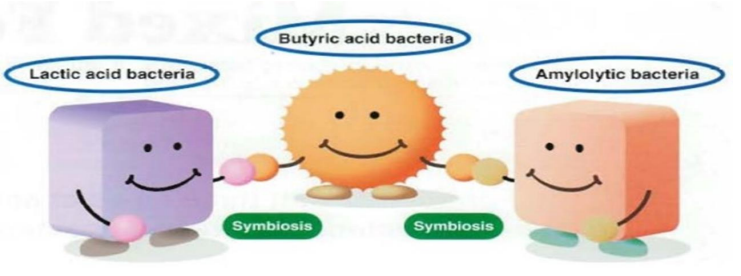
how do probiotics work?
Probiotics may act by:
– Allowing out-competition of pathogens
• Reducing available receptor sites
• Modulating the environment
• Modulating pathogen behaviour
– Producing anti-microbial compounds
– Altering the immune response of the host

Molecular approaches to understanding the microflora
• FISH – Automated confocal
• FlowFISH – 20 colour FACS
• Next Generation Sequencing (NGS)

FISH - fluorescent in situ hybridisation
limitation- can only look at bacteria

next generation sequencing (NGS)
doesnt have this limitation - can look at all organisms, and dotn need markers etc
• Sequencing is used to identify all the organisms in a sample and evaluate their relative proportions.
• For bacteria the most common protocols involve the amplification of the 16S rRNA gene (18S for fungi etc.) of all the organisms and then these are sequenced.
• Shotgun metagenomics (the genomes of the entire microbial community are sequenced).

16S rRNA NGS bacterial community studies
• Universal PCR for 16S rRNA genes
• High-throughput sequencing
• Analysis on QIIME for taxonomic assignment
– identify ~15,000 species per sample
– >500 genera identified
a simple infection that causes dispatch cirrhosis can result in big difference - type of bacteria present and the proportions
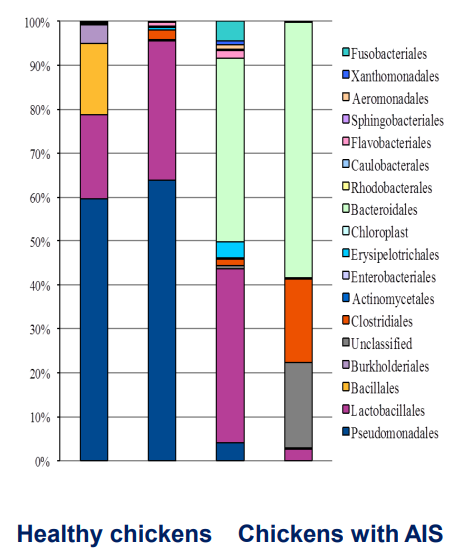

can do the same to see what happens when we add an antibiotic in
NGS discovered 15 new species of bacteria in chickens

how do we study without using actual animals?
use artificial gut models
e.g. take faecal sample and put in a tube and maintain the conditions for the bacteria
can also change other things like change the pH (stomach or bowel) to see how it affects the gut
