The nervous system
 Call Kai
 Learn
 Practice Test
 Spaced Repetition
 Match
 Flashcards
 Knowt Play
1/60

Earn XP
Description and Tags
McGraw Hill terms
61 Terms
Central nervous system (CNS)
Consists of the brain and spinal cord
Peripheral nervous system (PNS)
consists of all the nervous system except the brain & spinal cord
Nerve
bundle of nerve fibers (axons) wrapped in fibrous connective tissue
Ganglion
knotlike swelling where the cell bodies of neurons are concentrated
PNS
this system has sensory & motor neurons
CNS
this system has only motor neurons
sensory (afferent)
this division signals are carried from receptors to the CNS
somatic sensory
this division carries signals from receptors in the skin, muscles, bone, & joints
visceral sensory
this division carries signals from the viscera (organs)
motor (efferent)
this division carries signals from the CNS to effectors (glands & muscles)
somatic motor
this division carries signals to the skeletal muscles
visceral motor (ANS)
this division carries signals to glands, cardiac, and smooth muscle
-has two further subdivisions: sympathetic & parasympathetic
ANS
this division has two further subdivisions: sympathetic & parasympathetic
sympathetic
which ANS subdivision?
tends to arouse the body for action
parasympathetic
which ANS subdivision?
adapts the body for energy intake and conservation
excitability (irritability), conductivity, secretion
the physiological properties of a neuron are:
excitability
the ability of a neuron to respond to environmental changes called stimuli
conductivity
when neurons respond to stimuli by producing traveling electrical signals that can reach other cells at distant locations
Secretion
occurs when the electrical signal reaches the end of a nerve fiber, the neuron will secrete a chemical called neurotransmitter that crosses a small gap between cells and stimulated the next cell
sensory (afferent) neurons
this type of neuron:
detects stimuli
(PNS)
interneurons (association neurons)
this type of neuron:
receives signals from other neurons
Integration (process, store, retrieve) (make decisions)
(CNS)
motor (efferent) neurons
this type of neuron:
responds to stimuli
(PNS)
multipolar
which neuron type is the most common?
-includes most neurons of the brain & spinal cord
multipolar neuron
this neuron has:
one axon, 2 or more dendrites
bipolar neuron
this neuron has:
1 axon, 1 dendrite
-e.g., cells of nasal cavity, neurons of retinal & inner ear
unipolar neuron
this neuron has:
ONLY a single process leading away from the body
-e.g., carry sensory signals to spinal cord
Anaxonic neuron
this neuron has:
multiple dendrites but no axon
(communicates over short distances)
-e.g., found in brain, retina, & adrenal medulla
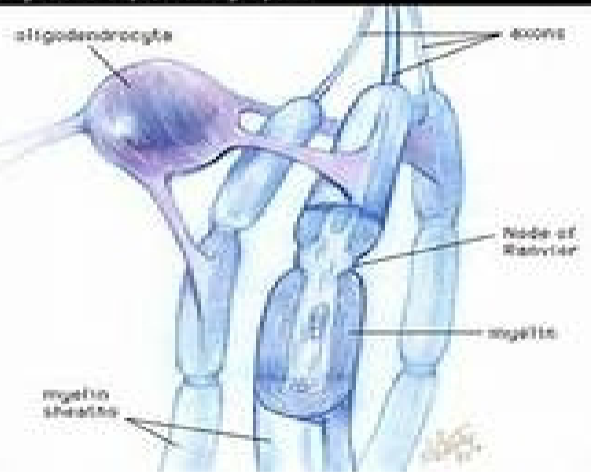
Oligodendrocytes
which glial cell?
bulbous body with armlike processes
each process reaches out to a nerve fiber & wraps around it with a myelin sheath
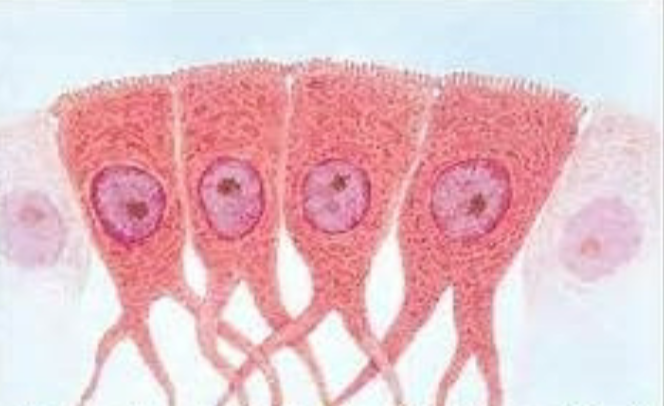
Ependymal cells
which glial cell?
cubed shaped cells
line internal cavities of the brain & spinal cord (CNS)
produce cerebrospinal fluid (CSF)
some have patches of cilia to help circulate CSF
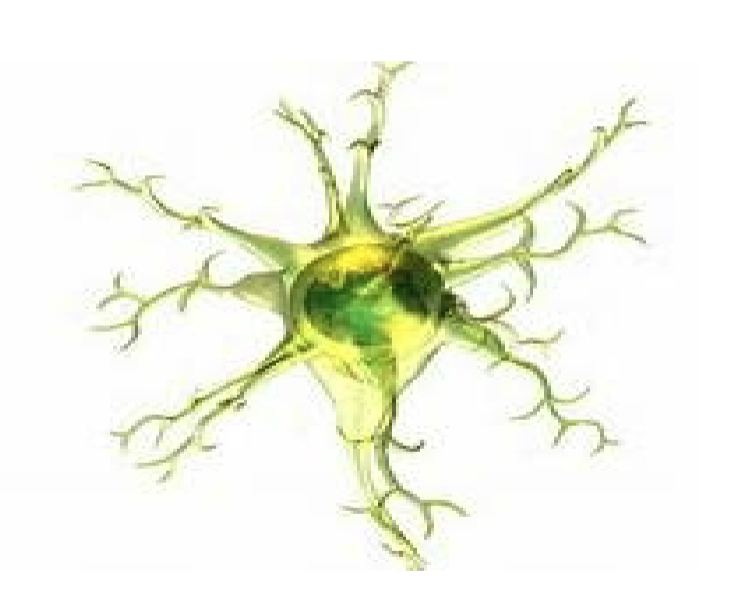
Microglia
which glial cell?
small macrophages
develop from stem cells
wander through CNS
perform check on brain tissue
detect foreign particles and get rid of them
concentrated in damaged areas (infection, trauma, or stroke)
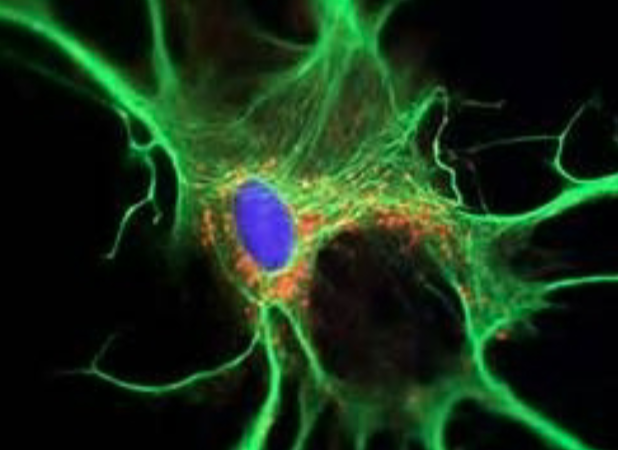
Astrocytes
which glial cell?
most abundant glial cells
CNS
form a hardened scar tissue to fill spaces when neruons are damaged (sclerosis)
regulate the chemical composition of tissue fluid
secrete proteins called nerve growth factors that promote neruon growth & synapse function
communicating electrically with neurons
form a supportive framework for nervous tissue
form tight seal called the blood-brain barrier
convert glucose to lactate & supply neurons for nourishment
Schwann Cells
which glial cell?
occur in PNS
envelope nerve fibers of PNS, form a sleeve called neurilemma
wind repeatedly around nerve fibers forming a myelin sheath
assist in regeneration of damaged fibers
Satellite cells
surround neurosomas in ganglia of PNS
provide electrical insulation around soma & regulate the chemical environment of neurons
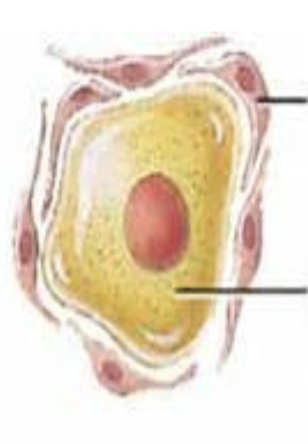
glial cells
what are most adult brain tumors composed of?
nodes of Ranvier
gaps between the segments in the myelin sheath
internodes
myelin covered segments from 1 gap to the next
diverging circuit
one nerve fiber synapses with several postsynaptic cells
-input from 1 neuron may produce output through dozens more
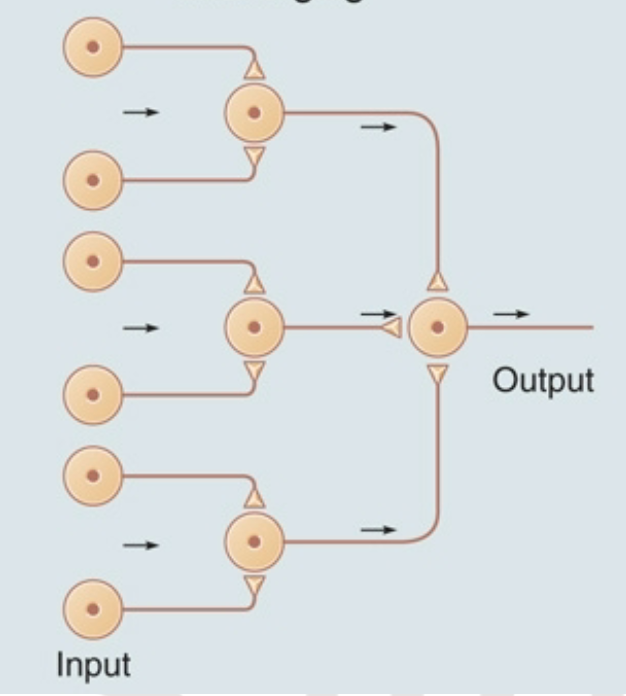
converging circuit
opposite of a diverging circuit, input from many different sources is funneled to 1 neuron or neuronal pool
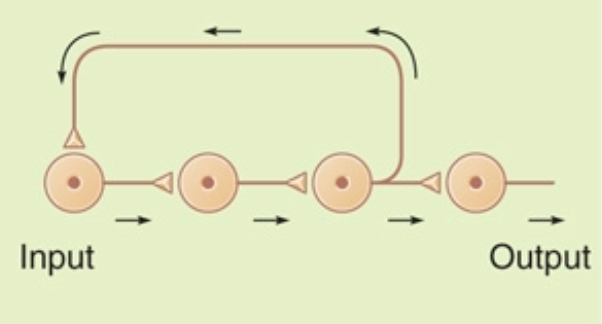
reverberating circuit
neurons stimulate each other in a linear sequence and also circle around and restimulate the process producing a repetitive output
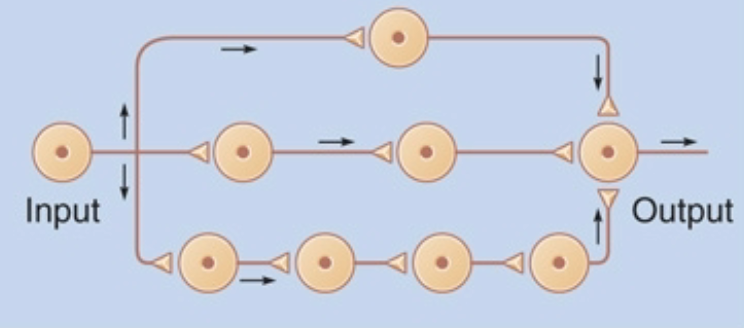
parallel after discharge circuit
input neuron diverges to stimulate several chains of neurons
-each chain has a different number of synapses, but they all reconverge on the same output neuron
spina bifida
occurs when 1 or more vertebrae fail to form a complete neural arch for enclosure of spinal cord
spina bifida occulta
one to a few vertebrae
no functional problems
(only external sign is a dimple or patch of hairy pigmented skin on low back)
spina bifida cystica
sac protrudes from the spine (may contain parts of spinal cord & nerve roots, meninges, and CSF)
more severe
cystica
Which spina bifida type is the worst?
anencephaly
no brain
microcephaly
small brain
L1
where does the spinal cord end?
dura mater, arachnoid mater, pia mater
What are the meninges from superficial to deep?
(D.A.P)
White matter
which one? Gray or White matter?
myelinated axons
bundles of axons (tracts)
Gray matter
which one? Gray or White matter?
Little myelin
somas, dendrites, proximal axons
Endoneurium
Connective tissue that surrounds individual axons
Perineurium
Surrounds bundles of axons forming fascicles
Epipneurium
Encloses the entire nerve
Chickenpox
caused by varicella-zoster virus
-produces an itchy rash that usually clears up without complications
-virus remains for life in posterior root ganglion, but kept in check by immune system
Quadriplegia
paralysis of all four limbs
paraplegia
paralysis of both lower limbs
hemiplegia
paralysis on one side of body
Spinal tap
a way to diagnose neurological diseases by examining CSF for bacteria, blood, and white blood cells, or abnormal chemical composition
L3, L4; L4, L5
A spinal tap is usually inserted between the spinous processes of _____-_____ or _____-_____.
Poliomyelitis (Polio)
skeletal muscles atrophy from lack of innervation
destruction of motor neurons in the brainstem & anterior horn of the spinal cord
signs: muscle pain, weakness, loss of some reflexes, paralysis, muscular atrophy, & sometimes respiratory arrest
ALS (Lou Gehrig’s disease)
astrocytes fail to reabsorb the neurotransmitter glutamate, allowing it to accumulate to a neurotoxic level
degenerates motor neurons, atrophies muscle, and sclerosis (scars) lateral regions of the spinal cord
signs: muscle weakness, difficulty speaking, swallowing, and using the hands
sensory & intellectual functions remain unaffected