AP Environmental Science Unit 3: Module 15 and 16
 Call Kai
 Learn
 Practice Test
 Spaced Repetition
 Match
 Flashcards
 Knowt Play
1/25

Earn XP
Description and Tags
https://www.lumisource.io/dashboard/ap/environmental-science/topics/practice
Name | Mastery | Learn | Test | Matching | Spaced | Call with Kai | Chat |
|---|
No analytics yet
Send a link to your students to track their progress
26 Terms
Generalist Species
A species that can thrive in a wide variety of environmental conditions and can utilize a range of resources. Generalist species often have flexible diets and are adaptable to changing habitats.
Population Growth
the number of offspring an individual can produce in a given time period, minus the deaths of the individual or its offspring during the same period. Also known as intrinsic growth rate
Biotic Potential
under ideal conditions with unlimited resources available, every population has a maximum potential for growth
K- Selected Species
A species with a low intrinsic growth rate that causes that population to increase slowly until it reaches the carrying capacity of the environment

Carrying Capacity
the limit to the number of individuals that can be supported by an existing habitat in a given area without causing environmental degradation.
What are some traits of K- selected animals?
typically large organisms that reach reproductive maturity relatively late, produce few, large offspring per reproductive event, and expend significant energy providing substantial parental care.
Do K- selected species have a high or low population growth rate?
a low population growth rate due to their slower reproduction and longer maturation periods.
R- Selected Species
a species that has a hight intrinsic growth rate, and their population typically increases rapidly

Do R- selected species have a high or low population growth rate?
a high population growth rate, characterized by rapid reproduction and short maturation periods.
Overshoot
when a population becomes larger than the environment’s carrying capacity.
Dieback
a rapid decline in a population due to death. Also known as die-off
Do R- selected species tend to be what size?
typically small in size.
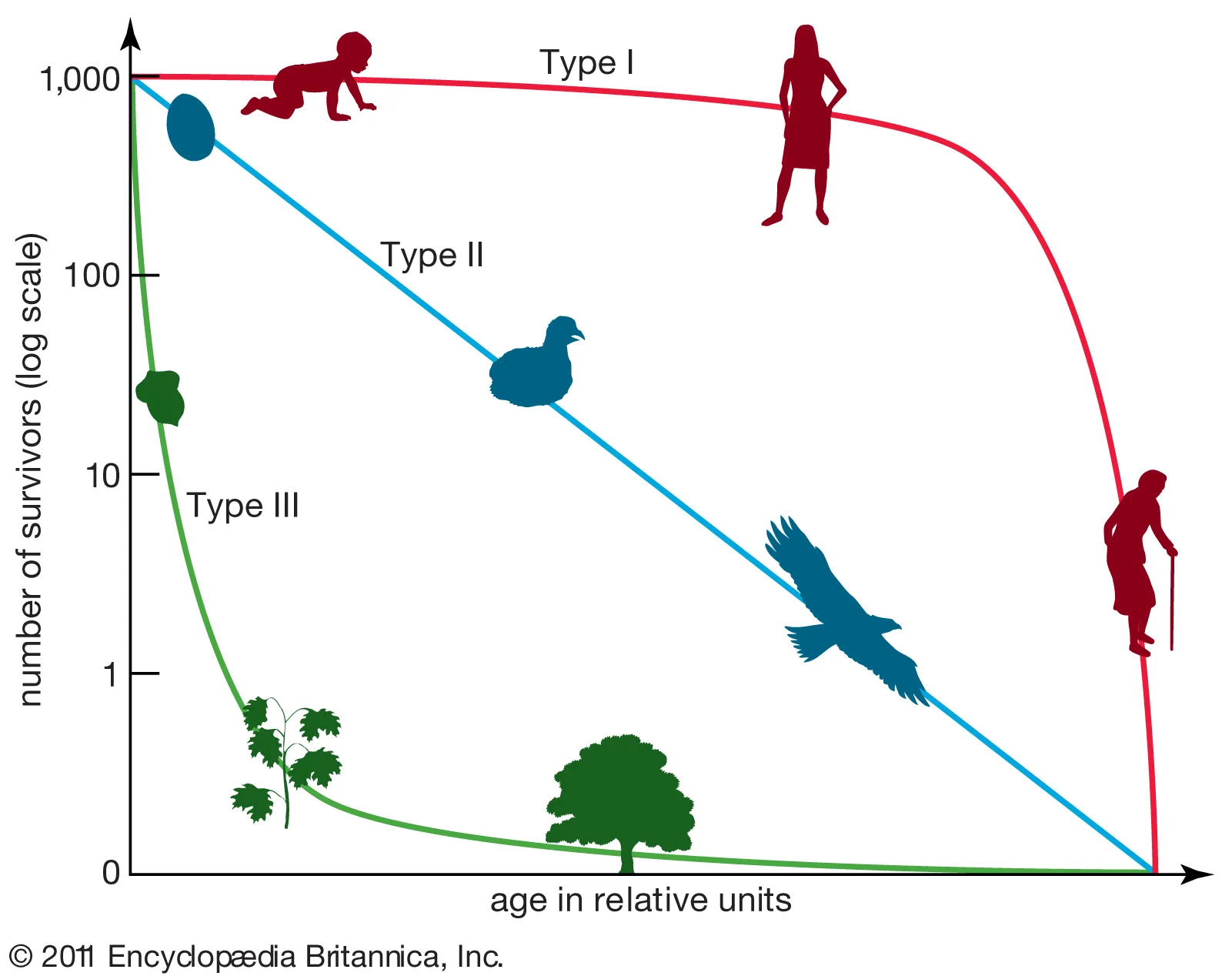
Survivorship Curve
a grpah that represents the distinct patterns of species survival as a function of age
Type 1 Survivorship Curve
a pattern of survival overtime in which there is high survival throughout most of the life spam, but then individuals start to die in large numbers as they approach old age
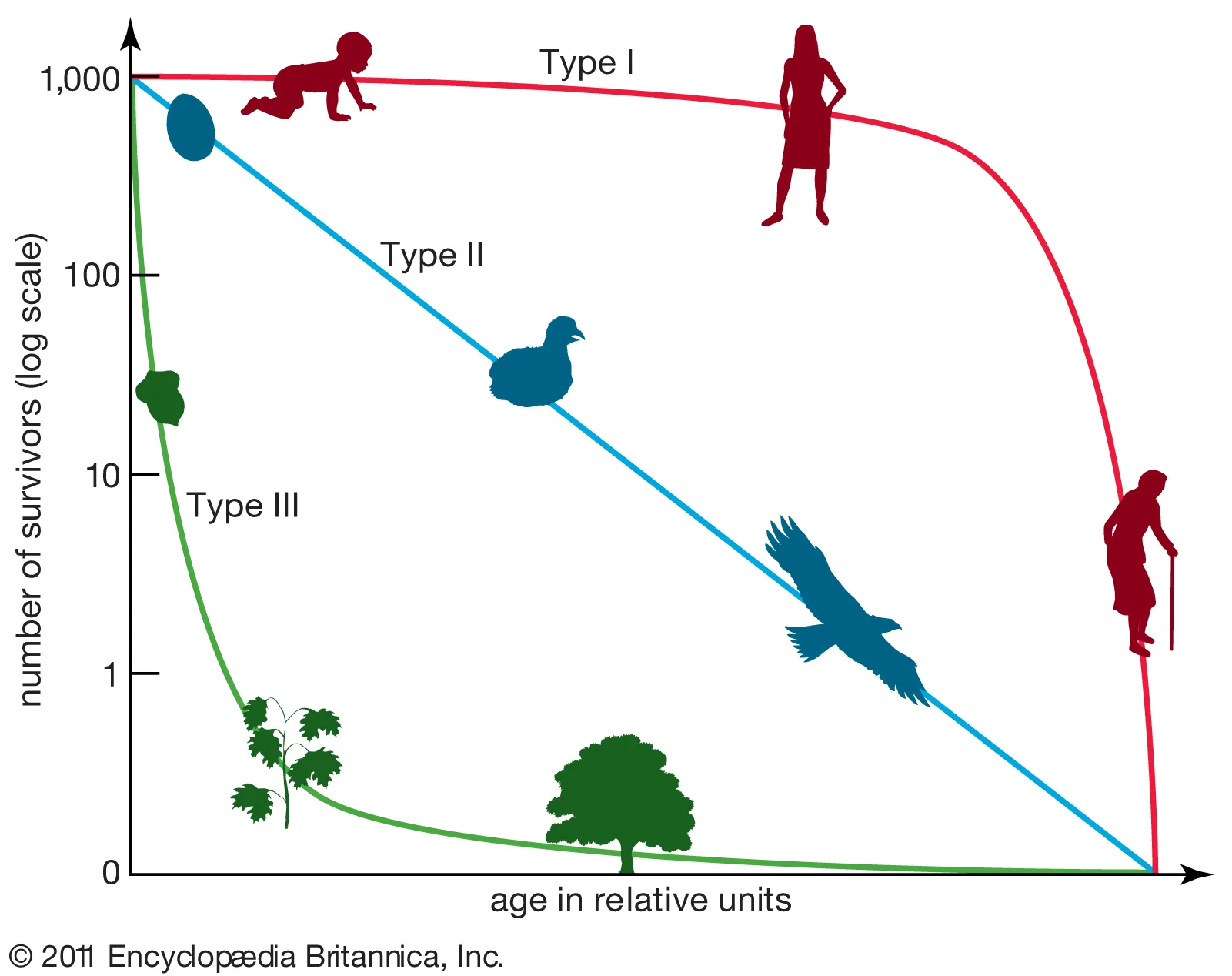
Type 2 Survivorship Curve
a pattern of survival where individuals have a relatively constant chance of dying at any age throughout their lifespan.
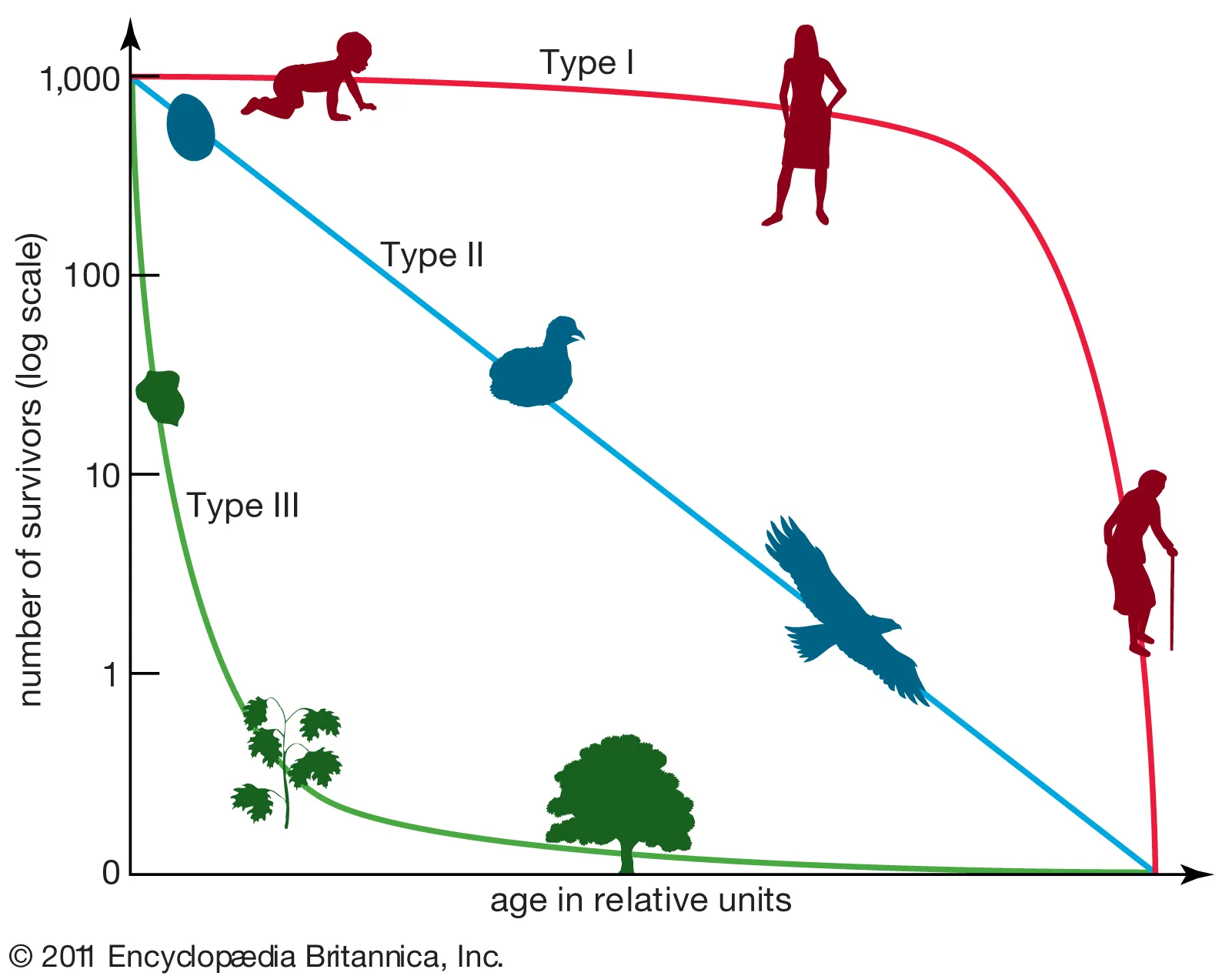
Type 3 Survivorship Curve
a pattern of survival where there is low survival at a young age, with few individuals reaching adulthood.
Density - Dependent Factor
a factor that influences an individuals probability of survival and reproduction in a manner that depends on the size of the population.
Density - Independent Factor
a factor that has the same effect on an individual’s probability of survival and reproduction regardless of population size. ex. hurricane
Population Growth Models
mathematical descriptions of how populations grow over time, often considering factors like birth rates, death rates, and carrying capacity.
Fecundity
the ability to prodcue an abundance of offspring
Exponential Growth Model
model that estimates a populations future size after a period of time based on the biotic potentials and the number of reproducing individuals currently in the population
J- Shaped Curve
the curve of the exponential growth model when graphedIt illustrates how populations can grow rapidly under ideal conditions, indicating continuous growth without limitations.

Logistic Growth Model
a growth model that describes a population whose growth is initially exponential, but slows as the populations approaches the carrying capacity of the environment.
S- Shaped Curve
the shape of logistic growth model when graphed

The logistic growth model is used to predict what?
Population growth under resource limitations.
Limiting Resources
a resource that a population cannot live without and that occurs in quantities lower than the population would require to increase in size