Organs of the Digestive System with Pictures/ Functions
 Call Kai
 Learn
 Practice Test
 Spaced Repetition
 Match
 Flashcards
 Knowt Play
1/26

There's no tags or description
Looks like no tags are added yet.
27 Terms
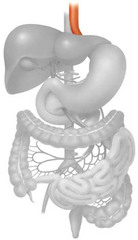
Esophagus (definition)
A muscular tube that connects the mouth to the stomach.
Stomach (definition)
large muscular sack that continues the mechanical and chemical digestion of food. Contains stomach acid

Small intestine (definition)
Digestive organ where most chemical digestion and absorption of nutrients takes place

Liver (definition)
organ that produces bile

Gall bladder (definition)
An organ that stores bile and releases it as needed into the small intestine

Large intestine (definition)
The last section of the digestive system, where water is absorbed from food and the remaining material is eliminated from the body

Rectum (definition)
A short tube at the end of the large intestine where waste material is compressed into a solid form before being eliminated
Oral cavity/ Mouth (definition)
Contains teeth and tongue, site of mechanical digestion

Salivary glands (definition)
Produces saliva that helps soften and break down the food (Arrow C)

Villi (definition)
Small fingerlike projections on the walls of the small intestines that increase surface area

Pancreas (definition)
Produces insulin and glucagon to regulate blood glucose

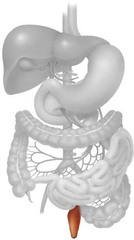
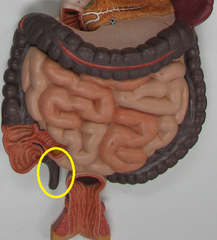
Appendix (definition)
Organ with no known purpose; can become infected and burst, causing life-threatening sepsis
In the picture of the digestive system what is letter "i" pointing to?
Stomach (image)

In the picture of the digestive system what is letter "D" pointing to?
Large intestine (image)
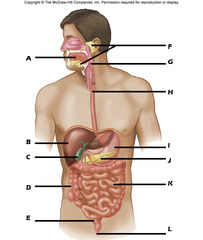
What is arrow "E" pointing to in the image?
Rectum (Image)

In the picture of the digestive system what is letter "J" pointing to?
Pancreas (image)

What is arrow "p" pointing to in the image?
Anus (Image)

What is arrow "K" pointing to in the image?
Small intestine (image)

What is arrow "B" pointing to in the image?
Liver (image)

What is arrow "H" pointing to in the image?
Esophagus (image)

What is arrow "C" pointing to in the image?
Gall Bladder (image)

Ingestion
taking in food
Propulsion
contraction of muscles that move food along the Gastro-Intesional tract
Mechanical Breakdown/ Digestion
reduces the food into smaller pieces and increases the surface area of the food
Chemical Breakdown/ Digestion
enzymes break down the food into smaller molecules
Absorption
movement of nutrients from the digestive organs (mostly small intestine) into the blood
Defecation
expulsion of food as wastes