ACT Math
 Call Kai
 Learn
Learn Practice Test
 Spaced Repetition
 Match
Match Flashcards
 Knowt Play
1/44

Earn XP
Description and Tags
Challenge areas for ACT math including equations, definitions, etc.
Name | Mastery | Learn | Test | Matching | Spaced | Call with Kai | Chat |
|---|
No analytics yet
Send a link to your students to track their progress
45 Terms
logbase(n)=x (logarithmic)
base^x=n (exponential)
y=A sin (B(x-h)) + k AND y= A cos(B(x-h)) +k
A is the amplitude (when A < 0, the graph will be reflected vertically over the midline
B is the frequency in the 2pi interval, and the period can be determined by -2pi/B (when B<0, the graph will be reflected horizontally)
h<0 shifts the function left, h>0 shifts the function right (phase/horizontal shift)
k<0 shifts the function (and thus the mean/midline) down, k>0 shifts the function (and thus the mean/midline) up
Double angle identities
sin(2A)=2sinAcosA
cos(2A)=cos^2A-sin^2A
Sum of angles of a polygon
(n - 2) * 180degrees

Distance formula (finds distance between two points on a graph)
d=square root of ((x1-x2)² + (y1-y2)²)
Midpoint formula (finds midpoint between two points on a graph)
(Xm, Ym) = ((x1+x2)/2, (y1+y2)/2)
Parallelogram
a flat, four-sided geometric shape where both pairs of opposite sides are parallel
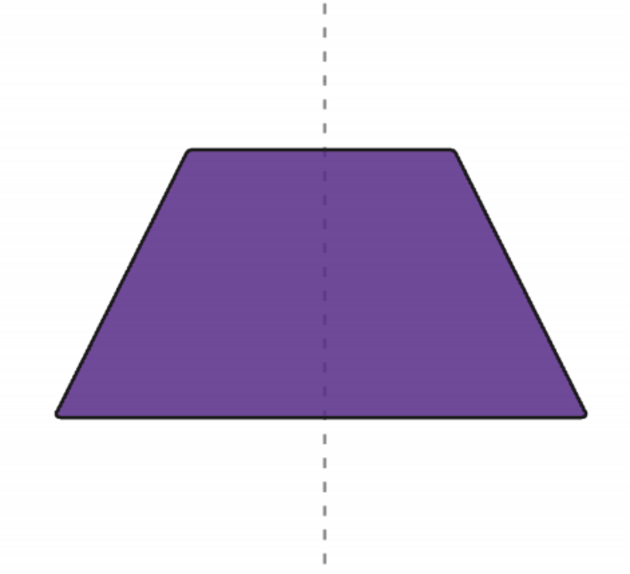
Area of a trapezoid
A=(b1+b2)/2(height)
Area of a rhombus
A=(d1)(d2)/2 d=diagonals

Circumference of a circle
Pi(diameter) AND =2pi(radius)
Area of a circle
Pi(radius)^2
Equation of a circle (center = (h,k) and radius = r)
(x-h)² +(y-k)² = r²
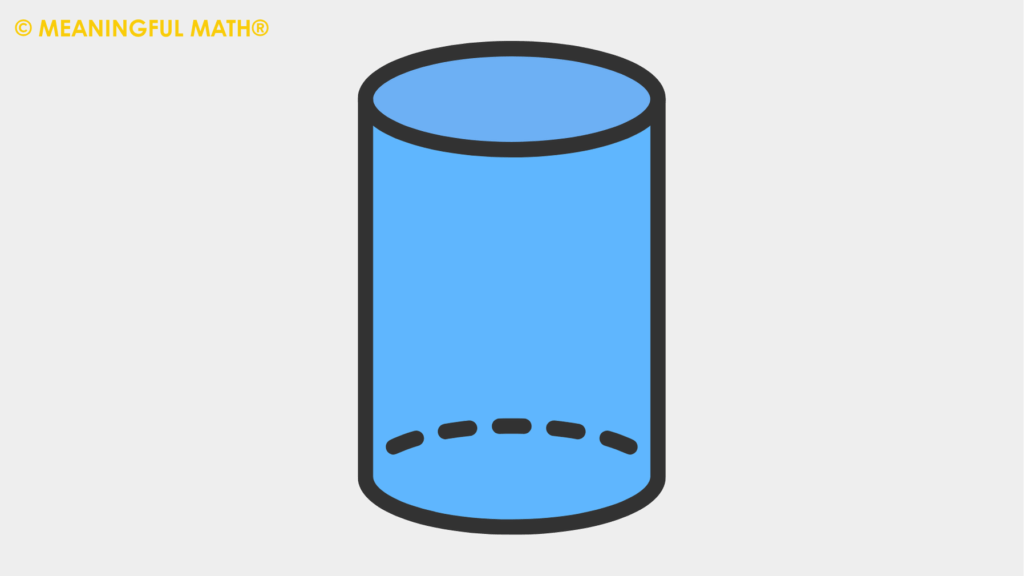
Volume of a cylinder
pi(radius)^2(height)
Volume of a rectangular prism
lwh

Volume of a cube
e^3 (e=edge length)
Surface area of a cube
6e^2 (e=edge length)
Volume of a sphere
(4/3)pi(radius)^3
Law of sines
sinA/a = sinB/b + sinC/c ABC=angles, abc = sides
Law of cosines
A²=B²+C²-2BCcos(a) (Can also be B² or C²)
Formula for combinations (Use when you select a smaller group of items from a larger set and the order does not matter, EX: Team or Committee Selection: Picking 4 students out of 20 to join a club.)
n! / (r!(n-r)!) n=set of items/groups r = some items/groups
Negative Exponent
Make the original number into a fraction with 1/n^x (n=original number) and (x=exponent)
Fractional exponent
The denominator tells you the root to take, and the numerator tells you the power to raise the base to. ex: a^m/n = m square root of (a²)
Square roots
You can multiply and divide square roots but cannot add or subtract them unless base numbers are the same.
Inverses
Find by switching the independent and dependent variables (aka x and y) and then solving for the dependent variable again.
Pythagorean Identities
sin^2 + cos^2 =1, 1+tan^2=sec^2, 1+cot^2=csc^2
Unit circle
2pi (1,0), pi/6 ((square root of 3/2), ½), pi/4 ((square root of 2/2)/(square root of 2/2)), and pi/3 (same as pi/6 but x and y are switched)
30-60-90 triangle
short leg of x, a hypotenuse of 2x, and a long leg of x(square root of 3)
45-45-90 triangle
legs of x and a hypotenuse of x(square root of 2)
Cosecant
csc =1/sin (hyp/opp) reciprocal of sin
Secant
sec=1/cos ((hyp/adj) reciprocal of cosine
Cotangent
cot=1/tan (adj/opp) reciprocal of tangent
For independent events
P(A|B)=P(A), P(B|A)=P(B), and P(A and B)=P(A) * P(B)
Conditional Probability rule
P(A|B)=P(A and B)/P(B)
Use this when you want to find the probability of an event happening given that another event has already occurred. It narrows down your total possibilities.
ex: In a class, 30% of students play soccer, and 15% play both soccer and basketball. If you randomly pick a student who you already know plays soccer, what is the probability they also play basketball? P(soccer = 0.30) P(Soccer and basketball)=0.15… 0.15/0.30 = 50%
Addition Rule (Non-Mutually exclusive)
P(A or B)=P(A)+P(B)-P(A and B)
Multiplication Rule (independent events)
P(A and B) = P(A) * P(B)
Use this to find the probability of Event A AND Event B happening together, when the first event does not change the odds of the second event.
Complement rule
P(not A) = 1-P(A)
Use this when it is easier to calculate the probability of an event not happening than the event itself
General Multiplication Rule (Dependent Events)
P(A and B) + P(A)*P(B|A)
Use when you want two events to happen in a row, but the first action changes the total pool for the second action.
ex: Picking marbles without replacement: A bag has 3 red and 2 blue marbles. You pick two without putting the first back. What is the probability of picking Red AND then another Red?
Addition Rule (Mutually Exclusive)
P(A or B) = P(A) + P(B)
how many ___ are possible
option 1 * option 2 *option 3 ex: 5 people, 5 seat choices: 5 times 4 times 3 times 2 times 1 = 12 possible seating arrangements
P(A and B) vs P(A or B)
multiplication vs addition
SD
measure of how spread data is (data close or far from mean)
Volume of a prism
area of base times height (area of base = area of a circle)
area of a circle
(pi)r²
circumf. of a circle
2pi(r)
Arc length formula
(subtended angle/360) times 2pi(radius)