music midterm study
 Call Kai
 Learn
Learn Practice Test
 Spaced Repetition
 Match
Match Flashcards
 Knowt Play
1/57

Earn XP
Description and Tags
search "find this" for flashcards with tbd answers
Name | Mastery | Learn | Test | Matching | Spaced | Call with Kai | Chat |
|---|
No analytics yet
Send a link to your students to track their progress
58 Terms
duple meter
one accented beat every two beats
triple meter
one accented beat every three beats
compound meter
a musical time signature where each main beat naturally divides into three equal parts
middle ages
plainchant
chanting sacred texts was normal in church services
Pope Gregory I standardized chants (Gregorian chant)
middle ages
characteristics of chant
non-metrical
based on medieval modes (instead of modern major/minor system)
has reciting tone (simple recitation on a single pitch)
used for routine texts in services
melody used for more significant prayers/events
the renaissance
chant paraphrase
values melodic character of chant (different from medieval organum)
gives the chant specific meter and rhythm
embellishes the chant
emphasizes sensuous aspect of chant
monophony
has a single melodic line with no accompaniment or harmony
polyphony
multiple melodic voices that can be considered independent from or an imitation each other
homophony
multiple voices
prominent voice is considered the melody (this one stands out from the background voices)
background voices are harmonic accompaniment
the renaissance
imitative counterpoint
a type of polyphonic texture in which melodic voices enter one after the other with the same melody. the initial melody is transposed higher/lower with each entrance
voices take turns competing for attention
the tonal system
a hierarchical system of organizing pitches/chords/keys around a central, stable reference note called the “home key” (or tonic).
the baroque
recitative (pertaining to opera)
speech-like rhythm
pitches follow speech patterns
continuo accompaniment
prose text (words stated once)
advances the action (theatrical movement)
dialogue (free interaction)
the baroque
aria
clear beat w/ consistent meter
pitches form melodic patterns/phrases
orchestral accompaniment
poetic text (phrases often repeated)
freezes the action (reflection)
soliloquy (expresses one emotion)
the baroque
continuo instruments
from left to right: harpsichord, lute, and viola da gamba

basso continuo / ground bass
a foundational harmonic and rhythmic structure in baroque music
gives players creative freedom to improvise, so no two recordings/performances sound the same
the baroque
madrigal
a setting of secular text for voice and instruments
monteverdi composed lots of madrigals, which often had Greek themes or were about love
often used basso continuo technique
classical era
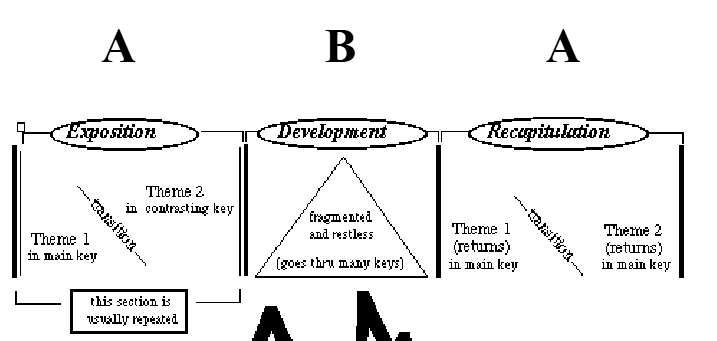
exposition in sonata form
usually contains 2 themes separated by a transition (transition is typically unstable)
appears contrasting in mood

classical era
development in sonata form
manipulates content from exposition

theme
the basic subject matter for a piece of music (usually a melody)
tends to transfer emotional aspects throughout a piece
baroque orchestra
a string orchestra with continuo:
keyboard
harpsichoard / organ
strings
violin 1 + 2
violas
bass (plays same music as cello but in a lower octave)
the baroque
festive baroque orchestra
adds brass, woodwinds, and percussion to standard baroque orchestra setup

prima practica vs. second practica
(find this)
middle ages
refers to the time period from ca. 500 - 1300
shift in power from roman emperors → roman catholic church
feudal system has most power
music and art served as an allegory to educate the illiterate population about the church
the renaissance
time period between 1350 and 1600 (250 years)
revival of ancient greek and roman culture
arts guided by sensory experience
new attempts to express feelings
music uses consonant harmonies and carefully controls dissonance
the baroque
time period between 1610 and 1750
highly decorated and concerned with expression
aka the age of absolutism or the age of reason
baroque music characteristics/innovations
the tonal systems
repeatable systems that are easy to follow
rise of instrumental music
theory of harmony
development of opera
the classical era
spanned from 1750 to 1815
aka the enlightenment
expanded on the baroque’s desire for scientific knowledge
concern for individual rights developed
more humanistic period
social justice ideas were promoted
art and music were intended to please rather than instruct/impress
romantic era
spanned from 1820 to late 1900
had sense of excitement, urgency, and striving
wide range of emotional qualities
prioritized feelings over structural rules
forms/genres
chant
non-metrical, with simple recitations on a single pitch (the reciting tone)
based on medieval modes (as opposed to the modern/major system)
used for routine texts in services
forms/genres
organum
refers to early polyphony in the middle ages
music becomes polyphonic around 900 CE
perotin was a composer of organum
forms/genres
baroque madrigal
a madrigal is a setting of secular text for voice and instruments
monteverdi wrote madrigals, most of which either pertained to greek themes or love
his madrigals used basso continuo
forms/genres
concerto vs. concerto grosso
these are the most important orchestral genres of the baroque era
concerto has one soloist, and concerto grosso has a small group of soloists.
the underlying idea of this is contrast:
soloist against the orchestra
group of soloists against orchestra (concerto grosso)
virtuosity (soloist episodes highlight this)
forms/genres
symphony
traits:
a large musical composition for an orchestra with multiple sections/movements
typically the first movement is in sonata form
movement plan:
I - moderate to fast; sonata form
II - slow; various forms
III - moderate tempo; minuet form
IV - fast; sonata/rondo form
forms/genres
symphonic form
a work for orchestra in 4 movements:
sonata form (moderate to fast)
variety of forms (slow)
minuet w trio (moderate)
generally sonata or rondo form (fast)
forms/grenres
sonata (form)
contains 3 main sections: exposition, development, and recapitulation
exposition usually contains 2 separate themes separated by an unstable transition
large scale form is ABA
forms/genres
sonata (genre)
less uniform than symphonies
rarely more than three movements
movements are always shorter than symphony movements
forms/genres
the classical sonata (genre)
a work in several movements for one or two instruments
piano sonata = for piano alone
violin sonata = for violin and piano
designed for private performance
forms/genres
dance suite
ordered set of instrumental/orchestral pieces performed in a concert setting
forms/genres
ritornello form
based on the exchange of musical ideas
orchestral material (ritornello)
solo material
ritornello returns many times to a stable element, either in whole/part or in various keys
as soloist gets farther from home base, so does the ritornello. however, ritornello is established as the constant home ending, so we know the piece will always end in the home key.

forms/genres
ritornello vs soloist episode

forms/genres
oratorio
a large musical composition for solo voices, chorus, and orchestra, centered on a sacred or semisacred subject.
forms/genres
opera
became big in the baroque era
an example of extravagance and control
traits:
has a plot + is staged
often in local language and is secular
alternates between recitative and aria
accompanied by an orchestra
forms/genres
rondo form
derived from ritornello’s ABA. possibilities for rondo are ABACA or ABACABA
composers
hildegard von bingen
⤷ time period: middle ages
⤷ year of death: 1179
⤷ significant compositions: Columba Aspexit (chant)
⤷ significant contributions: famous composer of plainchant, wrote 77 liturgical chants
composers
bernart de ventadorn
⤷ time period: middle ages
⤷ year of death: 1190
⤷ significant compositions: La Dousa Votz (monophony)
⤷ significant contributions: secular troubadour
composers
perotin
⤷ time period: middle ages
⤷ year of death: 1230
⤷ significant compositions: Alleluia. Diffusa Est Gratia
⤷ significant contributions: composer of organum
composers
montpellier codex
⤷ time period: middle ages
⤷ founder: edmond de coussemaker
⤷ significant compositions: On parole de batre / A Paris
⤷ significant contributions: important source of secular music
composers
guillaume dufay
⤷ time period: renaissance
⤷ year of death: 1474
⤷ significant compositions: Ave Maris Stella (a marian antiphon)
contrasts monophonic chant with homophony
homophonic sections are paraphrases of original chant
⤷ significant contributions: composer of early renaissance music
composers
heinrich isaac
⤷ time period: renaissance
⤷ year of death: 1517
⤷ significant compositions: Innsbruck, ich muss dich lassen
⤷ significant contributions: uses homophonic accurate declamation in the above composition
composers
josquin des prez
⤷ time period: renaissance
⤷ year of death: 1521
⤷ significant compositions: El Grillo
⤷ significant contributions: used word painting and imitative counterpoint in the above composition
composers
claudio monteverdi
⤷ time period: baroque
⤷ year of death: 1643
⤷ significant compositions: Lamento de la Ninfa
⤷ significant contributions: composed a large body of work including 9 books of madrigals, key figure in development of opera
composers
henry purcell
⤷ time period: baroque
⤷ year of death: 1695
⤷ significant compositions: Dido and Aeneas (opera piece)
⤷ significant contributions: wrote the famous lament “When I am laid in earth…”
composers
j.s. bach
⤷ time period: baroque
⤷ year of death: 1750
⤷ significant compositions: St. Matthew Passion (sacred oratorio based on the passion of christ)
⤷ significant contributions: orchestral and concerto pieces
composers
g.f. handel
⤷ time period: baroque
⤷ year of death: 1759
⤷ significant compositions:
⤷ significant contributions: composer of operas, oratorios, and instrumental suites
composers
mozart
⤷ time period:
⤷ year of death:
⤷ significant compositions:
⤷ significant contributions:
composers
franz joseph haydn
⤷ time period: classical era
⤷ year of death: 1809
⤷ significant compositions:
⤷ significant contributions: wrote oratorios, symphonies, and chamber music
composers
le chavalier de saint-george
⤷ time period:
⤷ year of death:
⤷ significant compositions:
⤷ significant contributions:
composers
beethoven
⤷ time period:
⤷ year of death:
⤷ significant compositions:
⤷ significant contributions: