BIOS3220 Exam 3 Content
 Call Kai
 Learn
 Practice Test
 Spaced Repetition
 Match
 Flashcards
 Knowt Play
1/113

There's no tags or description
Looks like no tags are added yet.
114 Terms
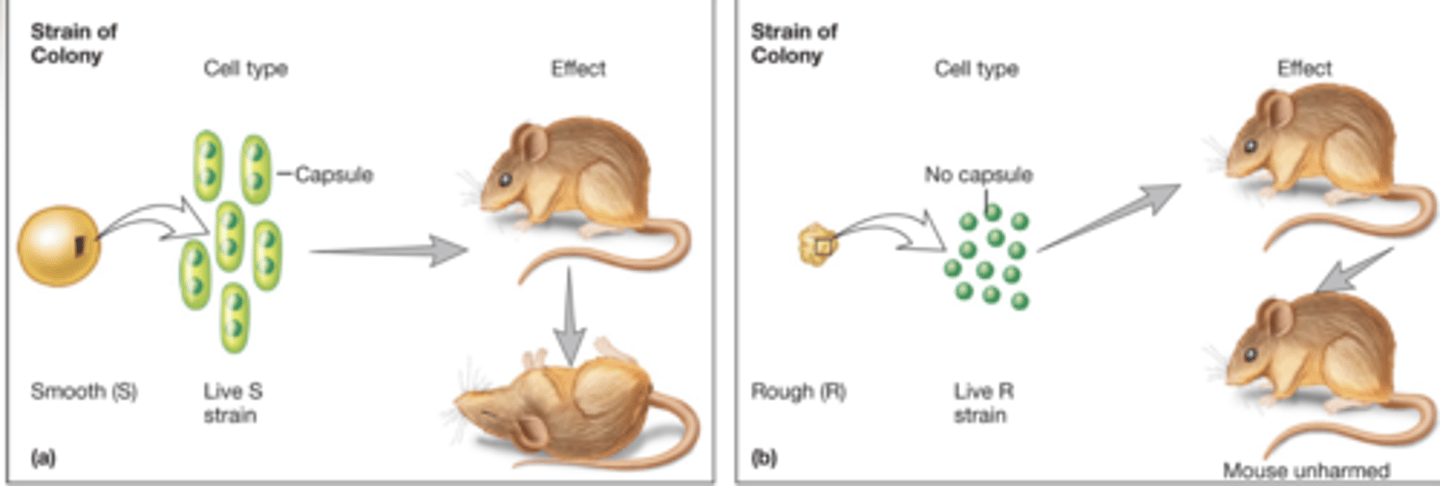
What did Frederick Griffith do?
Griffith studied pneumonia bacteria. In 1928, he isolated two strains of bacteria, and injected them into mice. Griffiths findings: Injection of live R strain was harmless (mice lived)
Injection of live S strain caused pneumonia (mice died)
Injection of heat-killed S Strain was harmless (mice lived)
BUT....Injection of mixture of live R strain with the heat-killed S strain caused pneumonia (mice died)
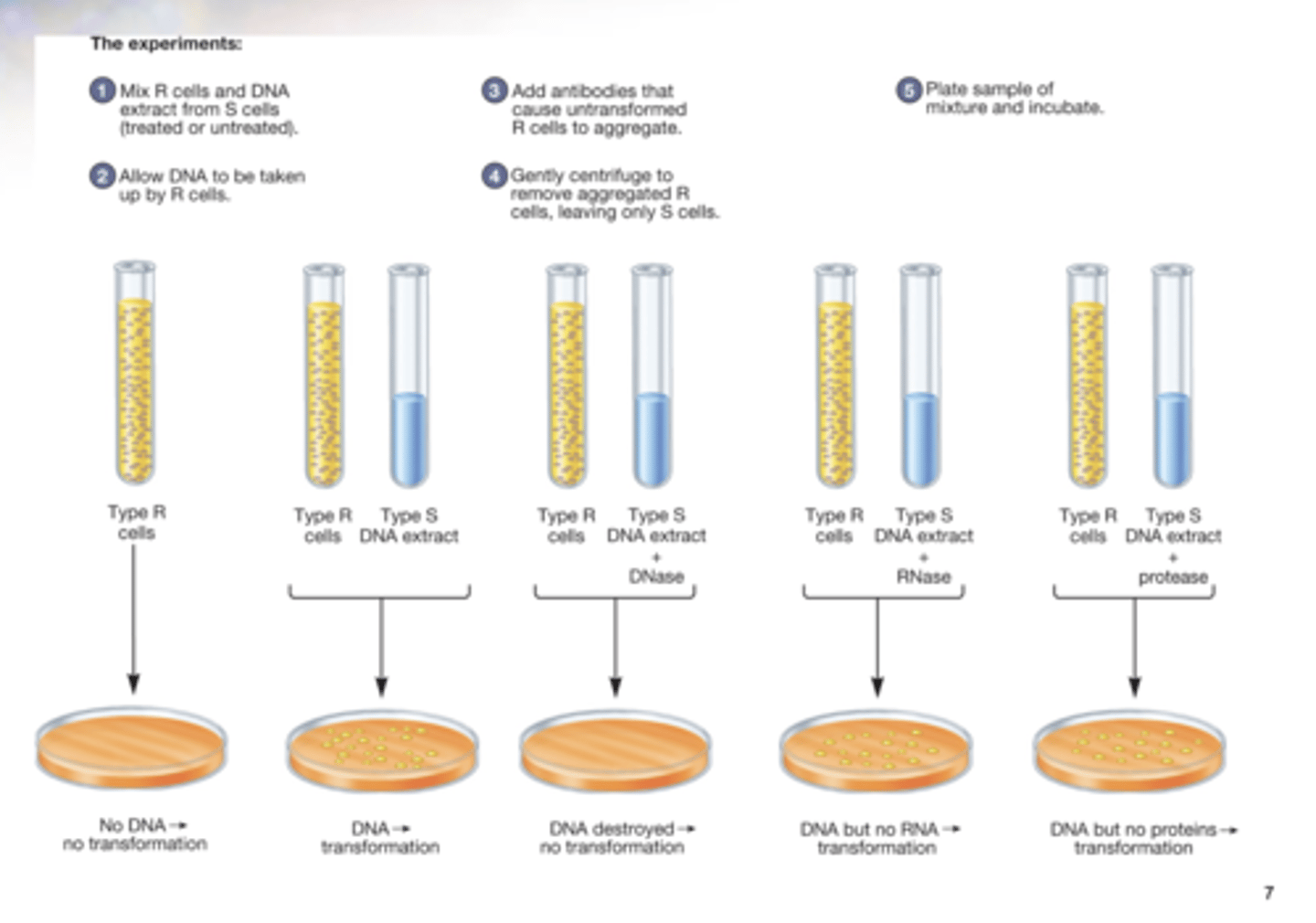
What did Avery, Macleod and McCarty do?
they used purification methods to reveal that DNA is the genetic material. DNAase was the only thing that prevented transformation
How many basepairs in 360 degree turn?
Roughly 10
What is the difference between the + and - strands of DNA?
+ = sense/coding strand. Is the non-template strand
- = Antisense/non coding strnad. Is the template strand

What does Pol3 and Pol1 do in E. coli?
Pol 3 does the main bulk of elongation. Pol1 is mainly for replacing the primers of the lagging strand.
What direction does most exonuclease activity occur?
3 to 5
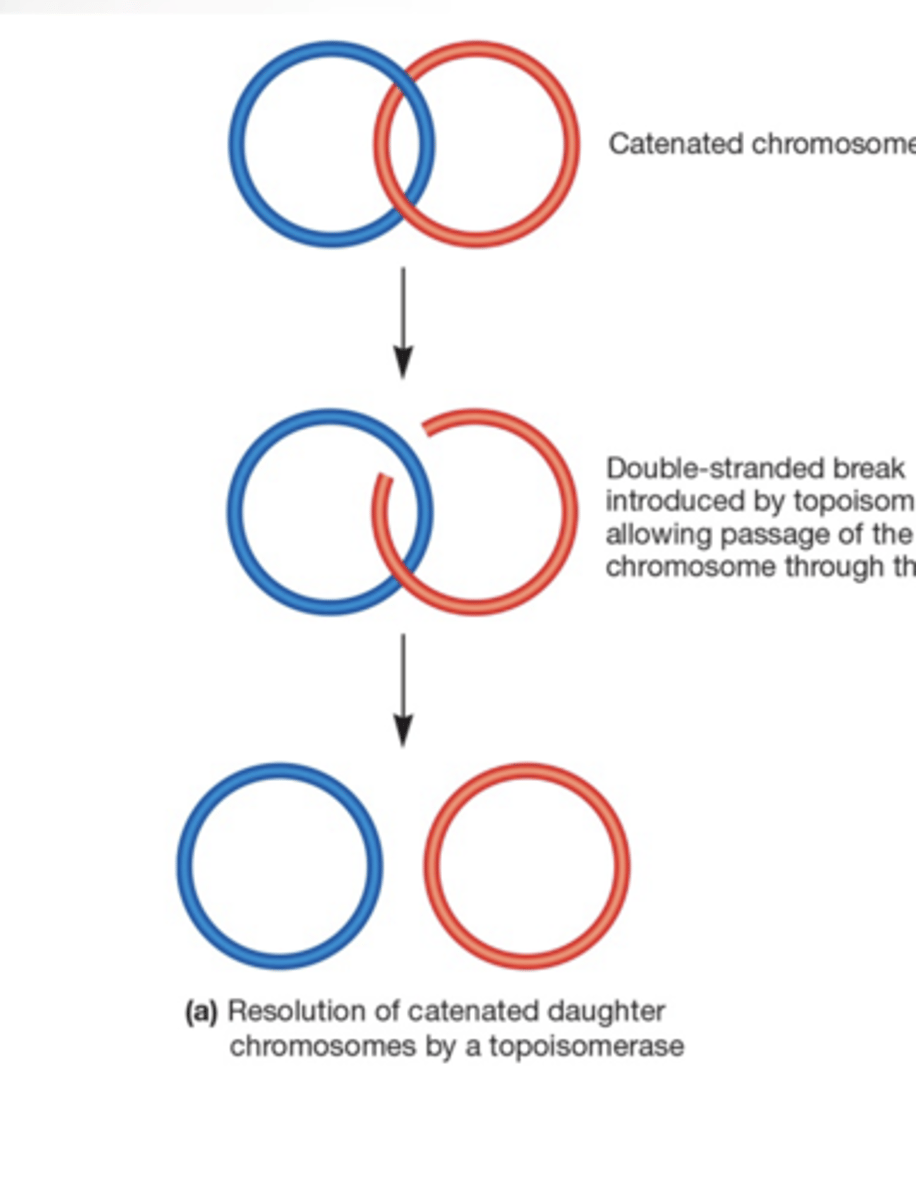
What are catenates?
When replicated circular DNA does not separate. A topoisomerase can ds break to fix this
What is the "end" replication problem and how is it fixed?
Chromosome shortens after each round of replication. In eukaryotes, telomeres fix this. In bacteria, the end of the DNA is looped to disguise the end
What is a cistron?
part of nucleotide sequence coding for single gene
How is the template strand read?
3 to 5
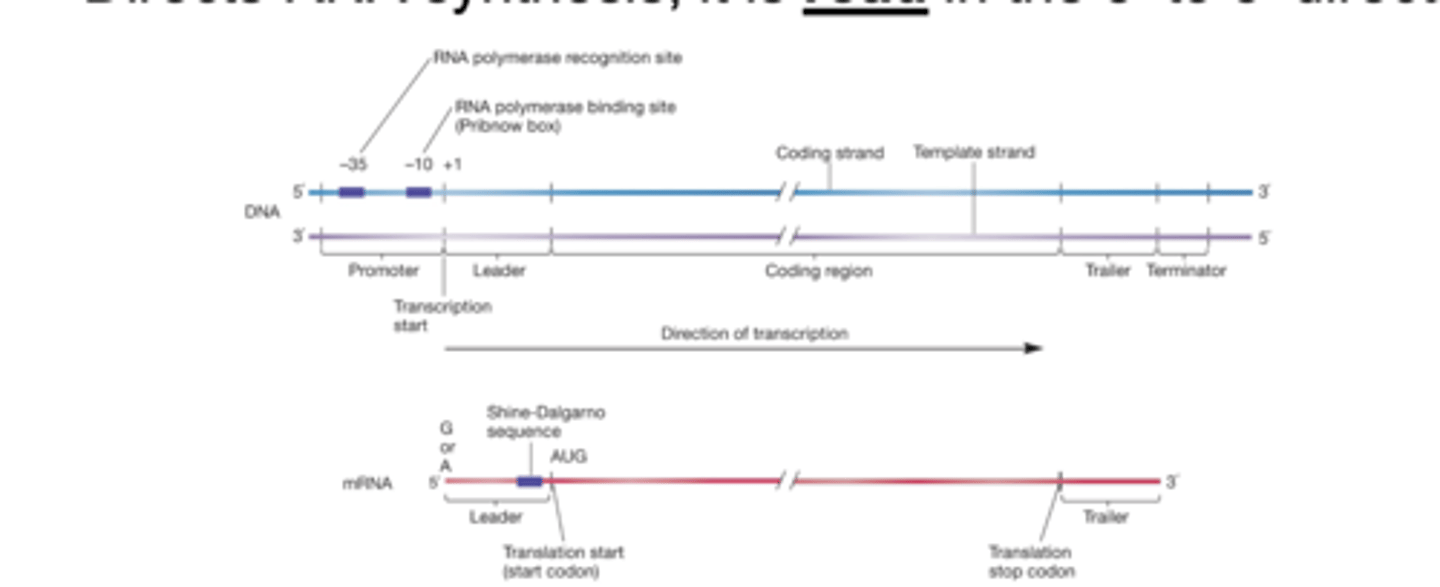
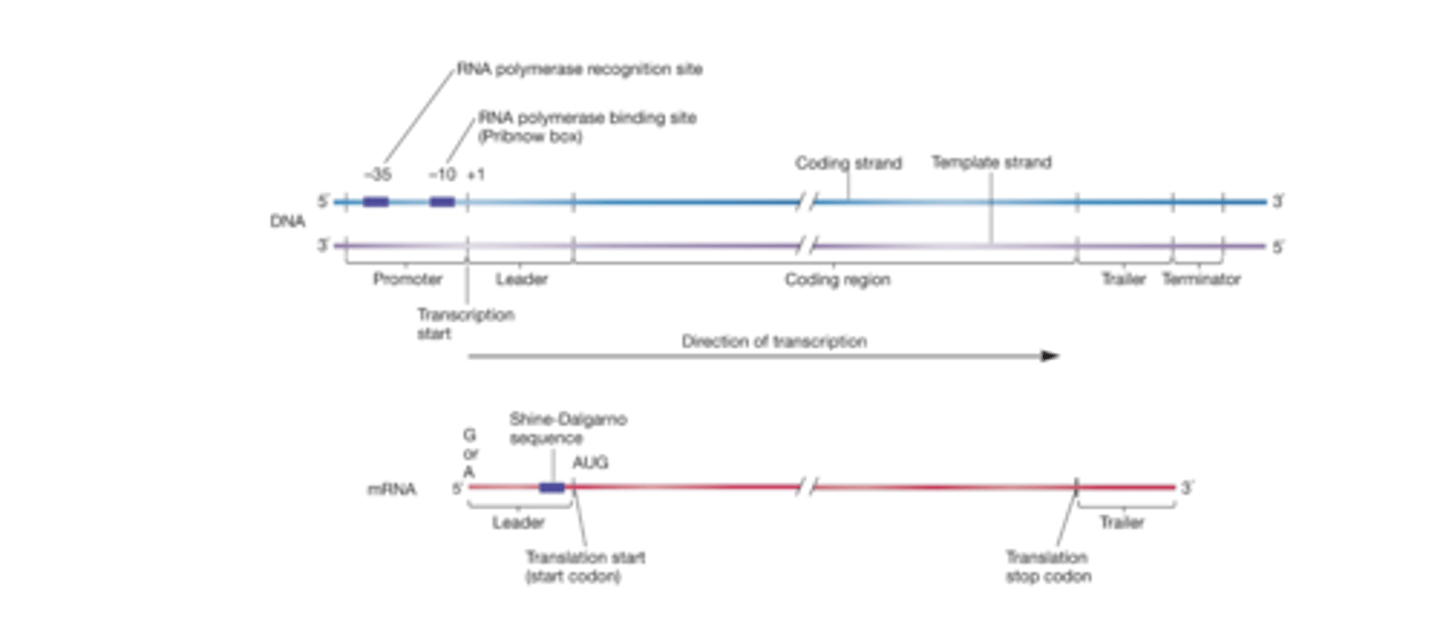
What are the two binding sites of the promoter for the RNA Polymerase?
-10 and -35
What is the +1 of the DNA seq?
The transcription start site
What is the Shine-Dalgarno Seq?
The ribosome binding site (RBS). Located within the 5' UTR. Upstream of start codon.
What is the first amino acid laid down in prokaryotes?
N-formylmethionine. A modified amino acid, which loses the formyl group later on.
What is the difference between the leader and trailer?
Leader is the 5' UTR, trailer is the 3' URT
What is a protein-independent method of termination?
Hairpin loop pushes RNA away from polymerase
What is the difference between prokaryotes and eukaryotes in transcription?
Prokaryotes have no introns, and can be polycistronic. In prokaryotes, no nucleus, so translation occurs while transcription is happening.
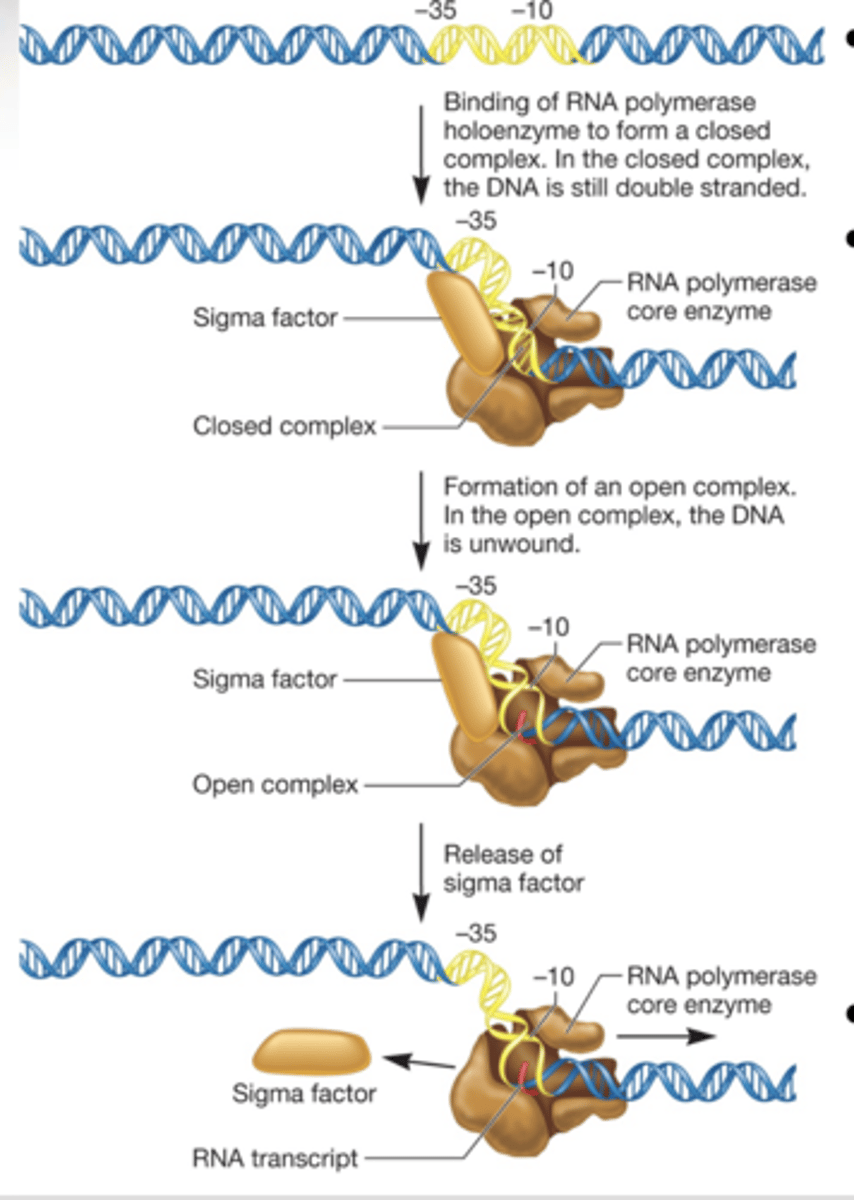
Where does the sigma factor of the polymerase bind to?
The promoter region. -10 and -35. It falls off after elongation starts.
What is a protein-dependent form of termination of transcription?
Rho. Looks for a rut site, where the protein catches up to the fork and the polymerase to get knocked off.
What is a sense codon and how many are there?
61 codons that specify amino acids
What is a nonsense codon?
a stop codon (3)
What is code degeneracy?
Up to six different codons can code for a single amino acid. This is due to wobble, where the third base of codon has binding flexibility.
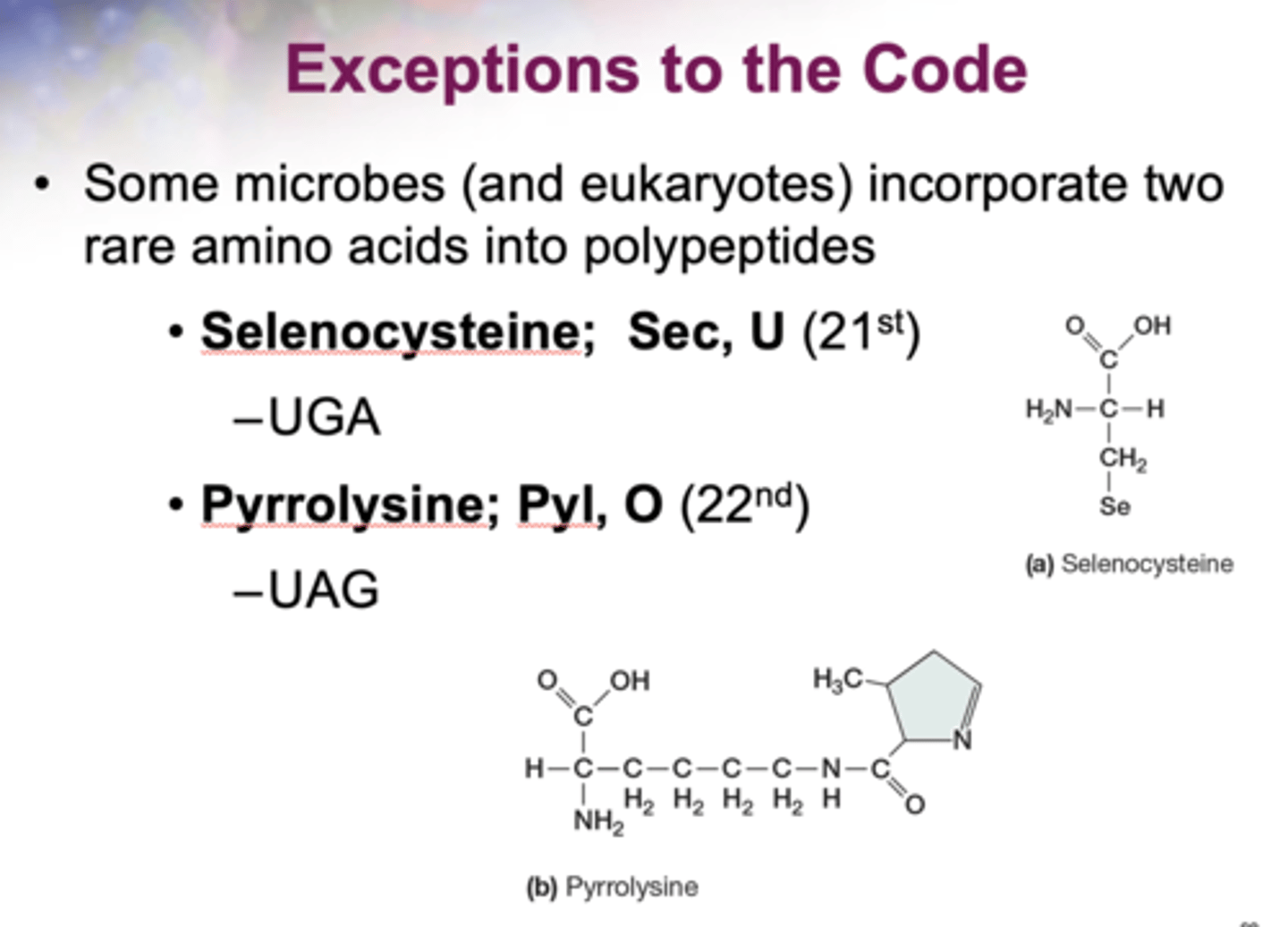
Do exceptions to the codon stuff exist?
yuh. Note: alternate start codons still translated as Met.
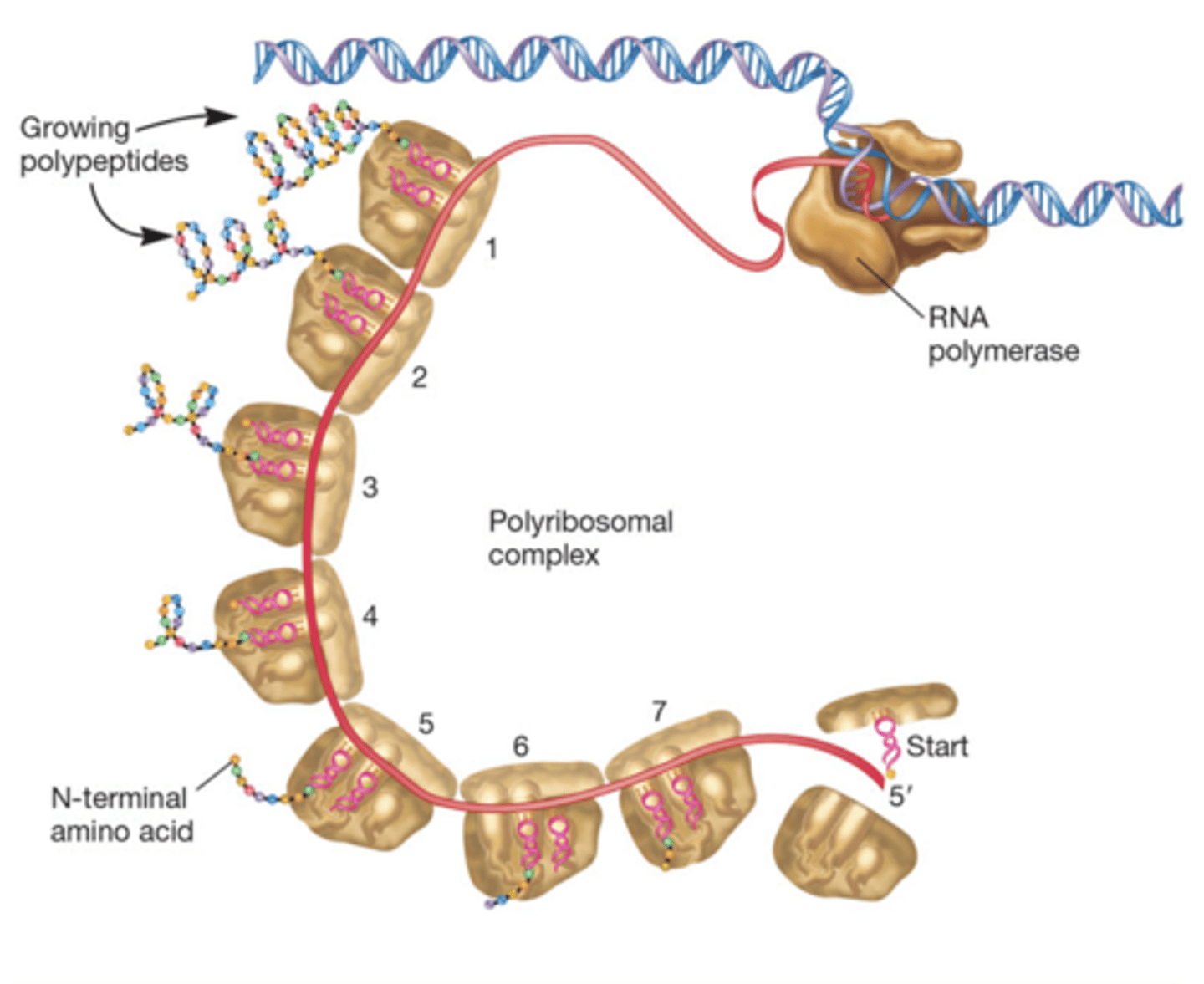
What is a polyribosome?
In prokaryotes, multiple ribosomes can bind to the same mRNA at once.
What is on the 3' and 5' ends of the tRNA? Where is the anticodon?
3' end binds the amino acid and has a CCA terminal seq. The anticodon is on the second loop.
What does it mean when a tRNA is charged/uncharged?
Charged = amino acid bound
Uncharged = not bound
What catalyzes the addition of amino acids to tRNA?
Aminoacyl-tRNA syntheses
What is special about the 16S rRNA?
It binds to the shine-Dalgarno seq to make sure that the start codon lines up properly.
What is special about the 23S rRNA?
Ribozyme catalyzes peptide bond formation
What are the 2 approaches to regulation of protein synthesis?
1) Regulation of gene expression
2) Posttranslational alterations
What is a housekeeper/constitutive gene?
A gene that is always on.
What is an inducible gene?
A gene that is normally off but can be switched on. Catabolic pathways. Lac-operon is inducible because you can induce it with lactose to turn it on.
What is a repressible gene?
A gene that is normally on. Can be turned off. Anabolic pathways
What do repressors/activators do?
They bind to DNA to regulate transcription initiation.
What is the difference between positive and negative control of operons?
Positive: Molecule that binds is an activator
Negative: Molecule that binds is a repressor
What is the difference between an inducor and a co-repressor?
Inducor: Turns the operon on
co-repressor: binds to the repressor to turn it off. Or to the activator to make it inactive (inhibitor).
How is the lac operon regulated?
negative control by LacI, positive control by CAP.
How does LacI bind to the operator?
it is a tetramer, that binds to three operator sites (O1,O2,O3). Allolactose binding causes conformational change, inhibiting this binding.
If glucose is present, will Lac Operon be on?
Nah. remember CAP. This is not America
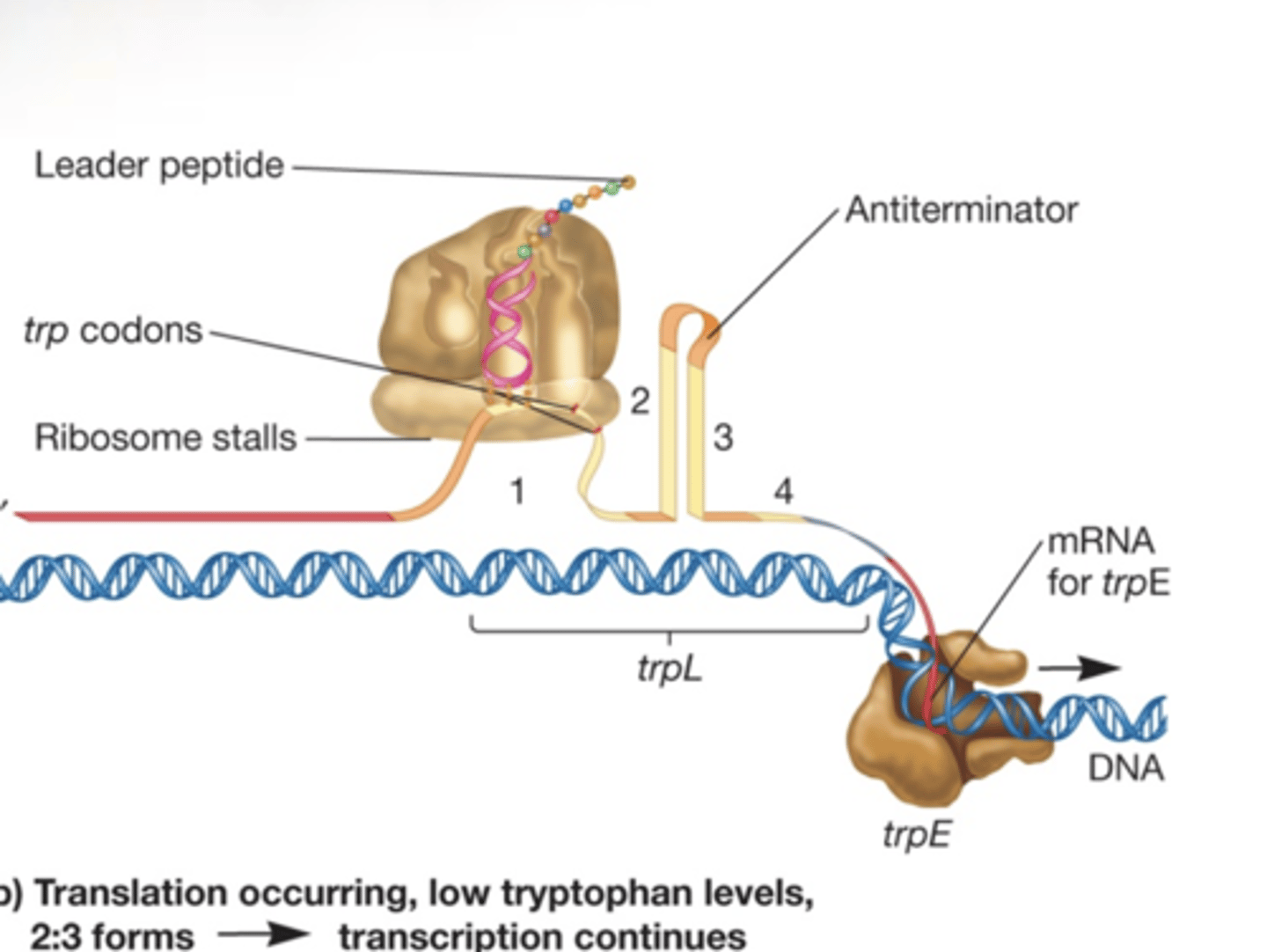
When does Trp Operon function?
In the absence of tryptophan
What is attenuation regulation?
When transcription is regulated by controlling termination.
Explain what the structure of the Trp riboswitch looks like when tryp is low and high
low: antiterminator, 2-3 binding
High: Terminator, 1-2, 3-4.
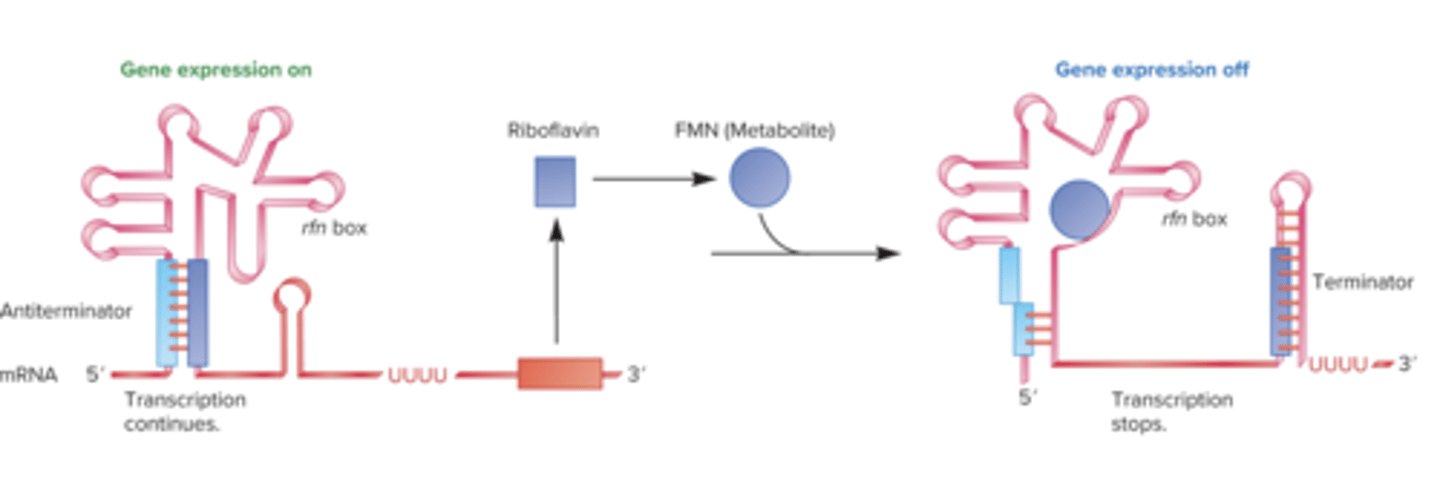
What else can effect a riboswitch?
An effector molecule
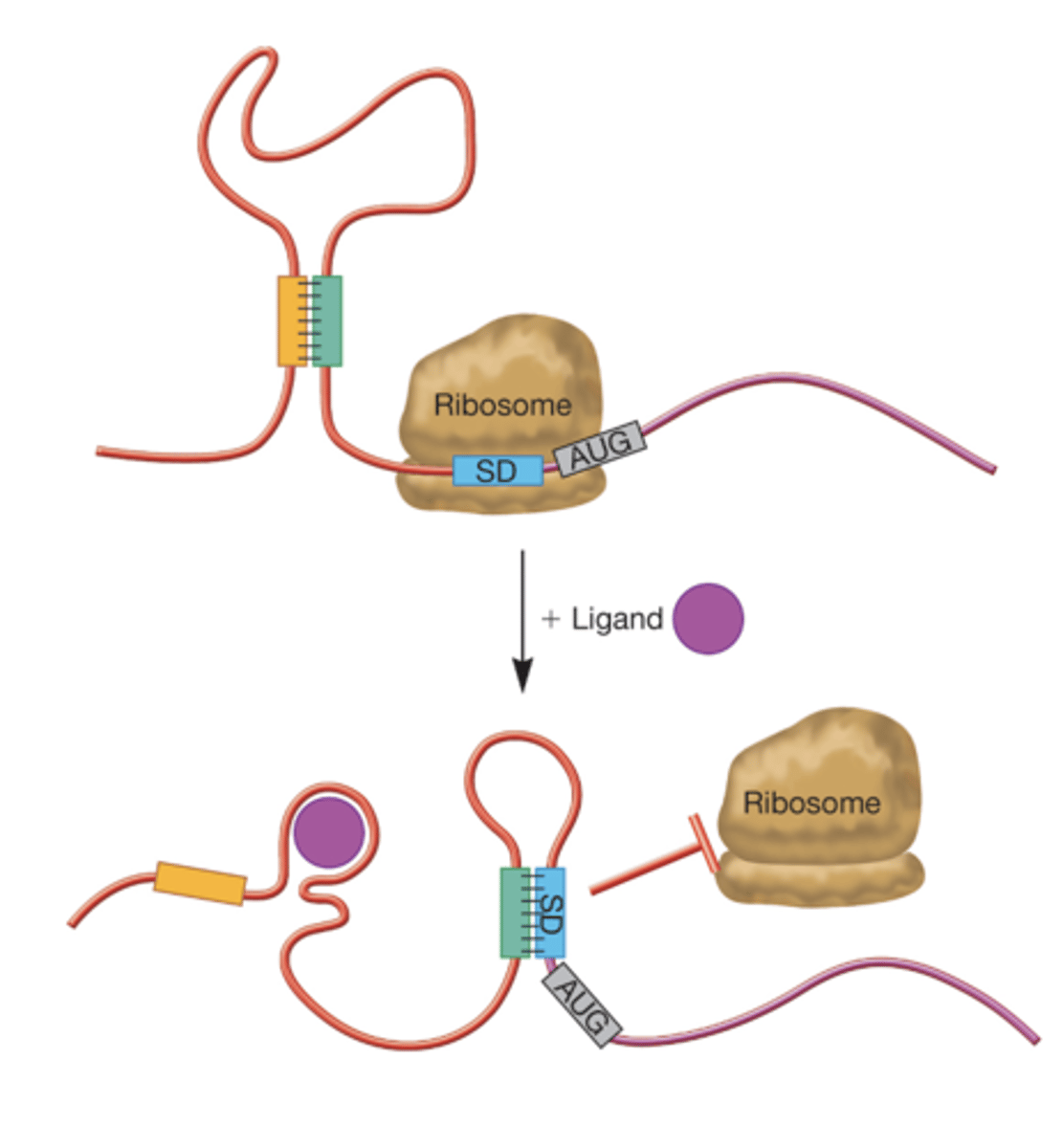
What is an example of a cis-acting regulatory element?
Effector molecule binding to 5' UTR alters mRNA folding. Causes different mRNA folding that blocks Shine Dalgarno seq. Prevents translation
What is an example of a trans-acting regulatory element?
sRNA's. Often form complementary antisense to mRNA. May enhance or inhibit translation. the mRNA this dsRNA acts on is not part of same transcript.
When is a regulon?
A set of genes or operons controlled by a common regulatory protein (global regulators)
Global regulation often uses a two component signal transduction system, or alternative sigma factors. Also, phosphorelay systems, and regulatory proteins.
What are two-component signal transduction systems (TCSTS)?
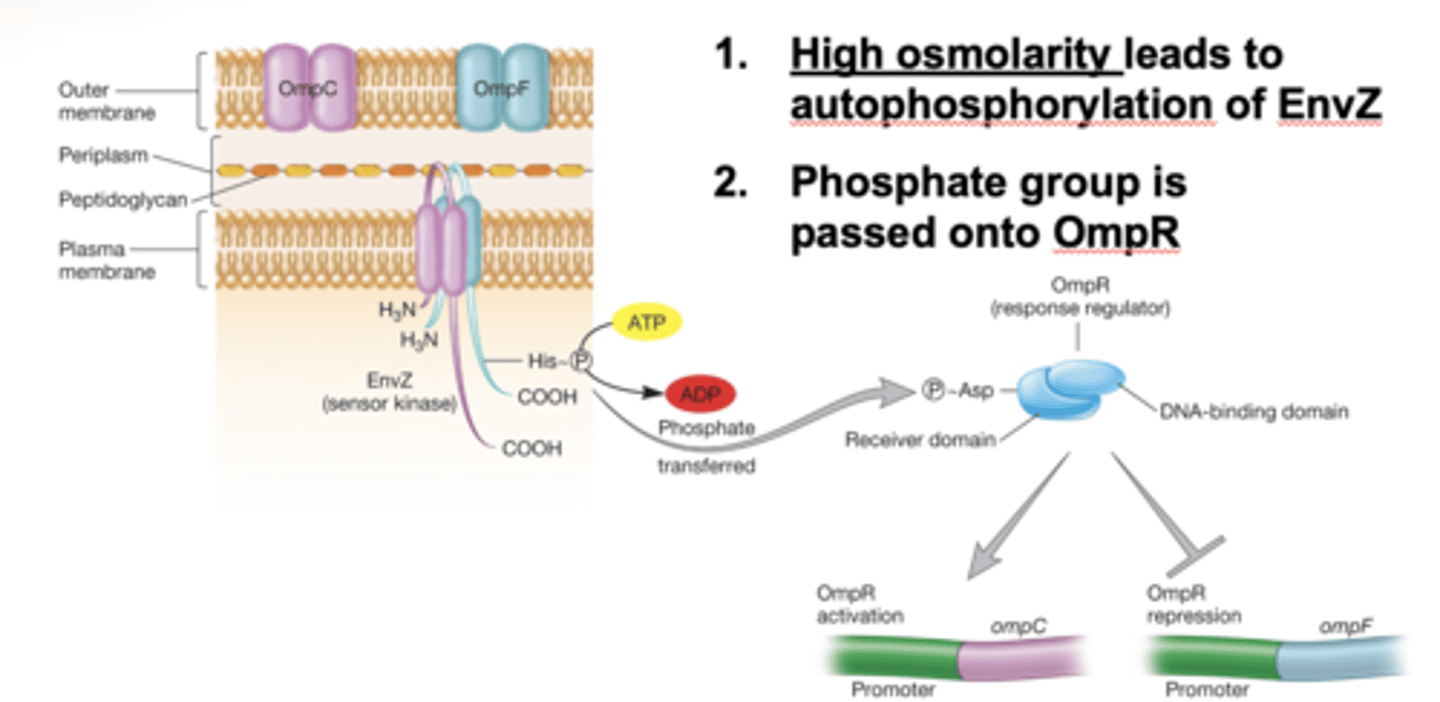
Many genes and operons turned on or off in response to environmental changes. Link the external environment to internal expression
What are the two components in TCSTS
1) Sensory kinase (histidine kinase)
2) Response-regulator protein: ends up binding to DNA. Activated by sensor kinase. Phosphate group transferred from H to D.
What are example components of TCSTS?
EnvZ: Sensor kinase (think env as in environment)
OmpR: Response regulator
These regulate outer membrane proteins OmpC and OmpF depending on osmolarity
When is OmpC and OmpF activated, and what does this activation cause?
OmpC: High osmolarity. Makes a smaller membrane pore.
OmpF: Lower osmolarity. Makes a fatter membrane pore.
OmpR: repressed F, activates C
No OmpR: no repression of F, no activation of C. Omp F = neutral.
How would you describe archaea when comparing it to bacteria and eukaryotes?
It looks like bacteria, but the machinery involved in replication and expression is closer to eukaryotes
What are the 3 polymerases involved in eukaryotic DNA replication?
pol alpha, pol epsilon, and pol delta. Epsilon makes leading, delta makes lagging
What is the end replication problem?
shortening of chromosomes after each round of replication
How is the end replication problem fixed?
telomeres via telomerase. Adds to the single-stranded DNA called the G-tail. Rich in guanosine.
How does telomerase work?
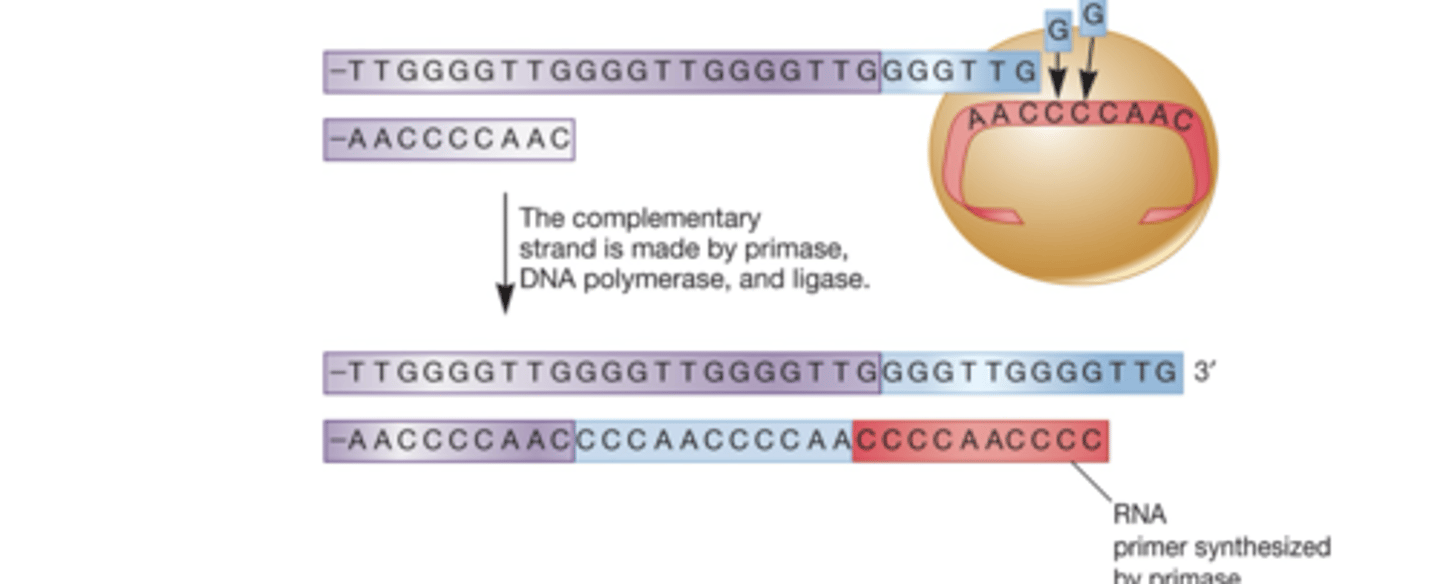
It has an internal RNA template that partially matches the G-tail sequence. This process is called reverse transcription. Can happen multiple times to keep telomere elongated.
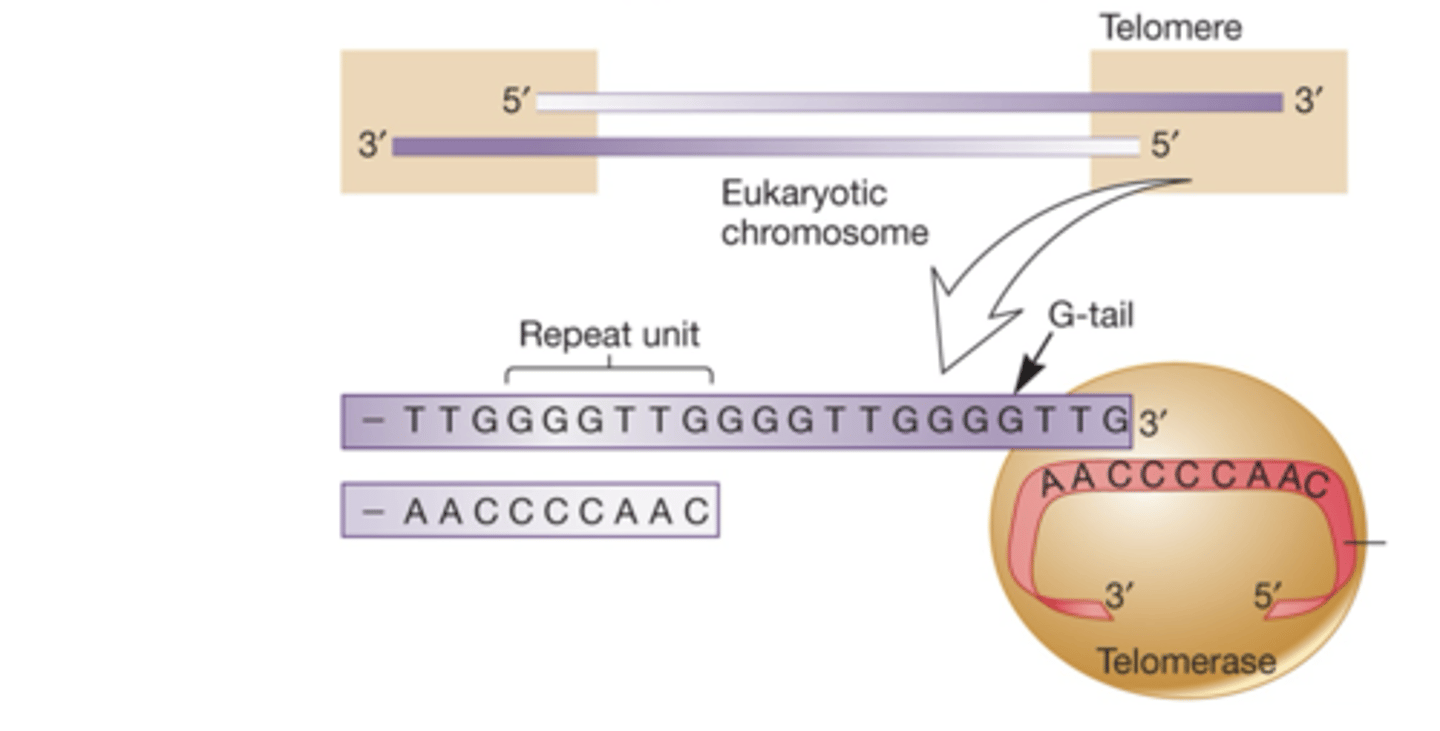
What happens after telomerase lengthens the G-tail?
There is then enough room on the lagging strand to lay down a primer and have DNA polymerase come in and fix the rest.
What does archeal DNA look like?
Circular but some have histones
What family of polymerases do eukaryotes use?
B
What unique DNA polymerase family does the phylum Euryarcharota use?
D
How many RNA polymerases do bacteria have?
1. But it has multiple sigma factors
How many eukaryotic RNA polymerases are there and what are their functions?
3.
1)catalyzes rRNA synthesis
2)catalyzes mRNA synthesis
3)Synthesizes tRNA molecules
Name the 4 promoter structures in the eukaryotic transcription
TATA box
BRE: TFIIB recognition element
Inr: Initiator element
DPE - Downstream promoter element
What is a transcription factor and who has it?
Protein complexes that help DNA and polymerase bind correctly. Eukaryotes
What is on the 5' cap?
7-methylguanosine
What happens after cap is added to pre-mRNA?
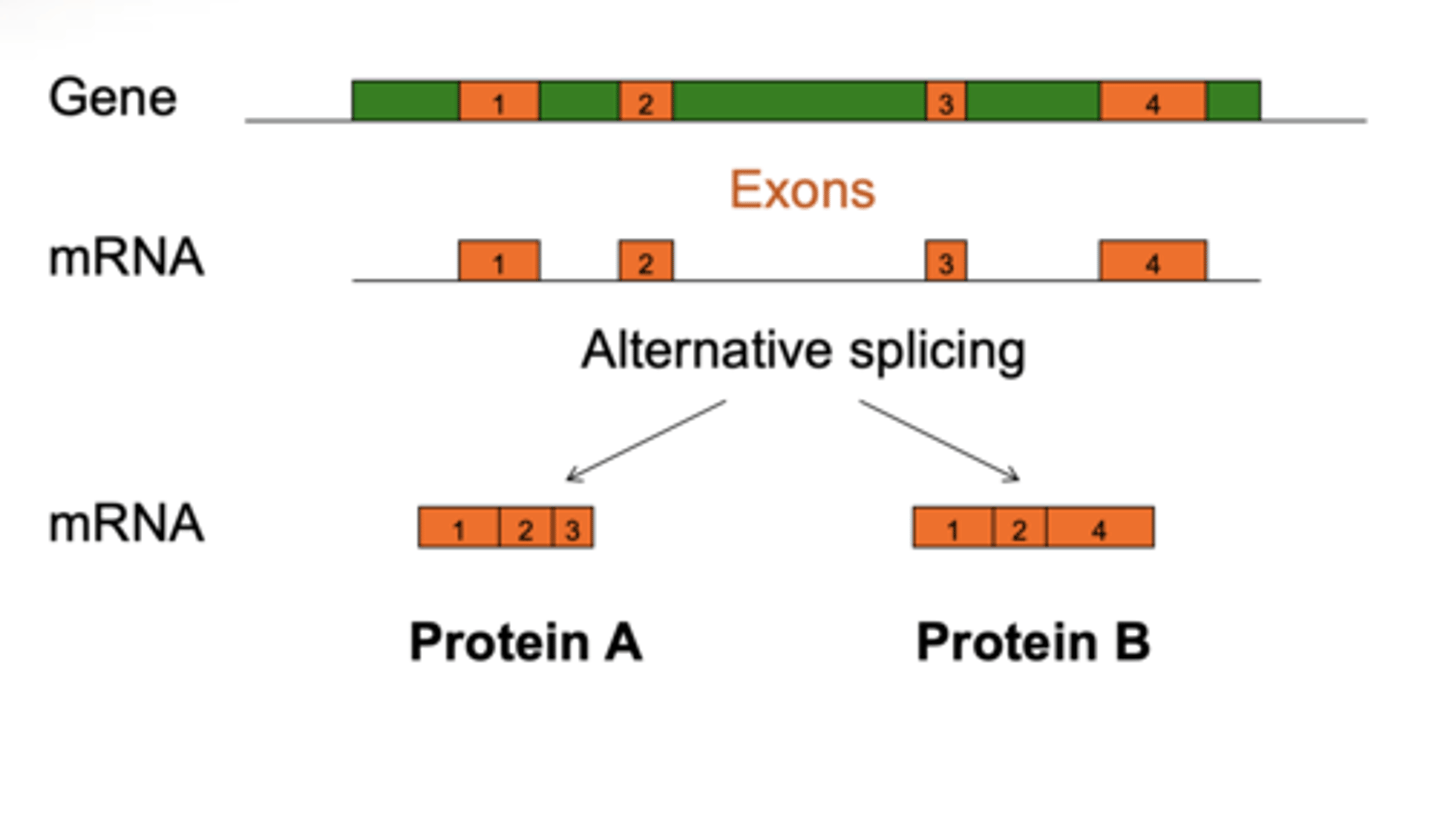
splicing/intron removal. Conducted by the spliceosome. Can do alternative splicing. Alternative splicing not found in the other two domains, just eukaryotes
What is alternative splicing?
What are 3 steps to eukaryotic RNA processing?
capping, splicing, polyadenylation
How are archaea similar and different to prokaryotes and eukaryotes in transcription?
"eukaryotic-like polymerase acting in a bacteria-like environment"
Resembles Pol II, and eukaryotic promoter region. No sigma factors
Happens in cytoplasm, is polycistronic, no introns.
What proteins bind to ribosome in eukaryotic translation?
Initiation factors bind to 5' cap, PABPs bind to 3' A-tail. Forms a loop that allows polysomes to form
How is eukaryotic translation initiated?
Met-tRNAi interracts with 40S subunit, new 43S complex binds to 5' cap. Slides along until it finds AUG. Then, 60S is recruited and the whole 80S ribosome starts translating
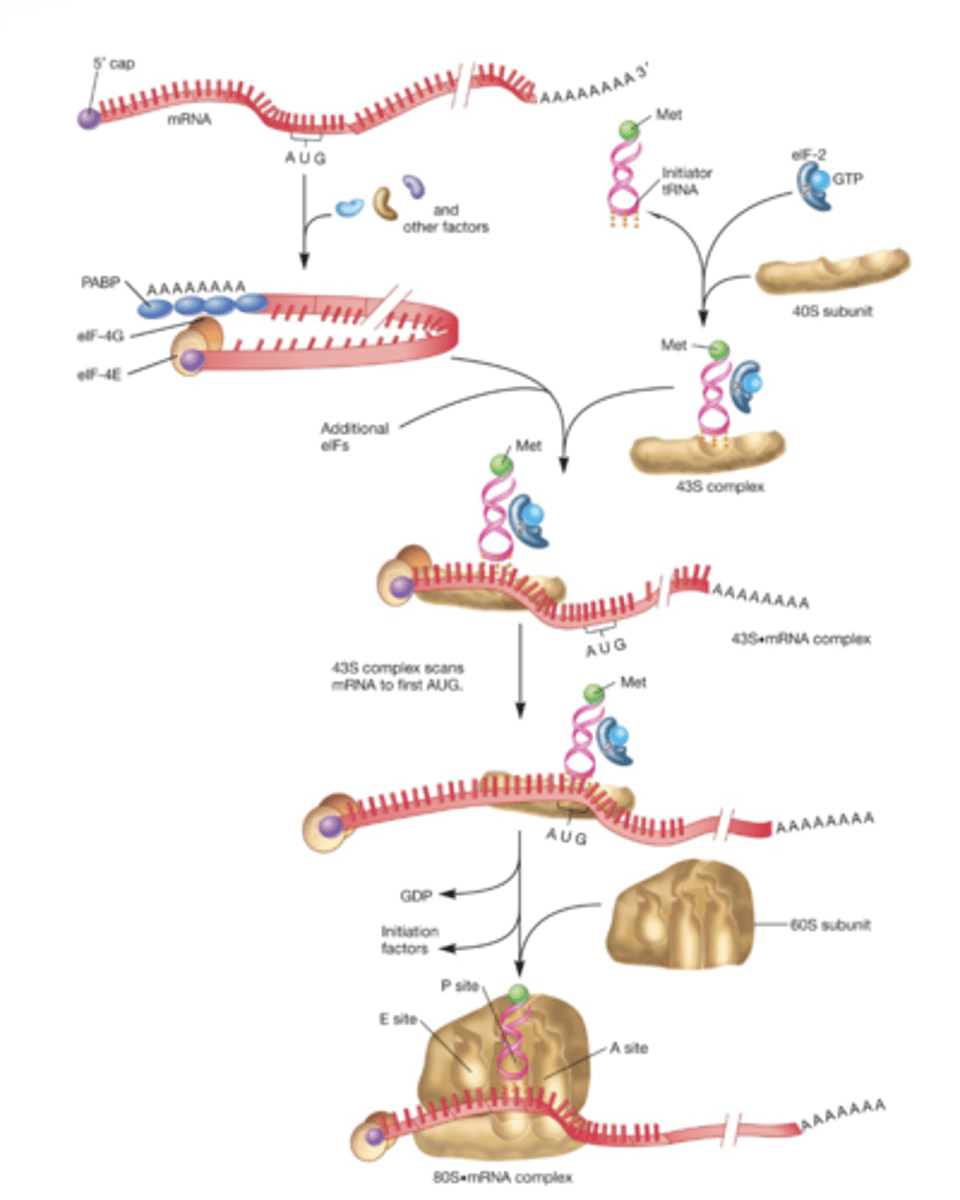
What are polysomes?
mRNAs with several ribosomes translating at once
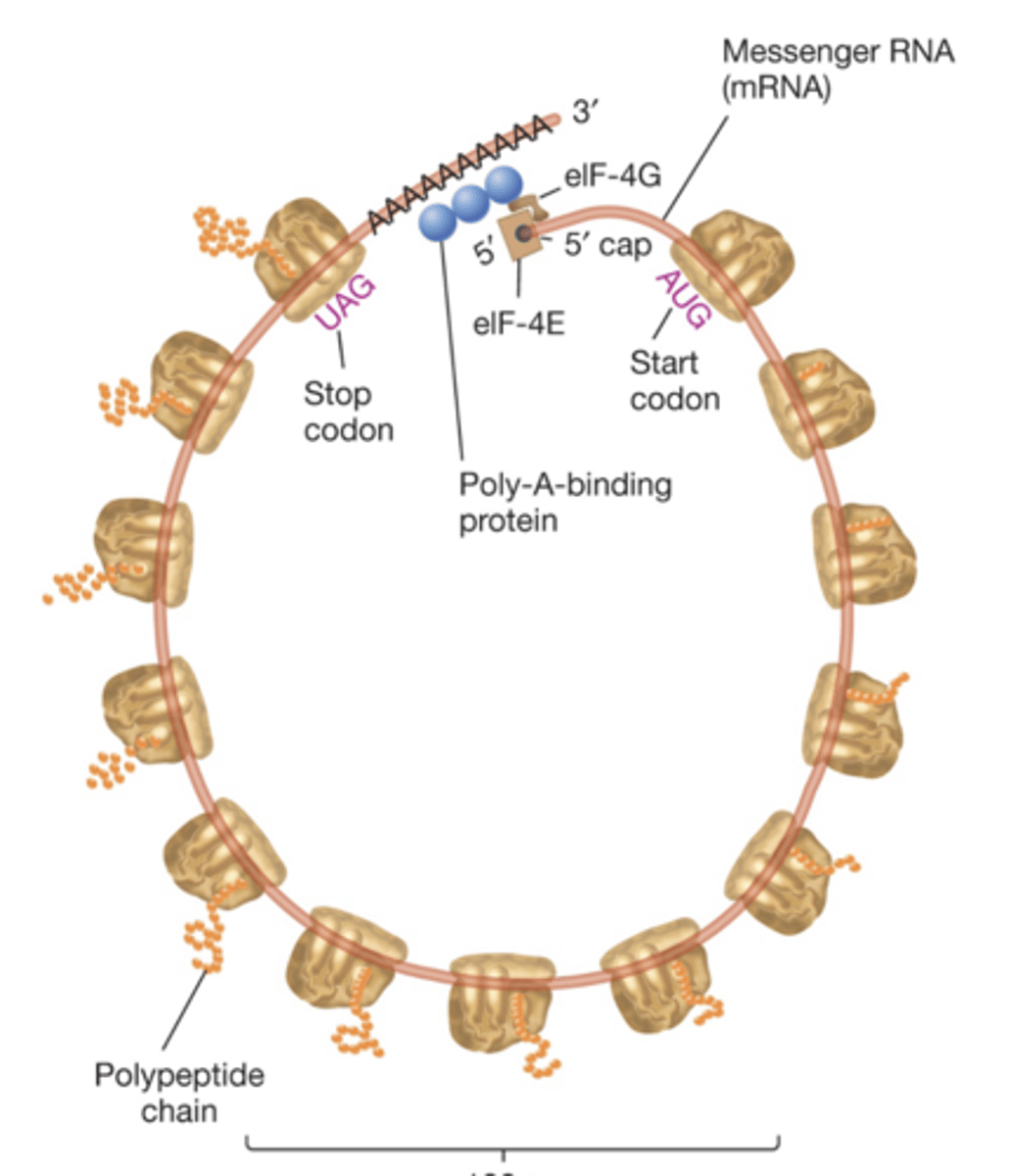
How is transcription regulated in eukaryotes?
Enhancer and silencer sequences
What does acetylation/methylation do to histones?
A: promote transcription
M: Inhibit transcription
What do miRNAs and siRNAs do?
Lead to the degradation of mRNA or block its translation. Uses an Ago RISC complex.
Can archaea have histones?
Yes, even though they have circular DNA
What is the difference between a CDS and IG mutation?
CDS = mutation in the coding sequence
IG = intergenic or between two genes (would be silent)
List the 3 types of mutations that a SNP can cause
Silent (no AA change), missense (AA change), and nonsense (premature stop codon)
What can an Indel mutation cause?
Frameshift
Do intergenic mutations effect phenotypic expression?
No
What happens when proofreading fails?
Mismatch repair, type of excision repair (Mut S,L,H)
How does cell know which strand is the right strand in mismatch repair?
Parent strand is only methylated strand
What is the difference between vertical and horizontal gene transfer?
vertical: Parents to progeny
horizontal: genes transfer from one independent organism to another. Typical in asexually reproducing organisms.
What makes a horizontal gene transfer (HGT) stable?
It finds a way to either self-replicate (plasmid) or integrate into the chromosome. If it doesn't, it will degrade.
How does the DNA from HGT integrate into host?
Homologous recombination or site-specific recombination
Differences: homologous = requires long strands. Site-specific = short strands, at specific sites of DNA, mediated by recombinases.
What are the two major types of transmissible DNA?
Transposable elements and plasmids?
What are the 3 mechanisms of HGT?
conjugation, transformation, transduction
What is transposition?
"jumping genes". Transposable elements that move in and out of the DNA.
What are the 3 types of transposable elements?
Insertion sequences (IS): Simplest transposon
Composite Transposons (Tn): has 2 IS's sandwiching a extra gene
Unit transposons: An expanded IS with an extra gene
What is the DR?
Direct repeat. Where TE is inserted into host. Gets duplicated during insertion (when overhangs are filled in)
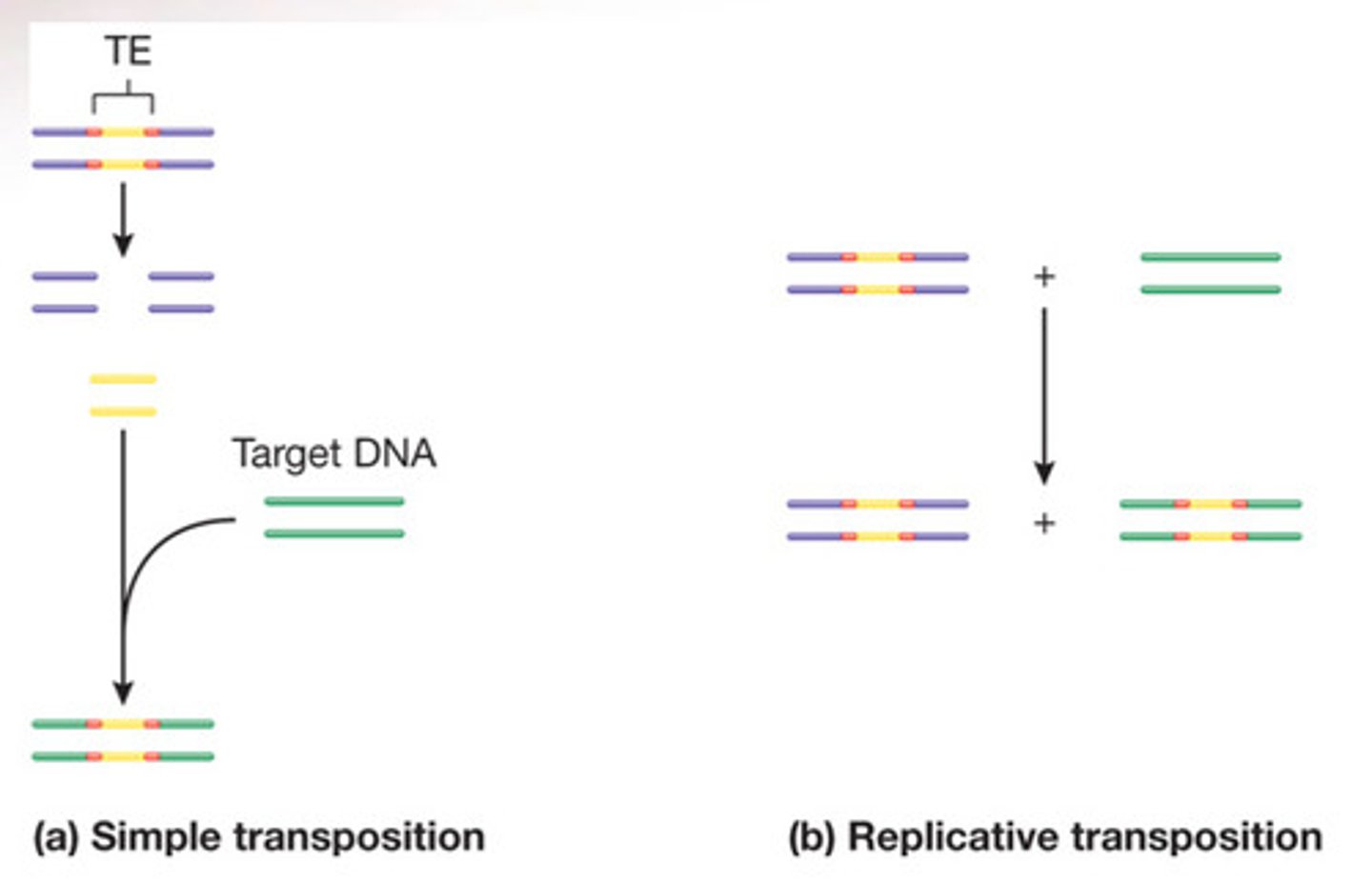
What is the difference between simple transposition and replicative transposition
Simple: cut and paste
Replicative: copy and paste
What are retrotransposons?
RNA copy of TE is made, which gets reverse transcribed into the new integration site
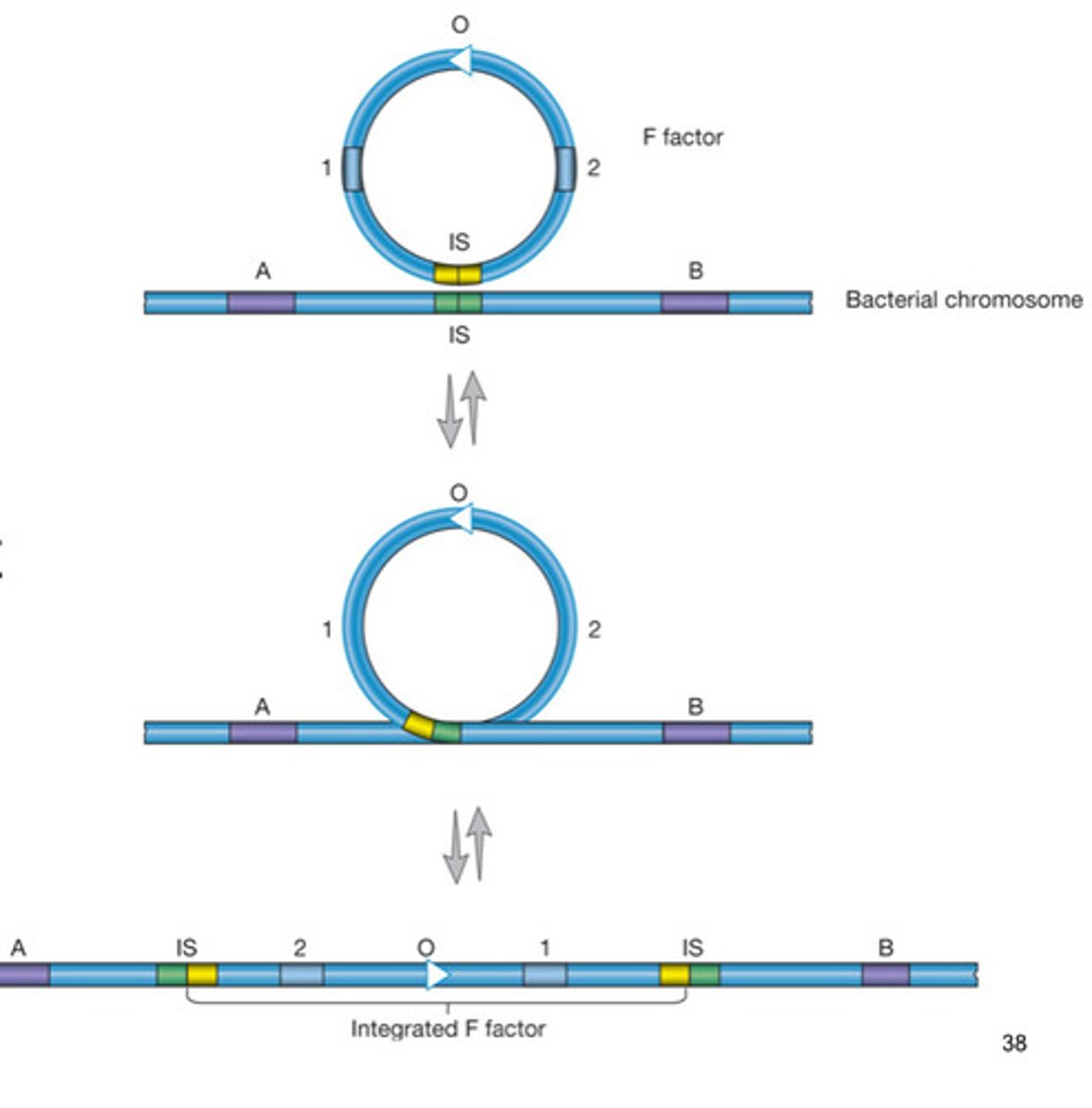
What are episomes? And how do they insert?
plasmids that can integrate into the genome. Integrates with an insertion sequence (IS)
What enzymes moves transposons?
Transposase
What are conjugative plasmids?
Can transfer copies of itself to other bacteria. Ex: F plasmid
How is the F plasmid transferred?
Through rolling circle method of replication, followed by synthesis. Transfers via a sex pillus
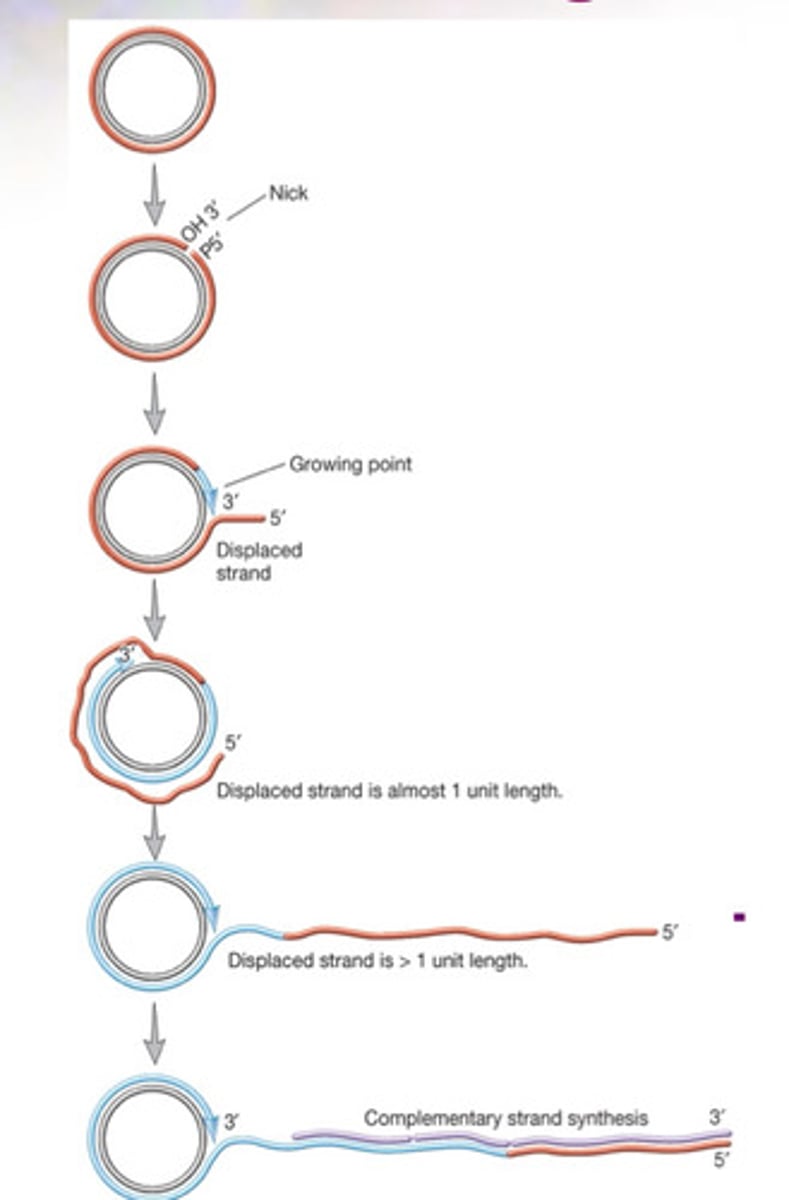
What is an HFr plasmid?
F+ integrates into chromosome. Conjugation can still occur with an F-, but a complete f factor is usually not transferred
What is an F' plasmid?
When F plasmid incorrectly excises from the host chromosome, taking up some of the chromosomal genes as well
What has to happen for linear DNA to be stabilized after transformation?
Incorporation into the chromosome
What is the difference between the viral lytic and lysogenic cycles?
Lytic actively destroys, lysogenic resides latent in host (becoming a prophage)
What is generalized transduction?
Occurs do to error in lytic cycle. When virus accidentally gets packaged with host DNA instead of viral DNA. Allows for transduction