MediaLab Microtomy
 Call Kai
 Learn
 Practice Test
 Spaced Repetition
 Match
 Flashcards
 Knowt Play
1/124

There's no tags or description
Looks like no tags are added yet.
125 Terms
while routine microtomy requires paraffin section be cut from 4-6 microns. The requirement for special stains varies on the tissue type being demonstrated. what is the microtomy requirement for demonstration of basement membrane tissue with jones methenamine silver stain
2-4 microns
the diamond knife is attached to the water trough, which is used to float tissue sections that are cut on an ultramicrotome
true
which of the following is acceptable for freezing free tissue to the cryotomy
-snap freezing by dry ice, then transferring tissue to cryostat
-using the combination of freezing platform and heat extractor in cryostat
-using dry ice and isopentane slurry to freeze tissue, then transfer to cryostat
-freezing tissue in an isopentane bath, then transferring to cryostat
During microtomy, fatty tissue within the parrafin ribbon explodes on the water bath. the water bath temperature is within range. all of the following can cause processed tissue to explode in water bath
fatty tissue over fixed and over processed
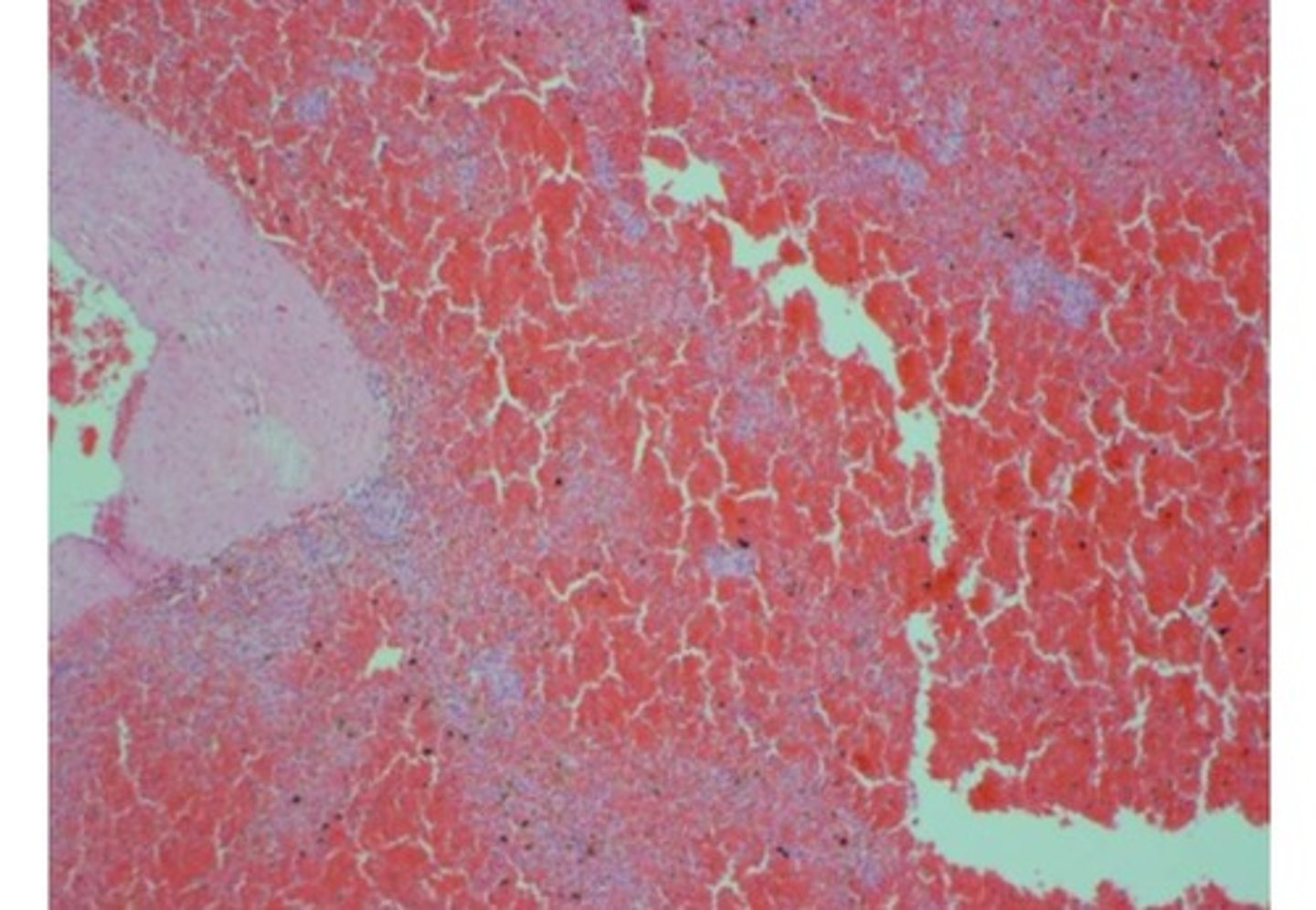
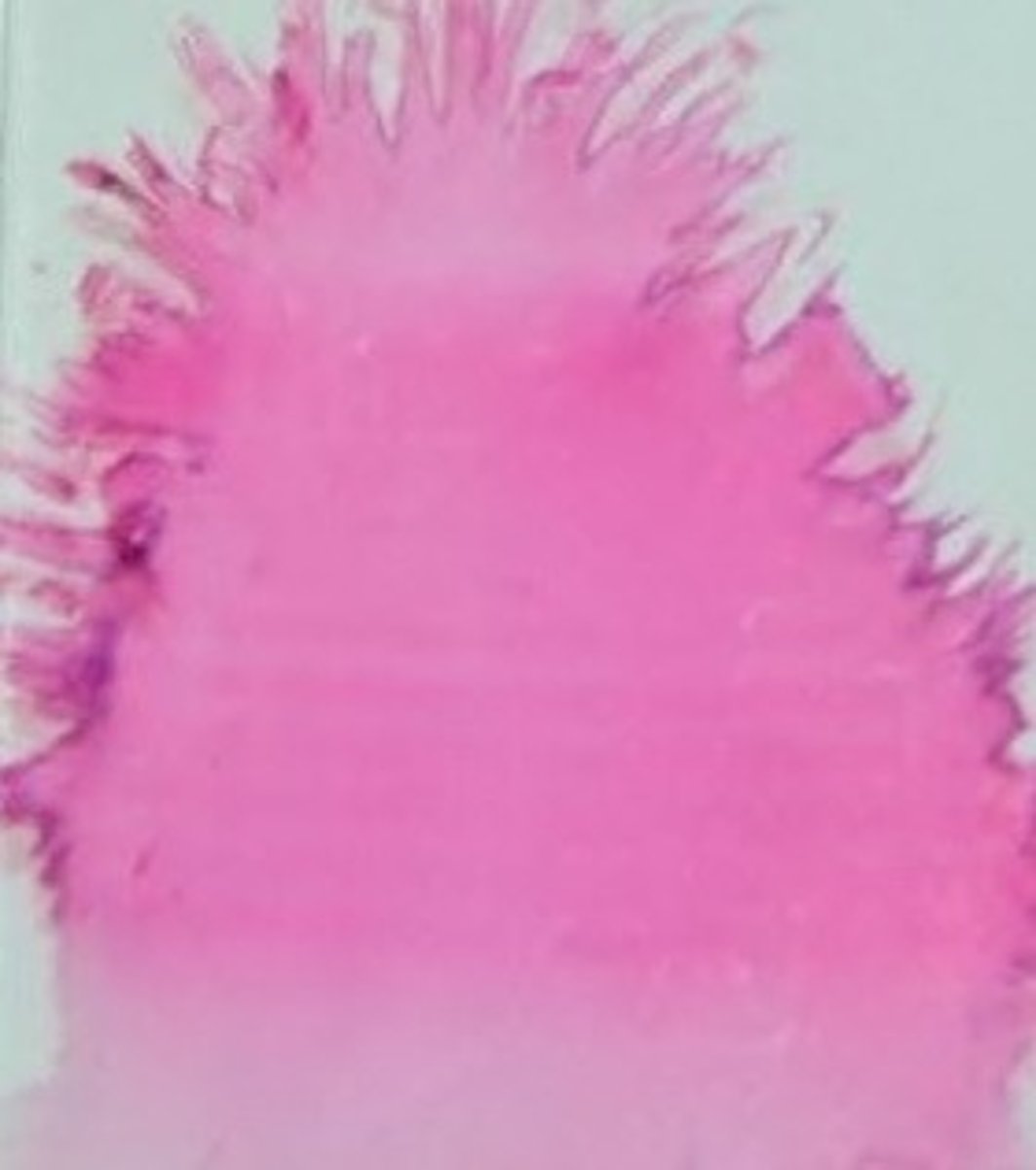
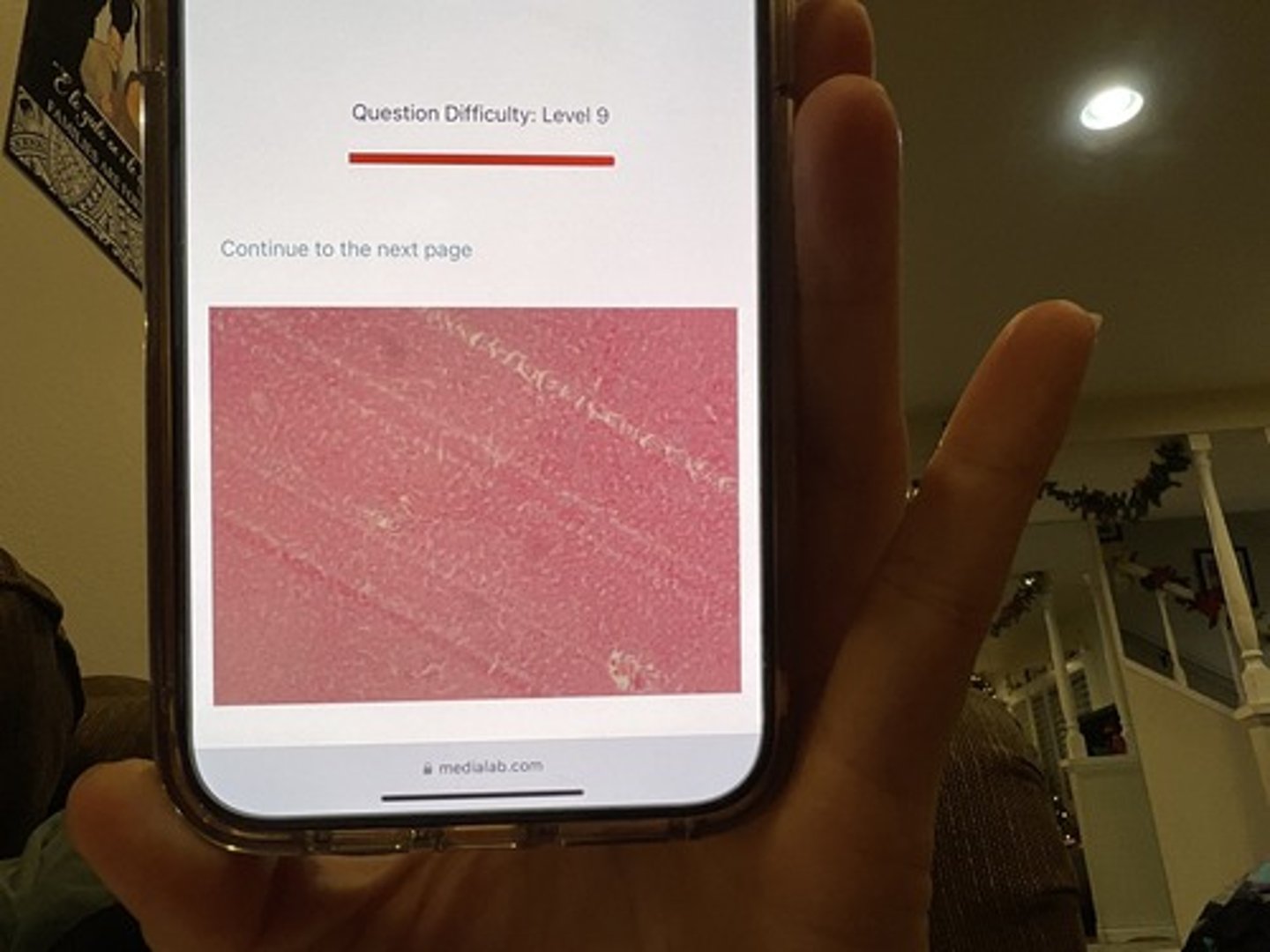
what is the most evident microtomy artifact shown in the image
parched earth
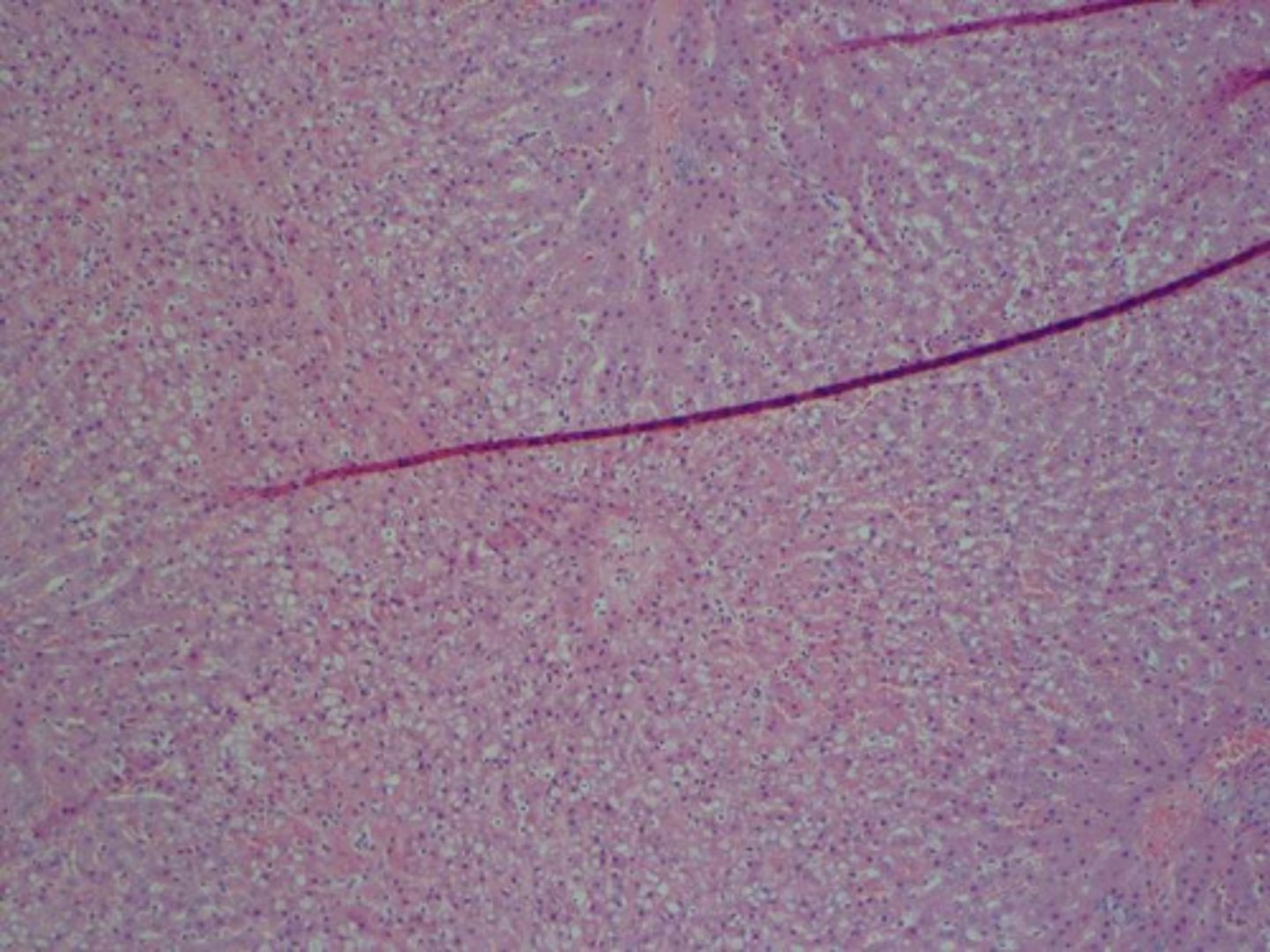
what is the most evident microtomy artifact shown in the image
folds wrinkles
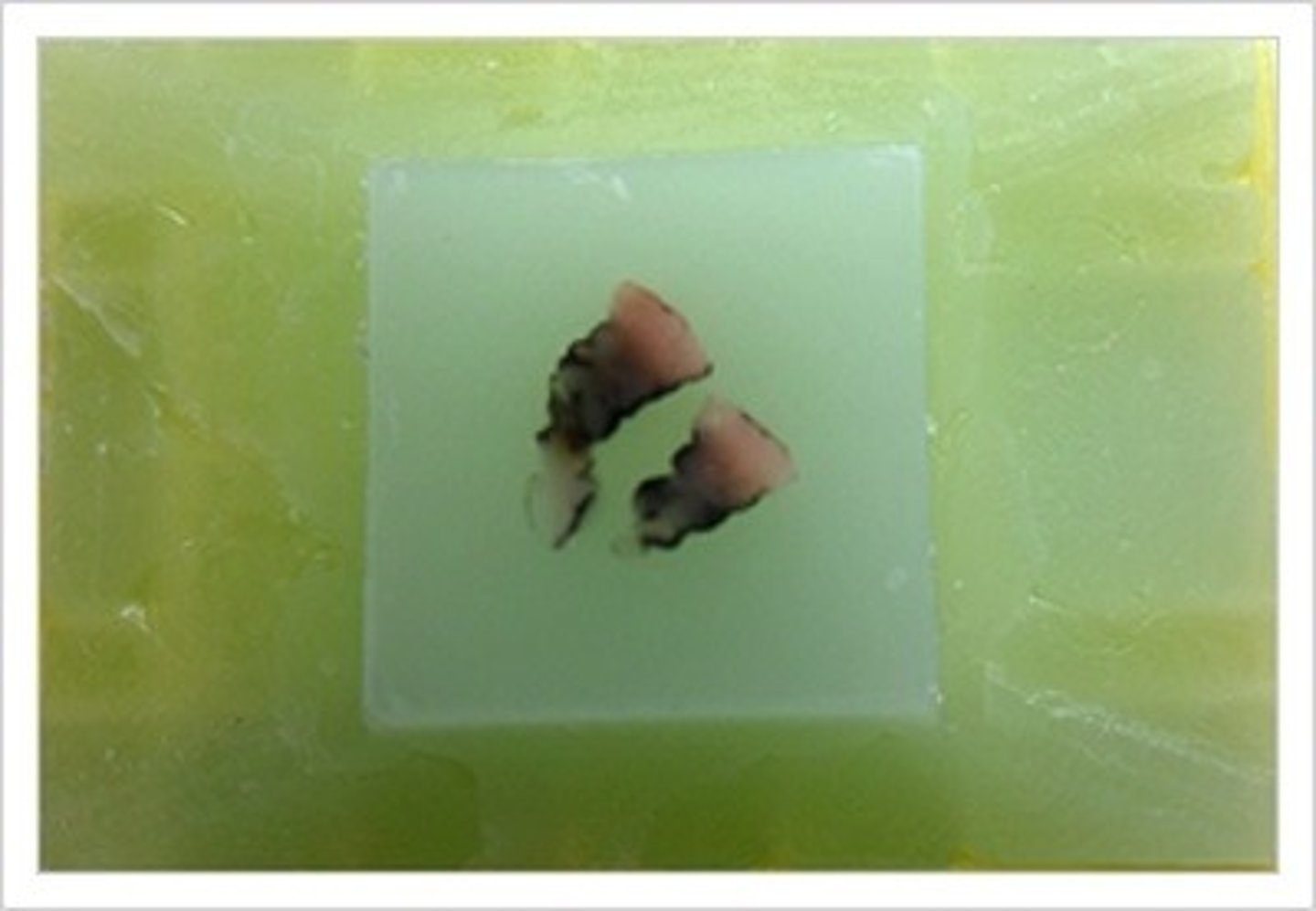
what type of tissue type description would best identify the specimen in the image of this cut paraffin block
punch skin biopsy
an issue arising during microtomy may have several sources that require consideration in order for it to be resolved
true
the cutting angle is between the block face and the upper facet of the knife
true
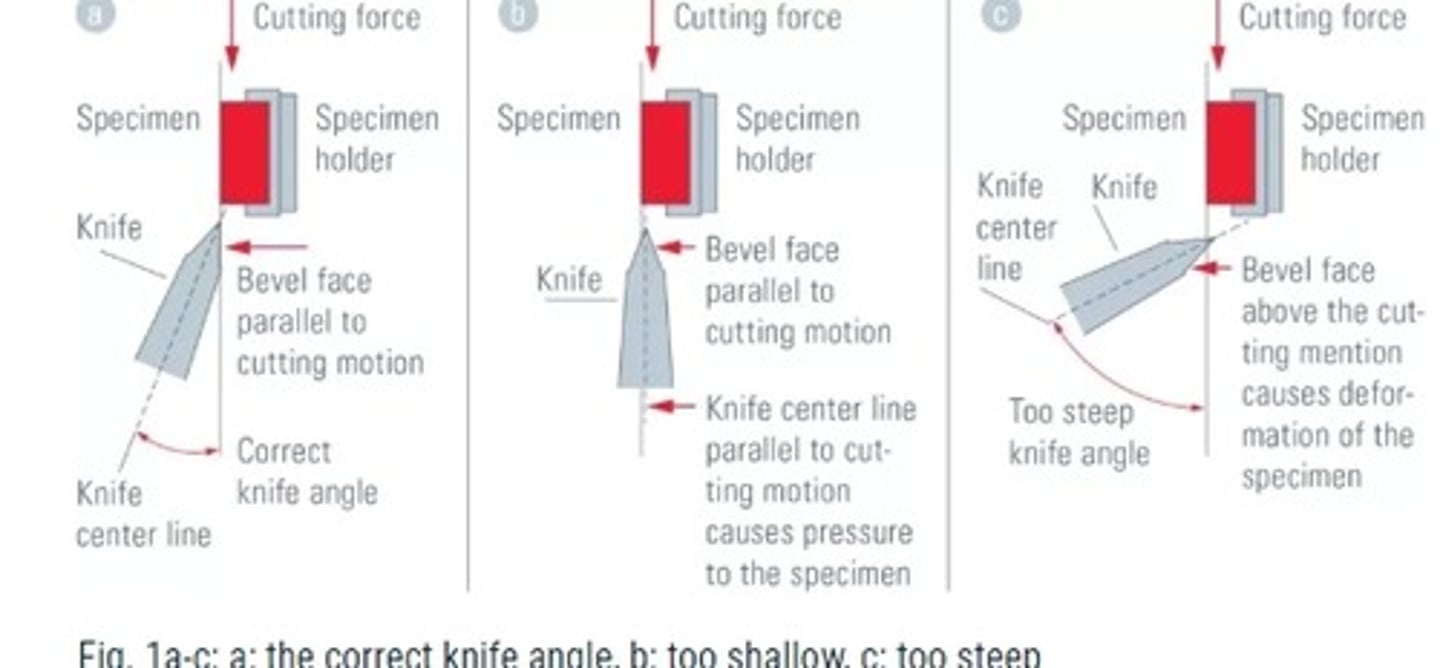
when tissue has varied layers of hardness, such as skin or bone, how should the block be positioned in the microtome?
so the knife passes through the hardest portion of the tissue last
a histotechnician is experiencing sections that will not ribbon. which of the following is NOT a factor that would contribute to poorly formed ribbons
improper embedding
things that would
-improper knife tilt
-knife not secured
-paraffin too hard
which of the following can cause a paraffin ribbon to compress and crumple or wrinkle
block is too warm
where are microorganisms contaminants on tissue slides usually picked up?
from the floatation bath
which of the following is necessary to ensure straight paraffin ribbons and avoid crooked ribboning
vertical sides of block must be perpendicular to the knife and horizontal edges of block parallel to the knife
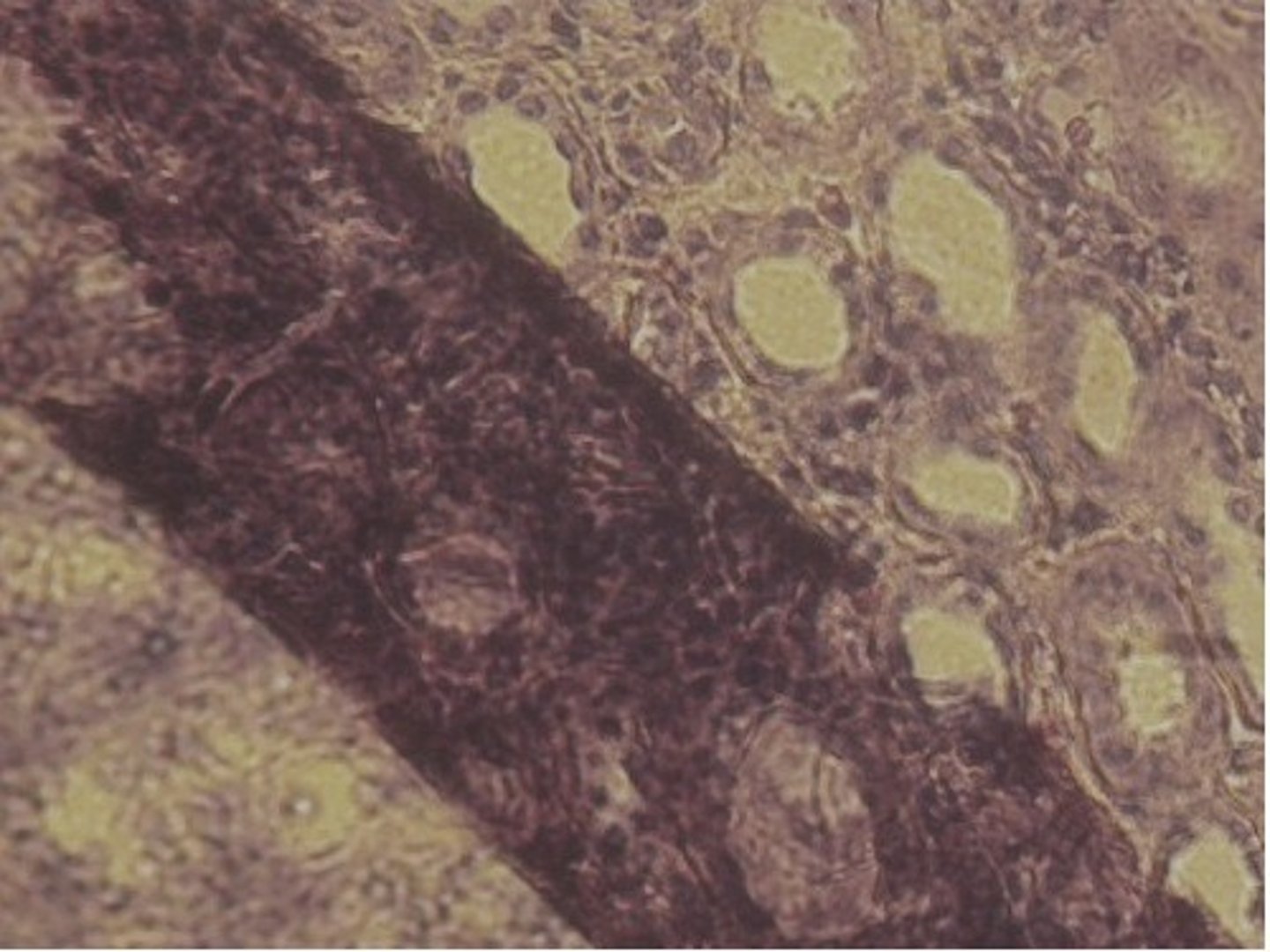
based on the image, what is one thing that must be done in order to prevent this from happening
stretch the ribbon
For optimal cryo-sectioning results, fresh tissue should be placed directly on the metal chuck and then sectioned.
false.
for optimal cryo sectioning you need freezing compound between chuck and tissue and on top of tissue
all of the examples provided will cause "parched earth" effect except for which of the following
the ribbon is not stretched enough
these will cause parched earth
floatation bath temp too hot
tissue not properly processed
use of fluorocarbon spray to chill the block
what is a possible cause of sections being lifted from the knife on the upstroke or sections sticking to the top of the block
knife tilt is incorrect
a pathologist orders a congo red(amyloid) stain on a skin sample. At which thickness should the tissue be cut for optimal stain results
cut tissue at 8-10 microns
positive charged slides attract frozen and paraffin tissue electrostatically to the slide, without the need for other slide adhesives
true
a histotechnology student attempts to coarse face a bone sample embedded paraffin block. the bone is very difficult to face and is beginning to crumble and splinter out of the block. what would you recommend that the student try before continuing to section this block
-hydrate the block in ice water
-decalcify the exposed bone tissue in a decalcifying solution prior to sectioning
to aid in diagnosis, it is recommended that LIVER biopsy samples are sectioned at what micrometer thickness?
3-5microns
what is the preferred temperature to dry paraffin sections on slides?
at the melting point
what is the most evident microtomy artifact in the image?
venetian blinds/washboarding
a pathologist observing a liver section under a microscope sees squamous debris. what could be the reason for this?
contaimination from another tissue
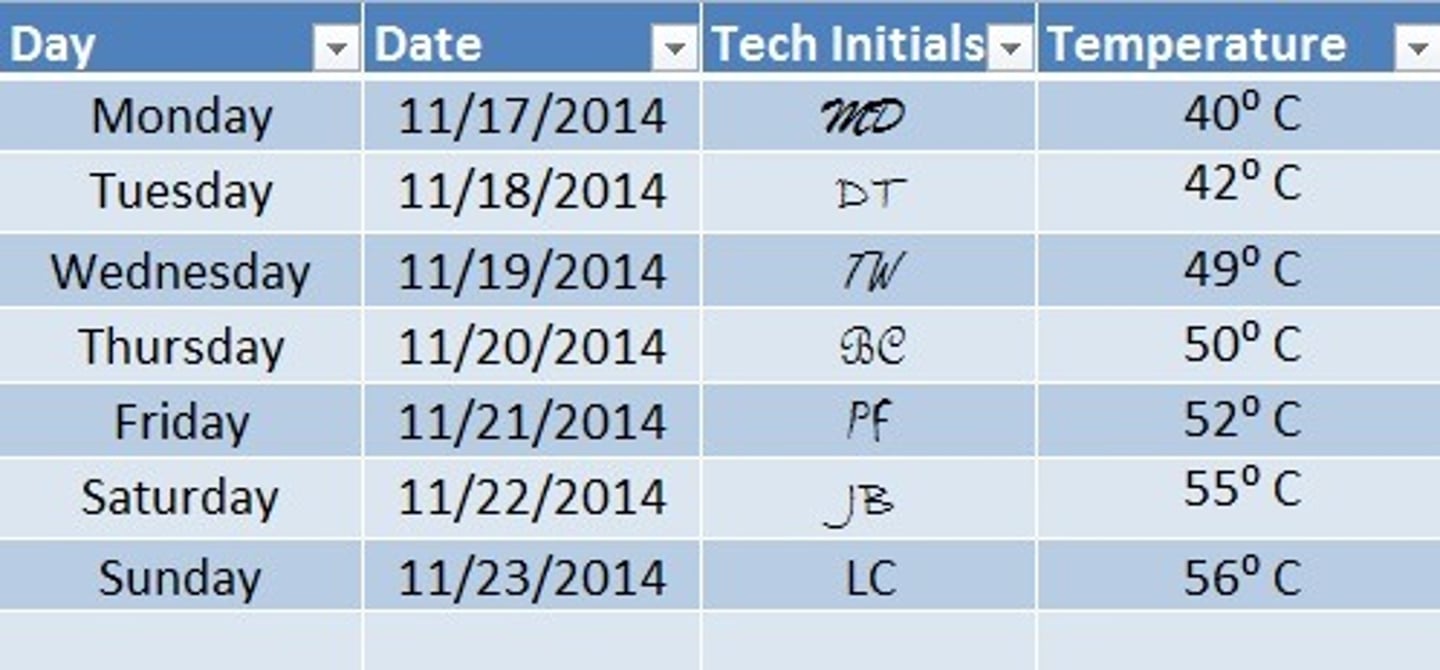
refer to the floatation bath temperature chart shown in the image. Based on your knowledge of the relationship between the temperature of float bath and melting point of paraffin. which days displays a water temperature within appropriate range?
Wednesday, Thursday, Friday
which of the following tissues need to be sectioned at 8-10 microns, for routine and specials
brain, central nervous system tissue
For electron microscopy (EM) tissue sections that are cut on the ultramicrotome are picked up on a mesh copper grids for metal staining
true
A GI biopsy sectioning protocol often used to diagnose Hirschsprung's disease would MOST likely be categorized as which of the following?
serial sectioning
As in any specimen, liver biopsies are subject to microtomy artifacts. Which of the following can cause chatter artifacts?
improper rehydration of tissue or rapid sectioning
Microtome knives/blades come in a variety of profiles. Which of the following knife profiles is recommended for the marjority of paraffin microtomy?
wedge
Slide adhesives that are added to water, such as gelatin, agar, and glue, can contaminate water with bacteria.
true
If a ribbon splits lengthwise when cutting paraffin sections, what is the most likely cause?
nicks or debris on blade
In order to preserve cellular morphology during frozen section, fresh tissue must be frozen rapidly.
True
Study the artifact in the image. Which of the corrective action listed would NOT help to eliminate this artifact?
tighten the microtome parts
Things that would help
-decalficy the tissue
-avoid touching the blade with forceps
-change the knife/blade
A cryo bath is used during cryotomy to float frozen tissue sections before placing them on a slide
false
Bloody tissues are most prone to the following microtomy artifacts EXCEPT for which one?
bubbles
prone to:
-parched earth
-chatter
-moth-eaten holes
What is the thickness of most standard glass slides
1.5 mm
The temperature of the floatation bath used for paraffin sections should be a 5-10 C ABOVE the melting point of the paraffin.
false
-the temperature of the floation bath used should be 5-10 C below the melting point of paraffin used to embed the tissue so as to not introduce artifacts due to over-expansion of tissue sections.
What is the most common type of hazard that you are exposed to during routine paraffin microtomy
mechanical hazard
Successful microtomy is dependent on tissue fixation, processing, and embedding
true
which statement is true with regard to the cutting speed of paraffin tissue sections?
cutting speed should be consistent; about one revolution per second
while routine paraffin sections are cut at 4 to 6 microns, the microtomy requirements for special stains varies depending upon the tissue element that is being demonstrated. What is the microtomy requirement for the demonstration of nerve tissue with luxol fast blue stain?
at least 10 microns
the part of the microtome where the block is held is called the rotary wheel
false. the correct part that holds the block is known as the specimen holder or block holder.
A histotechnology student manually depars and performs H&E stains on a dozen tissue slides, only to discover that all the slides were blank. Not a trace of tissue remained on the slides after the stainind was completed. the puzzled student to his supervisor for assistance. what questions could the supervisor ask to determine the source of the problem
were the freshly cut slides placed in the slide dryer?
what was the temperature setting on the slide dryer?
how long were the slides in the slide dryer?
the preferred knife for cutting thin sections of epoxy embedded tissue is ceramic
false
preferred knife is a diamond, as it is the only one sharp enough to cut the hard metal
during paraggin ribbon sectioning, 95% alcohol may be added to the water to lower surface tension and remove wrinkles
true
the pathologist requests a recut on a small intestine biopsy block because the chatter is interfering with their diagnosis. which action will address the chatter problem in the tissue sections
use new blade for the recut request
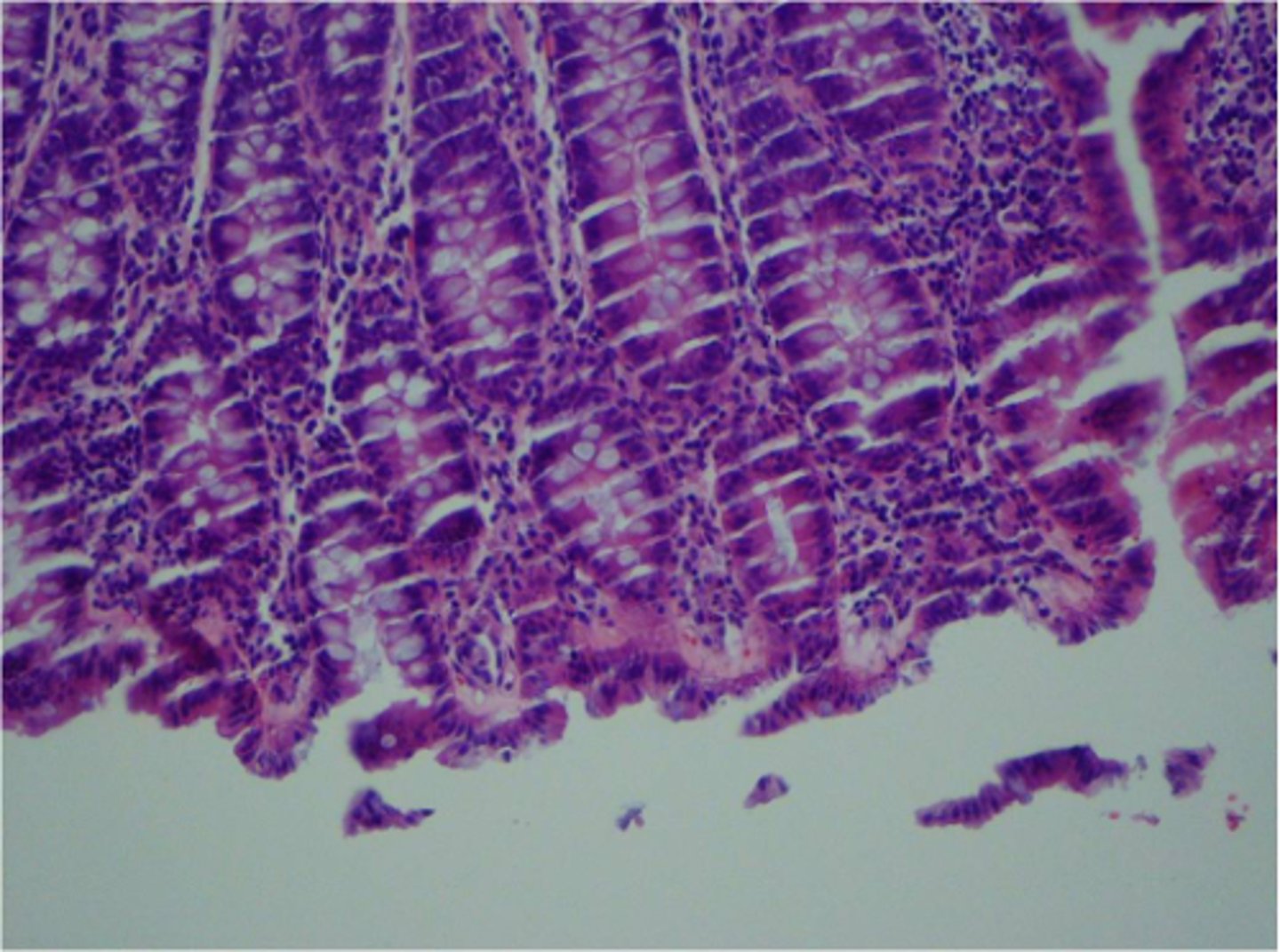
a new histotechnologist notices that there are white spots on certain slides after they are deparred with xylene. what is a possible explanation for this?
the slides were not properly dried
study the artifact in the image. which of the corrective actions listed, would help to eliminate this artifact?
decreasing ribbon time on water bath
which of the following problems can be encountered when the water bath is too cold for the paraffin sections
fold and wrinkles
tissue samples to be stained with bielschowskys silver staining protocol should be sectioned at how many microns
6-8 microns
muscle and uterine tissue cryotomy is optimal at what temperature
-15 C to -20 C
slides should be kept cold for proper adherence of frozen sections
false
study the artifact in the image. Which of the corrective actions listed will NOT help to eliminate this artifact?
increasing trimming/facing speed
things that will help
decrease the trimming/facing speed
decrease the trimming/facing microns
change the blade/knife
tighten down the blade
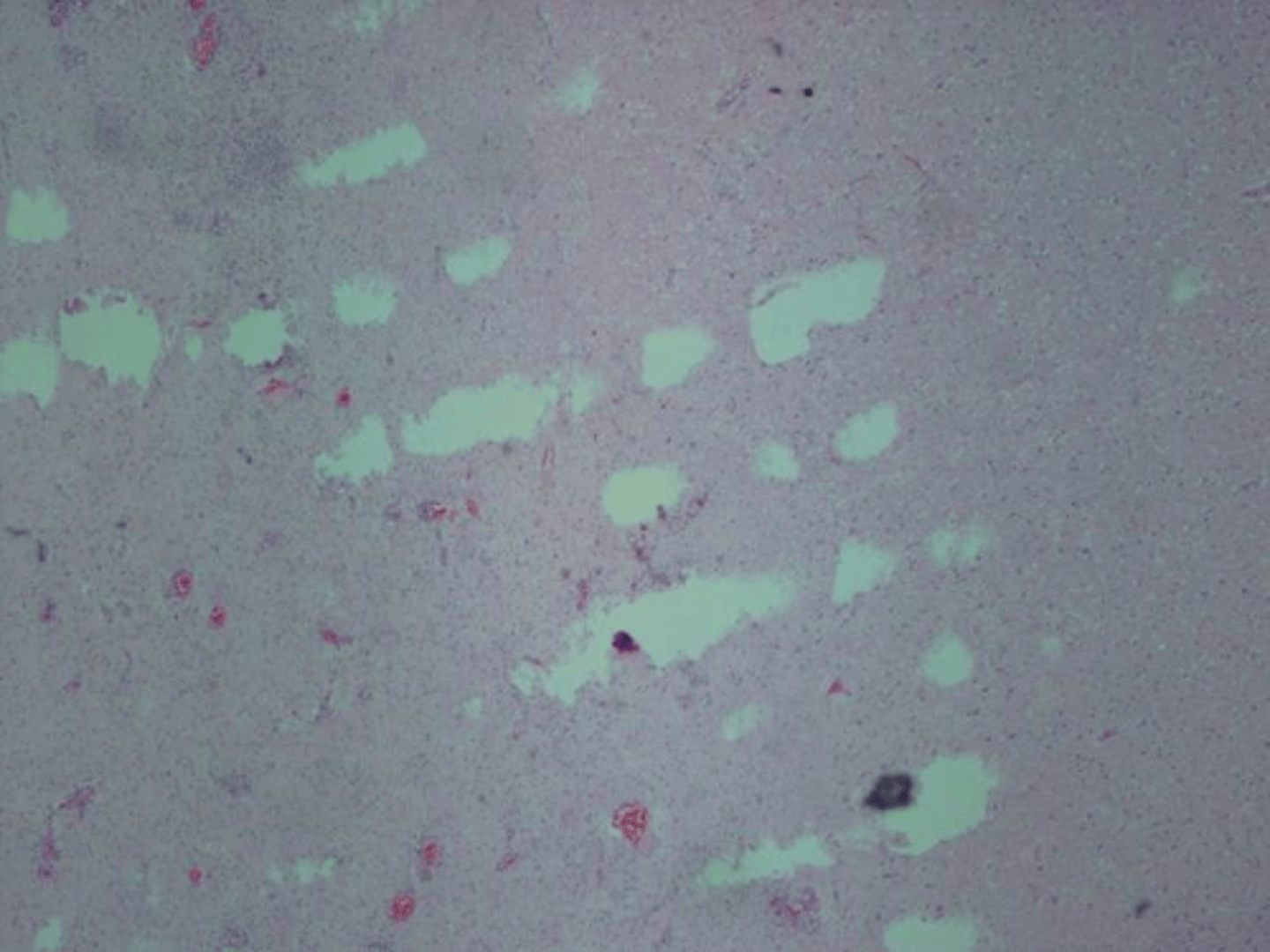
A cryostat has been contaminated with infectious tissue. How should the cryostat be decontaminated after sectioning is complete?
remove tissue debris, wipe down chamber with 5% bleach, following by 95% alcohol
Venetian blind artifact is demonstrated in the image. Considering the list of corrections provided, which action would NOT help to eliminate this artifact?
increasing the sectioning speed
would help
-tightening all microtome parts
-moving the microtome to a more stable work surface
-changing the knife/blade
-decreasing the sectioning speed
-adjusting the clearance angle
-securing the tissue block in the block holder
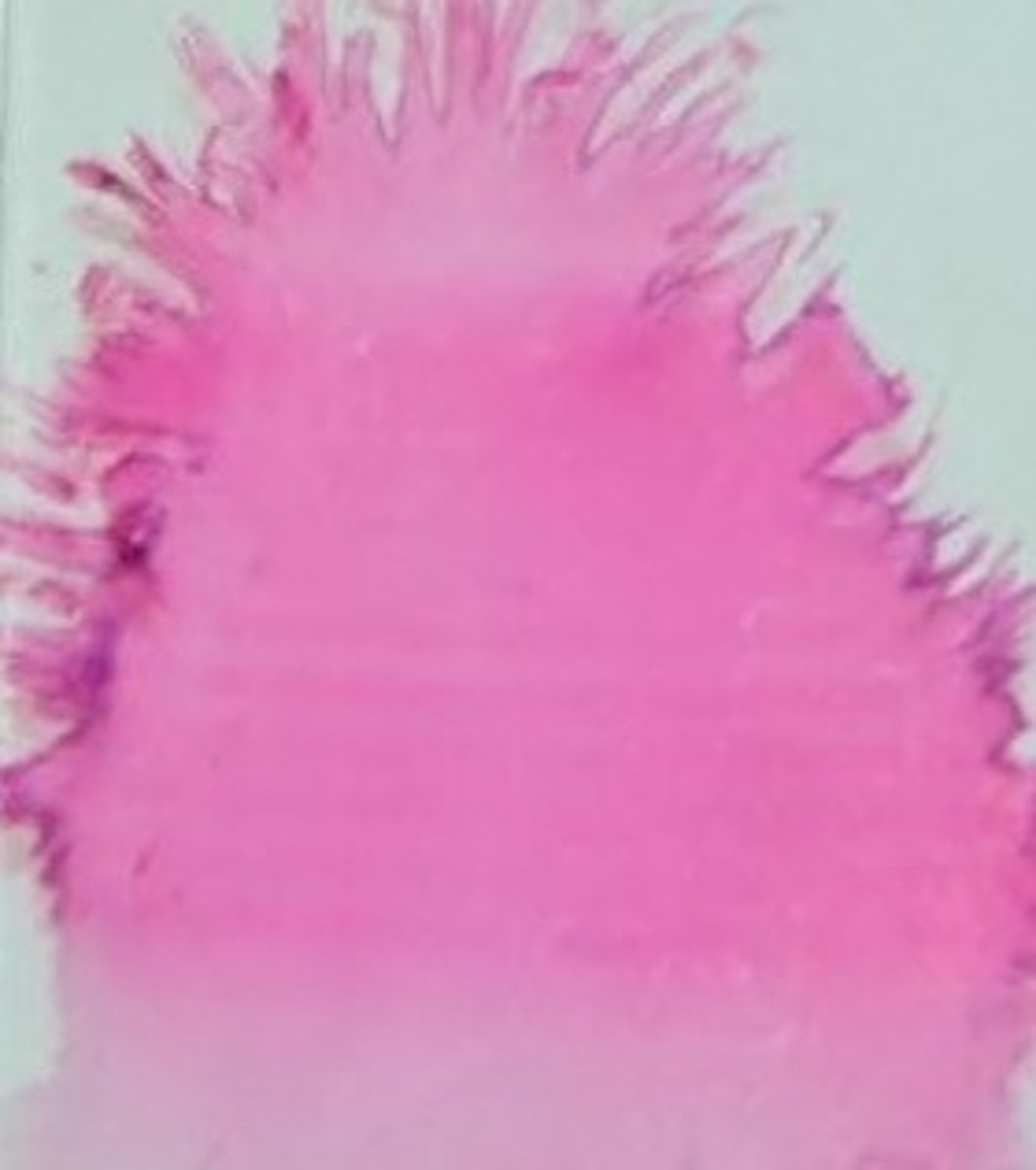
paraffin sections are floated on a water bath, but part of the tissue seems to be missing, even though it is visible in the paraffin block. what is the possible cause for this?
-tissue not embedded flat
-tissue is under-processed
-tissue not faced or trimmed deep enough
ALL of the ABOVE
the bevel angle can be adjusted on a microtome by moving the knife tilt/knife holder to an angle between 3-8 degrees
false.
the bevel angle is the angle of the very tip of a blade. this angle cannot be adjusted by knife tilt on a microtome
all of the following contribute to successful microtomy except for which factor?
paraffin blocks at room temperature
what does contribute:
-sharp knife/blade
-consistent cutting speed
-proper knife tilt
where is the appropriate place to discard disposable steel blades used for paraffin sectioning?
in a sharps container
at a minimum, how often should a floatation bath be emptied and refilled
once a day
the arrow is pointing to an artifact in this image. of the possible corrective actions listed, which would NOT help to prevent this artifact?
reduce trimming microns and speed
what would help
-remove bubbles from the bottom of water bath before using
-gently lay ribbon on the water surface to prevent air from trapping
-apply the coverslip before the section starts to dry
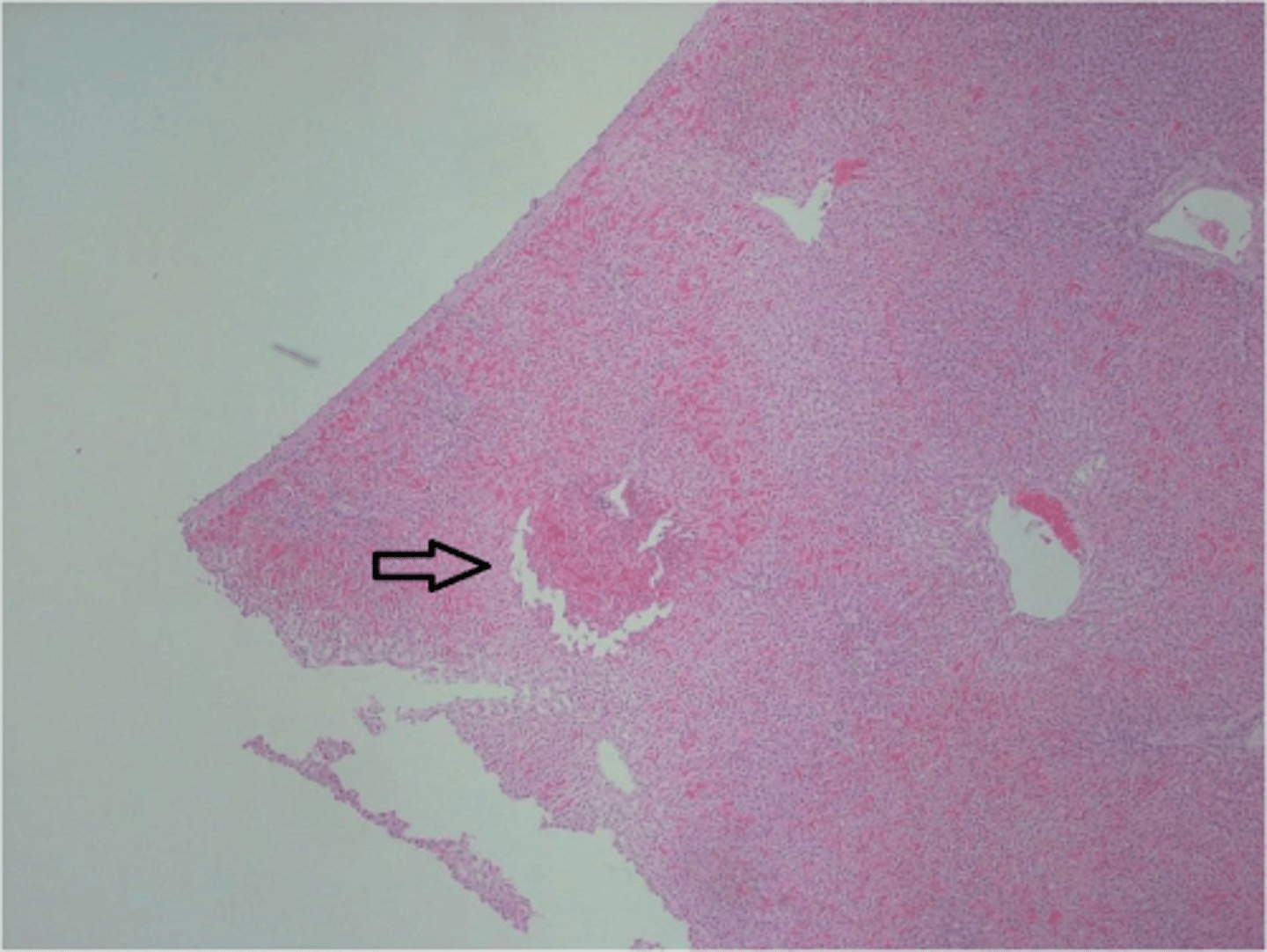
arrow is pointing to a trapped air bubble that burst during staining
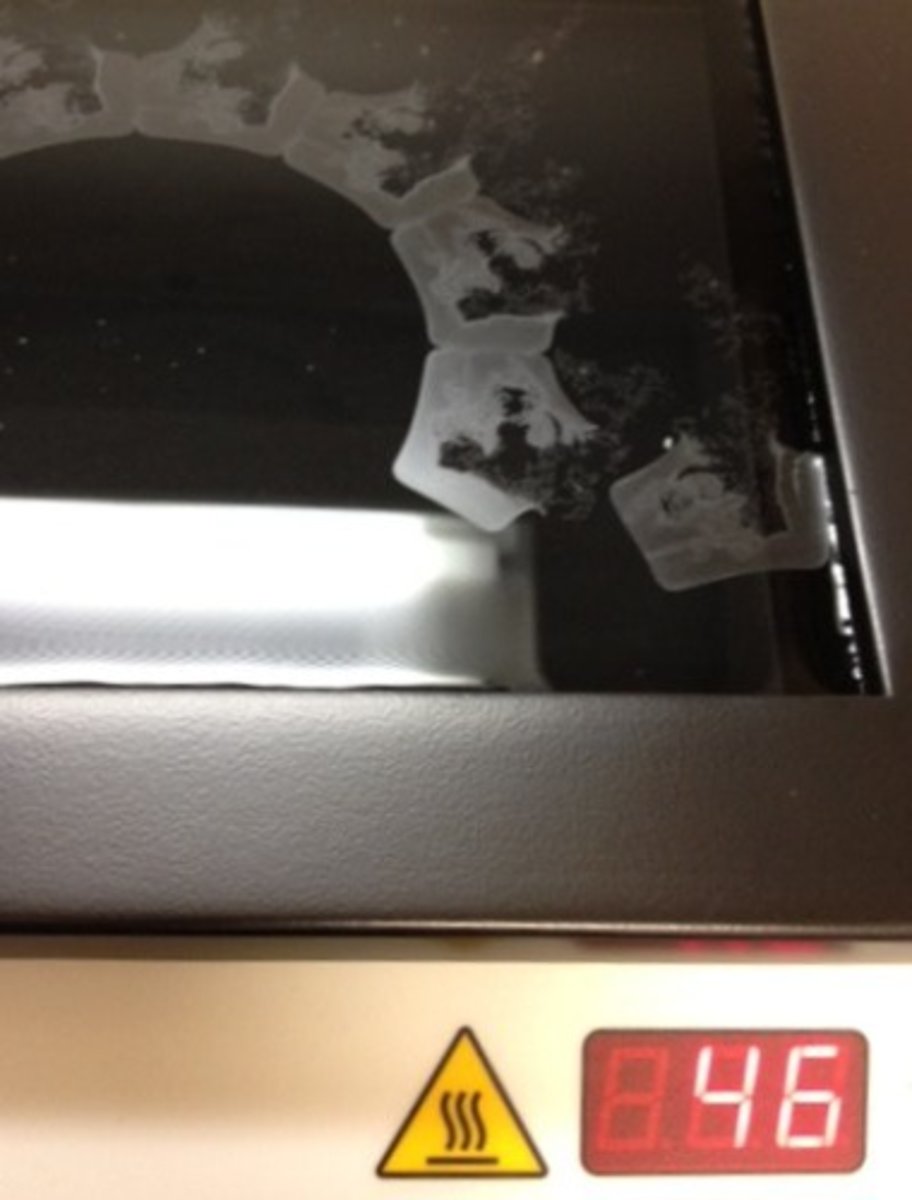
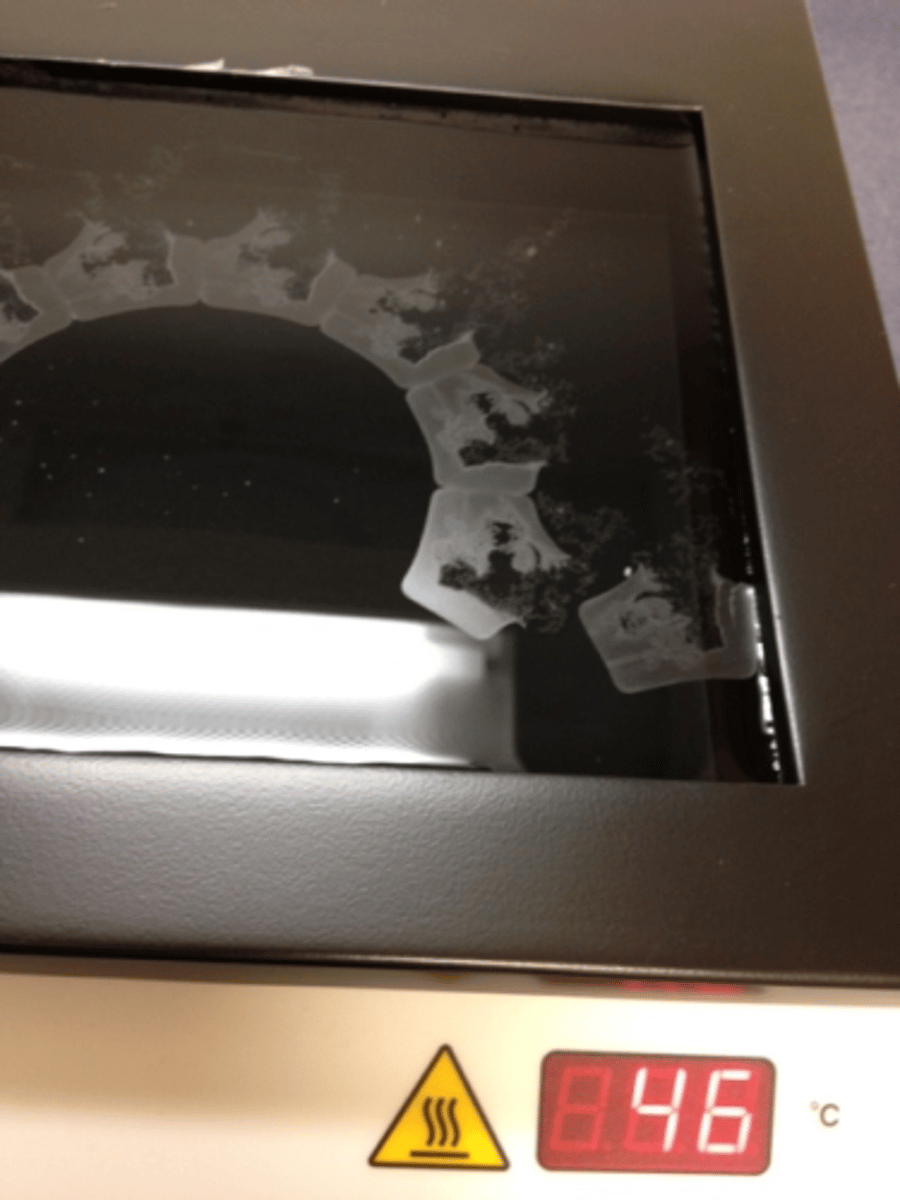
a histotechnology student places a paraffin ribbon on the water bath set at a temperature of 46 degrees C. The sections expand and "explode" on the water surface, leaving no complete section to be placed on the slide. The paraffin used has a melting point of 55 degrees celcius. What is the MOST likely cause of this problem, shown in the image
tissue was under processed
you notice that a histotechnology student is having trouble getting a smooth ribbon to form. The student is rotating the advancement wheel slowly at an uneven speed and the sections are very compressed and sticking to the blade. what would help the student address this problem?
all of the above
-the block is warm and must be chilled well before sectioning
-show the student how to rotate the wheel a little faster and more consistently
-change the dull and dirty blade
All tools used to transfer ribbons or pick up paraffin sections have the potential to introduce artifacts into the tissue and increase the riskof contamination if not cleared between blocks
true
this image shows a tissue section with straight cracks running in many different angles. what is the cause of this artifact?
quick freeze spray applied to the face of the block
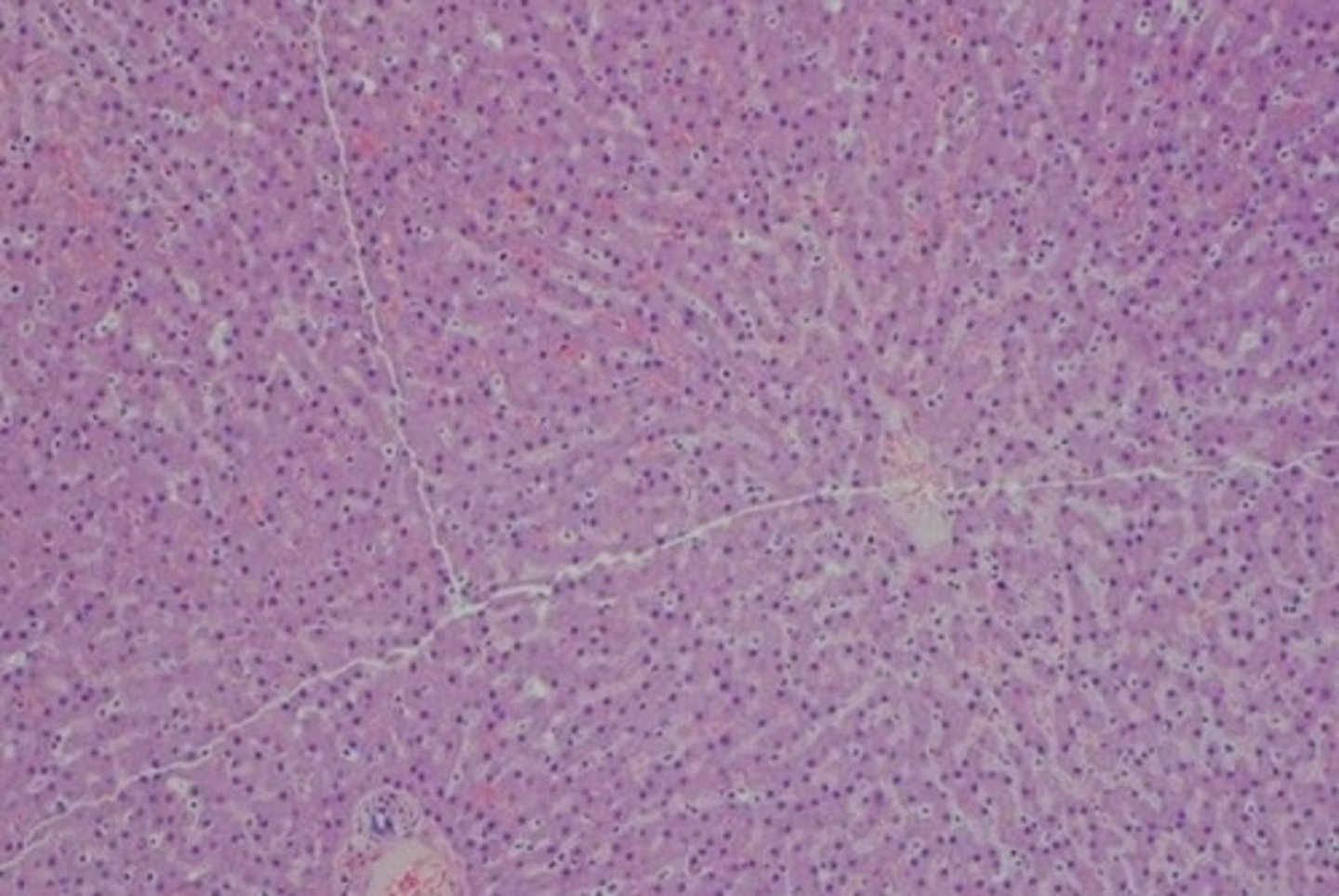
when could the microtome be considered the cause of poor tissue sections
when the microtome has not been maintained properly and/or consistently
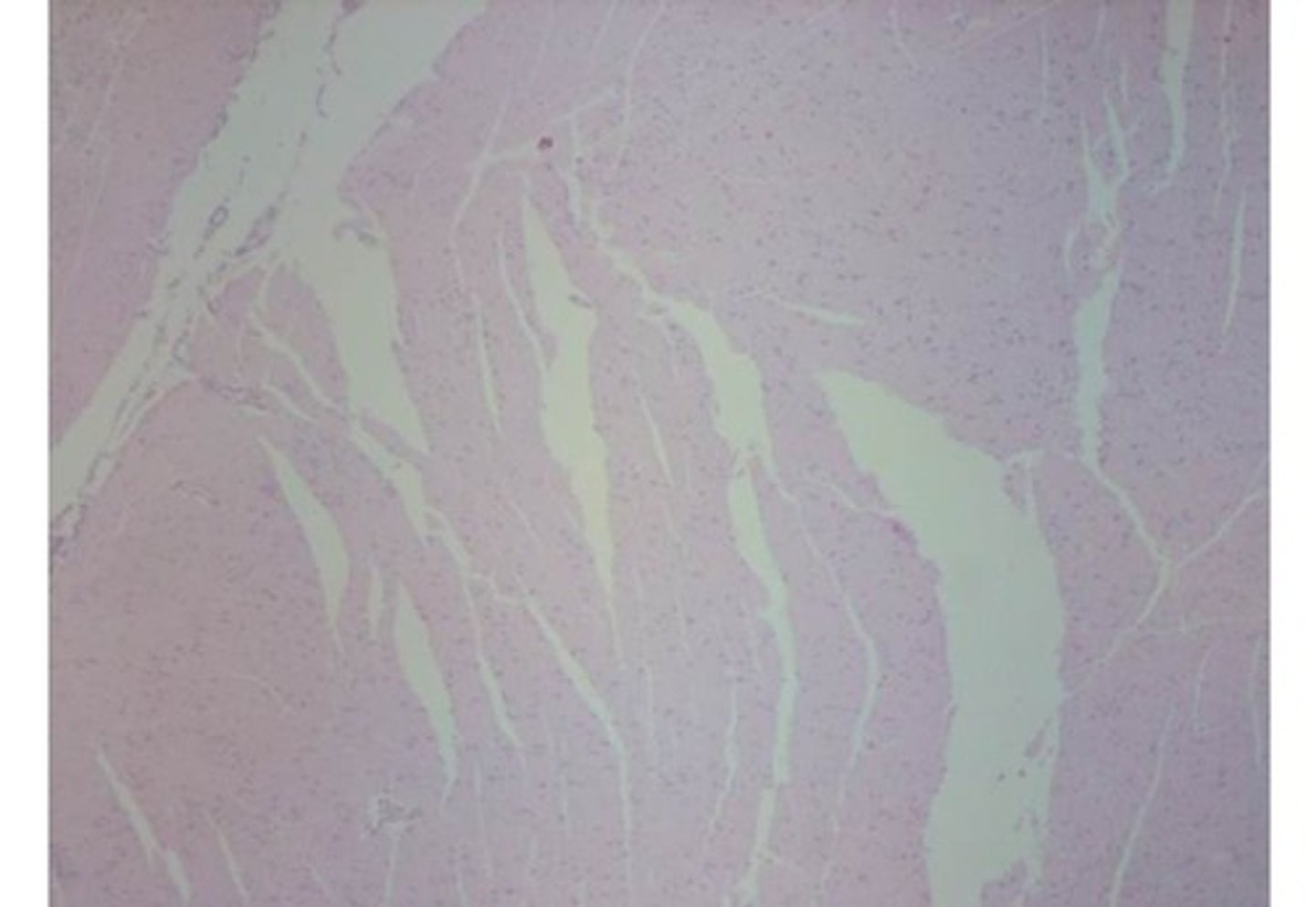
what is the most evident microtomy artifact demonstrated in this image
separations
mohs skin techniques rely solely on properly prepared paraffin-embedded tissue for diagnosis
false
blades and tools used for cryotomy should be kept cold inside the cryostate for optimal frozen sectioning
true
which of the corrective actions listed, can help to eliminate the artifact shown in the image?
increase the dehydration/processing time of tissue
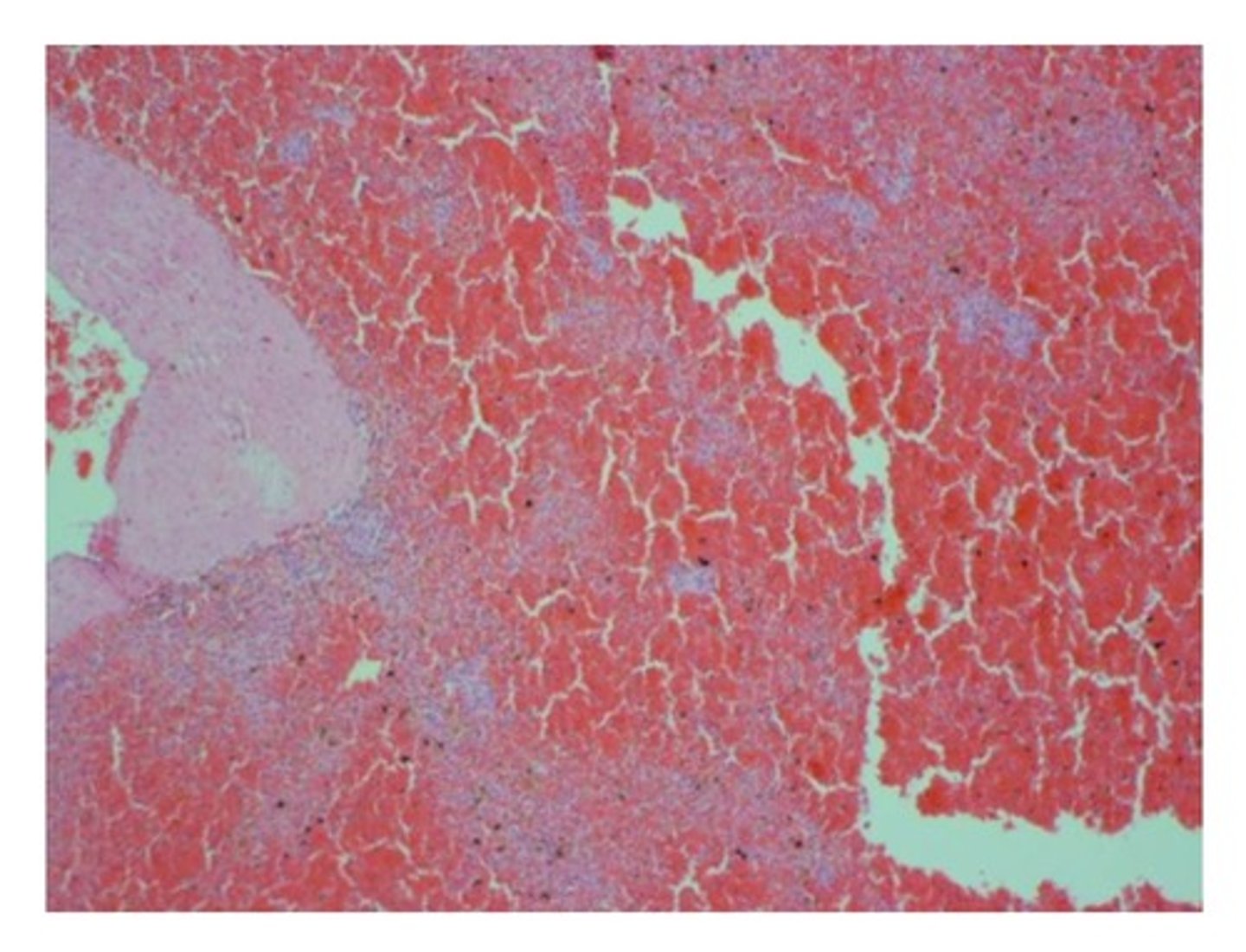
a laboratory is using a paraffin that has a melting point of 56 C. what is the optimal temp. range for the water bath when floating these paraffin sections
46-51 C
optimal water bath is 5-10 C lower than melting point
washboarding (undulations) introduced into tissue sections is MOST often caused by an unstable work surface or microtome parts that are not properly tightened
true
if a ribbon splits lengthwise during paraffin sectioning, it is most likely due to which of the following
nicks in the blade or debris on knife
breathing on a block can prevent static electricity from affecting it
true
A pathologist finds numerous, irregular holes throughout the tissue under a microscope. What is the MOST likely cause of this finding?
A. Tissue was difficult to cut
B. Incorrect temperature was used in the flotation bath
C. Aggressive block facing
D. Prolonged fixation
aggressive block facing
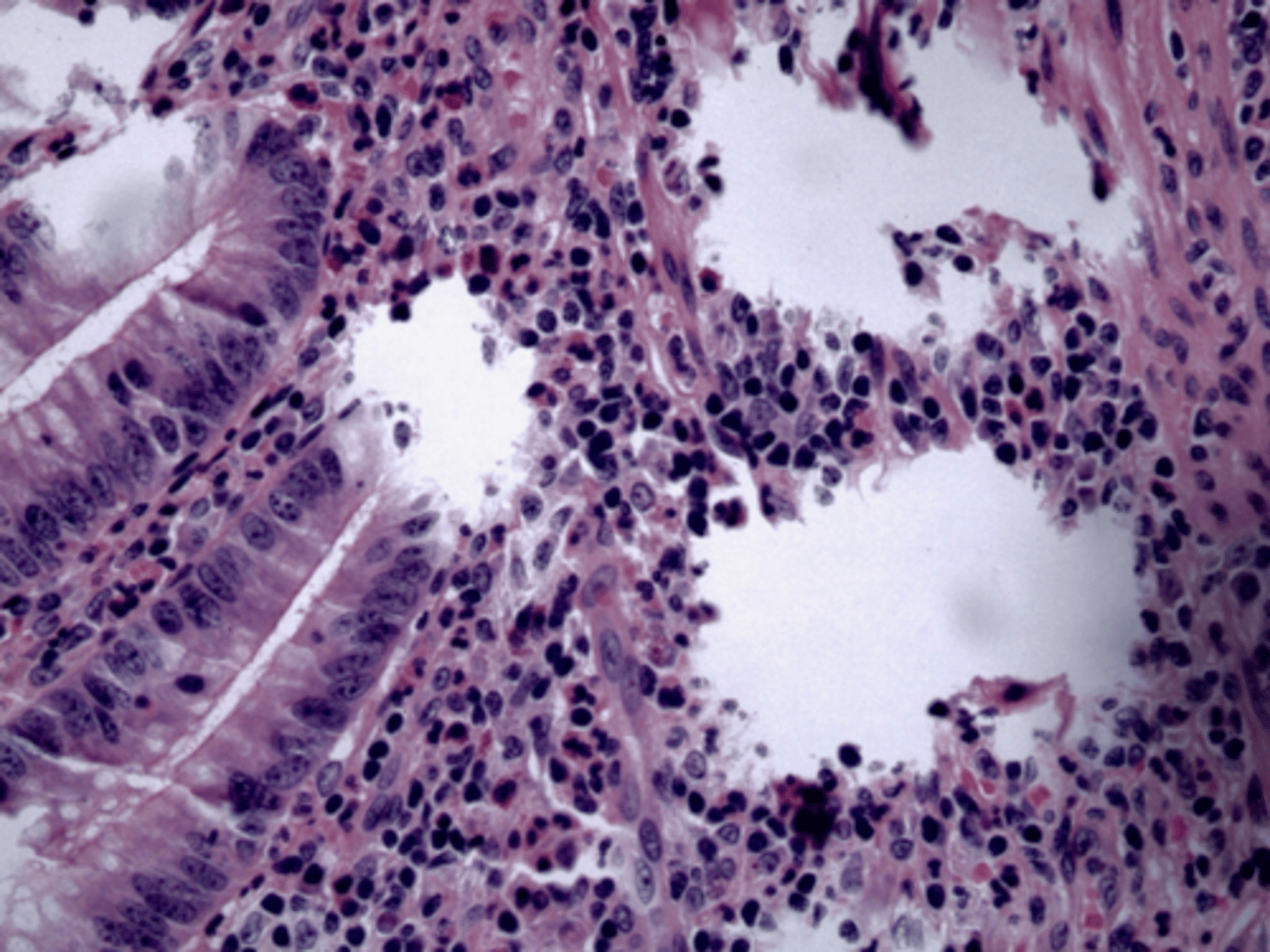
the clearnace angle used with MOST microtome knives is 15-23 degress
false.
most common is 3-8
glass knives are used to cut "thin" sections on ultra microtomes (for elctron microscopy) at what thickness?
0.5 microns
you inspect some slides under a microscope and see this image. what is the explanation for what you are seeing
the tissue folded
during paraffin sectioning, what shape must the paraffin block be in order to cut long, smooth ribbons
square or rectangle
as a general rule, what should the temperature range of the floatation bath used for paraffin ribbons be
5-10 C below the melting point of paraffin
kidney tissues should be cut at what thickness
2 microns
ergonomics are not a concern for those who sit at a microtome or cryostat all day
false
the proper angle for the cryostate blade to the block face is 40 degrees
false
aminoalkylsilane is a slide adhesive preferred for in situ hybridization studies
true
which of the listed factors will have an effect on paraffin sectioning results
all of the factos can affect paraffin sectioning
-tissue fixation
-tissue processing
-tissue grossing
-tissue embedding/orientation
what causes nuclear bubbling artifact
drying slides at very high temperatures
study the artifact demonstrated in the image. which of the corrective actions listed would help to eliminate this artifact
gently stretching the ribbon
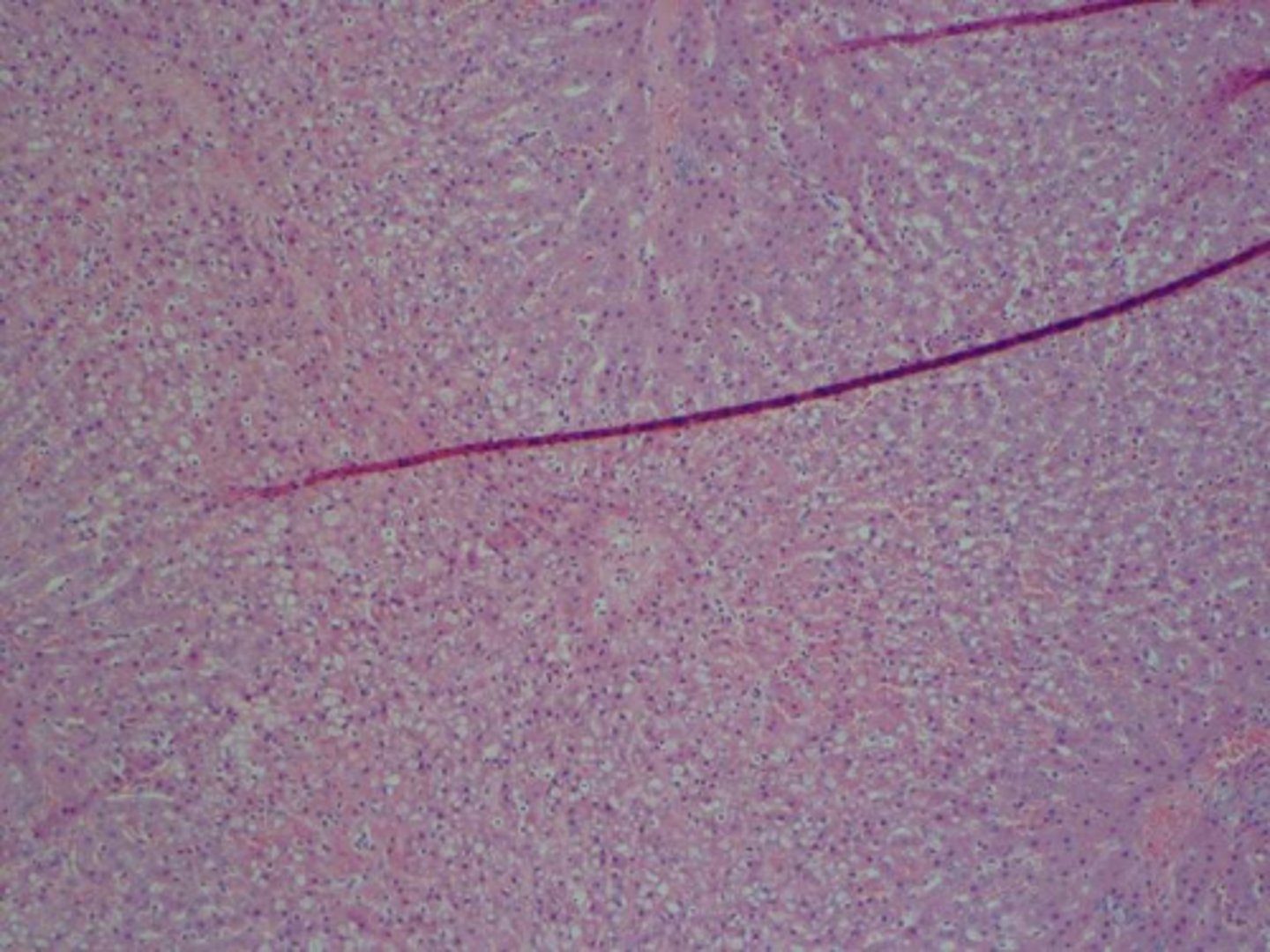
the bevel angle is the angle between the facets of the tip of a wedge knife
true
rotary microtome knives/blades used for paraffin sectioning are usually made of what material
stainless steel
if paraffin tissue sections are not dried properly before staining, they have a greater chance of lifting from slides and even falling off during the staining process
true
crooked ribbons form when the vertical slides of a paraffin block are not perpendicular to the blade and the horizontal edges of a block are not parallel with the blade
true
all of the following artifacts can be introduced during ribbon floatation on a water bath except for which one
undulations
blood rich tissue, such as spleen, should be cryo-sectioned at what temperature
-5 to -15 C
during microtomy, the knife digs into the tissue and tears out a chunk of the tissue block. which of the following is not a possible cause
knife is dull and dirty
this would not chunk out the tissue
a pathologist observes this slide under a microscope and he sends a memo to the laboratory. Based on this image, what does the memo say
please perform maintenance on the microtome
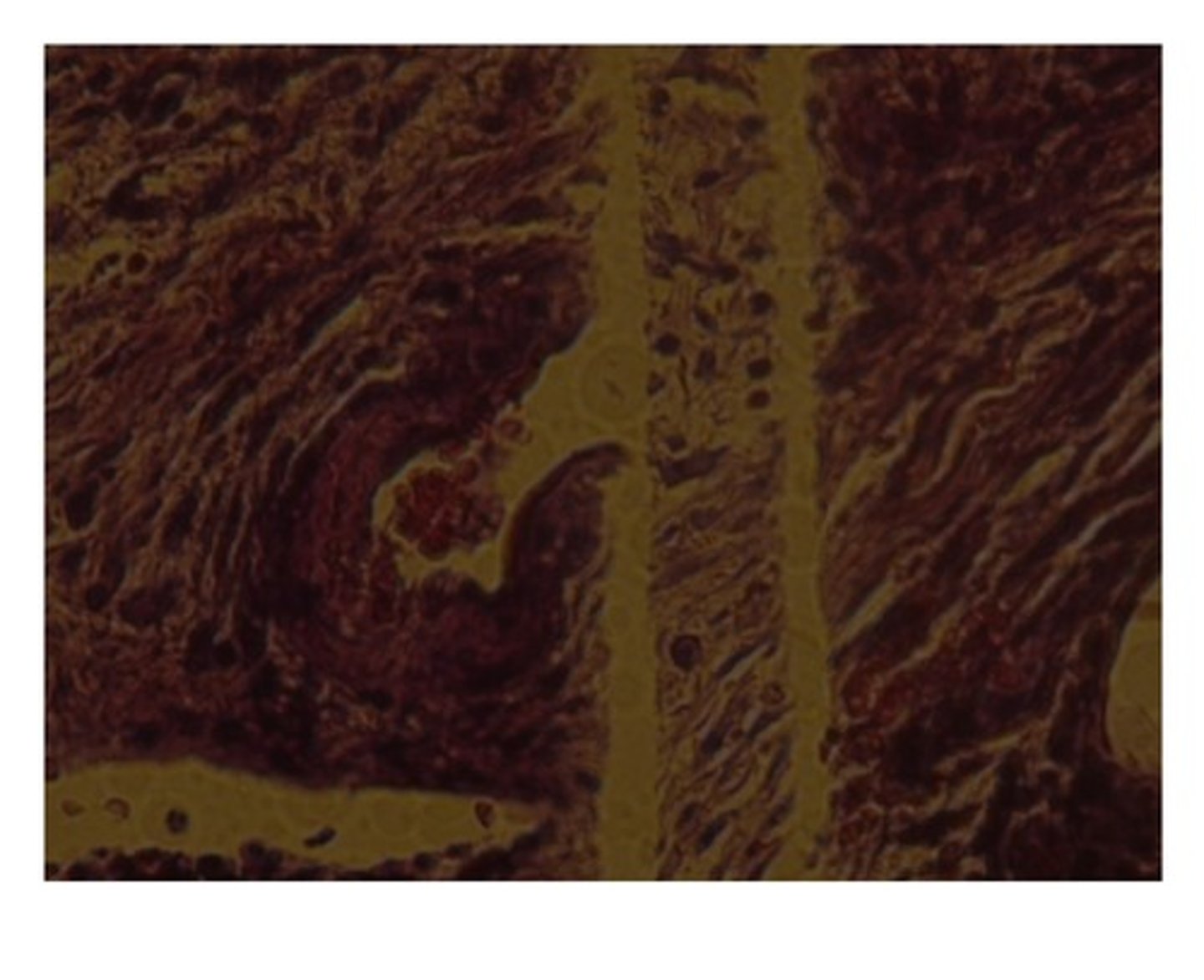
the microtome used for electron microscopy is called an ultramicrotome
true
when cutting paraffin control slides on the microtome, what is the BEST procedure to follow
microtome the same day and under the same conditions as the patients slide
what is the most evident microtomy artifact in the image
knife lines