Serology/DNA Analysis Study 5,6,7,9
 Call Kai
 Learn
 Practice Test
 Spaced Repetition
 Match
 Flashcards
 Knowt Play
1/76

There's no tags or description
Looks like no tags are added yet.
Name | Mastery | Learn | Test | Matching | Spaced | Call with Kai | Chat |
|---|
No analytics yet
Send a link to your students to track their progress
77 Terms
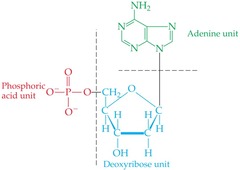
What are the 3 parts of a DNA nucleotide?
Deoxyribose sugar + nitrogenous base + phosphate.
What are the 4 DNA bases?
A, G, C, T.
What bonds join nucleotides?
Phosphodiester bonds.
What does a good extraction produce?
Enough DNA with good quality and high purity.
What does Proteinase K do?
Helps digest proteins during extraction.
What does SDS do?
Destroys cell membranes during lysis.
What does DTT do?
Acts as a reducing agent; in differential extraction, it cleaves sperm-cell disulfide bonds.
What is contamination?
Introduction of outside/exogenous DNA.
What does a reagent blank detect?
Contamination from reagents or handling.
Where is DNA after phenol-chloroform extraction?
Upper aqueous phase.
Where are proteins in phenol-chloroform extraction?
At the interface.
What does Chelex bind?
Mg²⁺ ions, helping protect DNA from DNase degradation.
Where is DNA after Chelex centrifugation?
In the supernatant.
Major advantage of Chelex?
Simple, fast, one tube.
Major disadvantage of Chelex?
Produces single-stranded DNA and is not suitable for RFLP.
What does DNA bind to in silica extraction?
Silica.
How is DNA removed from silica?
Elution with a low-salt solution.
What does differential extraction separate?
Sperm and nonsperm DNA fractions.
Which cells are lysed first?
Nonsperm cells.
What is used to lyse sperm cells?
Proteinase K + DTT.
Nonsperm cells → lyse first → supernatant
Sperm cells → pellet → Proteinase K + DTT → sperm DNA
Why quantify DNA before PCR?
To determine how much human DNA is present.
Ideal DNA input for commercial STR kits?
About 0.5-2.0 ng.
What can too much DNA cause?
Off-scale peaks, split peaks, and imbalance.
What can too little DNA cause?
Peak imbalance and allele dropout.
What was slot blot historically used for?
Detecting human genomic DNA.
How is an unknown quantified with slot blot?
Compare its signal to known DNA standards.
What does qPCR measure?
DNA amplification as PCR occurs.
Important advantage of qPCR?
Sensitive, objective, and can detect PCR inhibitors.
What is CT?
PCR cycle where fluorescence exceeds background.
More starting DNA = higher or lower CT?
Lower CT
What is on the 5′ end of a TaqMan probe?
Reporter dye.
What reduces reporter fluorescence when the probe is intact?
The quencher.
What happens when Taq cleaves the probe?
Reporter separates from quencher → fluorescence occurs.
Reporter + quencher together = low fluorescence
Reporter separated = fluorescence
What does the IPC detect?
PCR inhibition.
A pairs with what?
T, with 2 hydrogen bonds.
C pairs with what?
G, with 3 hydrogen bonds.
What is denaturation?
Separation of DNA strands.
What is Tm?
Temperature where 50% of DNA is denatured.
More GC content does what to Tm?
Increases Tm.
What is PCR?
Exponential amplification of specific DNA sequences.
What is an amplicon?
The DNA sequence amplified by PCR.
Main PCR components?
Taq, primers, DNA template, dNTPs, Mg²⁺, buffer.
What do primers do?
Bind sequences flanking the target DNA.
What are the 3 PCR steps?
Denaturation → Annealing → Extension.
Denaturation does what?
Separates DNA strands at about 94-95°C.
Annealing does what?
Primers bind to template DNA; 5’-3’, 3’-5’; 55-60*C
Extension does what?
Polymerase copies DNA. Taq Poly, dNTPs (A,C,G,T); 70-72*C
🔥 Denature → 🧲 Anneal → 🧬 Extend → Repeat
What can prevent PCR amplification?
Poor DNA quality, inhibitors, or contamination.
Common forensic PCR inhibitors?
Heme, indigo dye, and melanin.
Reverse transcription converts what?
RNA → cDNA.
Why can mRNA be useful in forensics?
Tissue-specific mRNA can help identify bodily fluids.
One-step RT-PCR?
Reverse transcription + PCR in one tube.
Two-step RT-PCR?
Make cDNA first, then transfer it for PCR.
What does ethidium bromide do?
Intercalates with DNA so DNA bands can be detected.
Major problem with ethidium bromide?
Mutagen and possible carcinogen.
Safer alternative to ethidium bromide?
SYBR dyes.
How sensitive is silver staining compared with ethidium bromide?
About 100× more sensitive.
Why do silver ions bind DNA?
Positive silver ions bind negatively charged DNA.
What is a fluorophore?
Part of a dye molecule that causes fluorescence.
What happens when a laser hits a fluorophore?
Electron is excited, then releases a photon when returning to ground state.
What does RFU stand for?
Relative fluorescence unit.
Where can fluorescent dye be attached for STR profiling?
The 5′ end of the primer.
How should 2 mL sample tubes be labeled in this experiment?
Name (Initial, Date, Sample ID)
What are the criteria to add starch solution to your samples?
To cover the sample with starch solution.
What color will be observed after the addition of GLO Iodine to negative control?
The color for a negative control with the addition of GLO Iodine is blue.
What color will be observed after the addition of GLO Iodine to positive control?
There is no color change for the addition of GLO Iodine to positive control
What is the indication for the presence of starch in the unknown or question sample?
A yellow color.
What is Negative Controls(Also Positive Controls) needed for?
To make sure that their is no contamination within the whole PCR.
What is Reagent Blank needed for?
To make sure their is no contamination within the extraction.
Positive Controls are needed why?
Because it has a known
What is the Known typically and how many years has it been around?
A females DNA; 30+ years
Amplification Process
Denaturation, Annealing, Extension