APAH Unit 6: Africa (1100–1980 CE)
 Call Kai
 Learn
Learn Practice Test
 Spaced Repetition
 Match
Match Flashcards
 Knowt Play
 Podcast
1/12

Earn XP
Description and Tags
Name | Mastery | Learn | Test | Matching | Spaced | Call with Kai | Chat |
|---|
No analytics yet
Send a link to your students to track their progress
13 Terms

Conical tower and circular wall of Great Zimbabwe
Southeastern Zimbabwe. c. 1100–1600 CE. Coursed granite blocks laid without mortar.
Massive stone masonry enclosing a royal residence and administrative center; the tapering circular tower resembles a traditional granary, symbolizing royal generosity and control over food reserves.

Wall plaque from Oba's Palace
Edo peoples, Benin Kingdom (Nigeria). 16th century CE. Cast brass (lost-wax technique).
Relief sculpture depicting an enthroned ruler surrounded by attendants using hierarchical scale; originally hung on palace pillars to record historical dynastic lineages and ceremonial court etiquette.
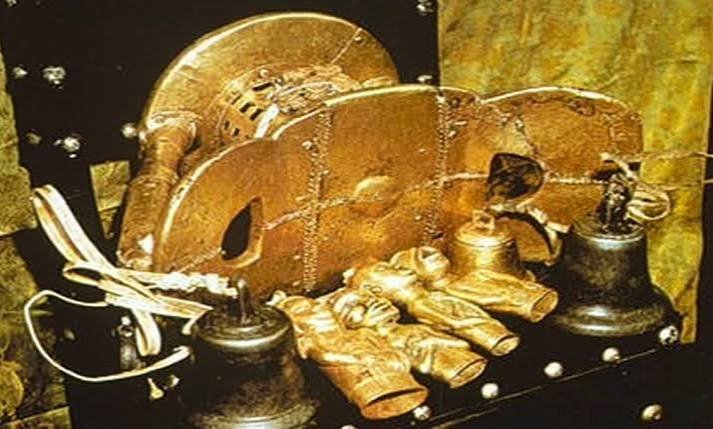
Sika Dwa Kofi (Golden Stool)
Ashanti peoples (south-central Ghana), c. 1700 CE. Gold over wood with cast-gold attachments.
Sacred vessel believed to contain the sunsum (soul) of the nation; never sat upon and rested on its own stool, serving as the supreme symbol of unity and political authority.

Ndop (portrait figure) of King Mishe miShyaang maMbul
Kuba peoples (Democratic Republic of the Congo). c. 1760–1780 CE. Hardwood rubbed with palm oil.
Idealized commemorative royal sculpture sculpted with a 1:3 head-to-body ratio; identifiable by the ruler's personal geometric emblem (ibol), a drum with a severed hand, placed before his crossed legs.

Power figure (Nkisi n'kondi)
Kongo peoples (Democratic Republic of the Congo). Late 19th century CE. Wood, metal blades, pegs, shells, and medicinal ingredients.
Anthropomorphic spirit container activated by a ritual specialist (nganga) who drives nails or blades into the body to seal treaties, enforce oaths, and resolve community disputes.

Female (Pwo) mask
Chokwe peoples (Democratic Republic of the Congo). Late 19th to early 20th century CE. Wood, fiber, pigment, and metal.
Carved by men and danced by male performers in ritual dances to honor fertile matrilineal ancestors; features closed slit eyes, white kaolin clay, and scarification marks (cingelyengelye) expressing spiritual inner wisdom.
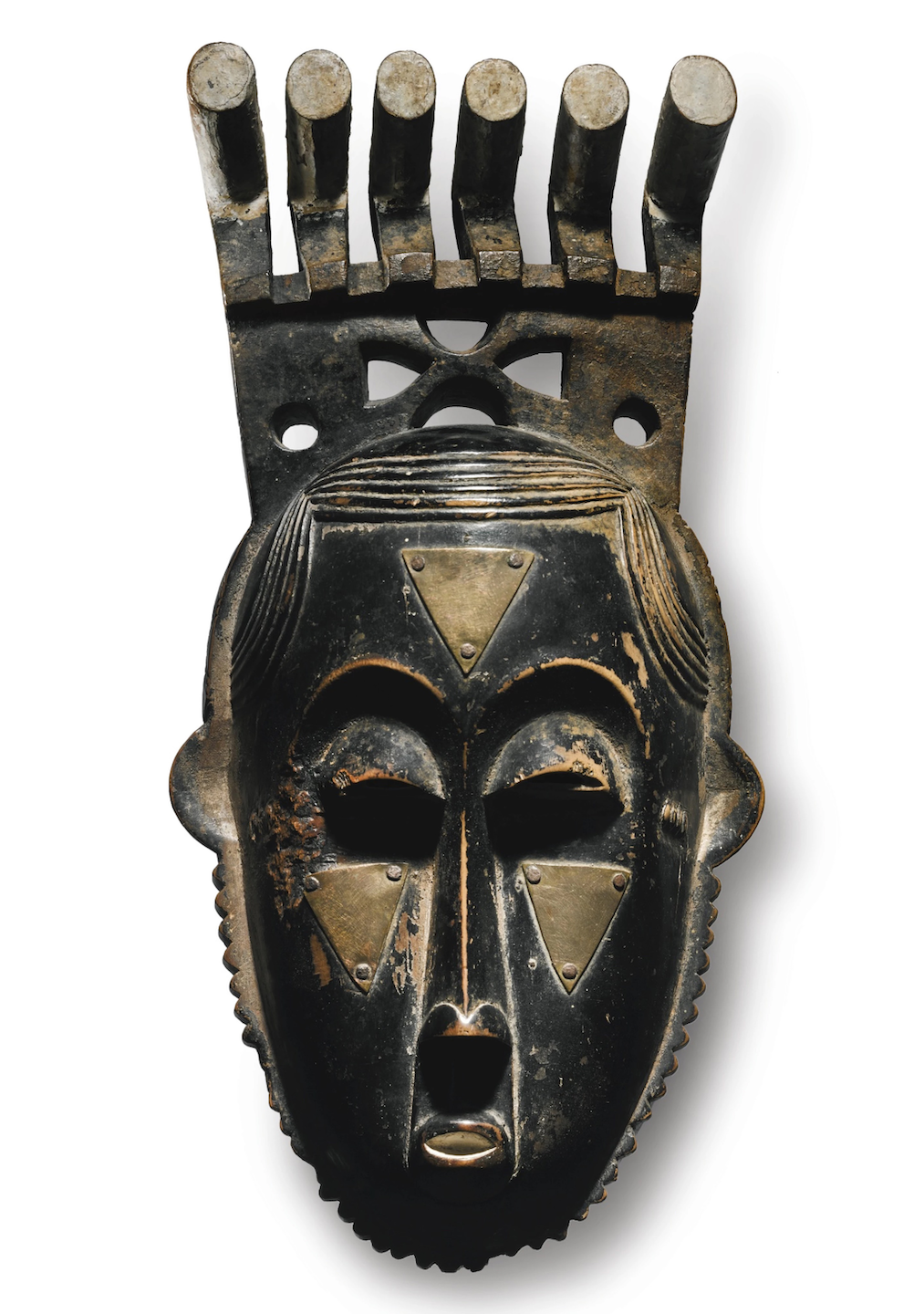
Portrait mask (Mblo)
Baule peoples (Côte d'Ivoire). Early 20th century CE. Wood and pigment.
Secular, individualized honorific sculpture created to celebrate an esteemed community member; danced in the gbagba entertainment series with downcast eyes and a smooth forehead reflecting modesty and high intellect.

Bundu mask
Sande Society, Mende peoples (Sierra Leone and Liberia). 19th to 20th century CE. Wood, cloth, and fiber stained glossy black.
Helmet mask worn exclusively by women to initiate young girls into adulthood; features fat neck rings symbolizing fertility and prosperity, elaborate coiffure, and small facial features emphasizing modesty.

Ikenga (shrine figure)
Igbo peoples (Nigeria). 19th to 20th century CE. Carved wood.
Personal male shrine dedicated to individual achievement, willpower, and the strength of the right arm; universally characterized by prominent ram horns symbolizing assertiveness and aggressive drive.

Lukasa (memory board)
Mbudye Society, Luba peoples (Democratic Republic of the Congo). 19th to 20th century CE. Carved wood, beads, and metal pins.
Mnemonic device read tactilely by initiated court historians to recount royal genealogy, migration histories, and political protocol; shaped like an hourglass with an animal shell contour.

Aka elephant mask
Kuosi Society, Bamileke peoples (Cameroon). 19th to 20th century CE. Beaded cloth, woven raffia, and fiber.
Dynamic masquerade costume worn by elite warriors and courtiers during royal ceremonies; incorporates an elephant trunk and leopard skin motifs to embody the power and stability of the fon (king).

Reliquary figure (byeri)
Fang peoples (Cameroon). 19th to 20th century CE. Carved wood, palm oil, and metal.
Sculpted guardian figure mounted atop a bark box containing ancestral bones; combines adult muscular tension with infantile proportions (large head and protruding belly) to embody the cycle of life and guard sacred remains.

Veranda post of enthroned king and senior wife (Opo Ogoga)
Olowe of Ise, Yoruba peoples (Nigeria). c. 1910–1914 CE. Carved wood and pigment.
Architectural palace pillar utilizing verticality and open negative space; portrays a seated monarch supported physically and spiritually by a towering senior wife, reflecting female spiritual power in crowning the ruler.