Chapter 8.1: Characteristics of Many-Electron Atoms
 Call Kai
 Learn
 Practice Test
 Spaced Repetition
 Match
 Flashcards
 Knowt Play
1/3

4 Terms

Pauli exclusion principle
States that no two electrons in the same atom can have the same four quantum numbers
Within a specific sublevel and orientation, spin numbers must oppose each other, limiting the number of electrons in each orbital to 2
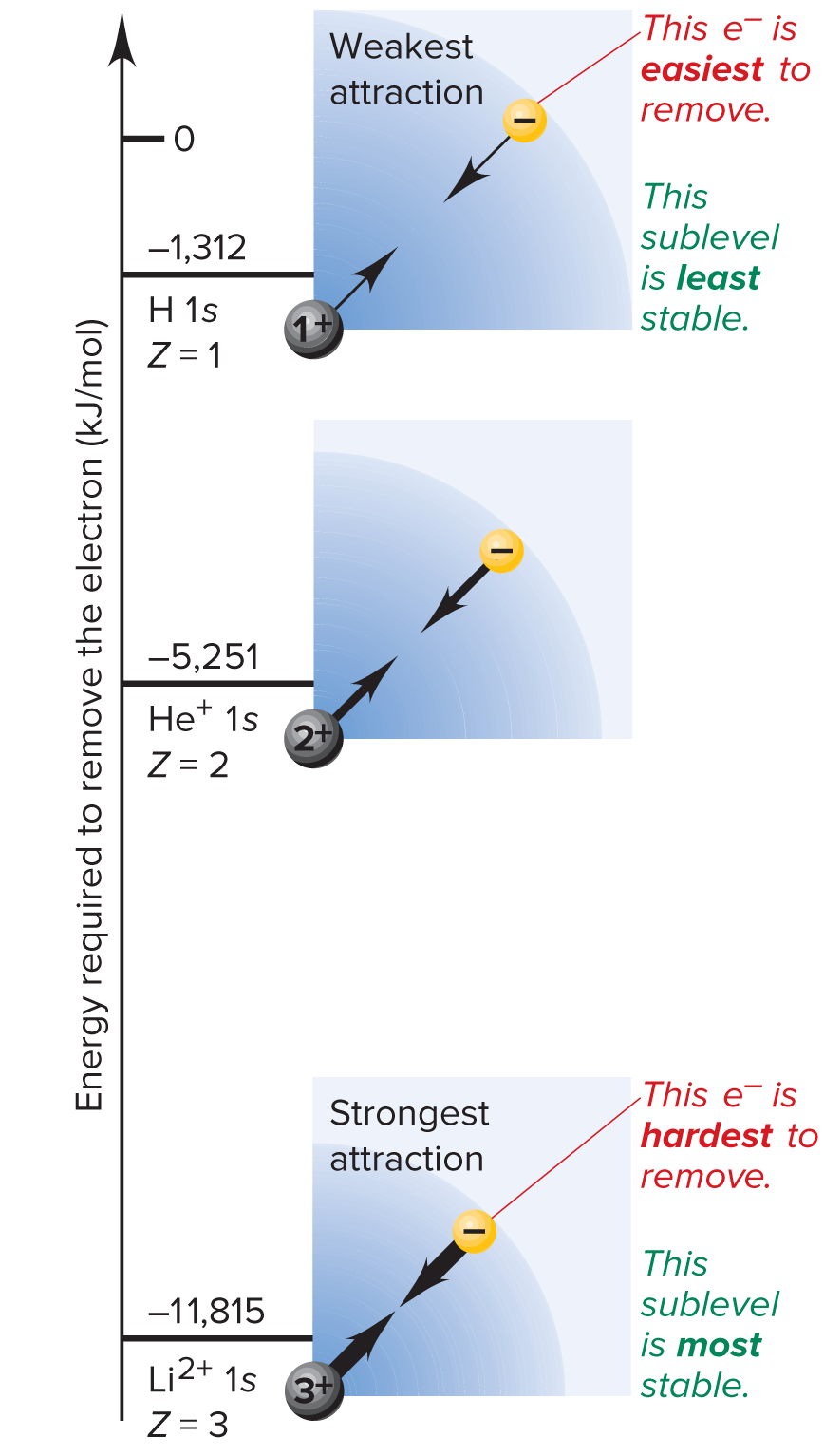
Nuclear charge (Z)
As this number increases, denoting more protons in the nucleus, sublevels are stabilized due to increased nucleus-electron attractions
Results in more energy being needed to remove a specific electron
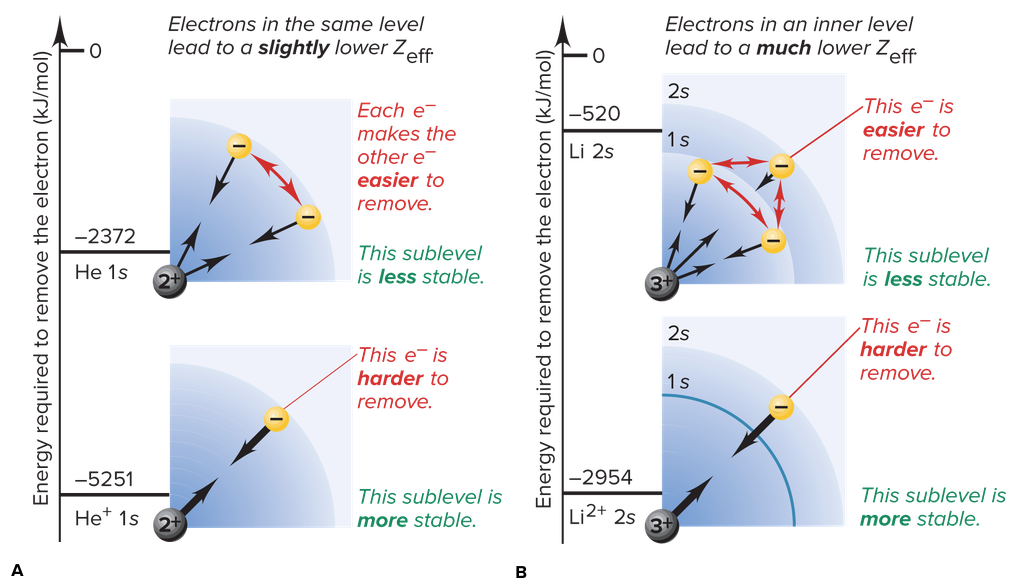
Shielding
The ability of other electrons to lessen the nuclear attraction for an outer electron through repulsion, creating a lower effective nuclear charge (Zeff) and enabling easier transfers
Primarily performed by electrons in the same or inner energy levels

Penetration
The phenomenon in which an outer electron moves through the region occupied by the core electrons to spend part of its time closer to the nucleus
This increases effective nuclear charge and decreases the effects of shielding by other electrons