Drug Discovery Exam 3
 Call Kai
 Learn
 Practice Test
 Spaced Repetition
 Match
 Flashcards
 Knowt Play
1/73

There's no tags or description
Looks like no tags are added yet.
74 Terms
Library based drug discovery
best to pick the best compund based on acutal data than try to predetermine which compounds might be best
let assays tell u which compound is best instead
…
Peptide chemistry
Automated Peptide synthesis served as start of library-based discovery
Greater number of operations required to synthesize, the less efficient it is.
Average 70% yield per step means overall 0.5% yield for 15 step process.
How do you lose product
Extraction, filtration, purification
How to minimize losses in peptide chemistry?
Synthesize normally but use resin beads made of polystyrene as a protecting group. Once it’s attached to bead, can filter/separate from other compounds.
Advantages of attaching compound to solid support (poly bead)
…
Advances in peptide synthesis
Coupling reagents, protecting groups, resins, …
Library
Collection of certain types of compounds. Peptides, indoles,
Pooled Synthesis
Synthesizing a bunch of compounds at once. Different combos of different steps to make all your compounds. Splitting and regrouping called split pool.
Combinatorics
Encoding strategies, pooling strategies.
Encoding - assigning DNA to certain compounds to identify later
RF Tags
Separate compounds out of pools and identify
Using a computer to track what compound will be made on each rf tag, an instrument cant tell you what flask each resin goes in to each step
Solid phase synthesis drawback
Compounds are typically cleaved with triflouroacetic acid, which can lead to some decomposition of product. inefficient removal of TFA leads to limited shelf life of the compounds prepared in this manner.
Alternative methods for performing solid phase organic synthesis
Fluorous technology - fluorinate compound, synthesize, then remove fluorine and separate out.
Parallel organic synthesis - not combinatorial.
Solution-phase synthesis
Immobilized reagents, immobilized scavengers (resin reacts with byproduct/excess to so you can filter it out), tea bags (resin).
But can’t be pooled. Greater shelf-life cause no TFA, cleavage needed.
Convergent synthesis.
Convergent Synthesis
Can decrease total step by reducing linear sequence, so higher yield.
Late-stage diversification
introduce part that you’re changing as late in the synthesis are possible
Molecular diversity
Late stage diversification and convergent syntheis or parallel organic synthesis
Advantages of analog availability
Removes synthesis as limit to progress
more likely that activity is not a fluke
rapid SAR access
Suzuki reaction
boronic acid/ester with aryl halide with base and pd catalyst leads to carbon carbon bond.
Doesn’t add to PSA, since it doesn’t necessarily add a H bond donor or acceptor. Thousands of available boronic acids/esters and aryl halides. Don’t need protecting groups like other reactions. Works on solid phase.

Buchwald-Hartwig Reaction
Amine or alcohol to compound
Alkyl/aryl halide with amine to couple amine to compound. Tolerant of many compound types, don’t need protecting groups. Works on solid-phase.
How to speed up coupling reactions
Automated chromatography, high-pressure, doing it in the assays,.
Automation for LC/MS NMR
Lead optimization trends/modifications
First - Confirm what is and what isn’t required for activity.
Determine optimal distance between interacting groups when u have more than one binding interaction. (ex. ring expansion contraction)
Test how rigidity impacts if your compound if flexible
Avoid molecule with stereochemistry
Isosteres, bioisosteres
one of two or more substances that exhibit similarity of some properties as a result of having the same number of total valence electrons in the same arrangement and that consist of different atoms and not necessarily the same number of atoms
bioisosteres - substituents or groups with similar physical or chemical properties that broadly produce similar biological properties in a chemical compound. ex: azide sub for alcohol
Common bioisosteres
Hydrogen replaced with fluorine (electronegativity makes it almost like a hydrogen).
C-F cannot be broken by CYPs, preventing metabolization and increasing half life. Usually para position of aromatic ring.
Carboxylic acid bioisosteres since they are very reactive
Amide bioisosteres, since amides are easily digested.
Heterocycles
Carboxylic acid bioisosteres
tetrazole - widely accepted bioisostere. aromatic ring. very similar pka. can’t form esters or amides.
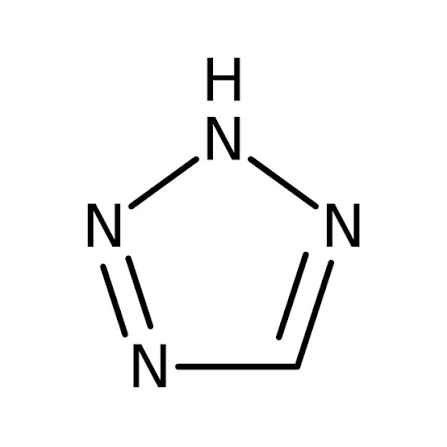
Heterocycles as bioisosteres
Serve as bioisosteres for aromatic rings.
TPD/PROTAC
Targeting protein-protein interactions by controlling protein degradation pathways. Inhibit desired proteins.
Take protein of interest (POI) and bind to E3 ligase using PROTAC. E3 ligase ubiquitinates POI, PROTAC now free to repeat while POI goes to proteasome.
Ubiquitin/proteasome system (UPS)
E3 ligase marks protein with a bunch of ubiquitin for degradation by proteasome.
Prodrugs
When active substance isn’t actually the drug. Drug metabolite is actually the active substance. Tamoxifen, Acyclovir.
Pharmacodynamics
what drug does to body. whether drug candidate hits the desired target in VIVO. Need animal models
Xenografts
Grow human tissue in animal. Like organs, or human tumors.
Requires immunodeficient (nude) mouse. Often examines a biomarker.
Biomarker
biochemical response measured from …
Efficacy in lead discovery questions, ways to measure
does drug do what we want it to do?
Pain (rat tail flick test), rat paw edema?, mental state (forced swim test), disease progression, waterfall plot, progr…survival.
is it statistically significant?
does it cause adverse effects?
weight loss
Biologics
any susbtance. serum or vaccine, derived from animal products or other biological sources designed to treat…
DPT vaccine, tetanus shot, bovine insulin, RNAi
Antibody engineering
Engineer an antibody to target whatever you want in immune system. Can tell if if a drug is a biologic cause generic name typically ends in “ab”. “imab means derived from primate” “umab” means “humanized” antibody.
Biologics made with recombinant DNA technology
Generated protein will undergo post-translational modifications in the system, so not guaranteed to be effective in human host.
Biologics pros and cons
Very specific, low toxicity/adverse effects
But poor PK - IV only. Pretty much defy all Lipinski’s Rules
Very expensive
Advances in biology that have advanced out ability to use biologics.
Potential use of RNA knockout therapies, antibody engineering. Recombinant DNA technology
Phenotypic and Genotypic drug discovery
Phenotypic - observe that a compound has a specific response (hit) so you have to to determine target
Genotypic - start with target, develop compound that elicits desired response.
When can you start moving to clinical trials?
Have leads that…
Preclinical studies
Toxicity (including everything that goes into the drug)
Salt selection
stability
CMC
IND application and requirements
Need to submit an Investigational New Drug (IND) application and get it approved in order to start human dosing.
Need all protocols you’ve used to analyze compound to date and your detailed plans and protocols to use during clinical trial
all details of drug candidate
full details about how and where compound will be prepared
full details about pharmacology and toxicology
Name of drug, generic and trade name
FDA Human Trial Guidelines
GLP - Good Laboratory Practice, not hiding anything
GMP - Good Manufacturing Practice, document everything
GCP Good Clinical Practice
FDA certifies that laboratories meet this standards.
Protocol and Plans Questions
Dosing method (IV, PO, etc)?
How many doses?
How will you analyze data?
What data and info are you trying to determine?
Who will be performing studies and where?
Drug Candidate Details
Structure
MW
MP
pKa, logP, logD7.4
Optical Roation
Proof of Structure (x-ray, NMR, IR)
Form (solid - crystalline, powder; solution)
Stability
Assessing stability
Have to decide what compound will be
Salt selection - counterion plays a big role in PK
How to studie stability?
Form drug via x-ray powder diffraction (XRPD or XRD) - not same as crystal x-ray. Allows identification of different polymorphs.
One you identify the polymorph you want, assess in its stability in :
light, heat, mechanical, hygroscopicity
Florida Test
Polymorphism
Ability of solid materials to exist in more than one form. Can get different polymorphs from different extraction methods.
CMC
Chemical Manufacturing and Control group - deals with how and where compound will be perpared.
optimize synthesis of compound at large scale (convergent synthesis in cGMP).
Must then thoroughly examine purity of drug candidate.
Things to avoid for large scale synthesis
Reactions that need very low temps
slow, controlled additions
Chromatographic purifications
cGMP facility
How to limit synthesis expenses
Developing a convergent synthesis
finding multiple commercial supplies for advanced intermediates
conductiing only final step in a cGMP Lab
Details that must be provided for every component in drug synthesis
Source, purity, grade
…
Ways to detect purity
Triple quadrupole mass spec
NMR using other nulcei
elemental analysis
chemical derivatization
FDA purity requirements
Every impurity that exists above 0.05% or every impurity that a human will be exposed to above 1.0 mg/day must be accounted for and tested for safety…
ADME details required by FDA
Metabolism extensively studies, every metabolite more that 1.0 mg/day must be fully characterized
ADME of each metabolite explored. MBI
Often radiolabelled analogs are prepared to tract them.
Toxicology FDA
All preclinical toxicology (like hERG) reported
Must determine how much is toxic. Maximally tolerated dose (MTD). aka dose range finding study. Must do in animals first. What is observed
Typically required more than 100g of product. Non-GLP toxicology batch (single batch to ensure impurity profile is the same)
Every impurity and excipient (like stabilizing components for IVs) is examined for toxicity.
Mutagenicity examined
Ames Test
Mutagen testing. Take salmonella that can’t make its own histidine, put on plates with and without histidine. Add drug. If salmonella grows in non histidine plate, drug helped it grow via mutation.
Clinical trial approval
File IND. Submit Investigator’s Brochure (IB).
IB
information that will be provided to the clinicians who will be studying the compound. Includes all pertinent safety data as well as the drug characterization. Required for every trial.
Clinical trial phases
Phase I - safety study, tens of patients
Phase II and II - efficacy studies, hundreds of patients for II, thousands for III.
Phase IV - undertaken after approval
Each considered a different clinical trial, each have own protocols and IBs.
Phase I trial
First time dosed in humans
Goal is to determine safety and PK profile
Most examine multiple dose PK. FInd MTD (when Grade 3 reached).
Identify the certified GCP clinic where study will be done in IND
Age, gender, race, ethnicity, health of patients must be detailed.
Changes in formulation or administration can only be considered if already accounted for in IND
Grades for toxicity
Clinical trial participants
Participants are voluntary. Careful screening, see if they’re taking other medications, likelihood to adhering to study conditions.
GCp facility where trial is conduction must monitor compliance as well as data.
Clinical trial protocols
Number of patients enrolled, exclusion criteria. Monitor data carefully to…
Toxicity in trials identified how by FDA
Through adverse events list (AE). Classified by Grades 1-5. Mild, Moderate, Severe, Life Threatening/Disabling, Lethal. Protocols in IND predetermine what adverse effects must be achieved to be considered MTD. Obviously, long term toxicity can’t be determined.
Career choices
Medical writing
Biostatistician
Regulatory Control
Clinical research Associate
Clinical Trial Liaison/Medical Science Liaison
Phase II
Does drug work. Multiple GCP facilities
New IND needed, including updated drug date (with human PK), safety data, protocols (ensure safe dosing but accounting for the need to determine effective dosing), IB.
Many IND applications are written as combination Phase I and Phase II trials.
Patient selection/screening more significant. Ethics plays a role (ethical biostatisticians, patients).
Phase II patients typically aware, risking placebo. RDT attempts to overcome this. Some drugs approved at this stage is data is strong enough.
Combined IND app for Phase I and II
Sometimes necessary in order to find an efficient number of Volunteers willing to enroll in risky trial (ex. cancer)
Complicates things because you are already examing efficacy before safety is established
Can cloud the attribution of SAE’s due to drug safety vs disease progression
Phase IIA and IIB
A: How much of drug do I need to give to safely elicit a response
B: Measure of whether a meaningful response can be seen. Do we see statistical efficacy.
Randomized Discontinuation Trial
Random groups of people rotated off of drug and onto something else to better evaluate if drug is working.
Phase III
Compare drug to current standard of care.
New IND needed with new IB. Multiple GCP facilities. Considerable communication between various national (and international) regulating agencies.
Patients dividied into test and control groups. Control not equal to placebo, placebo has no medicinal/biological effect.
Double Blind. Date assigned solely based on patient number. Only when certain conditions as outlined in protocol is the data unblinded and efficacy evaluated.
SPA
Special Protocol Assessment. Demonstrate that the drug is effective compared to standard through RDT. Request automatic approval if results are replicated in Phase III.
Phase IV
After approval.
How much improvement needed in Phase III for approval?
FDA requires 22% improvement over the standard of care.
DSMB
Data Safety Monitoring Board. Independent group approved by FDA that periodically reviews the blind data to evaluate all aspects of the trial. Eval safety, efficacy. ethics.
Can stop trial for control or test group. For good and bad reasons. Protocol outlines the next actions in these cases.
Since patients in Phase II are volunteers and typically aware of their condition, not uncommon for them to figure out which group they are in. So people may drop out.
Tuskegee Syphilis Study
enrolled 600 african american men with the promise of free healthcare. conducted a screen so 2/3 had syphilis. never told them they had it and never treated. continued for 40 years.