PRACTICE QUESTIONS PART 4
 Call Kai
 Learn
Learn Practice Test
 Spaced Repetition
 Match
Match Flashcards
 Knowt Play
1/177

There's no tags or description
Looks like no tags are added yet.
Name | Mastery | Learn | Test | Matching | Spaced | Call with Kai | Chat |
|---|
No analytics yet
Send a link to your students to track their progress
178 Terms
Which of the following would NOT be a typical methodology for a clinical chemistry test?
Immunoturbidimetry
Microscopy
EMIT®
ISE
Microscopy
from abbott guide
How should a laboratory verify the reference range it uses for a particular test?
Call another laboratory
Use the numbers from a textbook
Test samples from healthy people
Look on a medical internet site
Test samples from healthy people (Study individual)
ESTABLISHING A REFERENCE INTERVAL
A new reference interval is established when there is no existing analyte or methodology in the clinical or reference laboratory with which to conduct comparative studies. It is a costly and labor-intensive study that will involve laboratory resources at all levels and may require from ____ to as many as ≈700 study individuals.
20 study individuals
50 study individuals
100 study individuals
120 study individuals
120 study individuals
VERIFYING a reference interval (transference) is done to confirm the validity of an existing reference interval for an analyte using the same (identical) type of analytic system (method and/or instrument). These are the most common reference interval studies performed in the clinical laboratory and can require as few as ____ study individuals.
20 study individuals
50 study individuals
100 study individuals
120 study individuals
20 study individuals (7th& 9th ed. bishop)
40 in 8th ed.
A Gaussian distribution is usually:
Rectangular
Bell-shaped
Uniform
Skewed
Bell-shaped
Acceptable limits of a control value must fall:
Within ±1 standard deviation of the mean
Between 1 and 2 standard deviations of the mean
Within ±2 standard deviations of the mean
Within ±3 standard deviations of the mean
Within ±2 standard deviations of the mean
Feedback
For biological studies, control confidence limits are usually established at ±2 SD. When values fall outside these limits, the procedure is considered out of control.
Two standard deviations (2 SD) from the mean in a normal distribution curve would include:
99% of all values
95% of all values
75% of all values
68% of all values
95% of all values
OUTSIDE - 5% - 5/100 = 1-20 study individual
Feedback
In the bell-shaped normal curve:
±1 SD includes 68% of all of the values
±2 SD includes 95% of the values
±3 SD includes 99.7% of the values


abbott

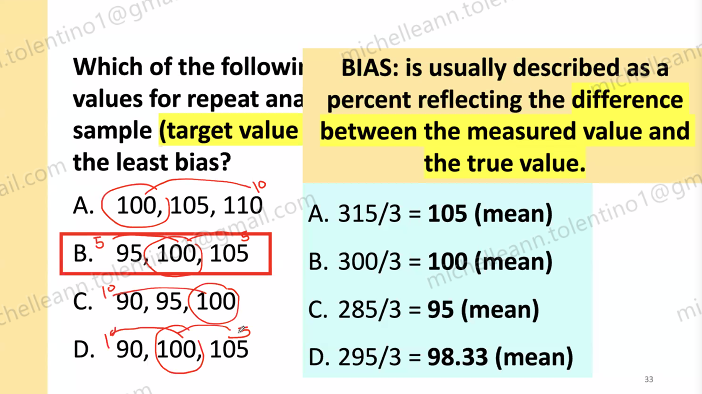
Which of the following sets of values for repeat analyses of a QC sample (target value of 50) reflects the best precision?
50, 51, 52
50, 52, 56
48, 50, 52
44, 50, 53
50, 51, 52 (smallest range)

What is used to zero the spectrophotometer before reading the test sample?
Calibrator
Sample blank
Reagent blank
Standard
Reagent blank
during = sample blank
What is the best way to clean up blood that has dripped on the arm of a phlebotomy chair?
Absorb it with a gauze pad and clean the area with disinfectant.
Rub it with a damp cloth and wash the area with soap and water.
Wait for it to dry and then scrape it into a biohazard container.
Wipe it with an alcohol pad using an outward circular motion.
Absorb it with a gauze pad and clean the area with disinfectant.


Primary glucoregulatory hormone during FASTING:
Insulin
Glucagon
Epinephrine
Norepinephrine
Glucagon
Feedback
Primary glucoregulatory hormones: insulin and glucagon.
Primary glucoregulatory hormone during fasting: glucagon.
The primary function of this protein is to maintain the colloidal osmotic pressure in the intravascular and extravascular spaces.
Albumin
Prealbumin
Fibrinogen
Transferrin
Albumin
Which of the following tests is a good marker of nutritional status?
Immunoglobulin M
Prealbumin
Ceruloplasmin
Lp(a)
Prealbumin - transthyretin
>albumin>fibronectin
The protein present in vaginal secretions that can identify patients who are at risk for preterm delivery is:
Human chorionic gonadotropin
Estrogen
PAMG-1
Fetal fibronectin
Fetal fibronectin
Which test is used as an indicator of congestive heart failure?
CRP
BNP
Cholesterol
Troponin
BNP
recall: TACO - diagnostic post-pre ratio = 1.5x
Which test is the most specific for myocardial infarction?
LDH
CK
Troponin
Myoglobin
Troponin
In pesticide poisoning, cholinesterase activity is:
Normal
Decreased
Increased
Variable
Decreased
also dec. in liver dx
An emphysema patient suffering from fluid accumulation in the alveolar spaces is likely to be in what metabolic state?
Respiratory acidosis
Respiratory alkalosis
Metabolic acidosis
Metabolic alkalosis
Respiratory acidosis
Feedback
Reduced lung capacity to eliminate CO2 can cause respiratory acidosis.
The expected blood gas results for a patient in chronic renal failure would match the pattern of:
Metabolic acidosis
Respiratory acidosis
Metabolic alkalosis
Respiratory alkalosis
Metabolic acidosis
Feedback
Reduced excretion of acids due to decreased ammonia formation, decreased Na+- exchange, and decreased GFR.
Severe diarrhea causes:
Metabolic acidosis
Respiratory acidosis
Metabolic alkalosis
Respiratory alkalosis
Metabolic acidosis
Feedback
Excessive loss of bicarbonate, Na+, and K+ due to diarrhea can cause acidosis.
Prolonged vomiting is associated with:
Metabolic acidosis
Metabolic alkalosis
Respiratory acidosis
Respiratory alkalosis
Metabolic alkalosis - loss of gastric acids
Feedback
CONDITIONS ASSOCIATED WITH METABOLIC ALKALOSIS
Excessive licorice ingestion
Cushing syndrome
Hyperaldosteronism
Cystic fibrosis
Prolonged vomiting
Pyloric or upper duodenal obstruction
The recommended initial thyroid function test for either a healthy, asymptomatic patient or a patient with symptoms which may be related to a thyroid disorder is:
1/1
Free thyroxine (free T4)
Thyroid-stimulating hormone (TSH)
Total thyroxine (T4)
Triiodothyronine (T3)
Thyroid-stimulating hormone (TSH)
Feedback
TSH is the American Thyroid Association's recommended screening test due to the extreme sensitivity of testing methods for detecting endocrine changes. It is useful for monitoring thyroid therapy and to detect subclinical hypo- or hyperthyroidism.
TSH>T4>T3
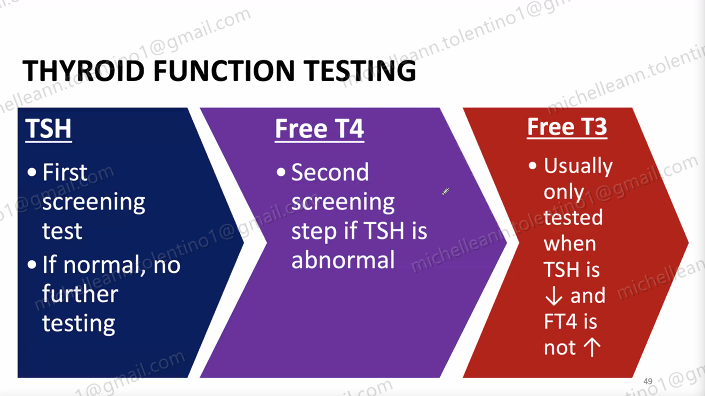
If a screening TSH is high, which test is likely to be ordered next?
Cholesterol
Free T4
Ferritin
Glucose
Free T4
Commonly used methods for thyroid hormone measurement except:
CLIA
EIA
LC-MS
RIA
LC-MS (LIQUID CHROMATOGRAPHY MASS SPECTROPHOTOMETRY)
The thyroid gland contains parafollicular cells (C cells), which secrete:
Calcitonin
T3
T4
All of these
Calcitonin
Feedback
THYROID GLAND
The follicular cells secrete thyroid hormones.
The thyroid gland also contains parafollicular cells (i.e., C cells), which secrete calcitonin.
Which of the following is both hormone and enzyme?
ADH
Angiotensin
Acetylcholinesterase
Renin
Renin
Endocrine gland that secretes melatonin, which helps to maintain the circadian rhythm and regulates LH and FSH levels.
Adrenal gland
Pancreas
Pineal gland
Pituitary gland
Pineal gland
Feedback
The pineal gland secretes melatonin, which helps to maintain the circadian rhythm and regulates LH and FSH levels. The circadian rhythm is a 24-hour biological clock that is influenced by periods oflight and dark.
Melatonin levels are low during the day because light exposure stops the release of melatonin into the blood, and they are high during dark periods, when the hormone is released. Photoperiods influence sleep patterns. Melatonin is thought to block the secretion of LH and FSH.

PLUMBISM, a deleterious effect of gradual accumulation of ______ in body tissues, as a result of repeated exposure.
Arsenic
Cyanide
Lead
Mercury
Lead
safe concentration of lead = alamin


Hazardous material is literally burned to ashes at temperatures of 870° to 980°C.
Autoclaving
Incineration
Inspissation
Pasteurization
Incineration
Feedback
Incineration is the most common method of treating infectious waste. Hazardous material is literally burned to ashes at temperatures of 870° to 980°C.
Incineration is the safest method to ensure that no infective materials remain in samples or containers when disposed.
Prions, infective proteins, are not eliminated using conventional methods. Therefore incineration is recommended.
A class _______ cabinet is selected if radioisotopes, toxic chemicals, or carcinogens will be used.
BSC Class I
BSC Class IIA
BSC Class IIB
BSC Class III
BSC Class IIB
Agents not known to cause disease in healthy adults:
Biosafety level I
Biosafety level II
Biosafety level III
Biosafety level IV
Biosafety level I - standard microbiological practice by mahon
Common human pathogens:
Biosafety level I
Biosafety level II
Biosafety level III
Biosafety level IV
Biosafety level II

Agents that may cause serious or lethal disease via inhalation. Effective treatment available.
Biosafety level I
Biosafety level II
Biosafety level III
Biosafety level IV
Biosafety level III
Agents that pose high risk of life-threatening disease. May be transmitted by aerosols. No vaccine or therapy.
Biosafety level I
Biosafety level II
Biosafety level III
Biosafety level IV
Biosafety level IV
Standard microbiological practices:
BSL 1
BSL 2
BSL 3
BSL 4
BSL 1
Typically lancet-shaped and occurs singly, in pairs, or in short chains:
Staphylococcus epidermidis
Staphylococcus aureus
Streptococcus pneumoniae
Streptococcus pyogenes
Streptococcus pneumoniae
methgb>biliverdin

Four blood cultures were taken over a 24-hour period from a 20-year-old woman with severe diarrhea. The cultures grew motile (room temperature), gram-negative rods. A urine specimen obtained by catheterization also showed gram-negative rods, 100,000 colonies/mL. Given the following results, which is the most likely organism?
TSI = A/A gas
Indole = +
MR = +
VP = Neg
Citrate = Neg
H2S = Neg
Urease = Neg
Lysine decarboxylase = +
Phenylalanine deaminase = Neg
Proteus vulgaris
Salmonella typhi
Yersinia enterocolitica
Escherichia coli
Escherichia coli
imvic = wink with RIGHT eye
TSI = A/A gas (remember EKE)
A leg culture from a nursing home patient grew gram-negative rods on MacConkey agar as pink to dark pink oxidase-negative colonies. Given the following results, which is the most likely organism?
TSI = A/A
VP = +
Urease = +
Indole = Neg
Citrate = +
Motility = Neg
MR = Neg
H2S = Neg
Antibiotic susceptibility: Resistant to carbenicillin and ampicillin
Serratia marcescens
Proteus vulgaris
Enterobacter cloacae
Klebsiella pneumoniae
Klebsiella pneumoniae
A stool culture from a 30-year-old man suffering from bloody mucoid diarrhea gave the following results on differential enteric media:
MacConkey agar = clear colonies
XLD agar = clear colonies
Hektoen agar = green colonies
Salmonella–Shigella agar = small, clear colonies
Which tests are most appropriate for identification of this enteric pathogen?
TSI, motility, indole, urease, Shigella typing with polyvalent sera
TSI, motility, indole, lysine, Salmonella typing with polyvalent sera
TSI, indole, MR, VP, citrate
TSI, indole, MR, and urease
TSI, motility, indole, urease, Shigella typing with polyvalent sera
All of the following are gram-positive spore-forming bacilli, EXCEPT:
B. anthracis
B. cereus
B. fragilis
B. subtilis
B. fragilis (Bacteroides)
Routine susceptibility testing is not recommended: *
Mycobacterium avium
Mycobacterium fortuitum
Mycobacterium kansasii
Mycobacterium marinum
Mycobacterium marinum
Feedback
Routine susceptibility testing of M. marinum is not recommended, because isolates are consistently susceptible to rifampin, ethambutol, doxycycline/minocycline, trimethoprim–sulfamethoxazole, and clarithromycin.
The agent of verruga peruana and a septicemic, hemolytic disease known as Oroya fever:
Bartonella bacilliformis
Bartonella henselae
Klebsiella pneumoniae
Klebsiella granulomatis
Bartonella (rokanimiya old?) bacilliformis
Feedback
B. bacilliformis, the agent of verruga peruana and a septicemic, hemolytic disease known as Oroya fever.
Etiologic agent of granuloma inguinale, or donovanosis, a sexually transmitted disease:
Bartonella bacilliformis
Bartonella henselae
Klebsiella pneumoniae
Klebsiella granulomatis
Klebsiella granulomatis
Feedback
B. bacilliformis, the agent of verruga peruana and a septicemic, hemolytic disease known as Oroya fever.
In general, fungal specimens can be _____ only if processing is delayed.
Incubated at 37C
Refrigerated at 4C
Frozen at -20C
Frozen at -70C
Refrigerated at 4C (elsevier)
Feedback
Fungal specimen transport:
Sterile, leak-proof container
Dermatologic requires dry container
No transport media
Processed within a few hours
Specimens can be refrigerated at 4 C
○ Only if processing is delayed
○ Blood and cerebrospinal fluid (CSF): 30 to 37 C
○ Dermatologic: 15 to 30 C
Storage for blood and cerebrospinal fluid (CSF) for fungal culture:
20 to 25C
30 to 37C
4C
-20 C
30 to 37C
Feedback
Fungal specimen transport:
Sterile, leak-proof container
Dermatologic requires dry container
No transport media
Processed within a few hours
Specimens can be refrigerated at 4 C
○ Only if processing is delayed
○ Blood and cerebrospinal fluid (CSF): 30 to 37 C
○ Dermatologic: 15 to 30 C
First step in viral replication:
Attachment
Penetration
Uncoating
Macromolecular synthesis
Viral assembly
Release
Attachment
Feedback
The six steps of virus replication, called the infectious cycle, proceed as follows:
1. Attachment
2. Penetration
3. Uncoating
4. Macromolecular synthesis
5. Viral assembly
6. Release

Specimens collected for virus isolation should be kept at:
37C
20C
4C
- 20C
4C
At what temperature should clinical specimen suspected of containing viruses be kept for transport that takes days?
37C
4C
-10C
- 70C
- 70C
Which of the following is the specimen of choice for detecting rotavirus?
Throat swab
Urine sample
Bronchoalveolar wash
Feces sample
Feces sample
Ova recovered from the stool are routinely used to diagnose infections caused by all of the following EXCEPT?
Necator americanus
Ascaris lubricoides
Trichuris trichiura
Strongyloides stercoralis
Strongyloides stercoralis - diagnostic stage = rhabdi larva
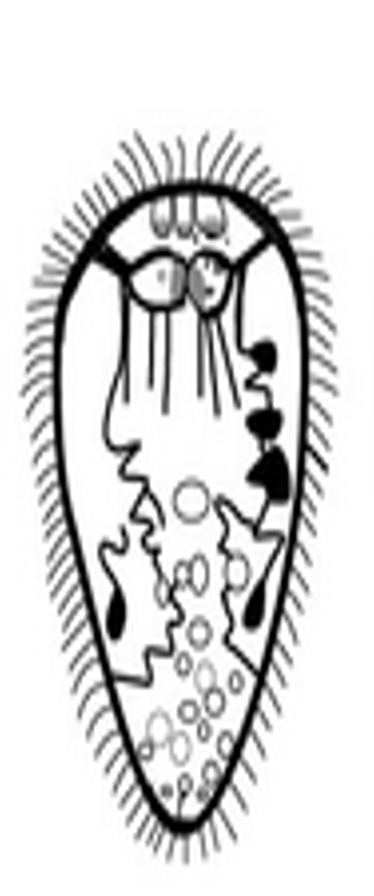
First-stage larva of flukes that emerge from the egg in fresh water , equipped with cilia, which aid in movement:
Cercaria
Metacercaria
Miracidium
Redia
Sporocyst
Miracidium

Fluke(s) associated with CHOLANGIOCARCINOMA
(cancerous growth in bile duct epithelium):
F. buski
P. westermani
C. sinensis, O. viverrini
S. japonicum
C. sinensis, O. viverrini
An operculated CESTODE egg that can be recovered from human feces is:
Clonorchis sinensis
Diphyllobothrium latum
Paragonimus westermani
Dipylidium caninum
Diphyllobothrium latum
Clonorchis sinensis & Paragonimus westermani are TREMATODES
In a condition resulting from the accidental ingestion of eggs, the human becomes the intermediate rather than the definitive host:
Trichinosis
Cysticercosis
Ascariasis
Strongyloidiasis
Cysticercosis
T. Solium - CESTODESE
brain, spinal cord and eyes
The organism is transmitted through a bite of the tabinid fly or deer fly of the genus Chrysops.
Brugia malayi
Loa loa
Onchocerca volvulus
Wuchereria bancrofti
Loa loa
The parasite is transmitted by the black fly, Simulium spp.
Brugia malayi
Loa loa
Onchocerca volvulus
Wuchereria bancrofti
Onchocerca volvulus
Number of nucleus (nuclei) of the mature cyst of Iodamoeba bütschlii:
1
2
3
4
1
Not all stages are seen in peripheral blood smear:
Plasmodium falciparum
Plasmodium malariae
Plasmodium ovale
Plasmodium vivax
Plasmodium falciparum
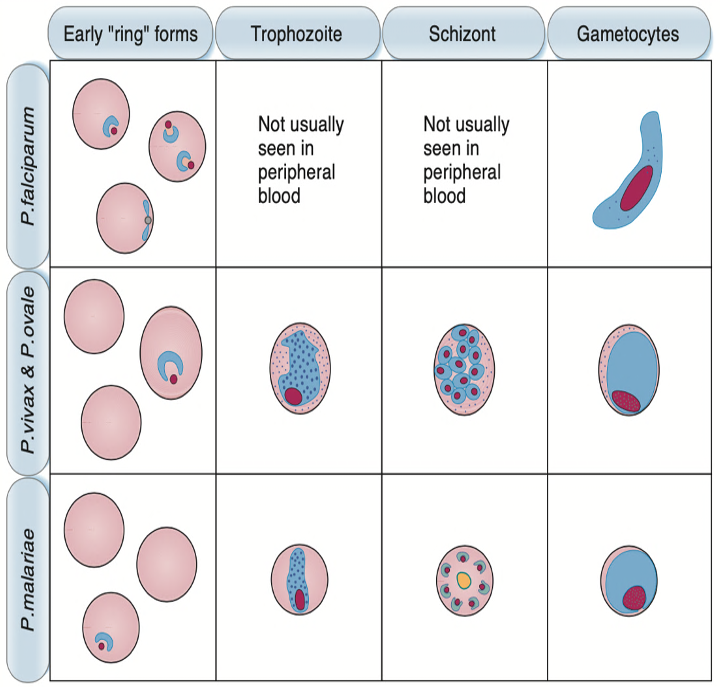
Gametocyte in a thin smear showing the membrane of the RBC:
Plasmodium falciparum
Plasmodium malariae
Plasmodium ovale
Plasmodium vivax
Plasmodium falciparum

Routine method of stool examination primarily useful in the detection of motile trophozoites:
Direct fecal smear (DFS)
Kato thick smear
Formalin ether/ethyl acetate concentration technique (FECT)
Zinc sulfate flotation technique
Direct fecal smear (DFS)
iodine destroy trophs
Useful in MASS STOOL EXAMINATIONS: *
Direct fecal smear (DFS)
Kato thick smear
Formalin ether/ethyl acetate concentration technique (FECT)
Zinc sulfate flotation technique
Kato thick smear
Higher sensitivity for detection of intestinal parasitic infections among FOOD HANDLERS (and OFWs):
Direct fecal smear
Kato thick smear
Formalin ether concentration technique
Sheather's sugar flotation
Formalin ether concentration technique
Best for recovery of coccidian oocysts, mainly Cryptosporidium, Cyclospora and Cystoisospora (Coccidians):
Formalin ether concentration technique
Zinc sulfate flotation
Brine flotation
Sheather's sugar flotation
Sheather's sugar flotation
Normal urine odor:
Ammoniacal
Cabbage odor
Fragrant
Mousy
Fragrant - Aromatic
ammoniacal = urea to ammonia, happens during inf.


Leaving a reagent strip in the specimen for too long will:
Cause runover between reagent pads
Alter the color of the specimen
Cause reagents to leach from the pads
Not affect the chemical reactions
Cause reagents to leach from the pads
Feedback
Allowing the strip to remain in the urine for an extended period may cause leaching of reagents from the pads.
Leaving excess urine in the reagent strip after removing it from specimen will:
Cause runover between reagent pads
Alter the color of the specimen
Cause reagents to leach from the pads
Not affect the chemical reactions
Cause runover between reagent pads
Feedback
Excess urine remaining on the strip after its removal from the specimen can produce a runover between chemicals on adjacent pads, producing distortion of the colors.
Which of the following is soluble in dilute acetic acid?
Bacteria
Yeast
Amorphous phosphates, carbonate
White blood cells
Amorphous phosphates, carbonate
Differentiates WBCs and renal tubular epithelial (RTE) cells:
Sternheimer-Malbin stain
Toluidine blue
Prussian blue
Hansel stain
Toluidine blue - nuclei
A method of measuring specific gravity by measuring the change in the frequency of a sound wave after it enters a solution:
Urinometry
Oscillation densitometry
Reagent strip
Refractometry
Oscillation (Harmonic) densitometry
A clinically significant squamous epithelial cell is the:
Cuboidal cell
Clue cell
Caudate cell
Columnar cell
Clue cell - G. Vaginalis
Forms of transitional epithelial (urothelial or bladder) cells include all of the following except:
Spherical
Caudate
Convoluted
Polyhedral
Correct answer
Convoluted

These crystals resemble a rectangular plate with a notch in one or more corners:
Bilirubin crystals
Cholesterol crystals
Sulfonamide crystals
Tyrosine crystals
Cholesterol crystals
recall: chole is soluble in = chloroform
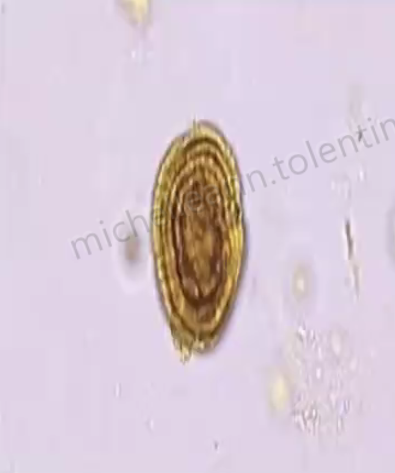
Yellow-brown spheres that demonstrate concentric circles and radial striations:
Bilirubin crystals
Leucine crystals
Tyrosine crystals
Uric acid crystals
Leucine crystals
Hoesch screening test:
Hemoglobin
Ketone
Porphobilinogen
Urobilinogen
Porphobilinogen
For evaluation of sperm motility, examine _______ sperms per slide and count the percentages of the different motile categories using a manual cell counter.
10 sperms
20 sperms
100 sperms
200 sperms
200 sperms
Feedback
The percentage of sperm showing actual forward movement can then be estimated after evaluating approximately 20 high-power fields.
An alternate procedure is to examine 200 sperm per slide and count the percentages of the different motile categories using a manual cell counter. Motility is evaluated by both speed and direction.
Grading can be done using a scale of 0 to 4, with 4 indicating rapid, straight-line movement and 0 indicating no movement.
A minimum motility of 50% with a rating of 2.0 after 1 hour is considered normal.
Maximum absorbance of amniotic fluid bilirubin and oxyhemoglobin (interference):
Bilirubin 450 nm, oxyhemoglobin 540 nm
Bilirubin 540 nm, oxyhemoglobin 450 nm
Bilirubin 450 nm, oxyhemoglobin 410 nm
Bilirubin 410 nm, oxyhemoglobin 450 nm
Bilirubin 450 nm, oxyhemoglobin 410 nm
Black pleural fluid:
Hemothorax
Chylous material from thoracic duct leakage
Rupture of amoebic liver abscess
Aspergillus infection
Aspergillus infection


Which cluster of differentiation (CD) marker appears during the first stage of T-cell development and remains present as an identifying marker for T cells?
CD1
CD2
CD3
CD4 or CD8
CD2
Which cluster of differentiation is MOST SPECIFIC identifying marker for mature T cells?
CD1
CD2
CD3
CD4 or CD8
CD3
IgM in plasma:
Monomer
Dimer
Pentamer
Pentamer
IgM on the surface of B cells*
Monomer
Dimer
Pentamer
Monomer
1st Ig to appear on B cell surface = IgM
2nd = IgG
Anti-glomerular basement membrane antibody is most often associated with this condition:
Systemic lupus erythematosus
Celiac disease
Chronic active hepatitis
Goodpasture disease
Goodpasture disease

In chronic active hepatitis, high titers of which of the following antibodies are seen?
Antimitochondrial
Anti-smooth muscle
Anti-DNA
Anti-parietal cell
Anti-smooth muscle
ASMA CA4
In primary biliary cirrhosis, which of the following antibodies is seen in high titers?
Antimitochondrial
Anti-smooth muscle
Anti-DNA
Anti-parietal cell
Antimitochondrial (AMA)

Which serum antibody response usually characterizes the primary (early) stage of syphilis?
Antibodies against syphilis are undetectable
Detected 1 to 3 weeks after appearance of the primary chancre
Detected in 50% of cases before the primary chancre disappears
Detected within 2 weeks after infection
Detected 1 to 3 weeks after appearance of the primary chancre
Tests to identify infection with HIV fall into which three general classification types of tests?
Tissue culture, antigen, and antibody tests
Tests for antigens, antibodies, and nucleic acid
DNA probe, DNA amplification, and Western blot tests
ELISA, Western blot, and Southern blot tests
Tests for antigens, antibodies, and nucleic acid
sero central dogma: nucleic acid(early)>ag>ab
Which tests are considered screening tests for HIV?
ELISA 4th generation, and rapid antibody tests
Immunofluorescence, Western blot, radioimmunoprecipitation assay
Culture, antigen capture assay, DNA amplification
Reverse transcriptase and messenger RNA (mRNA) assay
ELISA 4th generation, and rapid antibody tests
Which tests are considered confirmatory tests for HIV?
ELISA and rapid antibody tests
Western blot test, HIV-1,2 differentiation assays, and polymerase chain reaction
Culture, antigen capture assay, polymerase chain reaction
Reverse transcriptase and mRNA assay
Western blot test, HIV-1,2 differentiation assays, and polymerase chain reaction
Interpret the following results for HIV infection.
ELISA: positive
Repeat ELISA: negative
Western blot: no bands
Positive for HIV
Negative for HIV
Indeterminate
Further testing needed
Negative for HIV
Which of the following is used for the confirmation of infection with HIV-1?
Western blot (immunoblot) assay
ELISA
Complement fixation
p24 Antigen testing
Western blot (immunoblot) assay
Which technique is used for the confirmation of infection with HIV-1 and HIV-2?
Western blot (immunoblot) assay
ELISA
FDA-approved NAT
p24 Antigen testing
Which of the following tests is currently recommended by the CDC to confirm a positive screening test result for HIV infection?
Rapid test for HIV-1 and HIV-2 antibodies
Western blot
Molecular testing for HIV RNA
HIV viral culture
Rapid test for HIV-1 and HIV-2 antibodies
Feedback
Because of its relative insensitivity, level of technical difficulty, and long turnaround time to obtain results, the Western blot test is inappropriate for use as an initial screen for HIV infection.
For these same reasons, as we previously discussed, the CDC has recommended that the Western blot be replaced with rapid HIV-1/HIV-2 antibody tests as the standard method for confirmation of positive screening results.
Tumor markers found in the circulation are most frequently measured by:
Immunoassays
Thin-layer chromatography
High-pressure liquid chromatography
Colorimetry
Immunoassays