adult health pre midterm 2
 Call Kai
 Learn
 Practice Test
 Spaced Repetition
 Match
 Flashcards
 Knowt Play
1/94

There's no tags or description
Looks like no tags are added yet.
95 Terms
diabetes mellitus
multi system disease
endocrine disorder
abnormal insulin production, impaired insulin utilisation or both
approx 60-85% of ppl will die from heart disease or stroke
dm is contributing to death of approx 41 500 canadians per year
canadian adults with dm are twice as likely to die prematurely
higher incidence in indigenous pops as well as people with african and asian descent
etiology and pathophysiology of diabetes mellitus
causes are combination: genetic, autoimmune, viral, environmental, lifestyle
types: type 1, type 2, gestational (pregnancy), prediabetes, secondary diabetes (after renal disease or cardiac disease, etc)
normal insulin metabolism: produced by B cells in the islets of langerhans, released continously into blood stream in small amts (basal dose) and then larger amts after foods, stabilises glucose range to 4-6 mmol

insulin
comes out of organ, binds to glucose, helps glucose to go out of blood stream and into cells (cells have receptors for glucose but needs insulin to transport)
no insulin means nothing to transport glucose
for insulin resistance, the insulin will not bind to glucose
symptoms caused by not enogh glucose into cells and too much glucose in blood stream
post prandial (after meals) vs basal doses (reg dose)
insulin goes up after meals, it stimulates storage of glucose as glycogen in liver and muscle, inhibits gluconeogenesis, enhances fat deposition, increase protein synthesis
skeletal muscle and adipose tissue (insulin-dependant tissue)
other tissues (brain, liver, blood) doesn’t directly depend on insulin for glucose transport
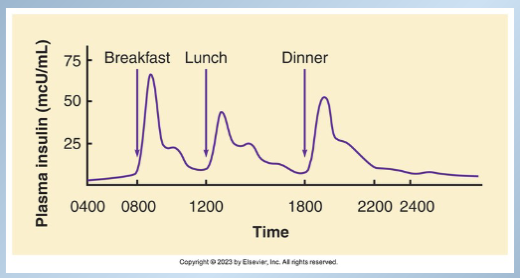
type 1 diabetes mellitus
aka juvenile onset or insulin dependant diabetes or IDDM (insulin dependant diabetes mellitus)
occurs in those younger than 30, more frequent in young children
end result of a long standing process: progressive destruction of pancreatic B cells by the bodys own T cells, autoantibodies cause a reduction of 80% to 90% in normal B cell function before manifestations occur
patient will get insulin bc cant make their own (exogenous insulin)
causes: genetic predisposition (related to human leukocyte antigens (HLAs), exposure to virus
long pre clinical period (could have had prediabetes, metabolic syndrome), antibodies present for months to years before symptoms occur, manifestations will appear when pancreas can no longer produce insulin (rapid onset symptoms, present at ED with ketoacidosis)
what can happen if cells do not get glucose
they can die
hypoglycemia: life threatening condition (IMPORTANT)
hyperglycemia: causes symptoms
DKA
diabetic keto acidosis
body has been burning fats and proteins
in absence of exogenous insulin
life threatening
results in metabolic acidosis
polydipsia, polyphagia, polyuria
polyuria
frequent urination
kidneys trying to get rid off too much glucose
polydipsia
excessive thirst
body wants to dilute sugar in blood stream
polyphagia
extreme hunger
cells aren’t able to get glucose
prediabetes
individuals already at risk for diabetes
blood glucose high, but not high enough for diabetes
IFG (impaired fasting glucose) - 8hr w out any oral intake (other than water), then get blood sugar checked, result will be 6.1-6.9
IGT or OCTT (oral glucose tolerance test) - give sugary drink then test glucose 2 hrs later, result will be 7.1 - 11 mmol/L
hemoglobin A1C - looks at life of blood vessel (normally 3 months) and looks at its carrying capacity,
long term damage already occurring to heart and blood vessels
usually present with no symptoms
watch for polyuria, polydipsia and polyphagia
normal blood glucose
3.6-6 mmol/L
type 2 diabetes
aka NIDDM (non insulin dependant diabetes mellitus), more prevalent (90% of all diabetes), ppl over 35 and prevelance increases with age, 80-90% of pts are overweight, genetic basis, greater in some pop: indigenous, latin america, south asian, asian or african descent
pancreas continues to produce some endogenous insulin, insulin is insufficient or poorly utilised by tissue
obesity (abdominal and visceral) is the most powerful risk factor for insulin resistance and diabetes in general, along with genetic mutations (lead to insulin resistance or increased risk for obesity)
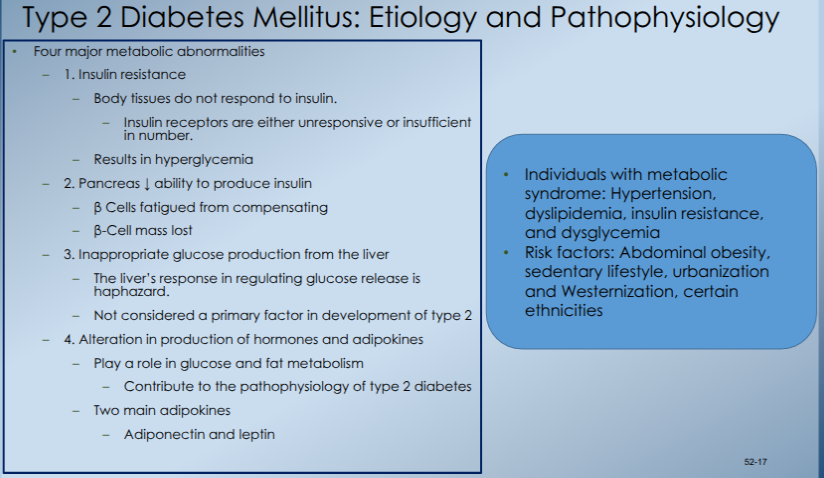
4 major metabolic abnormalities: insulin resistance, pancrease ability to produce insulin decreases, inappropriate glucose production in liver, alteration in production of hormones and adipokines
gradual onset, person may go years with undetected hyperglycemia
type 2 diabetes mellitus etiology and pathophysiology
gestational diabetes
develops during pregnancy (24-28) weeks at gestation
usually normal glucose lelves at 6 weeks postpartum
increased risk for birth trauma, hypoglycemia, hyperbilirubinemia, and resp distress syndrome
increased risk for developing type 2 diabetes in 5-10 years
therapy: first nutritional, second insulin
secondary diabetes
treatment of a medication contition or treatments that causes abnormal blood glucose levels
corticosteroids (prednisone) (acts as influx of cortisol- elevates sugar)
phenytoin (dilantin)
atypical antipsychotics (clozapine)
usually resolves when underlying conditions are treated
s+s of type 1 diabetes mellitus
polyuria, polydipsia, polyphagia
weight loss (bc of breakdown of fats and proteins)
weakness (no atp production in cells)
fatigue (no atp production in cells)
high risk complication: DKA
s+s of type 2 diabetes mellitus
non specific, may have type 1 symptoms
fatigue
recurrent infection
recurrent vaginal yeast or monilia infection
prolonged wound healing
visual changes (blood vessels in the eye get damaged bc excess sugar causes blood to get thicker)
diabtes mellitus diagnositc studies
need to have 2/4
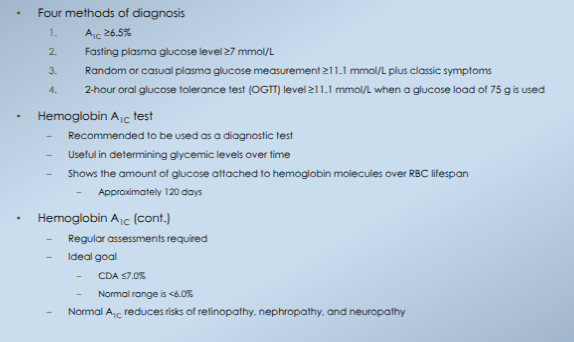
A1C test
life of hemoglobin over last 3 months
key diagnostic test for diabetes
anything equal or over 6.5% means diabetes, over 7 is diabetes
interprofessional care for diabetes
goals: decrease symptoms, promote well being, prevent acute complications, delay onset and progression of long term complications
patient teaching - self monitoring of blood glucose
nutritional therapy
medication therapy
excersise
exogenous insulin
insulin from outside source
required for type 1, prescribed for type 2 if unable to control blood sugar in other ways
also for type 2, esp in the hospital they may be more likely to have insulin because of surgery or illness and stress will cause increase in cortisol which causes spikes in blood sugar that can’t be maintained with oral glycemics
pts on TPN (total parenteral nutrition) may take insulin if it raises their bp too much
honeymoon period
after diagnosis of type 2, pts sometimes go through honeymoon period where they are able to balance for a little while before it gets worse and they may need insulin
human insulin
genetic engineering of bacteria to produce this, only one used today
differ with regard to onset, peak action and duration
different types in combo
regimen that closely mimics endogenous insulin production is basal-bolus
basal: once a day, long or intermediate acting
bolus: before meals, rapid or short acting

mixing insulin
regular insulin or short acting is the only one that can be given IV

critical thinking for insulin
if pt is going for a procedure hold med
if pt is vomiting hold med
rapid acting
bolus
lispro, aspart, glulisine
0-15mins before meal
onset of action: 15 mins
typically used in hospital for correction scale
short acting
bolus
regular insuline
only insulin that can be given IV
30-45 mins before meal
onset is 30-60 min
long acting
basal
once a day, bedtime or morning
released steadily and continuously (no peak)
cannot be mixed with any other insulin or solution
handling insulin
do not heat or freeze
store insulin in fridge
in use vials may be left at room temp for up to 28 days
avoid exposure to direct sunlight
admin of insulin
cant be take orally (stomach acid affects it)
subcut injection usually, IV for regular
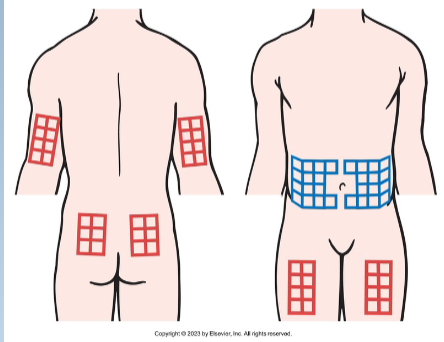
fastest absorption: abdomen, followed by arm, thigh and buttock
abdomen is preferred site, but when pt is on anticoagulants, abdomen is used for that, also pts probably use abdomen for themselves- usually use arms
rotate injections within one particular sites
do not inject in a site to be excersised
usually available as U100
1 mL contains 100 units of insulin
use alcohol swab first and let dry (UNLESS pt is at home and doing this for themselves)
handwashing with soap or abhr before
do not recap needle
45-90 degree angle- depending on fat thickness of pt
insulin pens preloaded with insulin are now available
sub cut injection sites
rotate sites
body part and within the body part
avoid hardened areas
insulin pen diagram

when admin insulin, what do u need
pen, needle, alcohol swab
priming insulin
dial pen to 2 units
over trash, dispense units out of the pen to prime needle
dial dose up to whatever is ordered for pt
independant double check
always for insulin
do not tell other nurse anything- they use sliding scale to figure out insulin amt on their own
insulin pump
continous subcut infusion
helps maintain glycemic control
battery operated
connects to phone
connected via plastic tubing to catheter inserted into subcut tissue in abdominal wall
complications with insulin therapy
hypoglycemia (pt gets insulin and then doesn’t eat, pt can vomit, increased excersise)- do frequent blood sugar checks as ordered and as needed
allergy (to any additives, can be switched to different insulin)
lipodystrophy (important to rotate sites, sites will start to harden)
somogyi effect
dawn phenomenon
somogyi effect
hyper glycemia in the morning
rebound effect where overdose of insulin causes hypoglycemia
SO MUCH insulin
usually during sleep
counterregulatory hormones released
causes rebound hyperglycemia and ketosis may occur
dawn phenomenon
hyperglycemia in morning
release of counterregulatory hormones in pre dawn
growth hormones/cortisol
normal pattern- dont eat overnight and body is compensating by increasing blood sugar
dawn vs somogyi
dr will call for testing around 2-3am
dawn is more slower and progressive, somogyi is sudden
understand correction/sliding scale
antihyperglycemic agents
oral agents: not insulin
work to improve mechanisms by which insulin and glucose are produced and used by the body,
for type 2 mostly
work on insulin resistance, decreased insulin production, increased hepatic glucose production
sulphonylureas

meglinides
difficult bc needs to be taken exactly 30 mins (pt needs to understand and able to do this)

biguanides
think abt kidneys, kidneys need to be in good status before giving this med bc this med is excreted through kidneys
if kidney function not good enough- med will build up in blood stream
if someone is ill, not enough fluid intake, vomiting or diarrhea- may have dehydration which will affect the kidneys (have to work harder)
SICK day protocol
short term effects to kidneys, this med isnt the best
IV contrast dye also affects kidneys- causes short term damage
***metformin and kidneys- remember trick

meds will be more thorough in pharm
α-Glucosidase inhibitors

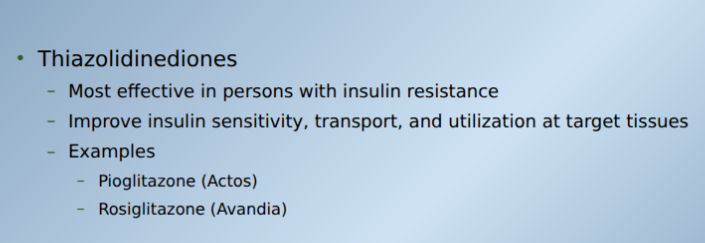
thiazolidinediones
insuline resistance most often used for obese patients
dipeptidyl peptidase-4 (DDP-4) inhibitor

B-Adrenergic blockers
mask symptoms of hypoglycemia
prolong hypoglycemic effects of insulin
thiazide/loop diuretics
can potentiate hyperglycemia bc potassium loss
nutritional therapy for diabetics
important and challenging
cornerstone bc we are trying to acheive a good glycemic index diabetes mellitus nurse educator and registered dietitian should be part of healthcare team
canadian diabetes association (CDA)/diabetes canada
provides a variety of teaching tools
type 1 diabetes mellitus nutritional control
based on usual food intake and balanced with insulin and excersise
insulin regimen managed day to day
often will wear a glucose monitor and pump to real time track and correct
type 2 diabetes nutritional therapy
emphasis is on achieving glucose, lipid and blood pressure goals
calorie and fat intake reduction
food composition of diabetic education
energy intake balanced with energy output
alcohol - LOWERS BLOOD GLUCOSE
work WITH the patient to find nutritional control that works for them- be careful with just telling people what to do
cultural component

healthy eating education
dietician initially provides instruction
carb counting
canadian food guide

excersise for diabetics
essential
increased insulin sensitivity
lowers blood glucose
weight loss
several small carb snacks can be taken every 30 mins during excersise to prevent hypoglycemia
best done after meals
excersise started after: medical clearance, slowly with gradual progression
should be individualised
monitor levels before, during and after excersise
rule of thumb for excersise
150 mins per week of moderate intensity aerobic physical activity
monitoring of blood glucose
self monitoring (SMBG): self management, detects episodic hyper and hypoglycemia, pt training crucial, supplies immediate info abt blood glucose
continous glucose monitoring (CGM): displays with glucose values every 1-5 mins, track trends, common for kids
nursing assessment of diabetics
past health history
medications
recent surgery
symptoms: malaise, weight loss, thirst, hunger, poor healing, kussmaul’s respirations (fast rapid breathing), constipation, diarrhea, polydipsia, polyuria, polyphagia, muscle weakness, fatigue, erectile dysfunction, frequent vaginal infections, decreased libido, depression, irritability, apathy. fruity acetone breath
nursing diagnosis for diabetics
inadequate health management
potential for injury
potential for unstable blood glucose
potential for peripheral neurovascular dysfunction
nursing planning for diabetics
active pt participation
few or no episodes of acute hyperglycemic emergencies or hypoglycemia
maintain normal blood glucose levels
prevent or delay chronic complications
lifestyle adjustments with minimal stress
nursing implementations for diabetics
health promotion: identify risks, routine screening (fasting blood glucose or A1c preferred, every 3 yrs past 40 or in high risk)
acute intervention: hypoglycemia, dka, hyperosmolar hyperglycemic state,
stress of illness or surgery: increase blood glucose, continue meal plan, increase intake of noncaloric fluids, continue taking insulin and oral meds, frequent monitoring of blood glucose, ketone testing of glucose over 14 mmoL to test for acidosis
home care: medications, hygeine, identification and travel card, carry diagnosis of diabetis, teaching, educate on disease process, meds, excersise, diet,enabel the pt to be active in care
nursing evaluation of diabetics
knowledge
balance of nutrition
immune status
health benefits
no injuries

DKA
can happen in type 2 during surgery, illness or stress
KETONES found in urine- byproduct of fat metabolism
symptoms: 3Ps, weakness, dehydration, sweet odor, tachycardia, kussmaul respirations, orthostatic hypotension
managment: airway management, correct fluid/electrolyte imbalance, iv infusion of 0.45% or 0.9% NaCl to restore urine output and raise bp, when glucose approach 14 mmol/L add 5% dextrose to regimen to prevent hypoglycemia, potassium replacement, (sodium, chloride, bicarbonate, phosphate, magnesium, nitrogen) deficits need to be corrected), insulin theryapy (withheld until fluid resuscuitation had begun, bolus followed by continous insulin infusion
labs: blood glucose over 14mmol/L, arterial blood pH under 7.35 (acidotic), serum bicarbonate level of under 15 mmol/L, anion gap greater than 12 mmol/L, moderate to large ketones in the urine or blood
important, must be treated proptly, may or may not need hospitalisation

DKA management quick steps
abcs
fluid resuscuitation, mostly isotonic
correct k+ if deficient
iv insulin
iv glucose when levels under 12 mmol/L
***K BEFORE INSULIN because potassium helps shift insulin into cells
hyperosmolar hyperglycemic syndrome (HHS) (non ketotic)

nursing managment of DKA/HHS
monitor and assess glucose, renal status, cardiopulmonary status, loc, signs of potassium imbalance, cardiac monitoring, vital signs
admin of iv fluids, insulin therapy, electrolytes
hypoglycemia
low blood glucose
too much insulin in proportion in the blood
manifestations: anxiety, nervous, diaphoresis, tremors, hunger, pallor, palpitation, irritable
untreated: loss of conciousness, seizures, coma, death
hypoglycemic unawareness: pt doesn’t exhibit signs, increased ris, related to autonomic neuropathy
causes: mismatch in timing of intake of meds and foods
normal blood glucose
4-6 mmol/L
management of hypoglycemia
check glucose, if under 4 mmol/L, start treatment
if alert to swallow- 15-20g of simple carb (175 mL of fruit juice, regular soft drink, 6 life saver candies)
recheck 15 mins, repeat until blood sugar greater than 4 mmol/L, pt eats meals or snacks to prevent rebound hypoglycemia, check in 45 mins after food
15 15 rules: 15 g of carb and check every 15 mins
if pt not alert to swallow- admin 1mg of glucagon IM or cubcut, adverse effect is rebound hypoglycemia, have pt ingest complex carb after recovery
in acute care: 20-50 m: of 50% dextrose IV push, follow up with 1v drip of glucose
chronic complications of diabetes

angiopathy macrovascular
cholesterol levels screened

angiopathy microvascular
yearly eye exams in these pts
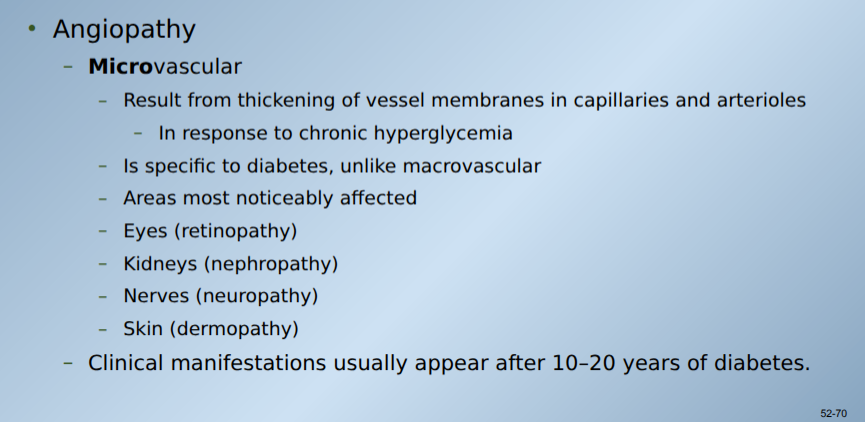
damage to eyes with diabetics
dont need to know in detail
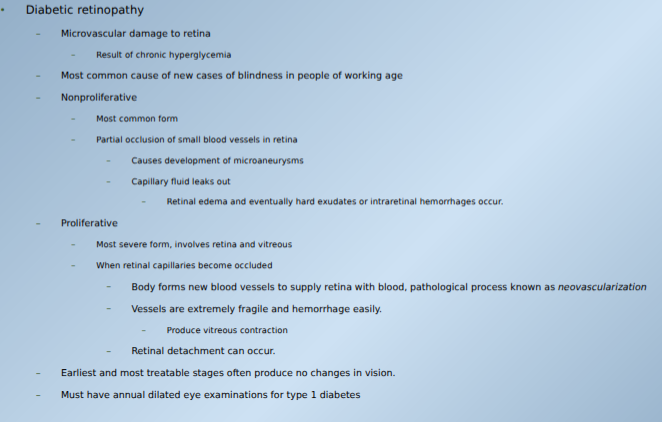
diabetic retinopathy

diabetic nephropathy

FINISH SLIDES