BIO 101- EXAM 1 MATERIAL
 Call Kai
 Learn
 Practice Test
 Spaced Repetition
 Match
 Flashcards
 Knowt Play
1/45

There's no tags or description
Looks like no tags are added yet.
46 Terms
What is the smallest biological structure that is living?
cell
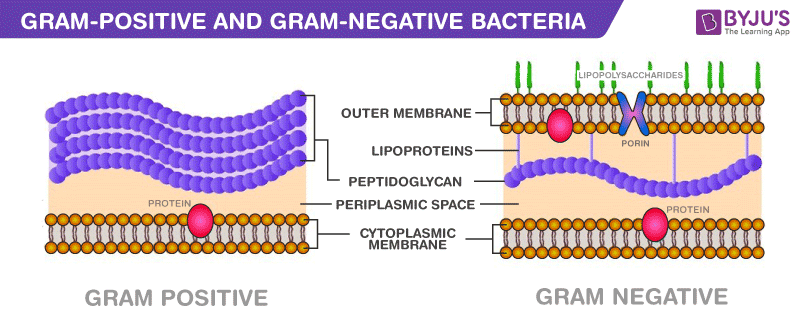
Gram-positive
Have a thicker cell wall
Natural selection
is the process by which organisms better adapted to their environment tend to survive and produce more offspring.
3 structural requirements for life
membrane, ribosome, and DNA
analogous structures
are structures in different species that perform similar functions but evolved independently, indicating convergent evolution.
convergent evolution
is the process by which distinct species develop similar traits or adaptations in response to similar environmental challenges. Unrelated species.
divergent evolution
evolves off a common ancestor, splits into different species, develop new traits based off environment.
Conjugation
process of bacteria picking up DNA from other bacteria
homologous structures
similar anatomical features in different species that share a common evolutionary origin, even if they now have different functions, providing strong evidence for common ancestry. ex. bones in wings of bat and bones of a flipper in a whale
phenotype
physical representation of alleles
genotype
specific allele combination
parasitism
a biological relationship where one organism (parasite) benefits by living on or in another organism (host), getting food, shelter, or other resources, while causing harm (ex. roundworm infection in dogs)
endosymbiosis
an evolutionary process where one organism lives inside another, forming a symbiotic relationship, both organisms benefit (form of mutualism)
commensalism
a biological relationship where one organism benefits from another (the host) by gaining food, shelter, or transportation, while the host experiences neither benefit nor harm.
mutualism
a biological interaction where two different species cooperate, and both organisms receive a net benefit
evidence for endosymbiosis
mitochondria and chloroplasts. having similar ribosomes to prokaryotes. they share key bacterial traits: they have their own circular DNA, ribosomes similar to prokaryotes, and reproduce via binary fission, all while being enclosed by double membranes
features in prokaryotes that allow them to adapt quickly
-short generation time
-genetic diversity via transformation, transduction, or conjugation
-ability to transfer advantageous alleles
-rapid reproduction which increases chance of mutuation
what can constitute a virus?
single or double stranded DNA or RNA with protein. No lipid envelope.
Hardy-weinberg equilibrium
It's a baseline model and control for ideal conditions like large population size, no mutation, random mating, no gene flow, and no natural selection, showing that if these aren't met, evolution and natural selection occurs.
Create a venn diagram comparing prokaryotes and eukaryotes.
prokaryotes:
-bacteria and archea
-single circular chromosome
-peptidoglycan cell wall
eukaryotes:
-nucleus
-linear chromosome
-mitochondria
BOTH;
-DNA
-Ribsomes
-cell membrane
What does it mean when words begin with “photo” and “chemo” in terms of metabolic descriptions?
photo- energy from sunlight
chemo- energy from organic materials
What it does it mean when words contain “hetero” “lithio” or “auto” in terms of metabolic descriptions?
hetero: get carbon from organic materials
lithio: get carbon from inorganic materials
auto: get carbon from C02
photoheterotroph
energy from sunlight, carbon from organic materials
chemoautotroph
energy from organic materials, carbon from C02
chemolithiotroph
energy from organic materials, carbon from inorganic materials
nitrogen-fixing bacteria
returns nitrogen to the cell, if this were not to happen, plants would not survive. ammonification would not occur, nitrification wouldn’t occur, dentrification wouldn’t occur
ammonification
process of ammonia being released during decomposition of nitrogen-containing compounds
nitrification
the natural, two-step process where soil bacteria convert toxic ammonia (from decaying matter) into nitrite, and then further into nitrate, a usable form of nitrogen that plants need for growth
denitrification
process of reducing nitrate from soil to gaseous compounds
typical structure of a prokaryote
-plasma membrane
-ribosome
-circular DNA strand
-cell well
-possibly flagella
typical structure of a eukaryote
-nucleus
-linear DNA
-mitochondria
-ER
-Golgi
-membrane
-cell walls and chloroplasts (plants)
3 conditions required for natural selection
-intraspecific competition: “survival of the fittest” the organisms most adapted to an environment will survive.
-variation must be heritable
-must have variation in a population
Why is DNA important?
-DNA replication
-hold data needed for evolution
-drives genotype and phenotype
endosymbiotic theory
a way a cell engulfs another and both cells benefit
symbiotic relationships
a close, long-term interaction between two different species where they depend on each other for survival or benefit in some way
what organisms bacteriophages infect
bacteria (prokaryotes)
zoonoses
animal viruses, infect eukaryotes, mainly affect animals and not humans.
Why are viruses non-living?
-cannot be classified into any kingdom, cannot grow or metabolize or reproduce via cell division
-can copy and replicate themselves with dependence on host.
-not living, not made up of cells
can individuals evolve?
-No, evolution is on a populations generational level, individual changes are developmental processes, not an intentional response to environment changes.
transformation
the process where a cell takes up foreign DNA from its surroundings, leading to a stable genetic change, common in bacteria but also relevant to viruses changing animal cells
transduction
involves a bacteriophage (virus) accidentally carrying bacterial DNA from one bacterium to another, acting as a vector
mutation
any change in the DNA sequence of an organism, caused by errors during cell division or environmental factors like radiation, leading to new versions of genes (alleles) that can be harmful (like sickle cell anemia), beneficial (like antibiotic resistance), or neutral, driving genetic variation and evolution.
antibiotic resistance
Antibiotic resistance in prokaryotes (bacteria) primarily arises through mutations, which generate genetic variation, and is rapidly spread through horizontal gene transfer (HGT), which includes transformation.
horizontal gene transfer
the movement of genetic material between organisms not related by parent-offspring inheritance, crucial for bacterial adaptation, antibiotic resistance, and evolution, occurring mainly through conjugation (cell-to-cell contact), transduction (via viruses), and transformation (uptake of free DNA).