7. Levels of Consciousness
 Call Kai
 Learn
 Practice Test
 Spaced Repetition
 Match
 Flashcards
 Knowt Play
1/18

There's no tags or description
Looks like no tags are added yet.
19 Terms
Lucid dreaming in the AIM model

an intermediate state
not like wake or REM but something in between
What is involved in the concept of lucid dreaming?
dreaming while aware of dreaming
often associated with the ability to control/direct dreams
spontaneously rare, but various training methods can induce ability to lucid dream more regularly
studies for centuries, but often on periphery of science
polysomnography and neuroimaging/stimulation methods have added credibility
What is a simple form of Lucid Dream Training?
learn to critically reflect on whether you are dreaming at frequent intervals
while awake “am i dreaming”, look at a clock to see if time is operating properly
What is MILD has a form of Lucid Dream training?
mnemonic induction of lucid dreams
rehearse/plan a dream before falling a sleep
most likely to work if you’re going into REM sleep (3am)
fairly common with modest levels of training
MILD + wake-up-back-to-bed (WBTB) led to about 50% lucid dreaming in naive participants
What is a slightly more sophisticated method of Lucid Dreaming Training?
present cues (e.g. light/sound) when REM automatically detected
What did Voss et al (2009) find is involved in the brain state of Lucid Dreaming?
3 lucid dreamers studied in lab
told to signal that they were in lucid state by giving deliberate eye movements

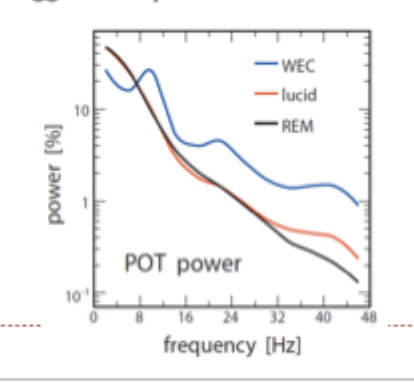
definitely not like wake
but 40Hz power suggests a hybrid state
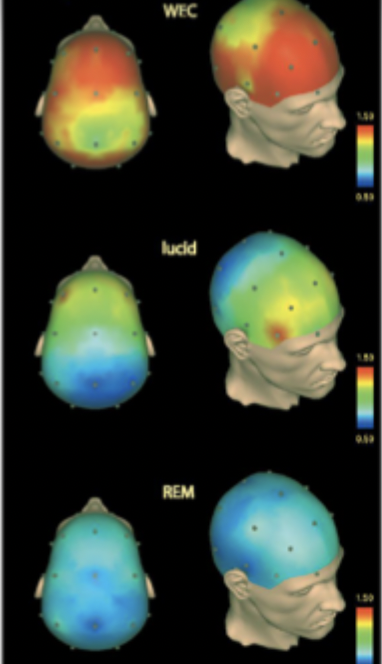
localisation of 40Hz effect suggests activation of dorsolateral PFC
fits with understanding of area as being involved in self-awareness
What did Voss et al (2014) find regarding stimulating lucid dreams?
used transcranial alternating currents stimulation, on DLPFC
whilst normal sleepers were in REM

people woke up and asked about their mentations after the delivery of the stimulus
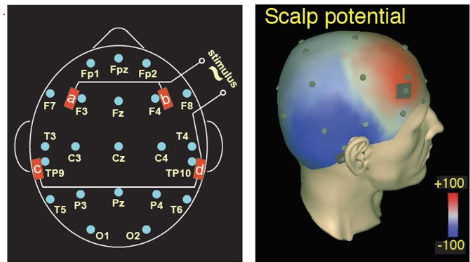

stimulation at 25 and 40Hz leads to the majority of reports classified as lucid
What has been found regarding time in dreams?
Erlacher et al (2014): direct comparison of waking and lucid dream actions (e.g, counting, walking)
some researchers thought the passage of time in dreams might be entirely illusory. Dreams as artifacts of waking?
but waking at varying times after REM onset correlates to some extent with dream duration (Hobson and Stickgold 1995)
in Erlacher et al (2014) dreaming on average a bit slower, but substantial individual difference, and quite regular relationships in time

What did Konkoly et al (2021) find regarding dialogue in lucid dreaming?

large collaborative study of lucid dreaming
participants signalled lucidity using eye-movements
Questions then delivered auditorially (France, Germany, US) or with Morse code light flashes (Germany)
e.g. maths questions, counting, semantic discrimination, yes/no questions
response delivered using eye-movements
dream reports collected upon waking

often no or ambiguous response, but when there was a clear response it was normally correct (85% of clear responses)
Interaction woven into dream
“I heard your voice as if you were a god”, “felt like sort of a radio in the car”, “there was a round bowl of water that flashed”
a window on perception in dreams?
and strong evidence of communication ability in lucid dreaming
What are a few examples of applications of Lucid Dreaming?
early days, but varying levels of potential for:
model of psychosis/therapy in schizophrenia
treatment for nightmares
improving motor performance
treatment for post-traumatic stress disorder
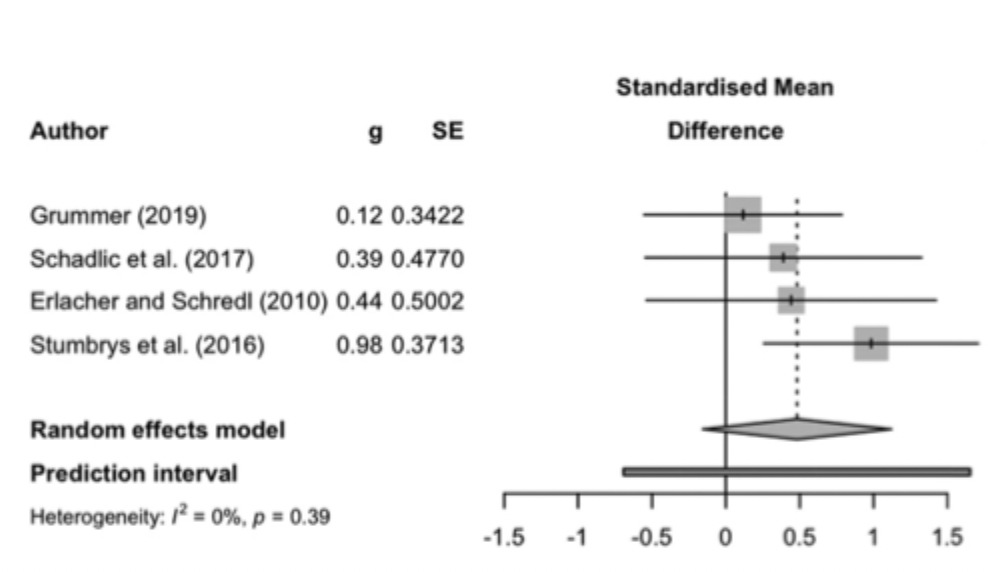
What did Yount et al 2025 find regarding Lucid Dreaming as a treatment for PTSD?
pilot study, 99 adults with PTSD symptoms (intervention vs waitlist control
interventions: 6-day online lucid dreaming healing workshop (22 hours)
ppts taught about lucid dreaming, induction techniques, meditation, dream planning lessons
ppts rated PTSD symptomatology, positive/negative affect, well-being before and after workshop, plus 1 month later

clear benefit of the workshop on PTSD symptoms, plus nightmares, wellbeing, pain and negative affect
next step - tease apart different aspects of workshop?
What is involved in the question of whether sleep blocks the senses?
obviously sensations can wake us up, but when we remain asleep what aspects of perception and action remains?
we know external stimuli can trigger reactivation of memories (sounds, smells) - is this the exception?
look at ERP responses to auditory stimuli
dream responses to olfactory stimuli
whether we can “classify” stimuli in our sleep
whether we can learn in our sleep (as opposed to strengthen existing memories)
What are N400 effects in wake?
ERP component reflecting sentential semantic integration
I take coffee with cream and sugar (small N400)
I take coffee with cream and dog (large N400)
seems unlikely that a marker of such high level process would be found in sleep?
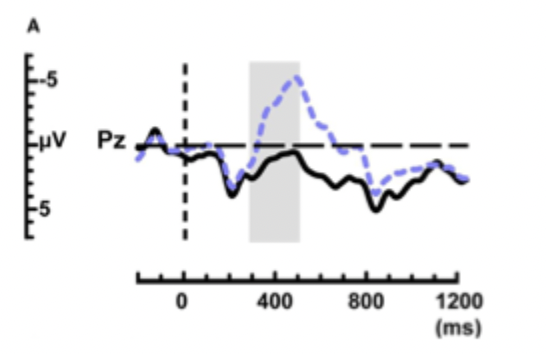
What did Ibanez et al (2006) find regarding N400 effects in sleep?
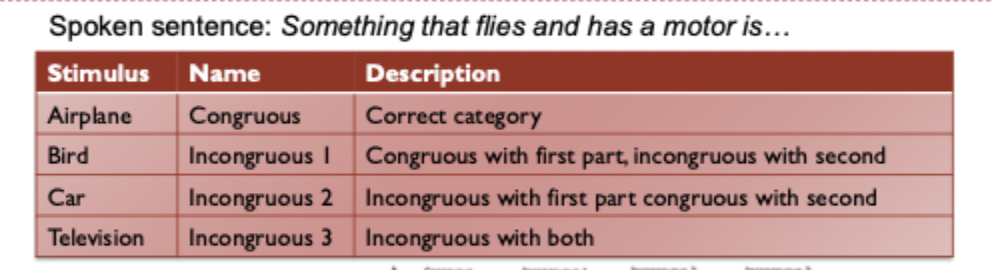
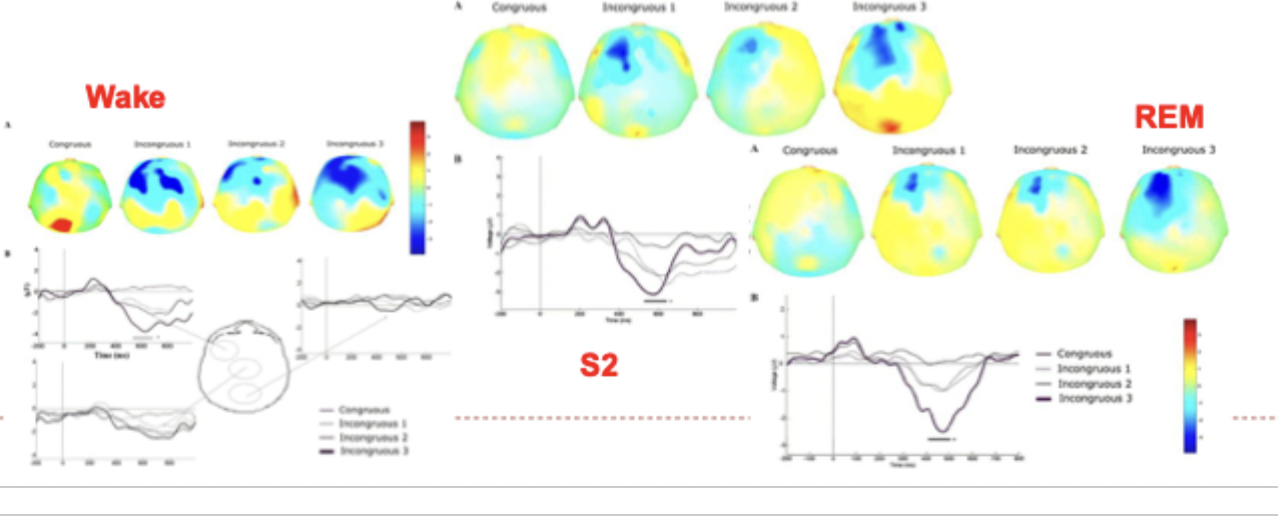
in wake: N400 effect seen in frontal area of the brain
S2 sleep: same effect as in wake, maybe tiny bit later. incongruity effect leading to N400
REM sleep: same pattern again
What did Schredl et al (2009) find regarding smells and dreams?
given pleasant or unpleasant smells during sleep
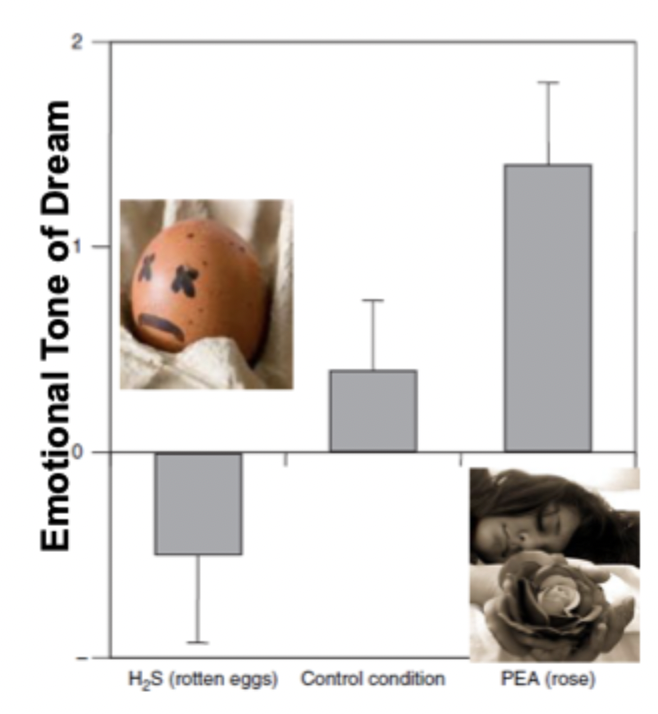
olfactory stimuli affect emotional tone of dreams
indirect incorporation as with recent memories
also effects for:
cold water spray, mild pain, electrical stimulation (although sleepers often woke)
What has previous research shown regarding whether we can learn in our sleep?
long history of dubious reports of success and more scientific null effects
last 10-15 years have started to show simple/weak learning effect
What did Arzi et al., (2014) find regarding aversive conditioning during sleep?
66 smokers wanting to quit


conditioning in S2 and REM reduced smoking in following days more than conditioning in wake
this effect was stronger than the simple presentation of odours, or non-associated presentation of cigarettes and odours (maybe because they’re not aware, a purer form of conditioning)
so very simple learning can occur during sleep
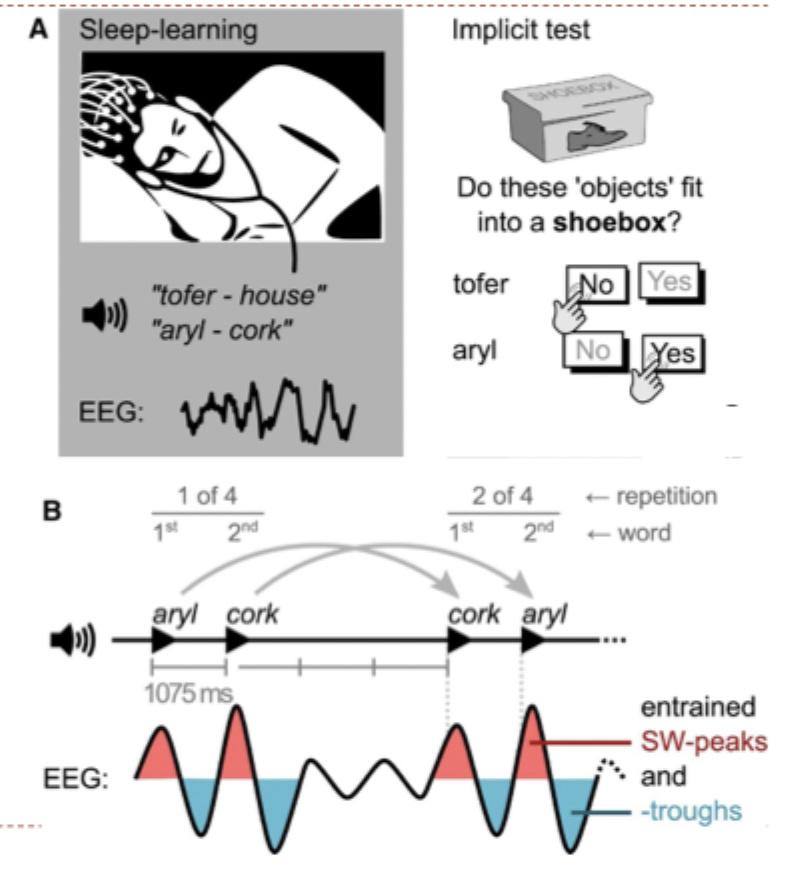
What did Zust et al (2019) find regarding paired associate learning in sleep?
can learning of non-word-word pairs (e.g., aryl-cork) occur when material is aligned to peaks of slow oscillations
words presented at regular intervals to entrain slow oscillations
tested after sleep for implicit memory of association - e.g., “how big is an aryl”
does the associated real word (e.g., cork) influence performance
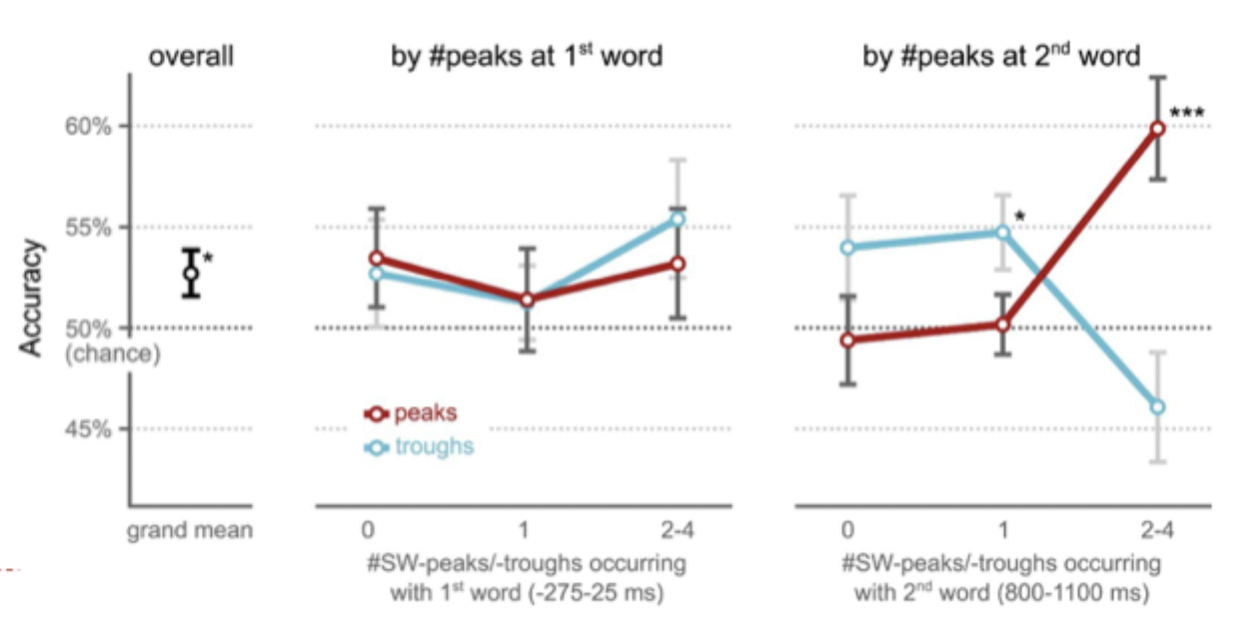
accuracy at size judgement is poor, but above chance (there is learning)
learning is best when the second word of the pair (e.g. cork) is repeatedly aligned to peaks of slow oscillations
weak learning during peaks of neural excitability?
but sleep learning may interfere with subsequent wake learning
Conclusions
Lucidity in dreaming is:
learnable
associated with specific neural signatures
induceable via stimulation
useful for examining aspects of dreaming (e.g., time)
potential as an intervention (e.g., PTSD, nightmares)
quite a lot of perceptual processing proceeds almost as normal under the surface during sleep
we can even plan responses (Kouider) and learn simple associations (Arzi, Zust) in sleep
Clearly a continuous space of consciousness states