EXAM 1 PDA
 Call Kai
 Learn
 Practice Test
 Spaced Repetition
 Match
 Flashcards
 Knowt Play
1/34

There's no tags or description
Looks like no tags are added yet.
35 Terms
What is a Drug?
A drug is a chemical or biological substances that interacts with a living system to alter its biological or physiological functions
Drugs may be used to
prevent, diagnose, treat, or manage diseases and symptoms
characteristic of drugs, chemical or biological
drugs may be small molecules like aspirin
peptides like insulin
proteins like monoclonal antibodies
nucleic acid based therapeutics
characteristics of drugs, biological activity
drug produce effects by interacting with biological systems through specific molecular targets
characteristics of drugs, mechanisms of action
drugs may activate or inhibit receptors, enzymes, ion channels, transporters, or other biological components
characteristics of drugs, therapeutic effects
drugs are used to prevent or treat disease, relieve symptoms, or modify physiological processes
characteristics of drugs, adverse effects
drugs may produce both beneficial and undesirable effects depending on their dose, selectivity, and exposure
FDAs definition of a drug
its an article (other than food) intended to affect the structure or any function of the body, intended for use in the diagnosis, cure, mitigation, treatment, or prevention of a disease
drugs that are small molecule
low MW
compounds MW<900 Da
about 90%
drugs that are biologics (large molecules)
large molecules
MW>1000 Da
about 10%, such as vaccines
small molecule drugs still account for abt
90% of the therapeutics in today’s pharmaceutical market
31 of t50 novel drugs approved by FDA 2024 were small molecules
traditionally small molecule drugs were obtained thru
extraction from medicinal plants, more frequently also by organic synthesis

drug targets
biological macromolecules or structures with which drugs interact to produce therapeutic effects
4 major classes of protein drug targets
receptors: recognize chemical signals ex. beta adrenergic receptor
enzymes: catalyze biochemical reactions ex. angiotensin converting enzymes
ion channels: regulate ion movement ex. L-type Ca2+ channel
transporters: move solute across membranes ex. serotonin transsporter
receptors
drug action thru recognition and carry signal transduction
receptor major types
G protein–coupled receptors (GPCRs)
Ligand-gated ion channels
Nuclear receptors
Enzyme-linked receptors
receptors drug examples
Propranolol → β-adrenoceptor antagonist
Morphine → μ-opioid receptor agonist
Dexamethasone → glucocorticoid receptor agonist
enzymes
drugs frequently inhibit catalytic activity
enzymes target —drug
ACE → lisinopril
Cyclooxygenase (COX) → aspirin
HMG-CoA reductase → atorvastatin
Protein kinases → kinase inhibitors
enzymes mechanisms
Competitive inhibition
Noncompetitive / allosteric inhibition
Irreversible inhibition
Modulation of enzyme activity
ion channels and transporters
control electrical excitability and chemical transport
ion channels
L-type Ca²⁺ channel → amlodipine
Voltage-gated Na⁺ channel → lidocaine
Drugs may block or modulate channel
opening
transporters
Serotonin transporter (SERT) → fluoxetine
SGLT2 → empagliflozin
Drugs often inhibit substrate transport or
reuptake
SGLT2
sodium-glucose co-transporter 2. It is a protein located in the kidneys that normally reabsorbs most of the filtered glucose (sugar) and sodium (salt) back into the bloodstream
additional drug target classes
important targets beyond the four principal protein classes
Structural Proteins
Tubulin → paclitaxel, colchicine
Nucleic Acids
DNA → cisplatin; RNA → antisense drugs
Ribosomes
Bacterial 30S/50S → tetracycline,
azithromycin
Membrane Components
Ergosterol → amphotericin B
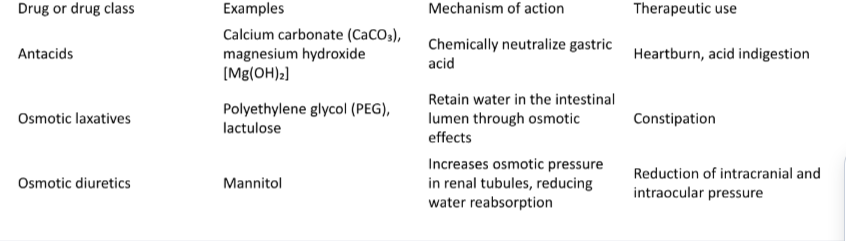
some drugs act via physiochemical mechanisms…
without a specific protein target
Examples of drugs acting through physicochemical mechanisms
drug vs. medicine
drug: the active chemical or biological substance that produces an effect
medicine: a drug formulated for administration to achieve a therapeutic or diagnostic purpose
organic chemistry is important
• Molecular structure determines physicochemical properties (e.g. solubility, lipophilicity)
• Functional groups control binding interactions with drug targets
• Ionization and lipophilicity influence drug distribution
• Metabolic soft spots affect duration of action
• Small chemical changes can substantially alter activity
drug-targeting binding forces
• Ionic: attraction of oppositely charged groups
• Hydrogen bonds: directional donor–acceptor interactions
• Hydrophobic interaction: nonpolar surfaces bury from water
• van der Waals: close packing and shape complementarity
• π interactions: aromatic stacking and cation–π contacts
ionic
attraction of oppositely charged groups

hydrogen bonds
directional donor-acceptor interactions

pie interactions
aromatic stacking and cation pie contracts

hydrophobic interactions
nonpolar surfaces bury from water

van der waals
close packing and shape complemtarity