MODULE 3 LESSON 2: Taxonomic Characters and Sources of Data
 Call Kai
 Learn
Learn Practice Test
 Spaced Repetition
 Match
Match Flashcards
 Knowt Play
1/49

There's no tags or description
Looks like no tags are added yet.
Name | Mastery | Learn | Test | Matching | Spaced | Call with Kai | Chat |
|---|
No analytics yet
Send a link to your students to track their progress
50 Terms
taxonomic/systematic
Morphological
Chemical
Genetic
animal sounds
In establishing classification schemes and phylogenetic reconstructions, ______________ evidence must be gathered from a variety of sources.
Evidences can come from:
__________________ characteristics
__________________ characteristics
__________________ characteristics
Other characteristics (e.g. ____________)
Morphological sources of data.
Various sources of data used in classification
_________________________
External features of an organism. Most common source of taxonomic data.
Morphological sources of data.
Various sources of data used in classification
_________________________
Species descriptions and taxonomic keys use morphological characters all the time
Morphological sources of data.
Various sources of data used in classification
_________________________

evolutionary
Various sources of data used in classification
An ideal taxonomic key should be ____________ in format.
evolutionary


Various sources of data used in classification
Characters in a couple must not merely differentiate one organism from another.
The character must have an ______________ significance.
phylogenetic; similarity
Various sources of data used in classification - In Evolutionary Systematics
The sources of data for _____________ reconstruction - not merely based on _____________.
plesiomorphic; apomorphic
Various sources of data used in classification - In Evolutionary Systematics
Character states may be evaluated as _______________ (primitive character) or ________________ (advanced or derived character).
homologous
common ancestry
homoplasy
Various sources of data used in classification - In Evolutionary Systematics
Character evaluation only applies to _______________ characters,
similarity is based on ____________ ______________
not as a result of convergent evolution (_____________)
outgroup
outgroup; plesiomorphic
apomorphic


How do you determine if a character is plesiomorphic or apomorphic?
The most common method used is the ____________ method.
An ____________ taxon is a representative ancestral clade hence assumed to be more primitive or more like the original (__________________).
Any modification in the character state from the outgroup will be considered an advanced or derived character (______________).
Chromosomes; Cytosystematics


Various sources of data used in classification
______________ as sources of data (________________)
Deals with relationships and classification of organisms using comparative studies of chromosomes.
Chromosome number
Chromosome size
Chromosome morphology
Various sources of data used in classification - Chromosome characteristics useful in systematics
What are all the characterisitcs?
_______________________
_______________________
_______________________
Chromosome number
Constant
Aneuploid series
Euploid series

Various sources of data used in classification - Chromosome characteristics useful in systematics
__________________-. Usually uniform within a species but may sometimes varies (e.g. mutants).
___________ (e.g., Quercus alba, Q. macrocarpa, and Q. prinus: all 2n=12)
____________________ - chromosome numbers not in exact multiples (e.g., Crepis pulchra 2n=8, C. schachtii 2n=10, C. paludosa 2n=12)
____________________ - chromosome numbers in exact multiples (e.g., five series in Fuertesimalva spp.: F. chilensis 2n=10, F. echinata 2n=20, F. limensis 2n=30) Crepis pulchra Crepis schachtii Crepis palud
Chromosome size

Various sources of data used in classification - Chromosome characteristics useful in systematics
______________. For comparing closely related species with the same chromosome number. Chromosome length can be used in size characterization.
Chromosome morphology

Various sources of data used in classification - Chromosome characteristics useful in systematics
____________________________. For comparing closely related species with the same chromosome number. This characteristic is best observed in the metaphase stage of mitosis.
Chromosome morphology

Various sources of data used in classification - Chromosome characteristics useful in systematics
_____________________
Parameters include relative arm length, centromere position, and presence of satellites.
Behavioral sources of data
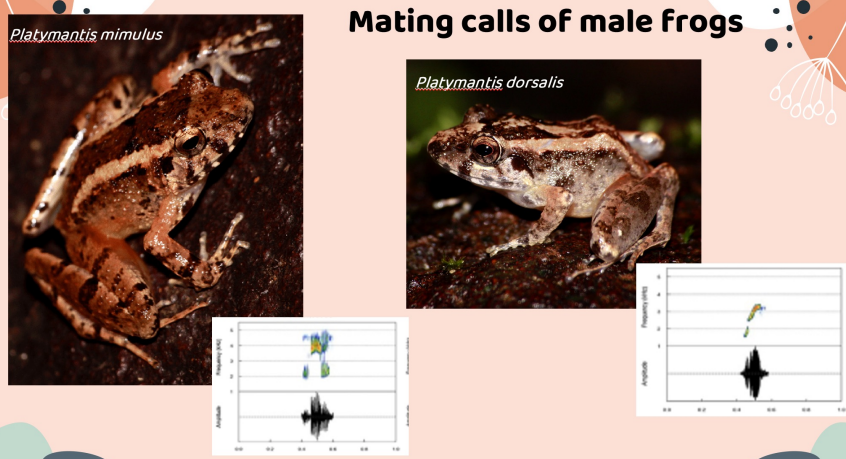
Various sources of data used in classification
________________________
Mating calls is one of the most common behaviors used in identifying individuals from its closely related species
Behavioral sources of data

Various sources of data used in classification
________________________
Flash patterns in fireflies is also another behavior used to differentiate firefly species from one another.
Behavioral sources of data
Various sources of data used in classification
________________________

Behavioral sources of data
Various sources of data used in classification
________________________

Physiological sources of data
chemosystematics
Various sources of data used in classification
________________________
E.g. In plant ________________
An interdisciplinary field that uses secondary metabolites such as flavonoids, terpenes, and alkaloids as characters for establishing relationships among and within plant taxa.
Phenols
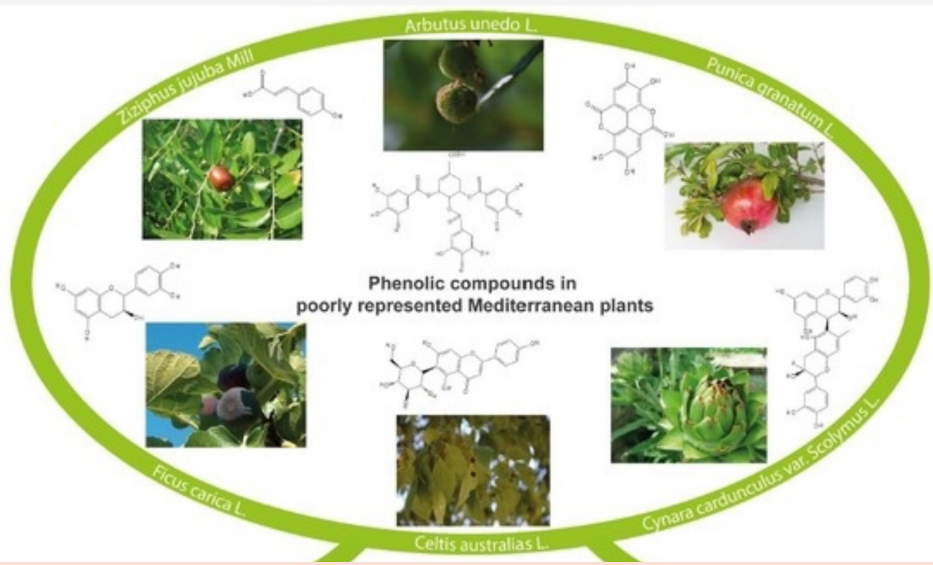
Various sources of data used in classification
Group of organic compounds with hydroxylated benzene rings
Phenols
Various sources of data used in classification
It is ubiquitous in the plant kingdom, but specific compounds vary among taxonomic groups.
Flavonoids

Various sources of data used in classification
Reliable markers in chemosystematics due to their chemical stability and widespread distribution in the plant kingdom.
Hornworts
Various sources of data used in classification
__________ (a group of bryophytes) are the only plants that do not possess flavonoids.
Molecular sources of data (or Molecular Systematics )
macromolecules
Various sources of data used in classification
_______________________
refers to the use of data from ________________ (nucleic acids and proteins) to infer phylogenetic relationships among organisms.
Molecular sources of data (or Molecular Systematics )

Various sources of data used in classification
_______________________
Sequence data:
(1) nuclear DNA- nDNA,
(2) Chloroplast- cpDNA,
(3) Mitochondrial DNA- mtDNA
Nuclear DNA (nDNA)
Various sources of data used in classification - Sources of DNA sequence data
_____________________
transmitted from parent(s) to offspring by nuclear division (meiosis or mitosis) via sexual or asexual reproduction.
Chloroplast DNA (cpDNA)
Various sources of data used in classification - Sources of DNA sequence data
_________________________
transmitted sexually from egg. In conifers, it is transmitted from sperm.
Mitochondrial DNA (mtDNA)
Various sources of data used in classification - Sources of DNA sequence data
______________________
Usually transmitted sexually from egg
Molecular evolution
substitution
Fewer
The Rationale of using DNA in molecular systematics
_____________________
sequence of nucleic acids and proteins changes across generations.
identify the number of nucleotide or amino acid undergoing _______________.
________ substitution implies closer ancestry.
Homologous genes
Types of Genes (in speciation)
___________________
Genes that originated from the same pre-existing gene
Orthologous genes
Types of Genes (in speciation)
_________________
Homologous genes resulting from speciation, and they have identical functions in different organisms.
Paralogous genes
Types of Genes (in speciation)
____________________
Homologous genes resulting from duplication usually having the same or similar functions.
Orthologs
Paralogs
Homologs
Types of Genes (in speciation)
___________ - A gene that has diverged as a result of a speciation event (many species)
___________ - two genes diverge as a result of a gene duplication event (same species)
___________ - genes are evolutionarily related

Types of Genes (in speciation)

Molecular Clocks
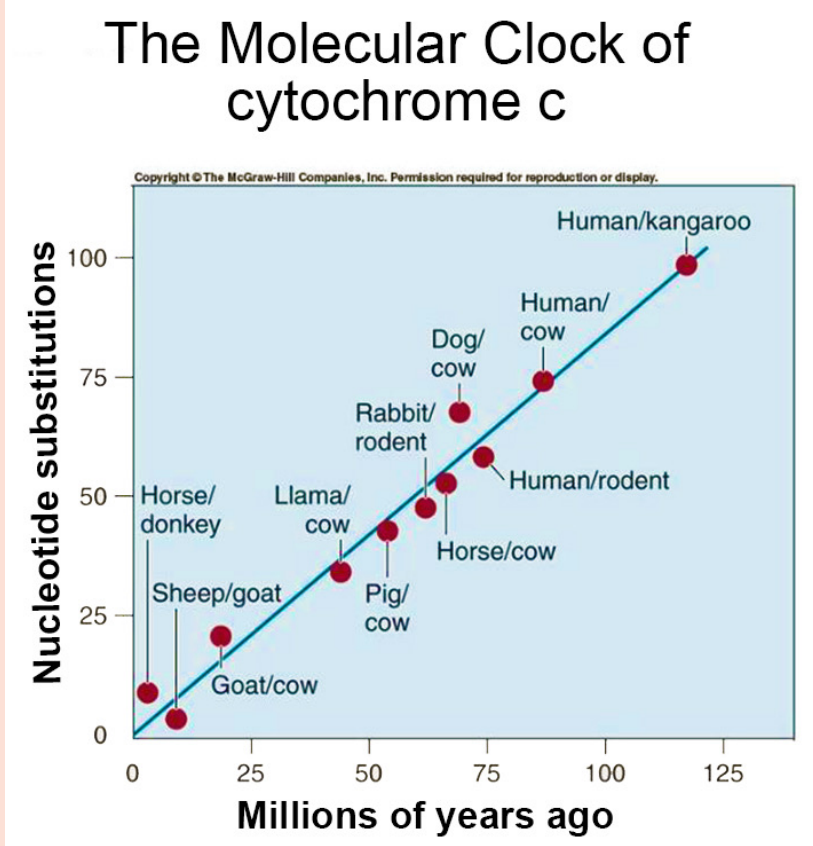

_________________
Using mutation rates for deduction of the time when two different taxa diverged.
fossil records
geologic events
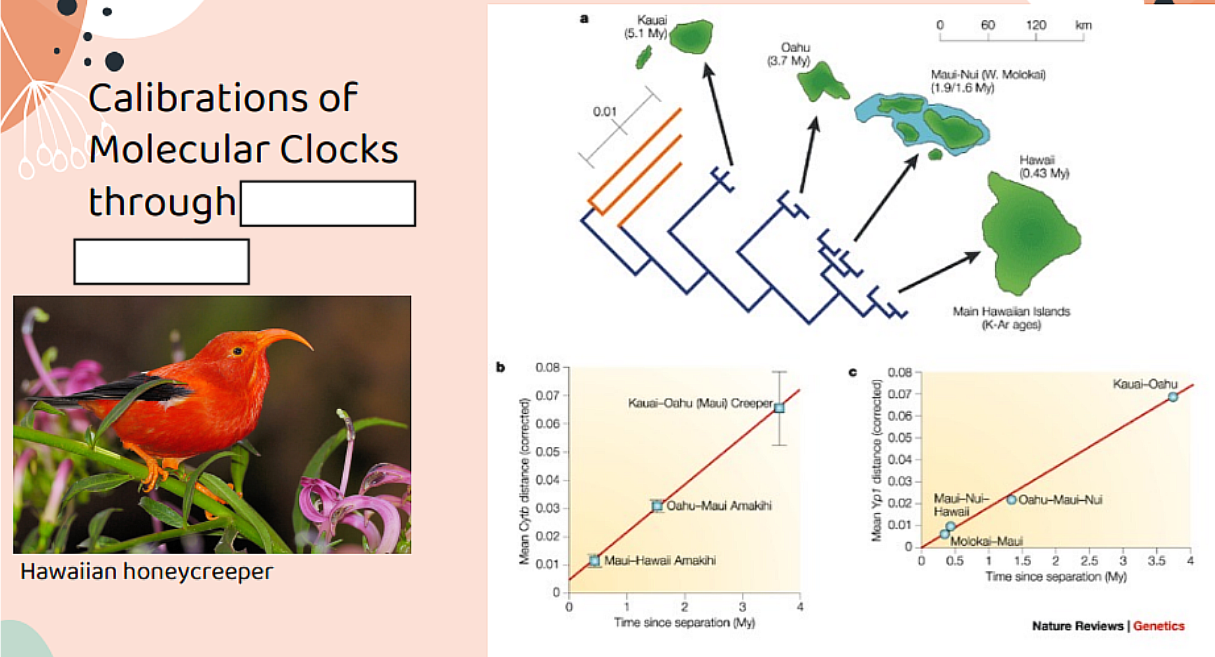
Calibrations of Molecular Clocks
Molecular clocks must be calibrated based on:
(1) _________________
(2) _________________
= to produce trees that provide more or less accurate date of divergence of branches from a recent common ancestor



Allozymes
Isozymes
Microsatellites
Restriction Fragment Length Polymorphism (RFLP)
Random Amplified Polymorphic DNA (RAPD)
Amplified Fragment Length Polymorphism (AFLP)
Other techniques and markers used in molecular systematics
__________________
__________________
__________________
__________________
__________________
__________________
ALLOZYMES


Other techniques and markers used in molecular systematics
Different molecular forms of an enzyme that correspond to different alleles of a common gene (locus).
ALLOZYMES
Other techniques and markers used in molecular systematics
They are usually detected through electrophoresis. Different allozymes of an enzyme migrate differentially due to slight difference in amino acid composition.
ALLOZYMES
Other techniques and markers used in molecular systematics
Traditionally, they are used for assessing genetic variation within a population.
ISOZYMES

Other techniques and markers used in molecular systematics
Refer to each of two or more enzymes with identical function but different structure.
ISOZYMES
Other techniques and markers used in molecular systematics
They are encoded by genes of different loci, but they process or catalyse same or similar reactions.
ISOZYMES
Other techniques and markers used in molecular systematics
Analyzing them can determine presence or absence of certain alleles.

Other techniques and markers used in molecular systematics
Regions of DNA containing short (usually 2-5) repeats of nucleotides (e.g., TGTGTG) (tandem repeats).
Other techniques and markers used in molecular systematics
They are identified by constructing primers that flank the tandem repeats.
microsatellites

Other techniques and markers used in molecular systematics
Using primers in tandem repeats to identify _____________