PSY 252 EXAM 1 👀
 Call Kai
 Learn
Learn Practice Test
 Spaced Repetition
 Match
Match Flashcards
 Knowt Play
1/19

There's no tags or description
Looks like no tags are added yet.
Name | Mastery | Learn | Test | Matching | Spaced | Call with Kai | Chat |
|---|
No analytics yet
Send a link to your students to track their progress
20 Terms
Problem of perception (grid of intensities (retina response)
input in the retina response, which is a grid of intensities (array of photoreceptors fiirng rates)
grid must reverse- engineer from the grid back to the object

gestalt principles
rules of human perception that show how our brains group individual parts into a meaningful whole
posner cueing task (methods and results)
visual attention
task: detect the target and push a button
visual attention
the brain's cognitive process of selecting important visual details in our environment while filtering out distractions
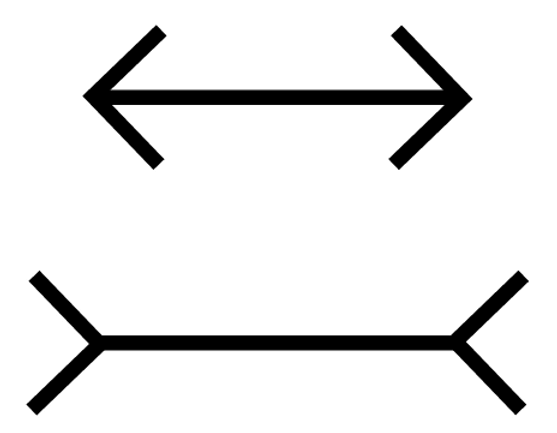
pozno illusion (draw, name it, explain)
a visual trick where two identical objects or lines placed between converging background lines look like they are different lengths
two visual pathways (ventral)
Ventral Pathway ("What" Pathway)
Route: Goes from the primary visual cortex down into the temporal lobe on the bottom of the brain.
Function: Handles object identification, recognition, and conscious visual perception (like naming a face, color, or shape).
two visual pathways (dorsal)
The ventral and dorsal pathways are the two main processing streams in the brain's visual system that handle information coming from the eyes
Route: Goes from the primary visual cortex up into the parietal lobe on the top of the brain.
Function: Handles spatial location, movement, and guiding physical actions like reaching and grasping.
multimodel effects
Sensory systems can influence each other. Information from one modality can affect perception in a different modality. (Modalities are vision, audition, taste, smell, touch)
Describe X multimodal effects
x=1-3
face perception
the cognitive process by which humans recognize and interpret faces to extract vital social information like identity, emotions, and intentions
change blindness
a common perceptual phenomenon where an observer fails to notice a major change in a visual stimulus when a brief disruption or distraction occurs
(the gorilla video)
visual attention
the brain's cognitive process of selecting important visual details in our environment while filtering out distractions
spatial neglect
a neuropsychological condition where damage to one side of the brain causes a person to lose awareness of objects, people, and their own body on the opposite side

action influences on perception
people see and evaluate their environment based on their physical ability to act in it, rather than through an objective, passive lens
constancy
the brain's ability to perceive familiar objects as having stable properties

specialized processing
how the brain's distinct neural pathways and cognitive modules handle specific types of information, such as faces, language, or sensory data
depth cues
visual signals and information our brain uses to perceive three-dimensional space, distance, and depth
psychophysics (method of constant stimulus)
the scientific study of the quantitative relationship between physical stimuli and the psychological sensations or perceptions they produce
affordances
actionable properties or opportunities for behavior that an environment offers to an organism
retina repsonse diagram
receptors on back of eye fire in response to incoming light

margeret thacher illusion
n optical phenomenon where facial feature distortions—like upside-down eyes and a flipped mouth—are very hard to notice when a face is upside down, but look grossly distorted when the face is right side up
