PSYC 3580 exam 3
 Call Kai
 Learn
 Practice Test
 Spaced Repetition
 Match
 Flashcards
 Knowt Play
1/37

There's no tags or description
Looks like no tags are added yet.
38 Terms
What is the difference between a team and a group?
groups - 2+ people that: share a connection, interact and influence each other, group membership, formal or informal rules for interaction
Teams - 2+ people that: share a common task related goal, exhibit some level of task inter dependence

when are teams most used?
Together Everyone Achieves More, for jobs that are non-routine, tasks that require brainstorming or production based
What is a role?
prescribed behaviors/responsibilities for members
what is a norm?
informal standards that govern behavior. primary functions of express team values, predict member behavior, ect. norms are formed with statements, behavior patterns, ect.
What are examples of different types of teams?
look into slides, first team PP

What are the different stages of team development Tuckman’s Stage Model? What characterizes each stage of this model?
forming - members get to know eachother and end when members become familiar, storming - engage in conflict regarding ideas and ends when members settle disagreements,
norming - defining task-related role and ends when plans are in place (trust and planning), performing - focus on completing goals and ends when task is complete, and adjourning - (planned or unplanned) evaluate work and make plans for future work and ends when team dissbands

Gersicks Punctuated Equilibrium Model

What is the Input-Process-Output Model and what would be examples of different inputs, processes, and outputs?
was modified

study issues with models
study issues with models
What is the recurring phase model and what are the two important phases in this model?
focus on life/task cycle of the team
two key phases: transition - planning or evaluation activities, action - activities that contribute to goal accomplishment or task work
What is interdependence?
degree to which team members must rely on one another to perform tasks effectively
higher levels → greater coordination, cooperation, and communication requirements
study different interdependence
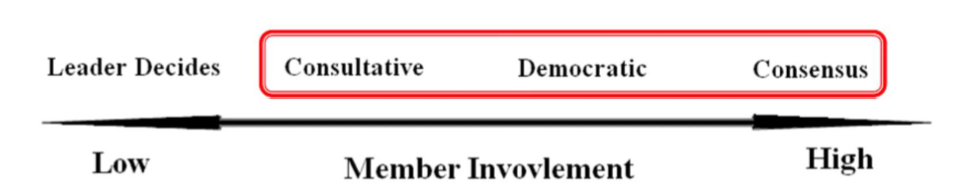
What are the different approaches to team decision making?
consultative - one member consults with members but decides how to weigh inputs and makes decisions
Democratic - voting and different decision rules may be used
consensus - group discussion until all members accept the same decision
What is task conflict?
disagreement about the content of the task, task goals, ect
what is relationship conflict?
interpersonal disagreement
What are the various conflict management strategies and how are they defined?

What is groupthink?
tendency to conform to group pressure in making decisions without much consideration
too much conformity = bad for group effectiveness
What is social loafing?
reduction of individual contributions and effort when people work in groups vs alone.
people can still get rewards, may not know their role
What is group polarization?
when a groups decision tends toward a more extreme decision after a group discussion than the individual group members’ decision before the group convened. risky shift tends to happen more with larger groups and when members are not familiar with one another.
How can cohesion be good vs. bad for teams?
?
What are different ways creativity is defined and measured (hint: Four P Model)?
there is a focus on the creative product rather than the person
also notes that the process can be regarded as creative
creativity is a subjective rather than objective criteria
appropriate observers are those familiar with the domain

What is innovation?
implementing and championing ideas
What is the difference between creativity and innovation?
creativity is part of the innovation process, studied in different areas
What is the art bias myth?
creativity is often associated with the artistic domains
only artists and musicians are creative
What is the creative genius myth?
you were either born creative or not
I am not creative
What is the tortured artist myth?
mental illness and drug use makes people more creative
ex: Beatles LSD
some evidence that certain types of artists are more prone to mental illness
What is domain generality vs. domain specificity?
generality - people who are creative are creative across several domains
specificity - people are creative in only one (or a few closely related domains)
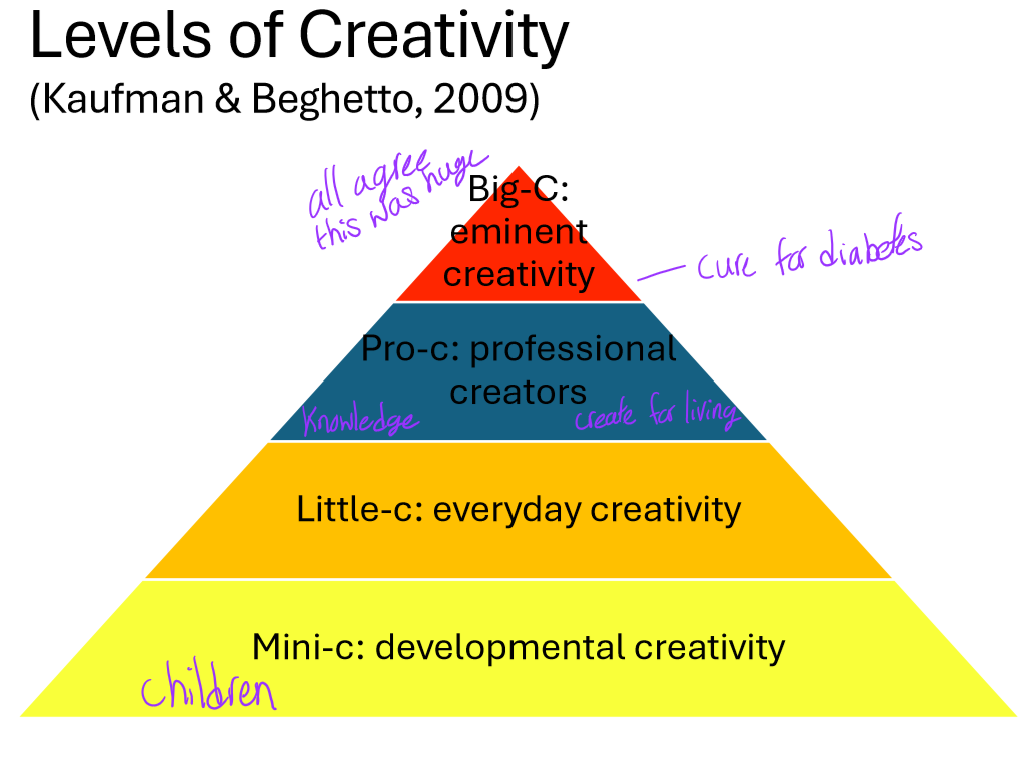
What are the different “levels” of creativity defined in the Four-C Model of Creativity and examples of outcomes at each level?
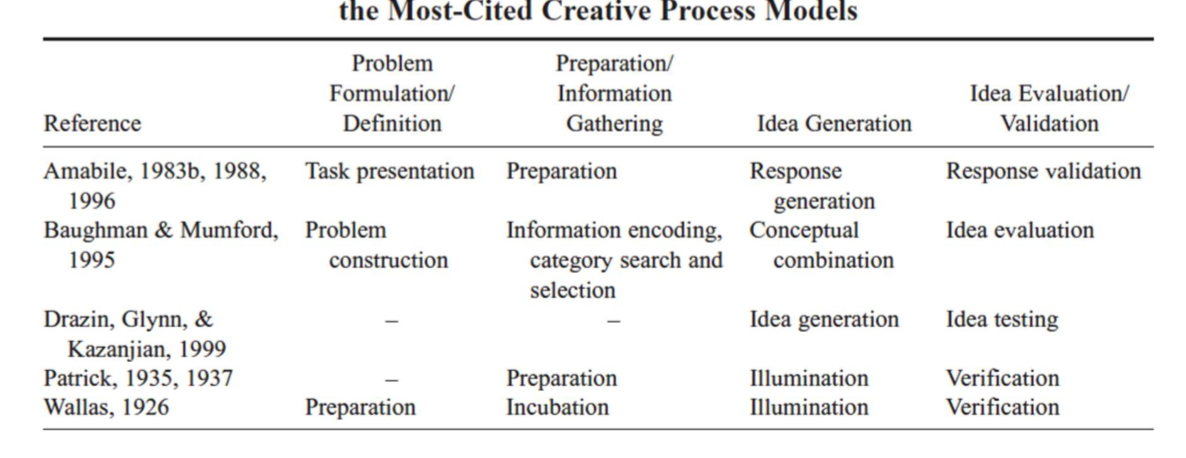
What is problem definition, information gathering, idea generation, and idea evaluation?
PD - identifying parameters of the problem to direct problem solving efforts
Info G - searching for relevant info
Idea G- divergent thinking, making mental connections to generate ideas
IE - process of evaluating ideas with respect to a set of criteria
What is divergent thinking?
ability to think outside box, come up with answers that diverge from typical
What is convergent thinking?
ability to think inside box, come up with correct answers
What personality trait(s) predict creativity?
openness to experience - intelligent, imaginative, curious
conscientiousness - responsible, organized, hardworking, goal directed
What is creative role identity?
whether person views self as creative person
What is creative self-efficacy?
belief in one’s ability to be creative
What is the Dual Pathway Model of creativity?

How do constraints impact creativity?

What is the implicit bias against creativity? When is it most likely?

When are constraints likely to be helpful vs. harmful for creativity?
