Terrestrial Flora L4-12
 Call Kai
 Learn
 Practice Test
 Spaced Repetition
 Match
 Flashcards
 Knowt Play
1/131

There's no tags or description
Looks like no tags are added yet.
132 Terms
What is a rainforest?
Anything that is a closed forest (>70% canopy cover, dense, medium-tall trees)
Where are rainforests located? Why?
Globally restricted to certain latitudes
tropical rainforests near equator
temperate rainforests located on coasts in northern and southern hem
Drivers: temperature and precipitation
Characteristics of lowland tropical rainforests (23°N to 23°S)
Climate is uniformly warm wet - isothermal environment
High rainfall, low elevation
Regional differences in composition
Rapid water and nutrient cycling = rapid growth
PP globally is greatest in tropical rainforests
⬆ precipitation, constant warm temp
PP: the rate at which energy is converted into organic substances (biomass) by producers
Factors influencing tropical rainforests
High rainfall
High humidity
Saturated soils
High temperatures
Optimal growth for fauna
Rapid growth
Dense canopy cover (90%)
Intense competition
Whether its (+) or (-) influence is contextual
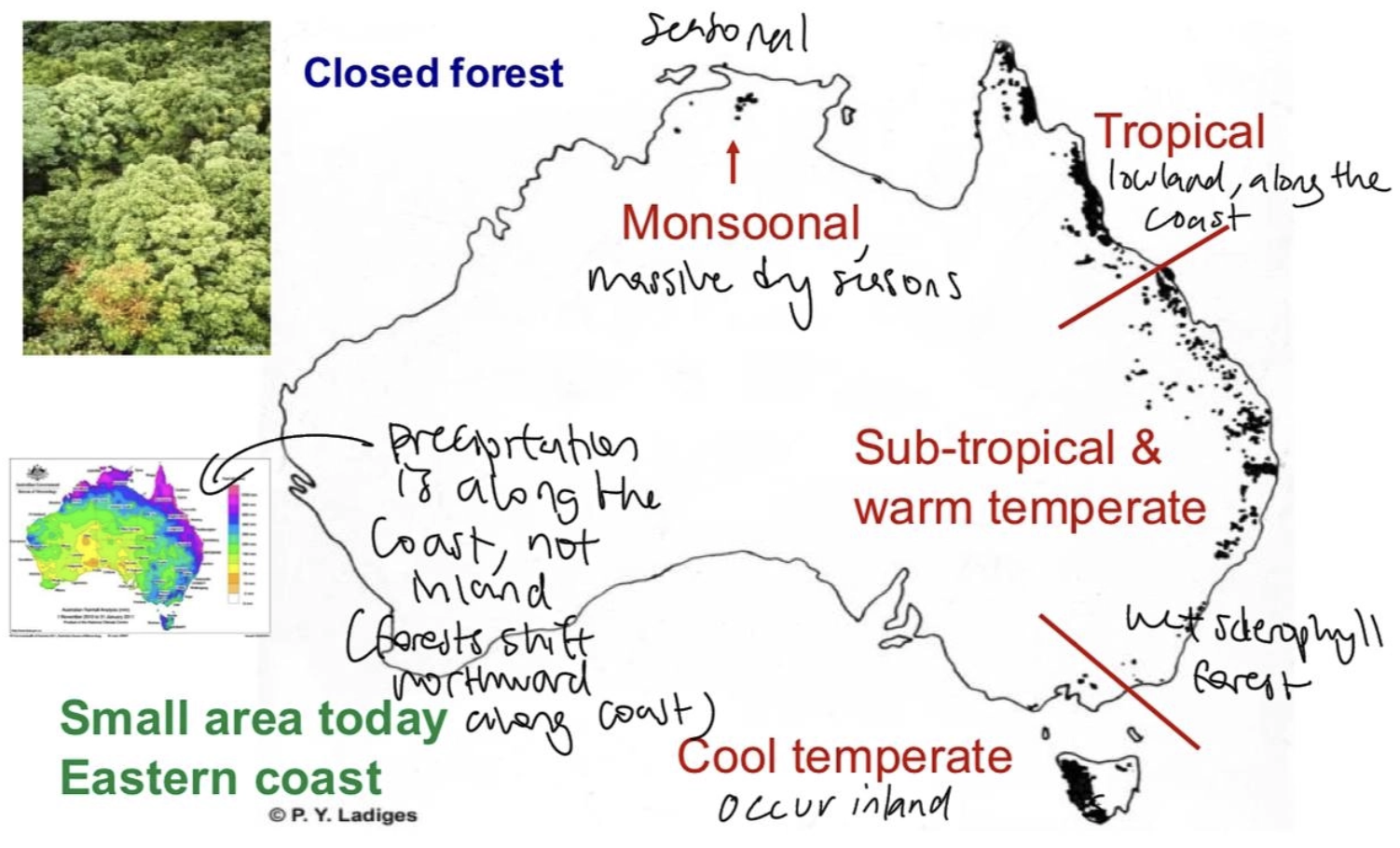
4 types of Australian rainforests
1. Monsoonal
Hot temp
Seasonal rainfall
2. Tropical
Hot temp
High, relatively consistent rainfall
3. Sub-tropical & warm temperate
Warm to mild temp
Relatively high rainfall
4. Cool temperate
Cool temp
High rainfall
Compare rainforest soils with sclerophyll soils
Rainforest soils have high nutrient availability but poor retention in soils because of mobilisation and leaching (during high precipitation)
Rainforest soils are often acidic due to organic matter decomposition and the loss of basic nutrients through leaching
Rainforest soils | Sclerophyll soils |
|---|---|
Rapid nutrient cycling | Slower nutrient cycling |
Relatively high nutrient turnover | Often low available nutrients |
High phosphorous availability (more readily mobilised) | Low phosphorous availability (strongly bound to soil minerals) |
*Nutrient cycling: nutrients are quickly released from decomposing leaf litter and reused by plants
Importance of Australian rainforests
Surviving remnants of Gondwanan flora & fauna
There's global cooling but the continent itself is drifting towards the equator (relative difference is it's not really cooling) — environments remain relatively stable = organisms don’t change very much
13 of 27 of the most primitive flowering plant families found in rainforests
Austrobaileya - pollen similar to oldest angiosperm fossils (120 my old) — the only one in its genus & family
Castanospermum australis (Black bean tree) - antiviral, antitumor + assisted migration by humans
Animals with primitive features from Gondwanan times
E.g. Hypsiprymnodontidae family (musky rat-kangaroos): simple rounded teeth, simple gut, fruit-eater, scaly tail
High conservation value — NE Queensland Wet tropics World Heritage Area
Has a tremendous amt of early plant diversity: Ferns —> cycads —> angiosperms
“cradle of life” new life evolving, diversifying more frequently than other latitudes OR “museum” things persist, not changing, no selection pressures
High diversity and high amounts of endemism
Species rich
Tropical vs Temperate rainforests of Austraila
Tropical | Temperate |
|---|---|
Lowland — species rich | Fewer species (including vines) |
Highly dense & diverse (100–200 tree sp per hectare) | Fewer layers, simpler vegetation structure |
Many vines (lianas), ferns, and palms | Single species often dominant: E.g. Myrtle beech (Nothofagus cunninghamii) |
Trees with large leaves | Smaller leaves |
In SEA, what separates 2 faunal regions and what are those regions called?
Wallace’s line. The Indo-Malaysian region in the North and the Austro-Malaysian region in the South.
The line aligns with plate tectonics, but climate intolerance also prevented migration into Australia.

Leaf adaptations plants have to persist in rainforests
Morphological:
Large leaves = SA to capture light
Efficient shape e.g. drip tips = remove excess precipitation
High wax content = beading of water to remove excess precipitation
Hydathodes specialised pore for process of guttation = remove excess precipitation
Physiological:
Guttation
Adapted to understory
within a plant: sun leaves & shade leaves
b/w plants: canopy & understory
Adapted to light gaps (sunflecks - high light in short intervals)
Leaf variation and complexity
Simple leaf: one leaflet
Compound leaves: divided into leaflets (can be pinnate or bipinnate)
Large SA
Captures light, but allow penetration to lower branches
“Cheaper” to produce than branches
The individual leaflets or blades can change their angle relative to wind or growth — can intercept light at different angles, is more efficient
New shoots (branches or inflorescences) arise from leaf axils

Root adaptations plants have to persist in rainforests
Shallow roots
To take up readily available nutrients in the first 0.5-1 m of soil
Roots spread widely = stability relative to wind blow
Buttress roots
Swollen towards the base, spreads out = Greater access to nutrients
Structural support
Stabilises soil = Erosion control — prevents soil from being washed away by high rainfall
Improves competitive ability
Access to light (height), nutrients
Increases cross sectional area of the tree
Girth displaces individuals from getting close
Prop roots
Structural support
Tree branches move out horizontally = Displace competitors + access to additional nutrients
Stabilizes soil = Erosion control
Lateral expansion = Improves competitive ability
All are more common in tropical, but also found in temperate
Shoot/stem adaptations plants have to persist in rainforests
Climbing habit (lianas) = reach canopy for light
abundant in tropics
some have thorns/spines/hooks to attach to host tree
Thorns / spines (connected to vascular system) = deter herbivores, shred others and prevent competition when leaves blow
E.g. Calamus muelleri “Wait a while vine”
Prickles (not connected to vascular system, epidermal structures)
E.g. Roses, raspberries
Modified trichomes (epidermal structures)
Some are fluid filled, silica enriched
Some are needle shaped, resemble felt hairs
E.g. Sundew: Exude sticky resins to capture other organisms
E.g. Gympie gympie: Stinging nettles of the genus Dendrocnide produce potent neurotoxins (effects can last weeks - years)
Cauliflory (flowering on woody stems where pollinators can easily reach flowers & fruits)
E.g. Figs: Cauliflory in figs aid seed dispersal by birds
Symbiosis: dispersal mutualism (both benefit)
Types of epiphytes
1. Elkhorn and staghorn ferns
2. Basket ferns
Epiphytes: Elkhorn and staghorn ferns
Platycerium spp
2 leaf/frond types:
Fertile long leaves
Spreads out away from host, enables light capture
Photosynthesises
Sterile nest leaves
Collect litter (defecation, dead animals, fruit) for nutrients

Epiphytes: Basket ferns
Drynasia spp
2 leaf/frond types:
Fertile foliage fronds
Senesce
Photosynthesise
Reproduce
Sterile nest fronds
Don’t senesce
Often brown - don’t photosynthesise
Traps nutrients and stabilises plants attachment to host
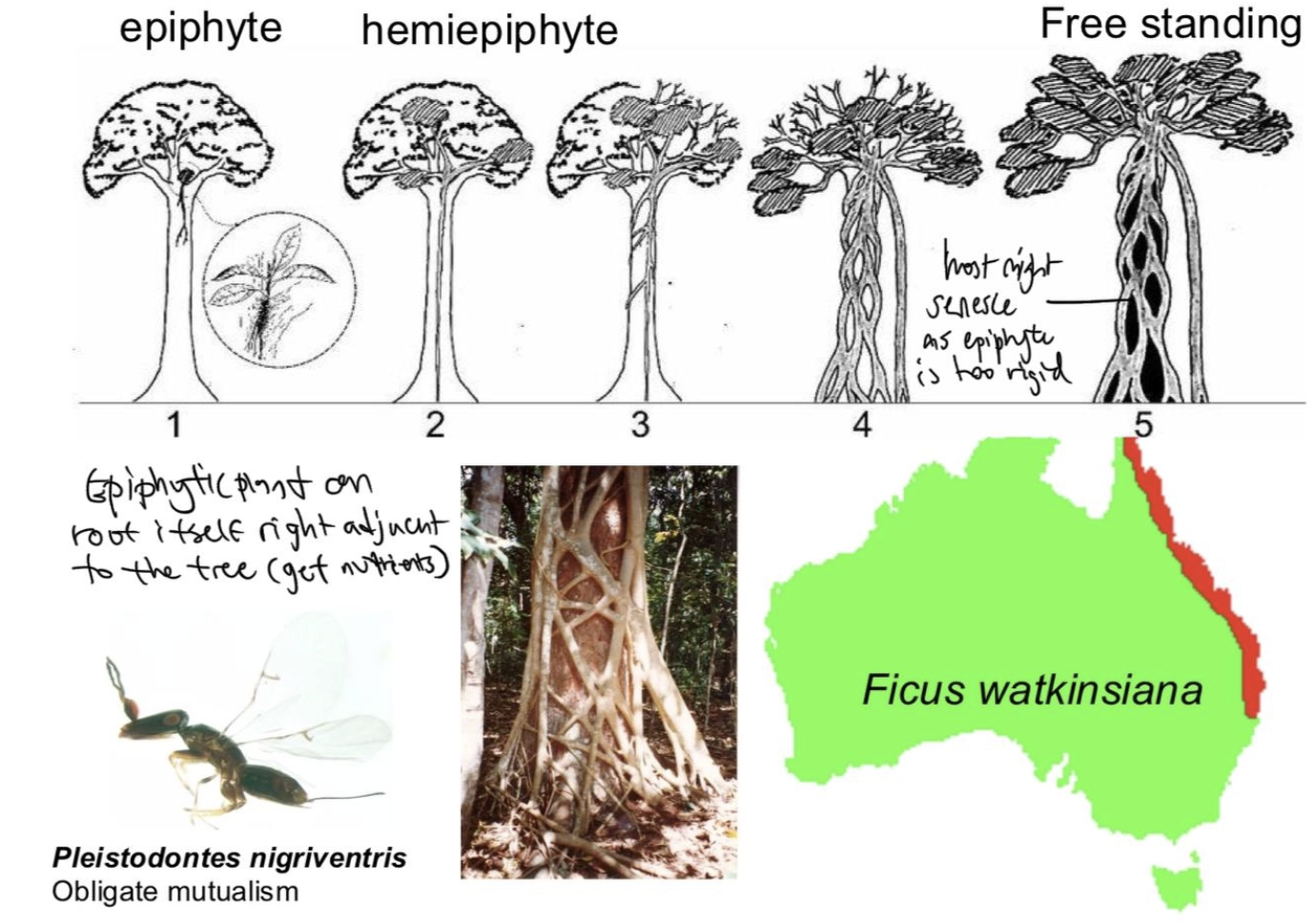
Hemiepiphyte: Strangling fig
Starts life in the upper canopy as an epiphyte, then crushes host
Seeds dispersed by birds
Commensalism becomes parasitism
Parasitic plants in the rainforest
Hemiparasite: Taps into host and steals compounds but can still photosynthesise
Holoparasite: Can’t photosynthesise (no chlorophyll), depends fully on host
Overcome need to access light by tapping into photosynthate
Often lack roots, leaves or stems
E.g. Mistletoe has sticky seed which sticks to cloaca of mistletoe bird —> it wiped on other plants
E.g. Balanosophora spp - Holoparasite: Has roots, no leaves or stem —> Roots tap into nearby trees and plants and take up resources
Carnivorous plants in the rainforest
6 orders across angiosperms, 11 families
Australia ~200 species
Convergent evolution
Evolved because of low nutrient environments
E.g. Nepenthes “Pitcher plants”
Lineage found only in tropics
85 species in SEA and Australia
Trap insects in modified leaf
Takes advantage of animal faeces when used as a habitat (larger = more interactions with fauna)
What is frugivory?
Animals feeding on fruits as a means of dispersal (they don’t eat the seeds)
What is the purpose of dispersal?
Extend range, avoid inbreeding, move progeny away from adults, and increase genetic diversity
Dispersal in rainforest
50-80% of tropical rainforest fruits are fleshy, often brightly coloured
There is energy available for growth and photosynthate production —> create large storage organs for sugar and photosynthate —> entice and interact with fauna in understory
Few large fruits
“Small” birds disperse 97% of fleshy-fruited species (seeds <2 cm), mammals and cassowaries disperse other 3% (larger)
Australian rainforests do not have primates
Megafauna declining / disappearing
More susceptible to disease, herbivores, other biotic stress events e.g. falling over
Diversity of fruits and flowers in the rainforest
Fruit colour increases apparancy; flower colour associates with pollinators
Fruit colour: 1. Red 2. Black 3. Blue
Birds can see better as they contrast the green background
Flower colour: Mostly white
Understory can be dimly lit —> white reflects more light = more apparent to different animals
Pigments can be expensive —> if plant opens flowers at night, they use chemicals to attract insects that are active at night —> no advantage to invest in colour so they retain ancient traits of being white
Frugivores are common dispersers of rainforest fruits
What are the (+) and (-) of large seeds?
(+)
Resistance to predation
Energy reserves for seedling establishment
Evolved in resource poor environments (e.g. high shade) with ample water
(-)
Reduced mobility
Increased apparency (seeds will be eaten)
Large energy resource (for consumers / to produce)
Rainforest case study: Cassowary has unique role in gene flow of Javan ash
Largest vertebrate in Australian rainforests, the only animal capable of long distance seed dispersal
Javan ash has toxic seeds that struggles to germinate
Flowers smell like rotten flesh & food —> pollinated by cockroaches
Suffering range contraction and reduced recruitment
Cassowaries are not poisoned after eating cyanogenic Ryparosa fruit because the ripe flesh contains little or no cyanogenic compounds and the seed is undigested during gut passage
Exocarp changes colour —> increases apparency
Seed doesn’t change toxicity but pericarp has low toxicity when ripe (more tasty — Cassowaries eat)
If it's defecated and has the right hospitable conditions, it will germinate and grow quickly
If left too long, germination success decreases as there are invertebrates that consume the scat and cause damage to the seeds —> susceptible to detritivory
Cassowaries have a varied diet and are not eating Javan Ash as much = less recruitment
Phytochemistry — plants use chemical compounds to defend themselves against animals, while also attracting animals to disperse their seeds once fruits are ripe
Secondary metabolites (compounds that aren’t primary to photosynthesis) diversifies / intensified with high selection pressure
Ripe fruits have fewer toxins and are attractive
HCN, alkaloids: (black bean tree), phenolics, terpenoids
Animals avoid toxins
Defecation ~3-4 hr
Coevolution (different enzymes and products)
The plant re-mobilizes / reduces those defensive compounds to allow vertebrates to eat them, but it maintains high amounts when not ripe so nothing eats it
Mutualisms in rainforests + provide an example of defense mutualism
Pollination
Dispersal
Defense
E.g. Myrmecophytes: Ant-feeding plants
Epiphytes (commensalism with host plant)
Plant base has bulbous, hollow chambers that house ants
Debris and excretia provide plant with nutrients
Ants forage for herbivores
Australia is uniquely diverse in Myrmecophytes
Arrange non-flowering fossils from oldest to most recent
Bryophytes >400mya
Ferns 350mya
Conifers >300mya
Cycads 290-251mya
Angiosperm (flowering plants) lineage only existed after 250mya

What did bryophytes evolve when they colonised land and adapted to climate change?
Desiccation tolerance: the ability to tolerate drying out completely, going from this really turgid or full volume plant body to a crusty, still alive but dry moss
Nucleation enables moss to draw in water from the atmosphere
Desiccation and rehydration of mosses greatly increases resource fluxes that alter soil carbon and nitrogen cycling (when rehydrated, they release substances provide resources for soil microorganisms, such as bacteria and fungi)
Describe bryophyte species richness in Australia
Highest in wet forests
But also found in arid areas
Important components of soil crust — contribute to water & nutrient cycling, and buffer that region from extremes in aridity
Seals everything in as it dries out during the dry season in b/w rain events, preventing evaporation from the soil
Fungi, bacteria, invertebrates live in and under this in a protected place, so the diversity is maintained
Footsteps would damage that protective area and lead to potentially erosion and death
Bryophytes: 3 lineages of non-vascular plants
Liverworts
Often small
Often look like leaves that move across the landscape
Hornworts
Fuzzy
Very common
Mosses
Dawsonia superba
How it grows so tall: passive movement through different through diffusion, lives where there's a lot of moisture
Arose before vascular tissues evolved, transport by osmotic gradients
All are non-vascular plants — no vascular systems and no true leaves

Where is fern species richness highest in Australia? Are ferns vascular or non-vascular?
Wet forests. Vascular.
Diversity & endemism of Australian ferns and bryophytes
Ferns: ~450 species; 35% endemic
Mosses: ~980 species; 26% endemic
Liverworts & hornworts: ~870 species; 23-28% endemic
How were early plant life cycles were adapted to common conditions?
Water is important (ferns and moss can't sexually reproduce without it)
Can be small - raindrops, puddles
Fertilisation occurs when the sperm joins with the egg.
Gametes can only swim from male to female reproductive structures in an aquatic environment
They can vegetatively reproduce without water, but that reduces genetic diversity overtime

Describe the spores of bryophytes and ferns
Produced in large numbers (>10 mill/m^2)
1n (half the chr of the parent)
Dust-like, mostly 5-70 um
Tolerant to desiccation, high UV, temperature extremes
Persistent - can travel long distances across vast oceans, etc

How do ferns and bryophytes survive in drier habitats?
Use sheltered micro-sites
Infrequent sexual reproduction
Not always in water (mostly asexual reproduction / vegetation propagules)
Persistent spores (can remain viable for >15 years / until rain event that facilitates replication comes)
Desiccation tolerance
Describe conifers diversity and distribution
Largest biome in the world is the Northern Hemisphere is coniferous forest
44 sp — 39 endemic (89% endemic)
5 species not endemic are distributed in New Guinea or associated parts of Asia (not unique to Australia because they arose so long ago)
Australian conifers have ancient Gondwanan origins
As climate became drier and fire became more common, conifers declined in many areas and survived mainly in moist, sheltered habitats where fires are less frequent or intense.
Fossil record suggests substantial contraction / extinction in most lineages
What are the 3 families of conifers that make up the dominant gymnosperms found in Australia?
1. Araucariaceae (most recent)
arose when Aus and SA were still connected
have a fossil record in southern Australia, in areas where they no longer occur
Bunya pine
Found on the coast of Australia, exists in very tropical regions (ample moisture), but also found in the cool temperate regions (more arid)
Have cones with large seeds ~10 kg
Edible — humans are developing an industry for consumption more commercially
Wollemi pine
Fossil lineage with a record >120 mya
Fossils similar to current ones (not a lot of morphological change over time)
Living specimens are isolated in deep canyons
2. Podocarpaceae
arose earlier when still connected to Africa
Plum pines
Reduced cones
Seeds have fleshy attachments (bird dispersal) — different from other gymnosperms (conifers and cycads)
Huon pine
Oldest individuals dates at ~3500 yrs old
One ancient male plant in Mt Read (Tas) has survived for >10k yrs by continually producing clones (clone stand)
These can be very old lived individual trees because the environment has been static for so long (has not changed much or has changed within survivability zone)
3. Cupressaceae (oldest)
widely distributed, arose a much longer time ago that when the land masses were more unified
Native cypress-pines
The only conifers in semi-arid/arid Australia (filled the niche by adapting to aridity)
Tight cones formed along stems
White cypress pine
Also found in arid regions (central Australia)
Light-coloured foliage, white reflectance = reflects light/heat
Small leaves; stems round = reduces SA for water loss
Woody female cone protects seed from fire and desiccation
3 genera of cycads in australia
7 living families, 11 genera, c. 100 spp.
Australia: 4 genera, 69 species, All endemic !! 100%
Old lineage (Gondwanan)
Seeds in cones or on loose clusters of female branches
Dioecious: separate male and female plants
Macrozamia
Found in isolated regions because they can persist in gorges or microclimates that have ample moisture
Bowenia
Was once more widespread but now survives naturally in tropical rainforests of northern Queensland (fossils are found elsewhere)
Very old
Cycas
The only one with NO AUSTRALIAN FOSSIL RECORD
Because it recently colonised from Sunda (Indonesia) to Sahul (Australia)
Fossils of other Australian genera indicate substantial range contraction
Very ancient lineages ~290-300 mya (living fossils)
But massive diversification in the last 10 my
It’s possible that all those fossils went extinct and they were highly diverse in the past, but we'd have no way of knowing
Categorise Bryophytes, Ferns, Conifers, and Cycads into whether they 1. need water to reproduce 2. have vascular tissue 3. disperse by spores 4. disperse by seeds

When did flowering plants originate?
Early cretaceous, 125-130mya.
What are Australia’s 3 largest angiosperm families, and what is the level of endemism?
Proteaceae
Fabaceae
Myrtaceae
Relative to the global species, Australia represents a very small percentage of all the plant species found on Earth
But highly endemic — 90% of flowering plants in Australia are endemic
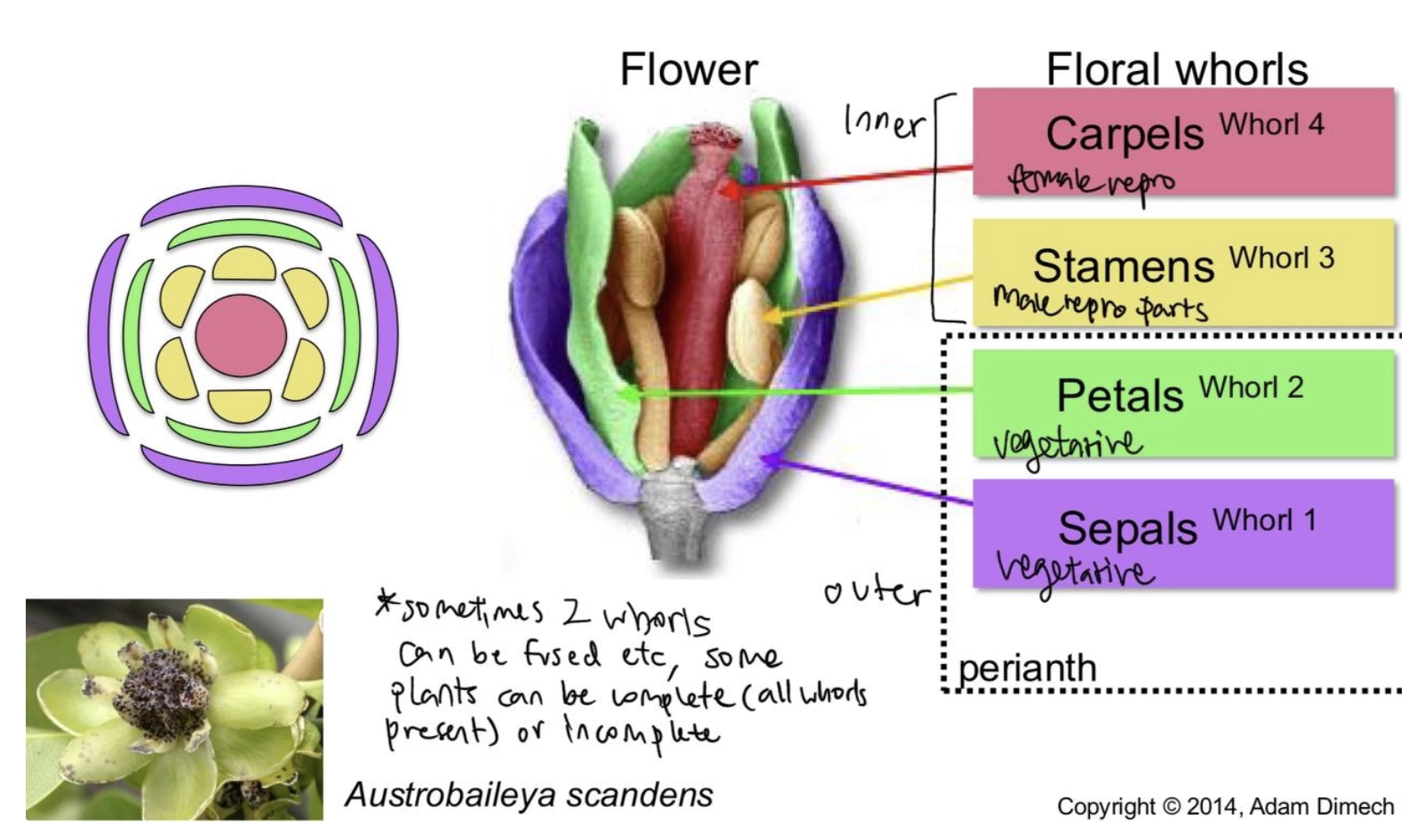
Describe flower parts
Flower organs are established in concentric layers (whorls)
The outermost floral organs are sterile (non-repro)
Whorl 1: Sepals (vegetative)
Outermost whorl, encloses the others
Deters herbivores, bacteria, and fungi (if tightly sealed)
Maintains humidity
Often photosynthetic, but sometimes pigmented like petals
Whorl 2: Petals (vegetative)
Contain coloured or UV pigments
Thin and delicate
Patterned to attract pollinators
Whorl 3: Stamens (male repro parts)
2 parts: filament + anther
Whorl 4: Carpels (female repro parts)
3 parts: stigma + style + ovaries
How can flower structure vary?
Flowers can be complete (all whorls) or incomplete (missing a whorl)
Monoecious or dioecious
Monoecious “one house” — complete or incomplete
Male (staminate) and female (carpellate) flowers occur on the same plant
Often in wind pollinated plants
Dioecious “two houses” — incomplete
Male (staminate) and female (carpellate) flowers are found on different plants
Often in vector (non-abiotic) pollinated plants
Shape can vary: can be typical or modified form

Proteaceae overview: Diversity, habitats, traits, fruits & roots
1500 species, > 1000 spp (2/3) in Australia
Habitats:
Forests, woodlands, heathlands — have low nutrient soils E.g. Banksia, Grevillea
Rainforests E.g. Macadamia, Telopea
Sclerophyll woody shrubs and trees with corky bark, often lignotubers
Sclerophylly is a key trait in proteaceae, associated with many lineages in the family
Lignotubes will store moisture
2 types of fruits:
Woody follicles (split open)
Fleshy drupes (don’t split open)
Proteoid / clustered roots
Within days, many lateral roots will shoot out from the main root.
Root hairs can get so dense that they'll start to senesce on themselves because they're not able to access nutrients and water
Distribution of Proteaceae
Wide range
Diversity associates with low P
Nutrient limitation that has led to the adaptive strategy of creating branching root structures (lateral roots)
But not all Proteaceae are sclerophyllous or live in low phosphorus environments
Banksia, Grevilia and Hakea are most rich in the Southwest, Persoonia (fleshy) lineage is found more on the eastern side
Proteaceae arose b/w 80-120mya (around the time where the continents were starting to spread out a bit more)
Hypothesis: 2 entry points, one in southwestern Australia and one in southeastern Australia relative to how the continents were aligned to Antarctica

Age of Proteaceae and how its distribution across continents changed as Gondwana broke apart
Old Gondwanan family with fossil pollen record 80 my old (Cretaceous)
demonstrate that these plants existed when Australia still had connections to Antarctica
When Gondwana broke apart, populations became geographically isolated through vicariance
Typical floral structure of Proteaceae
In Grevillea
1 whorl of perianth consisting of 4 tepals - fusion of whorl 1 & 2 (4-lobed)
Only 4 stamens attached to tepals
Ovary has 1 or 2 compartments
1. style is long and acts as pollen presenter (male phase) 2. style receives pollen from other plants (female phase)
As the anthers mature, pollen is released and deposited onto the stigma
After ~24–72 hours, the stigma becomes receptive to pollen from other flowers, and the style extends outwards to facilitate pollination.
In Banksia
Flowers aggregate into dense inflorescence
Flowers density, structure and apparency attracts pollinators
Styles are extended as pollen presenters in older flowers
Have robust structures that serve as functional perches to support the weight of animals (coevolution for mutualism)

Proteaceae: Why birds as pollinators?
Pollinators have sensitivities to different wavelengths
Birds: tetrachromatic vision (Blue, green and red)
Much better at discerning sharp contrasts in colour on the landscape although they can't see UV
Coevolution of bird vision and flower colour
(Insects: trichromatic vision (UV, blue, green))

Proteaceae: Fruits, seeds, and fire
Grevillea
leathery
tend to occur broadly, but also associate with moist conditions
Seeds have these little fans on them that allow them to float and disperse more
Banksia
Only a few ovaries develop as fruits
Fruit is a woody follicle
Requires fire to open
Evolved in response to environment (aridity, fire, low P)
Do NOT have hard seed coat
2 winged seeds per follicle
Hakea
woody structures that pop open with fire
Macadamia
Edible, oil-rich nuts
Woody follicle
4 different species
2 of them are commercialised crop
Persoonia
Fleshy sweet drupes
Occur in clusters
What are 2 main genus in Fabaceae (Legumes) and their uses?
Peas
Wattles (Acacia)
Seed pods (fruits) are called legumes
Uses of legumes
Food plants - peas and beans
Native species contains toxins
Antivirals, medicinal properties
Antidigestives, reduced by cooking
Peas overview: forms, seeds, leaves, pollinators
Can be trees, shrubs, herbs, creepers, climbers
Seeds have hard resistant coats
Survive fire, aridity
Protect embryo — will germinate when conditions are right
Leaves are often compound - 3 leaflets or more
Sclerophyll forms: simple leaves, reduced to spines or scales, or sometimes absent
Adaptation to low P habitat
Photosynthesise by green stems
Nitrogen fixing — often associates with bacteria in the soil (Rhizobia)
Fabaceae colours and sizes associate with distinct pollinator groups
~95% insect pollinated E.g. ‘Egg and bacon peas’
Birds pollinate less — only flowers in the red spectrum e.g. certain species of Gastrolobium
Describe pea flowers
Butterfly flowers
5 petals: 3 free, 2 united
Keel petals largely protect the reproductive whorls
Standard petal is big showy and helps signal colour
10 stamens
Bilateral symmetry

How are ‘Egg and bacon peas’ pollinated?
Insect pollinated
Standard petal
Large and showy with nectar guides
Yellow broadly attractive to different insect lineages
Keel and wing form a landing platform for pollinator
Flower variation in Gastrolobium of Fabaceae
Birds tend to pollinate a fewer number of the Fabaceae (pollinate in the red spectrum), whereas insects pollinate a large number of Fabaceae across different spectrums
When they tend to be more red-coloured, or larger or more showier, they're gonna be largely associated with birds as opposed to all the other colours that are largely associated with insects.
Wattles (Acacia): age and habitat
NOT of Gondwanan origin
known in Australia since the early Miocene (recently within cenozoic)
arised after Aus moved away from Antarctica
Acacia is the largest genus of woody flowering plants in Australia with ~1073 species
Genus can occupy different habitat types
Occur in rainforests and wet eucalpyt forest e.g. Acacia melanoxylon
Widespread, can be understory or tall wet sclerophyll forests
Dominant in semi-arid and arid regions e.g. mulga lands
Wattles (Acacia): keystone resource used by ecosystems and people
Green Acacia seeds roasted and eaten
18-25% protein content
Acacia gum - contains carbohydrate rich sap
Sweet / sugary
Used as glue or as food resource
Timber e.g. A melanoxylon
Hard wood can be used in many timber processes
Keystone species
Has root nodules that fixes N
Helps with recovery in fire damaged regions
What are the 2 foliage types of Wattles (Acacia)?
Bipinnate leaves
Compound leaves
Leaf structure is bifrucated with leaflets pointing off each side
Phyllodes (dominant in Aus)
Simple leaves
Not true leaves — they are equivalent to a flattened and expanded petiole of a pinnate leaf that photosynthesise
Juvenile (young) leaves are bipinnate but as the plant matures, it develops phyllodinous leaves
Both have nectaries at the base of stem near axle

Wattles (Acacia) pollination biology
Very small flowers, in clusters (globular head or spikes)
Closed flower head
Sepals and petals are wrapped around all the other parts protecting it
Petals will curl back and expose male and female reproductive parts
Maturation and how it becomes receptive for pollination is OPPOSITE from Proteaceae (grevillea)
Female phase: The stigma becomes receptive and can receive pollen from other flowers.
Male phase: The anthers mature and release pollen.
Can differentiate Acacia based on pollen grains
Showy inflorescence of many flower clusters
Extra-floral nectaries on leaves or phyllodes
Honeyeaters and Honey possums feed off nectaries (Both have convergently evolved forked tongues)
Can also attract non-pollinators (e.g. ants)
(-) Takes nutrients that might be reserved for pollinators
(+) Can keep plant relatively free of fungal spores (insect cleans)
(+) Ward off herbivorous insects
Wattles (Acacia) fruits and seeds
Fruit a legume (pod)
Soil seed banks
Hard seed coat
Requires scarification: cutting it open / breaking it (e.g. by heat of fire or sharp object) — Seed takes in water and germinates once cracked
Often have an eliasome (funicle)
Structure that's highly enriched in lipids
Helps attach the seed to the pod, but it also attracts ants to disperse it when it falls to the ground
Ants take seed underground to their burrow
Remove the eliasome, cast the seed out, and put it in underground in a protected place (their garbage pile)
Seed will now be protected from predation and being broken down by fungal pathogens etc.
Ants can help maintain the acacia seed bank
Myrtaceae (Eucalypts) overview: diversity, fruit, flowers, leaves
Bottlebrushes, tea trees, eucalpyts, etc.
3000 spp worldwide, 1/2 in Aus
Largest genus is Eucalyptus
Widespread across all habitat types
Dominate forests and woodlands
Used for horticulture, timber, paper, oils, spices - cloves (Syzygium aromaticum flower buds)
Typically have secondary metabolites that have evolved into different oil components
2 fruit types - scrub cherries, guava, feijoa
Floral variation exists across genera
Despite looking very different they are genetically and morphologically the same
Fuzzy, many stamens
Most have leaves with aromatic oils in oil glands
2 common fruit types of Myrtaceae
Dry-fruited forms (most common) e.g. eucalypt capsule opens by valves
Fleshy-fruited forms (less common) e.g. rainforest lilly pilly, midgem berry
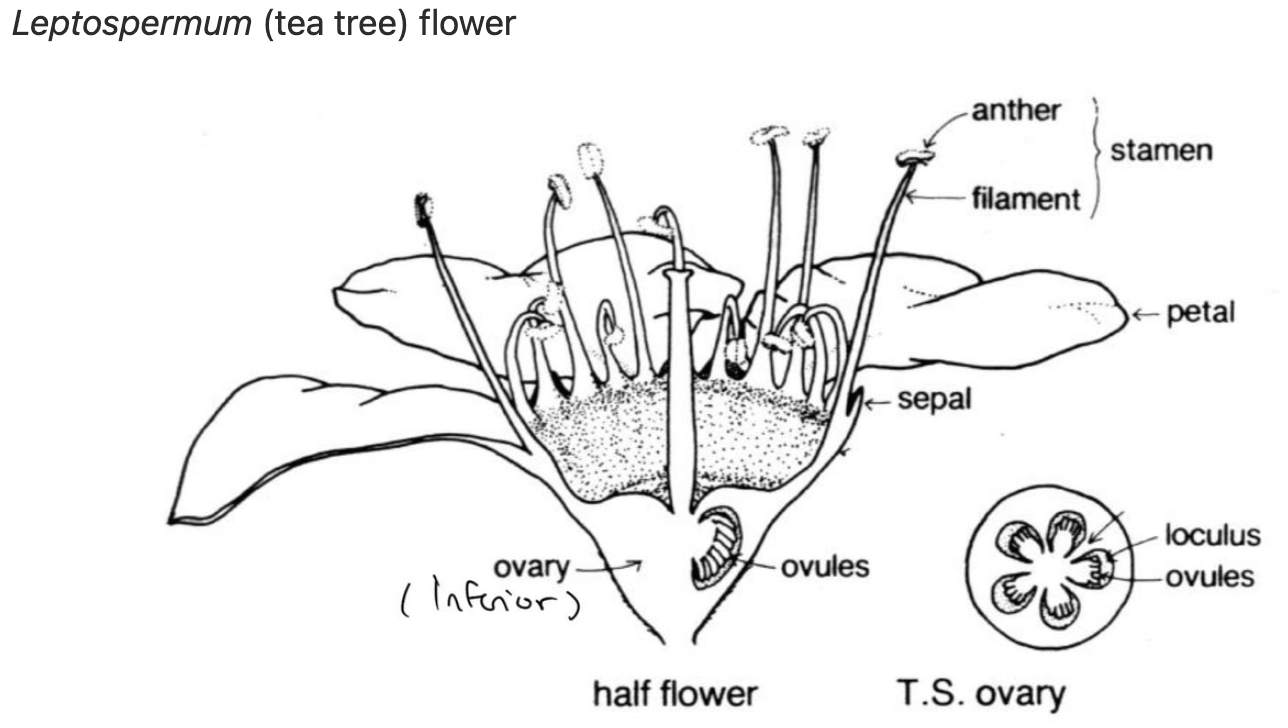
What are the shared features of Myrtaceae flowers?
Flower structure may vary but there are shared features
4-5 sepals, 4-5 petals
actinomorphic = radically symmetrical (equal halves on either side when bisected in many different ways)
Many ( >10) stamen
Inferior ovary (whorls are above ovary)
How are Myrtaceae pollinated?
Mostly insects, but some by birds.
Myrtaceae (Eucalypts) distribution
Some Eucalypts also only occur in Alpine
Typically don’t occur in central arid regions
The eucalypts dominate most habitats because they can get very large
Myrtaceae (Eucalypts) include the tallest angiosperm in the world. What is it called, where is it found, and is it fire sensitive?
Mountain ash, Eucalyptus regnans
Occurs in wet sclerophyll forests
Up to >100 m, >400 yrs old
Centurion in Tasmania was tallest one recorded 100.5 m
When tall it is subjected to wind events (might fall)
When old it becomes a keystone species: nest hollows are a resource for animals
Adult is fire sensitive but seeds are stored in canopy and are released with fire
Myrtaceae (Eucalypts) flower and fruit development
1 is the Sepal operculum (top cap) - 5 sepals fused
2 is the Petal operculum (bottom cap) - 5 petals fused
Both operculum will pop off as the flower matures and expose many stamens
Male reproductive phase: pollen is released
The numerous stamens produce and release pollen
Nectar is produced to attract pollinators, such as insects, birds and mammals (produced by nectaries on the floral disc around the base of the style)
As pollinators feed on the nectar, pollen sticks to their bodies
Female reproductive phase: pollen is received
The stigma becomes receptive to pollen
When a pollinator visits another flower, it can transfer pollen from the first flower onto the receptive stigma (cross-pollination)
Fertilisation
Pollen reaches the ovules inside the ovary, allowing fertilisation to occur
The fertilised ovules develop into seeds
Fruit development
Once fertilised, ovaries will swell into large gum nut or capsule type structures
The male and female phases can overlap in eucalypts, and the timing of stigma receptivity varies between species. Not every eucalypt flower follows a strict male-then-female sequence.
Eucalypts are complete (4 whorls) but when flowers mature, sepals and petals pop off (2 whorls)
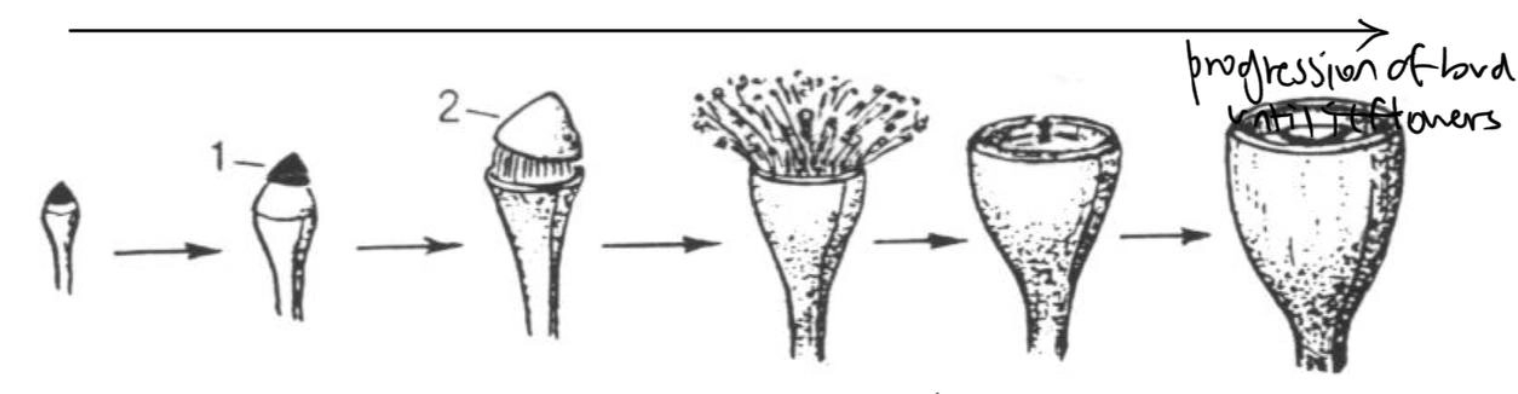
How to describe fruit shape of Myrtaceae (Eucalypts)
Elongated, spherical, angular
Disc level with rim, ascending, or descending from rim
Valves flat, above, or below rim
Pedicellate gumnuts: each fruit has a pedicel connected to a group stalk
Sessile gumnuts: attached directly to the group stalk (peduncle)

Bark type of Myrtaceae (Eucalypts)
Thick fibrous bark promotes fire resistance

Leaf type of Myrtaceae (Eucalypts)
Eucalypts have distinctive foliage at various life stages (like Acacia)
Juvenile leaves:
arranged in pairs
rounded shape
leaves often opposite one another
horizontal
sessile
dorsiventral (2 different tissue types on 2 sides) anatomy — palisade and spongy mesophyll
Adult leaves:
long, droopy
arranged in spiral or alternate arrangement
petioles twist during development and leaf hangs vertically
isobilateral (one type of tissue on 2 sides) — palisade mesophyll only
when sun hits from any angle, more efficient in taking up energy
Some Eucalyptus species retain juvenile foliage: Neoteny - retaining juvenile features in adult form e.g. E. shirleyi
How do to identify Myrtaceae (Eucalypts) based on leaf and bud type?

Where in Australia is water limiting to plants?
Arid = < 250 mm per year
Semi-arid = 250-350 mm per year
Half of Aus is arid / semi-arid
Northern Aus has warmer temps (follows distance from equator)
Even aquatic environments can be a dry habitat because if it is ephemeral
Water can accumulate on some of the very clayey, tightly poor soils
Water can evaporate and dry up
Alpine habitats can be dry habitats too
When its most available its snow
Water can be locked away as ice or if it's rain it percolates through the system
⬆ precipitation = ⬆ biomass production
Vegetation is the densest and the tallest where there is the most precipitation
What drives water transport in plants?
Plants take up water to replenish water loss through transpiration
Vapour pressure deficit = amt of moisture in the air relative to how much it should be able to hold if it was saturated
If air is saturated (raining, high humidity) = value is less negative = water potential gradient wont be as strong = transpiration flux will be slower (often good for the plant unless they are in rainforests they may have too much water)
If air is unsaturated (hot, windy) = gradient more extreme = ⬆ transpiration = water columns may break
Gas exchange requires ____ ____
open stomata
Atmospheric CO₂ enters plant through stomata
Stomatal aperture is controlled by turgor of guard cells
Water loss depends on VPD
Plants differ in _____ use efficiency
Water.
WUE: relative to how much H2O is used per how much CO2 is fixed
WUE is associated with the type of photosynthesis they perform
CAM photosynthesis is most efficient (temporal separation)
C4 (spatial separation)
then C3
*C4 grasses open their stomata during the day but generally to a lesser degree than C3 plants

What are plant strategies for avoiding drought?
Xerophytes: adapted to survive under arid conditions
avoidance
escape
tolerance
What are the 2 types of drought avoidance
1. Water spenders — rainforest & riparian (near water) plants
Ample water available, near water source
Deep rooted or high Root:shoot ratio (deep root systems, laterally extensive as well)
Ample access to water from groundwater
Have continuous access + steady water supply, can transpire even in arid seasons
Mycorrhizae (fungal organisms) help
Freely distributed and colonised with ~80% of plant species
Mycorrhizal fungi hyphae act as root hairs
⬆ SA (⬆ nutrient and water uptake as it becomes limiting)
2. Water savers
Leaf rolling: e.g. desert grasses -Triodia (spinifex)
Improve water efficiency by reducing water loss
Spines within the curled part interrupt boundary layer of the plant
Stomata stomatal crypts / grooves (invagination where the stomata at the bottom) also interrupt the boundary layer (surface of plant)
= slow down those water molecules from moving away from stomata = reduce the VPD = improved water efficiency by reducing water loss
Have sclerophyll (type of cells that are highly lignified)
Have spines
Tough, rigid, unpalatable plants = deter herbivores living in an environment
What are anatomical features of water savers?
Thick, waxy cuticle = reduce heat flux, light penetration, and water loss
Sunken stomata = water not blown away easily
Thick-walled cells (sclereids, fibres) - lignin in walls
Leaf hairs (trichomes) = alter the boundary layer for heat = reduce heat transfer to leaf + reduce water loss
What are forms of drought escape?
Annuals
Annual (over a yr) / ephermeral (over a couple yrs) plants spend drier times in dormant state as seeds
Grow and reproduce quickly when moisture is available
E.g. Wildflowers in Western Australia (everlasting daisies), Sturt’s desert pea (legume)
Plasticity
Depending on the time of year, plant is physiologically plastic
Winter: Stomata will open maximally, driven by hormonal and water gradients throughout the day to uptake CO₂ without exporting too much water
Summer: Tighter control of maximising carbon uptake in mornings and evenings resulting in slower growth rates relative to carbon taken up

What are examples of plants with drought tolerance?
Have desiccation tolerant enzymes
Osmotic adjustment of cells using solutes
Australian succulent plants
~400 spp that have higher degree of succulence (spongy, thicker layers)
Coastal and inland saline areas
Small number of succulents in arid Australia — lack the large stem succulents seen in other arid parts of the world
most CAM plants are succulents (but not all succulents are CAM)
E.g. Boab tree Adansonia gregorii
Long lived ~2000 yr and can grow up to 15 m diameter
Up to 100 kL water stored in trunk = persist in arid times
Drought deciduous (one of the few species in Aus that are) — when very arid, they will lose their leaves & when favourable conditions return, they will resprout leaves (phenotypic plasticity)
E.g. Chenopod shrublands /Chenopodiaceae (saltbushes) of deserts
drought and salt tolerant
Can concentrate salts into specialised cells in the leaf tissue (e.g. vacuole)
Draws water in by maintaining higher levels of salt and using it as a gradient for water
Surface colour reflects radiation (greyish blueish colour)
Covered with bladder cells to excrete salt
Salts form on leaf surfaces as a protective layer = alters boundary layer = reduces high UV hitting the plant
Maximising water supply ≠ drought resistance in most plants. What is an example of a plant that maximises water supply?
E.g. Mulga (small Acacia, Acacia anuera)
Acacia anuera can grow throughout the year
Has plasticity and adaptations to enhance water uptake and water preservation = adapted to conditions, not really drought resistant
Extensive root systems (up to 3m)
“funnel” habit can eek out more water from dry environment
NOT drought avoiders as they continue to grow (slowly) and metabolise through dry periods
What are sclerophylls and why did they first evolve?
They are hard-leaved plants
Tough leaves, reduced SA, thick short stems (reduced internodes), high lignin
Fossil evidence shows sclerophylly arose prior to acidification (rainforest still present) but soil weathering likely occuring
Experimental evidence shoes P addition can reduce rigid leaves
Contemporary biogeographic patterns link P to sclerophylly

What are the 2 hypotheses to how sclerophylly evolved
Evidence for Beadle comes from biogeography and experimentation:
Many sclerophyll plants thrive in areas with abundant moisture (e.g. Eucalyptus, Acacia, Epacris)
Sclerophyll plants were evident before the onset of aridity in Australia (e.g. first fossil of Banksia > 50 mya — alot of rainforests present)
Sclerophyll plants when given additional P can become soft-leaved
When starved of P, roots become proteoid / clustered

Why might sclerophylly be an adaptation to low nutrient soils?
Lack of nutrients can limit plant cell growth and metabolism
Excess carbs are thus invested into lignin structures
P deficiency can imbalance metabolism
P will be used for traits relative to survival through evolution
When did sclerophylly first evolve?
Beadle’s hypothesis: Sclerophylly first evolved on soils of low nutrient level - especially low P
Under rainforest conditions —> high amt of weathering —> high mobility —> competition and adaptation to access P
Current lineages that are highly sclerophyllous have low conditions of P
What are 3 examples of sclerophyllous plants?
E.g. Heaths
Southern heaths; Epacris
Bell-shaped flowers
Distributed on heathlands that have low P soils
Because of extensive weathering and laterite soil (oxidation = low pH = mobilised P can be leached out by rain events)
Small stature: small leaf size, short internodes
Proportionally thick leaves
Reduced SA:Vol of leaves
E.g. Acacia
~1000 species in Australia, dominant vegetation of deserts
Tough “leaves” that are phyllodes (flattened leaf stalk)
Water loss from phyllodes is less than leaves (⬇SA:Vol)
Long-lived, grow slower during drought
E.g. WaxflowerMyrtaceae
Often small leaf size, short internodes
Proportionally thick leaves
Reduced SA:Vol ratio of leaves
Sometimes cylindrical or needle shaped
Less SA for water loss through stomata
What does sclerophylly do?
Reduces damage caused by wilting during drought
Reduces damage caused by herbivores, as sclerophyllous tissue is not highly palatable or nutritious (high C:N ratio)
applying fertiliser to sclerphoylls (e.g. by cattle / sheep waste) can lead to their demise
Plant crown foliage may overdevelop
Plant may become palatable (ruminants will eat) and prone to disease (foliage may develop) e.g. eucalypt “dieback”
The current prevalence of sclerophyllous plants in Australia is related to…
Low nutrient soils
Increased aridity since Australia separated from Antarctica
Increased frequency of fires since Australia separated from Antarctica
What are the types of grasslands in Australia and where are they found?
Used to be 70% of Australia, now only 25%
Arid tussock grasslands
Clumps of grass
Astrebla spp
Arid hummock (widespread) grasslands
Grow into large mound shape = habitat for animals, alters precipitation, contributes to different crust formation
Triodia, spinifex
Coastal grasslands
Xerochloa, northern coastline
Subhumid grasslands
Can occur in Tropical (Themeda), Temperate (Themeda), Subalpine
Keystone species: Kangaroo grass (Themeda triandra)
An example of subhumid grasslands, occurring in both tropical and temperate regions.
Only been in Aus for ~1.5 m yrs (recent immigrant)
Tufted perennial
Poor tolerance to high grazing
Environmental indicator
Overgrazed = reduced recruitment
Native grain (flour)
Origins trace back to SEA
Floral spikes have barbed seeds that attach to animals very well
They are a keystone species
Regular biomass removal maintains diversity
Deep rooted, taller competitors win over time
Irregular (changing) land management can lead to local extinction
Fire regime of kangaroo grass (Themeda)
With regular biomass removal (fire comes every 3-5 years)
Tussocks burn back to their core and then grow back profusely
Creates high fire load of vegetation
⬆ amt of vegetation that will dry out and burn within the season
Grasslands grows fast — can burn quickly and release nutrients
Forbs and wildflowers take advantage of inner tussock space — there is nutrients and now light (1.5 m tall plants are gone)
Biomass that grasslands create contribute to their ability to catch the landscape on fire when there are dry conditions and lightning
With irregular biomass removal (no fire regime)
Grasslands keep growing taller and putting on more biomass
Eventually shade out other species, and that can lead to local extirpation of some of these species

When and why did grasslands evolve?
Evolved during the Late Cretaceous period 94-110mya
Ancestors to grasses were in rainforests / evolved in rainforest ecosystems
Diversified and adapted to a changing global climate
Aridity (shift Northward)
Cooling temperatures
Changes in landscape
Dispersed across continents
Sunda-sahul interchange occurred during glacial maximum — cooler temp and connectivity increased range / speed
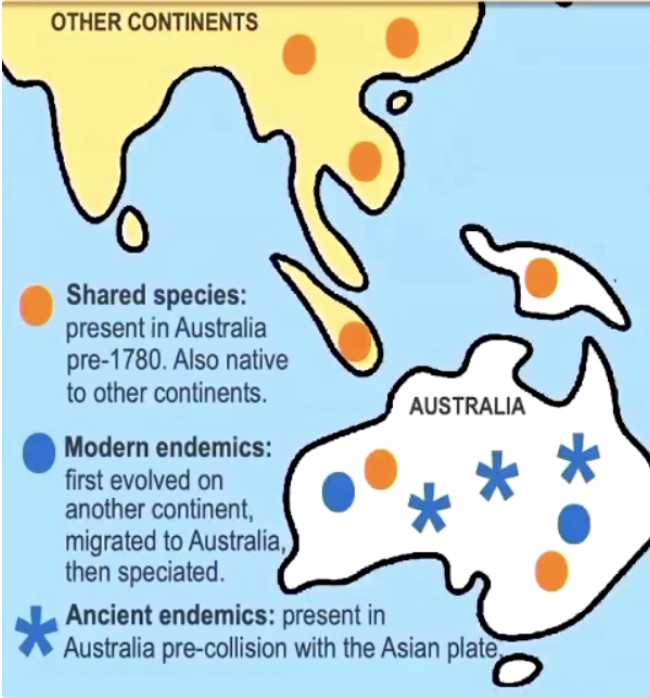
How did grasslands persist?
Evolved drought avoidance mechanisms
Long fibrous deep roots
Grasslands occur wherever clay is high
Slow water percolation and poor aeration occurs when wet & excessive moisture loss when dry
There is aerenchyma or special cell types that allow for oxygen flow in the plant
Plants have swollen or thickened root structure
C4 photosynthesis
C4 photosynthesis
Convergently arose x60 across different lineages)
C4 arose ~60mya, grasses arose >100 mya
It was getting too warm and challenging for grasses to take carbon and not lose water
Common in subtropical and tropical ecosystems
Many grasses (including crop species) have C4 photosynthesis e.g. maize, sugarcane, millet
~ 1/4 of global GPP is by C4 plants
⭐ Australia has the highest dominance of C4 vegetation of all continents
14 families that have different C4 plants i.e. Chenopods (Chenopodaceae), Sedges (Cyperaceae), grasses (Poaceae)
Neuranchne, mulga grass is now a model for photosynthesis evolution
Started off largely C3 but the incidence of C4 is occurring, and the reversion back to C3 is also occurring
Grasslands are home to what other species?
1. Orchids (Orchidaceae)
CAM photosynthesis
Epiphytes (in the tropics) and ground dwelling (in southern Australia)
Occur in diverse range of habitats
28k spp globally, 1800 spp Australia
2. Lillies (Asparagales)
C3 photosynthesis
High endemism
Thysanotus (fringed lily)
Drymophila
Tropical
Dianella
Orchidaeae - 2nd largest family of flowering plants. What mutualisms do they have and what kind of photosynthesis do they use?
2 mutualisms:
1. Mycorrhizae dependent seed germination
Orchids seeds do not contain storage tissue (do not have an endosperm) —> they have no way to mobilize nutrients
Mycorrhizae get resources eventually when orchid produces photosynthate, and they help this orchid germinate (hyphae grabs moisture and nutrients)
2. Pseudocopulation (deceptive) pollination
Orchids mimic the smell of saw fly females (has a sex pheromone) and kind of looks like saw fly
Mutualism: orchids maintain high degree of fedility
Earliest described Australian CAM plants were orchids
CAM plants lacked succulence (compared to Crassulaceae)
2/3 of all orchids showed CAM physiology
CAM photosynthesis
The most water efficient
Convergently arose across plants x30
A way to tolerate arid conditions, lack of moisture e.g. Epiphytes have no roots to tap into moisture
At night (cooler and moister):
Stomata open
CO₂ diffuses into storage at night
Transported and fixed into acid — malic acid
Stored in vacuole
During the day (hot and dry):
Stomata closed (water loss reduced)
Acid is broken down into carbohydrates through the Calvin cycle
CO₂ released form storage
CO₂ fixed in usual Calvin cycle reactions
Light is available and can drive the Calvin cycle
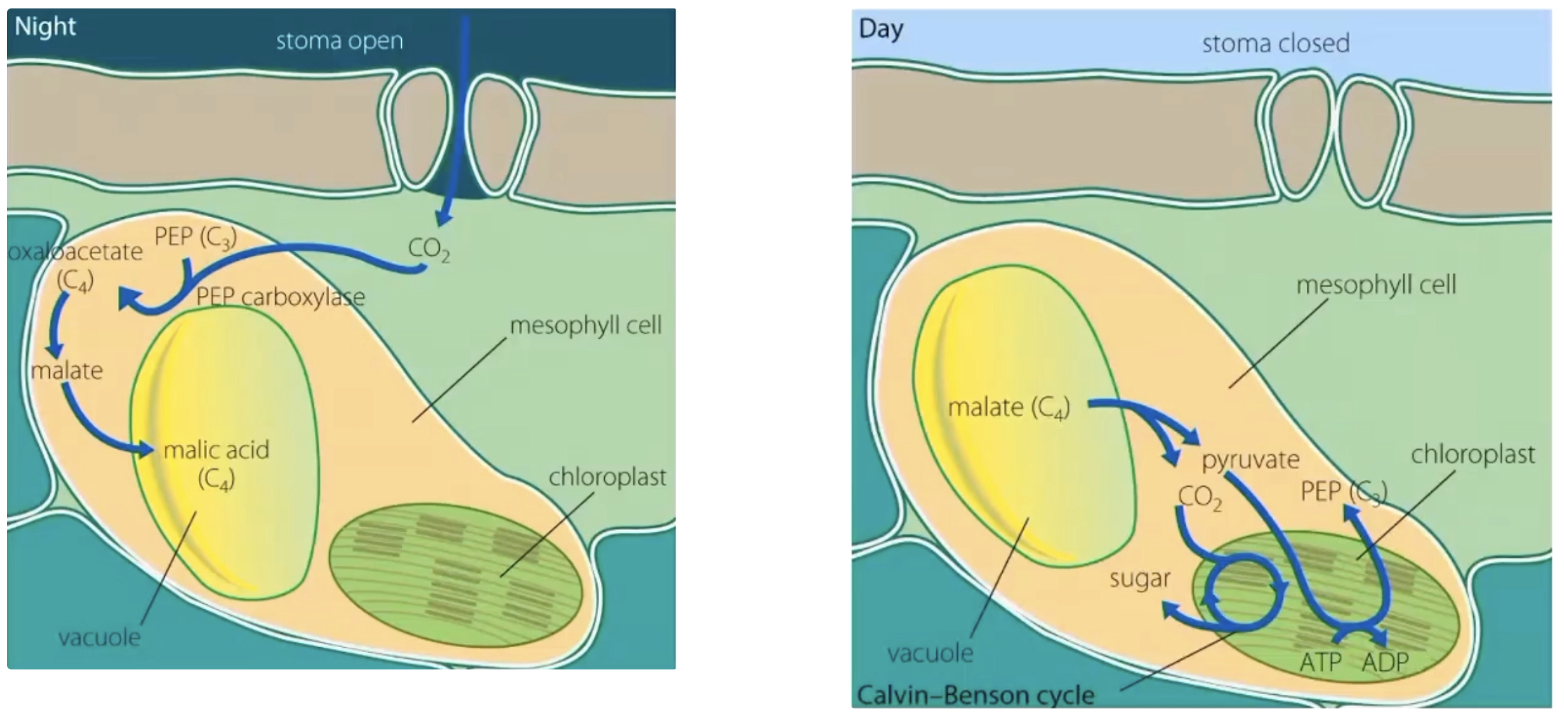
What are other CAM plants that are not Orchids?
Isoetes quilworts
Some submerged aquatic plants have CAM
Ancient vascular plant lineages
Reason for evolution of photosynthetic pathway
During the day, photosynthetic algae rapidly deplete CO₂ in the water
At night, CAM draws in CO₂ that is being released through respiration from other organisms, fixes that carbon the next day when the sun is up
Caustic vine
Gondwanan origins
Cynachum viminale
Subsp. Australe (Apocynaceae)
Dogbanes / milkweeds
Type of endemic in Aus
What is an example of a facultive CAM plant?
Parakeelya spp
Australia’s first identified succulent (desert CAM)
Calandrinia (parakeelya) polyandra (Montiaceae)
Nocturnal acid accumulation relative to water status (trait has plasticity)
Only CAM under certain conditions
Under well-watered conditions operate like C3, but when droughted they turn CAM on
Induced to perform different physiological states as a means to adapt to env
Why is too much sunlight a bad thing for plants?
Energy is gained through net radiation by leaves / plant (sun, environment, biochemical reactions) & is lost (reflectance, evaporation, environments)
The bigger the difference in air and leaf temperatures, the greater the sensible heat flux
The bigger the difference in the air and leaf water vapour concentrations (VPD), the greater the latent heat flux
Plants need to maintain optimal physiological temps (heat denatures proteins)
Latent heat loss: Heat energy lost from plants through water vapour formation is called latent heat loss
Sensible heat loss: Heat energy loss through transfer to the air
