Unit 3: The Ancient Near East
 Call Kai
 Learn
 Practice Test
 Spaced Repetition
 Match
 Flashcards
 Knowt Play
1/42

There's no tags or description
Looks like no tags are added yet.
43 Terms
What is Mesopotamia?
The land between the Tigris and Euphrates Rivers
What is the Fertile Crescent?
A fertile region surrounding the Tigris, Euphrates, and Nile Rivers
How did agriculture help civilizations develop?
It created stable food supplies, permanent settlements, specialized jobs, writing, cities, and social classes
What were the major cultures of the Ancient Near East?
Sumer, Akkad, Babylonia, Assyria, and Persia
What is cuneiform?
A wedge-shaped writing system pressed into clay tablets
What was a ziggurat?
A large raised temple platform used in Mesopotamian cities
Who was the White Temple and Ziggurat at Uruk dedicated to?
Anu, the Sumerian sky god
What does the Warka Vase show?
Agriculture, animals, workers, and a ruler/goddess connected to Inanna
What was the purpose of votive figures?
They represented worshippers and were meant to pray to the gods forever
What were cylinder seals used for?
They acted like signatures and were rolled into wet clay
Who was Sargon of Akkad?
A ruler who created the first lasting Mesopotamian empire around 2340 BCE
What was important about Akkadian art?
It emphasized military power and divine kingship
What does the Victory Stele of Naram-Sin show?
Naram-Sin defeating the Lullubi and being shown as powerful and almost divine
Who was Hammurabi?
The king of Babylon who ruled 1792–1750 BCE
What is the Law Code of Hammurabi?
A collection of 300+ laws written in cuneiform
Who gives Hammurabi the laws in the stele's relief?
Shamash, the god of justice
What was the Ishtar Gate?
A grand Babylonian gate decorated with blue glazed bricks, lions, bulls, and dragons
What was important about Assyrian art?
It emphasized war, conquest, royal power, and hunting
What was the purpose of the Lamassu?
It served as a guardian at palace entrances and symbolized royal power
Why does the Lamassu have five legs?
From the front it appears standing, while from the side it appears walking
What was the Achaemenid Persian Empire?
A large empire that existed around 550–330 BCE and included many different peoples and cultures
Who founded the Persian Empire?
Cyrus the Great
What was Persepolis?
A major ceremonial capital of the Persian Empire
What was the Apadana?
A large Persian audience hall supported by many columns
What do the Persepolis reliefs show?
Delegations from different parts of the empire bringing tribute to the Persian king

White Temple and ziggurat, Uruk
(modern Warka), Iraq
3200–3000 BCE


Warka Vase
3500-3000 BCE
Alabaster

The Uruk Vase

Deer hunt
Çatal Höyük, Turkey
5750 BCE

Statuettes of worshipers from the Square Temple at Eshnunna
(modern Tell Asmar), Iraq
2700 BCE

Cylinder seal of (Queen) Pu-abi
Ur (Royal Cemetery)
2600 BCE

The Standard of Ur (War Side)
Tomb 779, Royal Cemetery, Ur (modern Tell Muqayyar), Iraq

The Standard of Ur (Peace Side)
Tomb 779, Royal Cemetery, Ur (modern Tell Muqayyar), Iraq
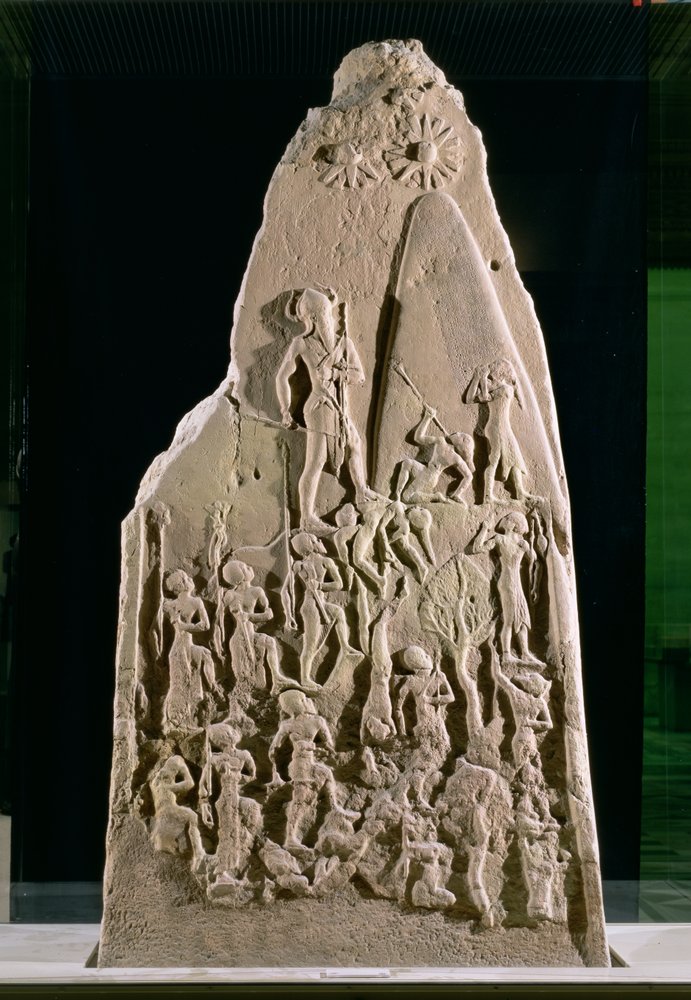
Victory Stele of Naram-Sin
2254-2218 BCE
Susa, Iran

Statue of Gudea as Ensi (governor) of Lagash
2090 BCE

Law Code Stele of King Hammurabi, Babylonian
1792-1750 BCE
King Hammurabi and the Babylonian sun god and god of justice, Shamash

Lamassu (winged, human-headed bull)
Sargon II, Dur Sharrukin (modern Khorsabad), Iraq
720–705 BCE

Hittite Lion Gate from Hattusa
modern Boghazkoi, Turkey
1650 BCE

Assyrian archers pursuing enemies
Northwest Palace of Ashurnasirpal II, Kalhu
(modern Nimrud), Iraq
875–860 BCE

Ashurbanipal hunting lions
North Palace of Ashurbanipal, Nineveh
(modern Kuyunjik), Iraq
645–640 BCE

The Dying Lion
North Palace of Ashurbanipal, Ninevey, northern Iraq
645 BC

The 'Garden Party' relief from the North Palace of Ashurbanipal, Nineveh, northern Iraq
645 BC
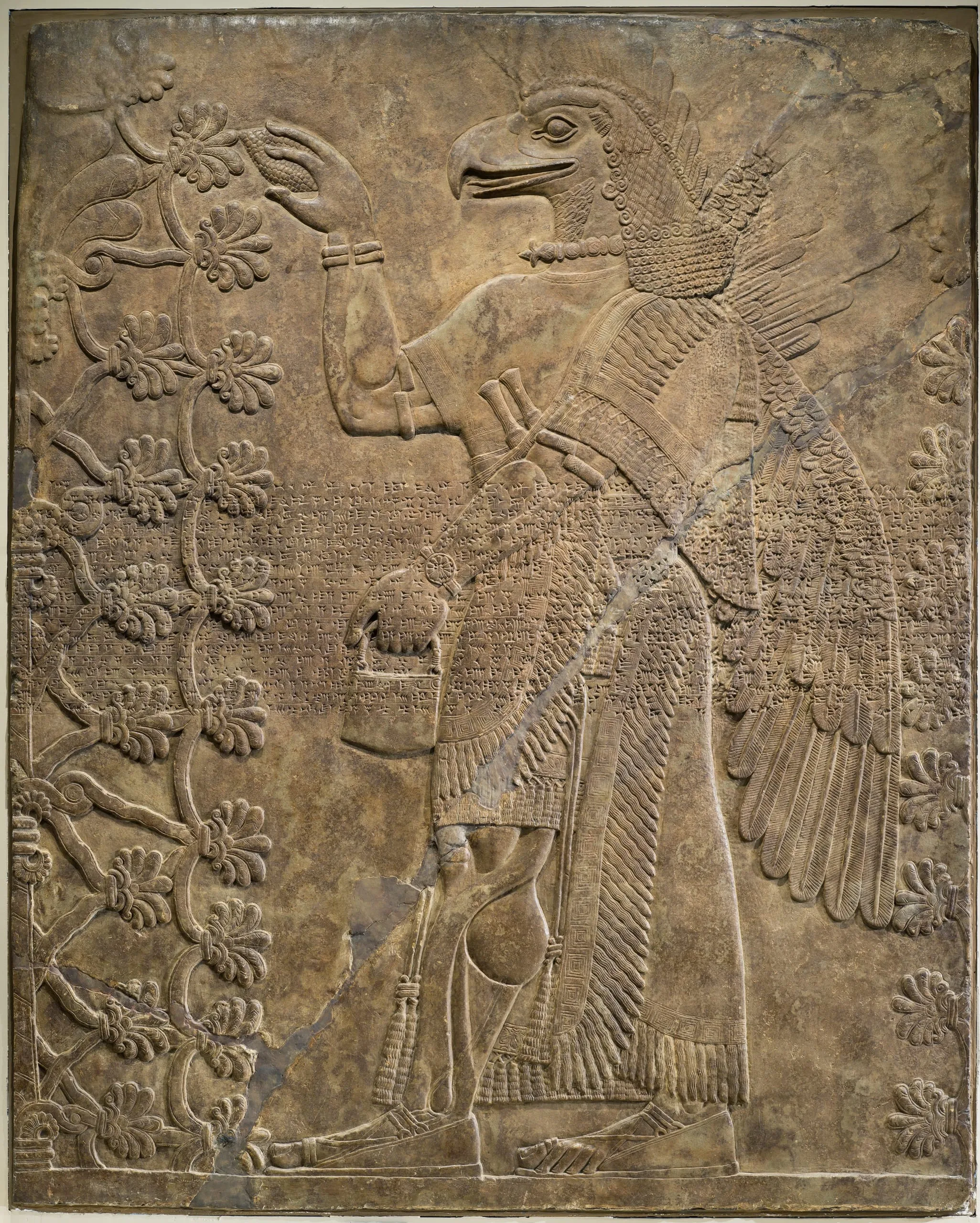
ASSYRIA
Eagle-Headed Guardian Figure
875-860 BCE