Theme 3: social learning
 Call Kai
 Learn
 Practice Test
 Spaced Repetition
 Match
 Flashcards
 Knowt Play
1/41

Earn XP
Description and Tags
LB
42 Terms
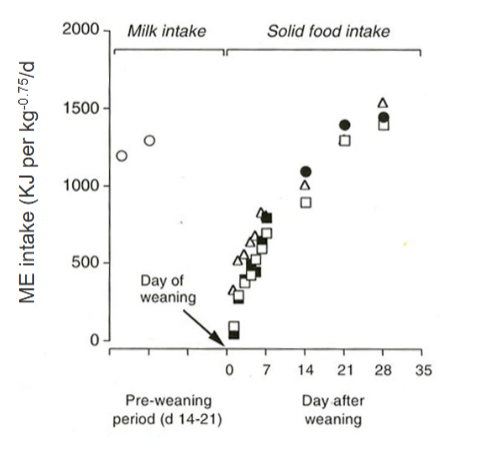
Energy intake around weaning
Change from milkk intake to solid food intake
drop and then increase day 28
Problems associated with weaning of pigs
health and performance
low nutrient intake
poor growth rate or even weight loss
impaired intestinal functioning, diarrheo
use of antibiotics
welfare
stress response
maladaptive behaviours
decreased play behaviour
Weaning - schematic overview of changes

Learning of feeding and foraging behaviour
omnivores: few inborn restrictions → learning
learning what to eat
food neophobia
recognition by flavours (taste + retronasal olfaction)
flavour + postingestive effects → preference or avoidance
generalization (preference/avoidance of similar food items)
sensitive periods
food neophobia
reluctance to try unfamiliar food items
mechanism to protect against toxins or other negative effects
Factors influencing food neophobia
personality
stress and fear
unfamiliar environment increases food neophobia

food neophobia in piglets
food neophobia higher in unfamiliar environments and in high fear/stress situations
better to expose piglets to (novel) solid food before weaning, in safe familiar environment
Offering creep feed before weaning
feed intake before weaning low and variable
several strategies tried, feed quality, palatability, but often not sucessful
Lessons from nature, feed exploration
Stable
weaning abrupt event
at 3-4 weeks
little eexperiece with solid feed
nature
weaning: gradual process
ends at 8-20 weeks
feed exploration starts early
feed presentation: diversity infeed
day 11 before weaning
\2 times more eatesr at day 11,100% eaters at wenaing
not so much piglet feed
feed presentation larger feed pellets
before weaning, preference large pellet first 2 weeks, 181 vs 91 gfram per pen
after weaning
pigletrs fed 12 mm pellet before weaning, growth +26% until day 10 postweaning, feed intake +14%
irrespective of pellet size after weaning
Feed presentation: play feeder
before weaning
more play with feeder
more early eaters
no effect on overall intake
after weaning
= growth +15% 2 weeks
less body lessions and damage to ears and tails\
feed intake +30% first 4 hours, +15% first 2 weeks
lessons from nature: sow-piglet interaction
stable
limited ocntact
eating separately
different feed
nature
lots of contact
eating together
same feed items
social learning
learning that is influenced by observation of or interaction with another animals or its products
crucial during developmetn of feeding (weaning transition)
trial and error learning risky
trial and error learning time consuming
social learning in weanling pigs
feed intake sitmulated by eating pen mates and eoghbours
non-eaters preweaning, after weaning housed with
experienced postweaning eater
neighbour eaters
eaters one pen in between

moter more imporat than dry ewe for learning

social learning
mothers
mothers best likely models (vertical transmission)
genetically related
same environment
most attention directed at mother
information transmission may start early in life, even before birth
prenatal flavour learning
animals prenatally exposed to flavoiurs
via foetal blood streama dn amiotic fluid
evidence of prenatal flavour learning inmany species
prenatal learning may facilitate transiton from prenatal environment ot environment after birth
e.g. location of nest, nipple, kin (familY) recognition
dietary preferences and acquisiton of independent feeding
prenatal flavour learning
maternal die3ts
maternal diets affects prenatal environment
pregnant ladies during third trimester were given carrot juice, enhanced acceptance of carrot flavoured meal
postnatal learning
lactating mothers diet
rat example
rat mothers fed palatable diet or unpalatale diet during lactation
rat pups from mother unpalatable diet consumed 10x more unpalatable feed at d17
Effects of lactating mother (diet)
around weaning (rats, mice, rabbits, humans)
initial dietary choice
preference for similarly flavoured feed
increased intake or liking if diet matches with mother’s feed
even in later life - goats
faster acceptance and increaed intake of rice straw at 6 motnhs
effects of lactating mothers diet - how
observational learning (direct social learning)
but also information transfer if mother is fed in asbsence of sucklins
flavour learning by exposure to maternal diet
through mother skin, breath, body, faeces, air
milk
learning via exposure to flavours in milk
flavour changes in milk are perceived by sucklings
flavouor learning through milk more effective than via other routes e..g breath mother, air
swalling facilitates retronasal perception
association of flavours with reinforcing conditions
positive consequences
suckling → warmth. tactile contact
perinatal flavour learning in piglets
experiment
flavour exposed pilgets before birht showed more interst in the anise flavour
flavour exposed piglets showed less escape attempts and vocalization sin the prsence of anise
recognition of flavours from mothers feed
prenatally exposed piglets experiemtn
recognition of falvour form mothers feed after birth
reduced fear/sttress in the presence of this flavour
flavour learning and performance postweaning
prenatally and pre+postnatally exposed piglets
experimetn
higher feed intake d2-3 and hgiehr growth, d2. d5
less damaging behaviours during 2 weeks
less diarrhoea during 2 weeks
if flavour was present in postweaning environment
diarrheoa during first 2 weeks postweaning

perintal flavour weaning
prenatal flavour weningimporves performance of weanling piglets if the flavour is present in the pstweaning environment
no preference for flavoured feed
familiar flavour (prenatal exposure)
schematic overview
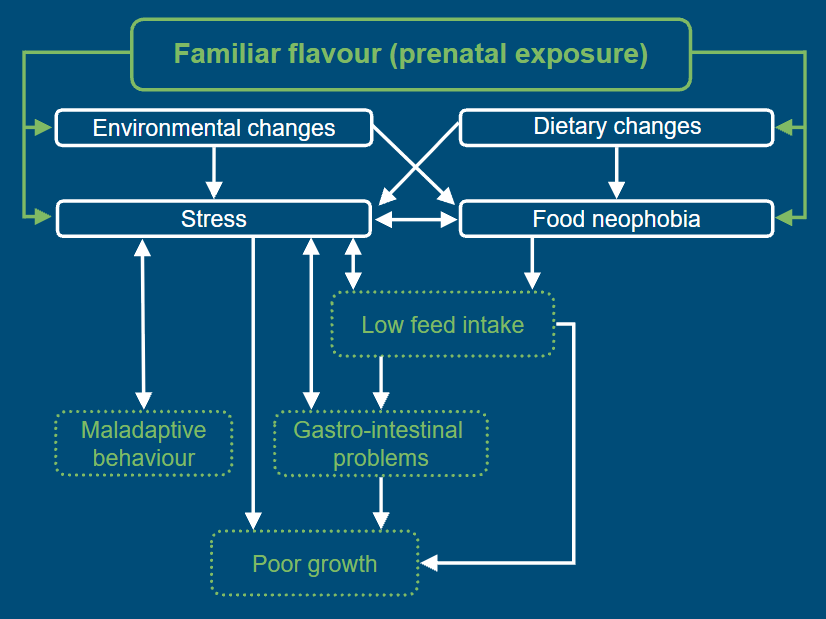
flavour learning and performance postweaning
anise experiment
perinatally exposed piglets postweaning
lower coritsol levels at 4h and 7h
ate faster
played more
showed less damaging behaviours
had less stressrelated vocalisations
if flavour was present in postweaning environment, in either air or feed
conclusions perinatal flavour learning
perinatal flavour learnign enahnces piglets performance at weaning if the flavour ispresent in the postweaning environment
stress reducing effects of familiar flavour at weaning
so effect not due to reduced food neophobia and generaltization alone
but
effects may dpeend on chosen flavour
dosage effects
indivual differences
direct forms of social learning
learning what, when, where how to forage
multiple cues or signs involved
olfactory and gustatory
audtory
visual
combinations
chickens”: acoustic and visual cues
direct
specific food call
ground pecking
scratching
high quality food: more intnse and longer food calls
more food pecking and scratching by mother if chicks eat wrong foods
social learning: process
true imitaiotn
goal-directed, purposeful copying of behaviour of a demonstrator
social facilitation (contagious behaviour)
initation or increase of behaviour due to presence of another animal displaying that behaviour
local or stimulus enhancement
demonstrator directs attention to part of environment (place or stimulus)
social transfer, not true imitation (even presence anesthesized rat induces preference of rat pups for feeding site)
delayued vs immediate reinforcement
paticipating with demonstrator (immediate) may be more effective than observing only (delayed)
no delay between observation and performing behaviour
direct reinforcement: link between cues/behaviour and post-ingestive consequences (NUTRIENTS)
many animals are able to learn with delayed reinforcement, but the shorter the delay, the betterr
food neophobia test
in the presence of their mother, piglets
were faster to touch the food 19 s vs 111s
consumed more food items 6.3 vs 4..6
were more likely to try both types of food
more interaction with the sow
piglets with loose housed sow
higher growth d15 until weaning, likelyu due to higher feed intake
less damaging behaviours after weaning
more play beavhioura fter waning
\
improved coping wth weaning transiton?
delayed vs immediate reinformance experiment
observing or participating sow
observing sow and particpating with sow effective
faster at feeder than controls
higher feeed itnake than controls
preference for sows feed (flavour) and feeder
demonstrating is better than self leaning
even wihout own experience with feed (observation)
why participation not etter than observation?
location
social learning in piglets
learning form mother is effective in stimulating feed intake in piglets
more effective than own exposure to food (self learnign)
observing sow and particpating both effective, piglets also use information with delayed reinforcmeent
piglets prioritze type of sows food (flavour) over location, but location is also important
mother-offspring information transfer plays a role in the development of independent feeding
true
increasing opportunties for sow-piglet information transfer improves performance and welfare of piglets after weaning
several ways of information transfer are effective (perinatal flavour learning; observatinal learnign)
reduce weaning problems by
providing piglets same flavour before and after birth and after weaning
\allowing piglets to observe (see, smell) what the sow is eating
allowing piglets and sow to eat together
providing piglets and sows the same food in early lactation