DSG325-CNC Milling – 2D & 2.5D operations
 Call Kai
 Learn
 Practice Test
 Spaced Repetition
 Match
 Flashcards
 Knowt Play
1/31

There's no tags or description
Looks like no tags are added yet.
32 Terms
what is milling?
subtractive process - spinning cutter removes material from stock
high precision
what is 3 axis milling?
workpiece fixed, cutter spinning
cutter can remove material by plunging or moving sideways
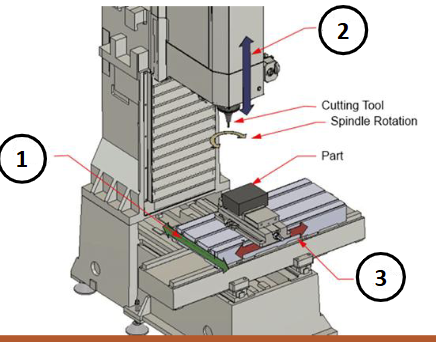
what axis is 1?
y axis
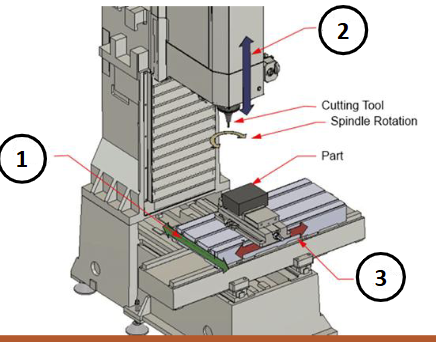
what axis is 2?
z axis

what axis is 3?
x axis

can this part be made on a 3-axis machine?
yes

can this part be made on a 3-axis machine with a single setup?
yes

can this part be made on a 3-axis machine with a single setup?
yes

can this part be made on a 3-axis machine with a single setup?
no

can this part be made on a 3-axis machine with a single setup?
no
What is a “Set-up”
any time you have to put the part in the vise in a new orientation
multiple setups allow you to machine features that would be otherwise inaccessible
off the shelf stock is imperfect what must you do to ensure that your final parts meet the desired dimensions?
oversize stock compared to part
What happens if there is a large difference between stock and finished part?
more material wasted
more time spent machining
What is the rule of thumb when choosing stock size?
leave a “skin” of around 0.05”-0.1” per side (overall 0.1-0.2)
what could you do to your noncritical dimensions to accommodate a smaller stock size?
consider under sizing outer dimensions in X and Y so part can fit
what dimensions are taken into consideration when determining excess material in the Z dimension? What are the associated rules of thumb?
the “skin on top”
around 0.02”-0.05”
clearance between top of vise and bottom of actual part
around 0.05”-0.2”
material that vise is gripping on
around 1/8”
total excess in Z: 0.195”-0.375”
which direction should the saw cut face be in to avoid tilting and instability of the workpiece?
prioritize placing this face in the X direction if possible
make it the longest dimension of the part
avoid contact with parallel or vise face due to irregularity
describe what a “set-up” is in CNC machining?
the way the part is put in the vise by the machinist
any time the machinist has to take the part out of the vise and put it back in at a different orientation

determine the axes for the set- up: label which of the blue green and red axes should be X, Y, Z
X - red
Y - green
Z - blue
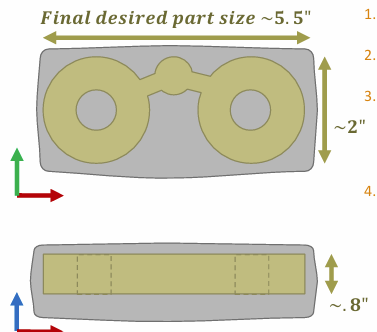
what face should be the saw cut face? (left/right/top/bottom)
left and right sides
what is the rule of thumb for drilling deep holes?
Length: diameter ratio <5
What is the rule of thumb for internal radii and sharp corners?
internal corner radii > 1/5 * pocket depth
what happens if the cutter radius matches the internal fillet radius?
can result in a very large cutter load
what are the benefits of upsizing the internal radius?
allows the cutter to sweep through the radius
less cutter wear
more accurate geometry
better surface finish
what is the rule of thumb for internal corner radii
add around 0.01” - 0.03” to corner radius
make fillet size bigger than the cutter
what is facing?
removing the ‘skin’ from the top of the stock, revealing top, smooth surface fo the part
what is roughing?
remove material quickly, at expense of surface finish and accuracy
what is finishing?
slower material removal done after roughing
superior surface finish and accuracy

what is this operation?
facing

what is this operation?
spot drilling
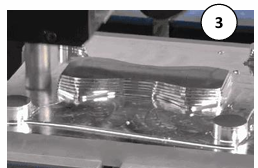
what is this operation?
roughing

what is this operation
finishing