Lab Safety and General Lab Procedures
 Call Kai
 Learn
Learn Practice Test
 Spaced Repetition
 Match
Match Flashcards
 Knowt Play
1/35

There's no tags or description
Looks like no tags are added yet.
Name | Mastery | Learn | Test | Matching | Spaced | Call with Kai | Chat |
|---|
No analytics yet
Send a link to your students to track their progress
36 Terms
NO! Never work in the lab alone, wait until your TA is present and only do the experiment assigned.
Should you work in the lab alone?
Never eat, drink, use tobacco, apply make-up, chew gum, or take medication during lab. DO NOT taste or directly sniff any chemicals
Can you have food in lab?
• Carcinogen
• Mutagenicity
• Reproductive Toxicity
• Respiratory Sensitizer
• Target Organ Toxicity
• Aspiration Toxicity

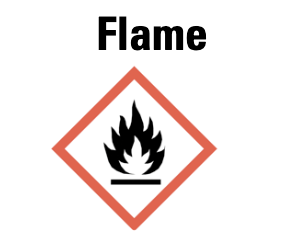
• Flammables
• Pyrophorics
• Self-Heating
• Emits Flammable Gas
• Self-Reactives
• Organic Peroxides
• Desensitized Explosive
• Irritant (skin and eye)
• Skin Sensitizer
• Acute Toxicity (harmful)
• Narcotic Effects
• Respiratory Tract Irritant
• Hazard Not OtherwiseClassified (non-mandatory)
• Hazardous to Ozone Layer(non-mandatory)

• Gases Under Pressure
• Chemicals UnderPressure

• Skin Corrosion/Burns
• Eye Damage
• Corrosive to Metals

• Explosives
• Self-Reactives
• Organic Peroxides

• Oxidizers

• Aquatic Toxicity

• Acute Toxicity(fatal or toxic)

• Container used for transferring, stirring, and heating solutions.
• Has a small spout on the side to assist you with pouring.
• Look to the side of the beaker to find the volume it can hold.
• Lower accuracy and precision for reading a volume.
• Beakers used in your lab will most certainly be glassware, but could also be made from plastic
beaker

• Container used to measure, mix, and store liquids.
• Look to the side of the flask to find the volume it can hold.
• Low accuracy and precision for reading a volume.
Erlenmeyer Flask

• Container used to measure out an exact quantity of a liquid
• Has a small spout on the side to assist you with pouring when transferring the liquid.
• High accuracy and precision for reading a volume.
• Look to the side of the cylinder to find a graduation and the maximum volume it can hold.
• Cylinders might have a wide glass base or come with a plastic base
• Cylinders used in your lab will most certainly be glassware, but could also be made from plastic
Graduated Cylinder

• Usually made from glass, with a bulb-shaped bottom and long thin neck.
• Must be filled exactly to a line marker located on the neck of the bottle.
• Designed to very accurately measure a defined amount of liquid (Volume is indicated on flask).
• Can be sealed with a glass or plastic stopper
Volumetric Flasks

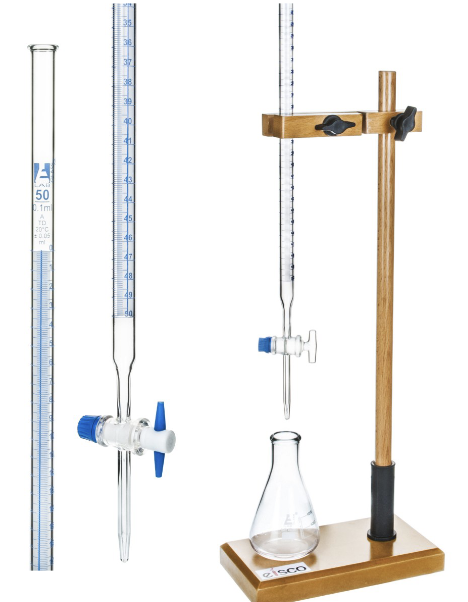
• A long and thin glass tube with a glass or Teflon stop cock and a spout on the bottom
• Used to determine the amount of dispensed liquids with a high degree of precision
• Must be held by a utility clamp on a stand
Burettes
• Small glass vessels used to handle chemicals, especially for qualitative experiments (test experiments).
• Convenient containers for heating small amounts of liquids or solids with a Bunsen burner. (can withstand high temperatures up to several hundred degrees)
• Can be sealed using a rubber stopper.
Glass Test Tubes

• A circular concave piece of glass that can be used for:
• Evaporating a liquid
• Holding solids while being weighed
• Heating a small amount of substance
• Covering a beaker
Watch Glass

Mostly glass, but can also be
plastic
• The filtering funnel can be used to help with the
transfer of liquid.
• It can also be used (with filter paper) to remove
solid from a liquid mixture in a process called
gravity filtration.
Filtering Funnel

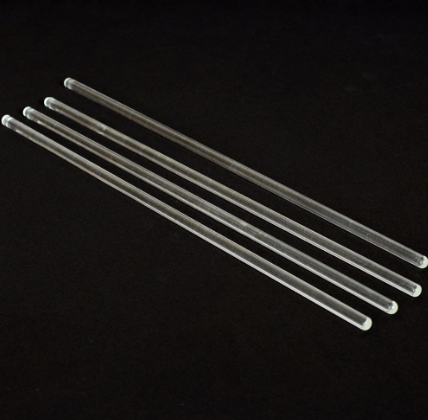
Are used for manually stirring liquid
mixtures, i.e. in a beaker.
• Can also be used for splash-free
transfer of liquids
Glass Stirring Rods
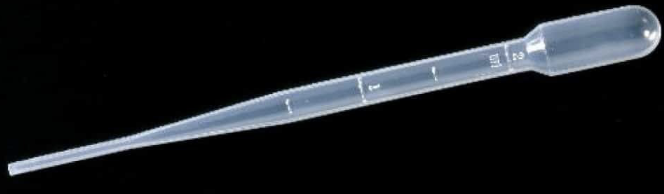
Either in the form of disposable plastic pipettes or as glass pipettes, which require rubber pipette bulbs.
• Small pipettes that are used to transfer small amounts of liquids.
• NOT used for transfer of exact amounts.
• Can be used to transfer liquids dropwise.
Pasteur Pipettes
• Contain liquids that can be squirted out through spout for filling a vessel or washing and rinsing labware
• Beware: All wash bottles must be properly labeled!
• Wash bottle could be filled with soap water or deionized water
• Wash bottles containing organic solvents (like ethanol or acetone) must be kept in properly labelled bottles.
Plastic Wash Bottles

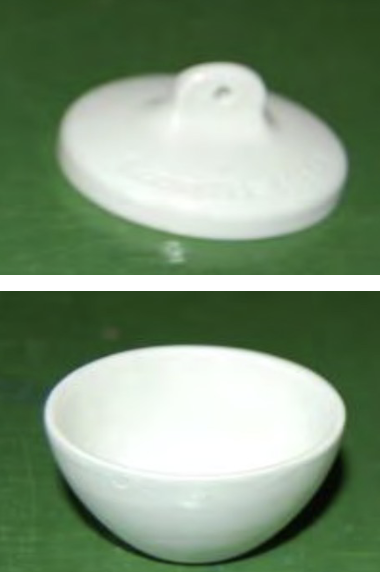
• Used for holding small amounts of chemicals while being heated, i.e. using a Bunsen Burner.
• A lid might be used to prevent chemicals splattering during heating.
• Can crack easily, if not given the proper amount of time to cool after heating.
Porcelain Crucible with Lid
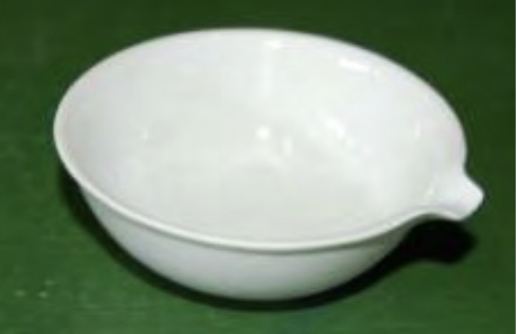
• Is typically an open container that can withstand heat.
• It is used to hold liquids that will be heated for evaporation.
• Has a little spout to aid with decanting liquids
Evaporating Dish
• Clamps used to move/hold a test tube during your experiment.
• Especially useful when test tube is hot.
Test Tube Clamps

Used to move the crucible, especially when warm.
• Use extreme caution, as crucibles drop easily.
• Never move a crucible until you are sure it has cooled- they crack quickly
Crucible Tongs

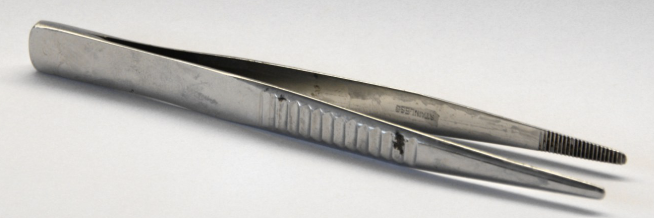
Great for picking up items that are too small for your hand.
• Do not use these to hold glass vessels!
Forceps or Tweezers
• Clamps are used for supplying support.
• One end of the clamp screws on stand and the other end can hold a piece of labware
Clamps and Stands

• Used to hold the test tubes during your experiment.
• The test tube racks in your lab are most likely made from wood, but they could also be made from plastic or metal
Test Tube Racks

The metal tripod is used together with either a wire screen or a Nichrome Triangle to hold vessels in the flame of a Bunsen Burner and to let them cool down afterwards.
• There can be a porcelain cylinder on each side of the Nichrome triangle
Metal Tripod with Wire Screen

• Are both used to transfer small quantities of solid chemicals.
• Scoopulas are curved.
• Spatulas are flat.
Scoopulas and Spatulas

• Balances come with different degree of precision
• Open pan balances (higher error but can hold higher weight)
• Analytical balances with draft shield (lower error, but can hold less weight
Balances

• A Bunsen Burner produces an adjustable flame by burning natural gas in air.
• Used for heating chemicals contained in glass test tubes, Erlenmeyer Flasks or porcelain crucibles
• The flame is lit by using a striker, which produces sparks by rubbing a piece of flint across a grated metal surface.
Bunsen Burner and Striker

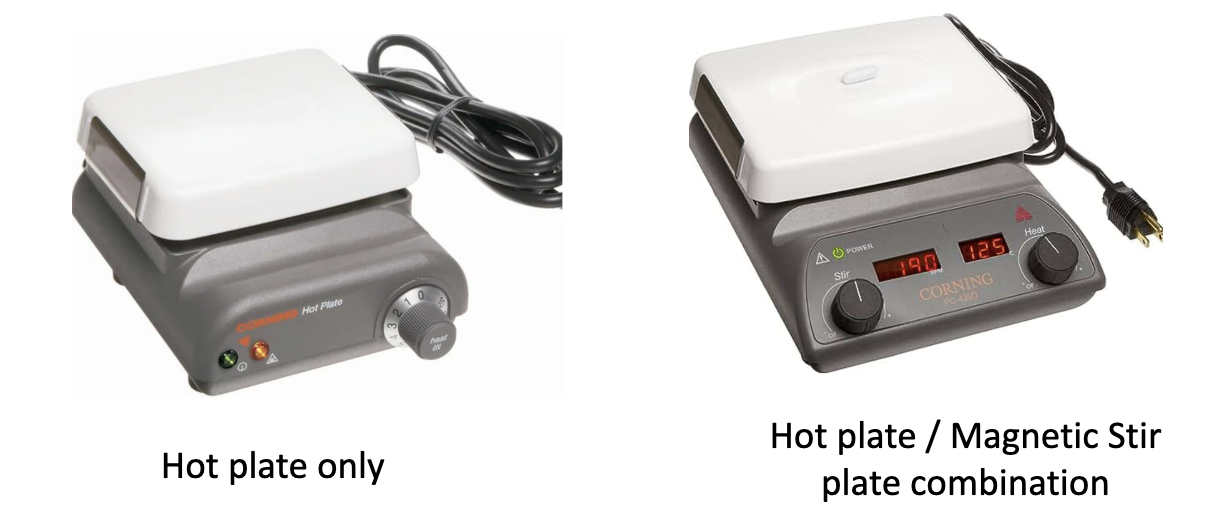
Are used to heat up substances, usually in a beaker or Erlenmeyer flask
• Can come as hot plate only or including a magnetic stirring function
Hot Plates
• There are different sizes that are used to seal test tubes, Erlenmeyer flasks, or other glassware.
• There is a variety that can have different number of holes for inserting of glass tubes or thermometers.
Rubber Stoppers

• Can be red or black tubing.
• Rubber tubing is used to connect glassware to the gas, vacuum or water outlet.
• Important for the use of a Bunsen burner or for suction filtration.
Rubber Tubing
