Ancient Greek Culture, Architecture, Constitutions, and History
 Call Kai
 Learn
Learn Practice Test
 Spaced Repetition
 Match
Match Flashcards
 Knowt Play
1/52

Earn XP
Description and Tags
Vocabulary practice flashcards generated from lecture transcripts on Ancient Greek mythology, temple architecture, constitutions, and Mediterranean history.
Name | Mastery | Learn | Test | Matching | Spaced | Call with Kai | Chat |
|---|
No analytics yet
Send a link to your students to track their progress
53 Terms
Polytheistic
Belief in multiple gods, as practiced by ancient Greeks whose pantheon featured deities governing different domains.
Polis
An ancient Greek city-state that functioned as an independent political and religious community sharing language and culture.
Patron Deity
The primary god or goddess prioritized by a specific polis, such as Athena for Athens and Poseidon for Corinth.
Stylobate
The topmost step of a Greek temple platform that directly supports the columns.
Doric Order
A compact, solid, and plain Greek architectural method stereotypically associated with a masculine aesthetic.
Ionic Order
A taller, slender, and ornate Greek architectural method stereotypically associated with a feminine aesthetic.
Myrmidons
The special soldiers of Achilles mentioned in the Iliad.
Delian League
An alliance led by Athens following the Persian invasions, where member contributions largely benefited Athens and sparked Spartan opposition.
Entasis and Optical Refinements
Deliberate architectural curvatures and imperfect straight lines engineered in Greek temples to correct visual perception or reflect nature.
Pronaos
The entrance porch of a Greek temple, typically located on the eastern end.
Naos / Cella
The main central room of a Greek temple housing the cult statue of the god.
Opisthodomos
The rear porch of a Greek temple, typically functioning as a treasury for valuable objects.
Parthenos
An epithet signifying 'the Virgin' used in the title of Athena Parthenos.
Sacrificial Altar
An outdoor structure positioned outside a Greek temple where public worship and animal sacrifices were performed.
Abacus
A flat slab forming the uppermost part of a column's capital.
Classical Age
The era defined as 479–323 BCE, considered the golden age of Greece and the height of Athenian democracy.
Athenian Office Term Duration
Government office terms in Athens lasting about 35–36 days, resulting in frequent leadership rotation.
Spartan Constitution
A political framework centered on military organization, strict obedience, public virtue, and societal stability over individuality.
Helots
Sparta's unfree, enslaved population who primarily worked on farms and faced systemic, brutal treatment.
Lawgiver
A term designating the initial individual responsible for establishing a formal body of laws for a city-state.
Phoenician Alphabet
The writing system adapted by the Greeks to replace Linear B, which later influenced Latin and Cyrillic scripts.
Enslaved Police in Athens
A public enforcement force in ancient Athens that source materials note was composed of enslaved individuals.
Athenian Women's Legal Status
A legal condition characterized by lack of property ownership, exclusion from voting and political participation, and mandatory guardianship by a male.
Spartan Women's Rights
Legal and social rights in Sparta that afforded women greater property ownership and educational opportunities compared to Athenian women.
Mentorship in Same-Sex Relations
Socially structured same-sex relationships in ancient Greece between older and younger males framed around mentorship.
Levant
The Middle/Near East region examined around 1000 BCE that was home to Phoenicians, Israelites, Philistines, and Assyrians.
Kingdom of Israel Split
The split of the original Kingdom of Israel (founded c. 1050 BCE) around 930 BCE into Northern Israel and Southern Judah.
720 BCE
The year the Northern Kingdom of Israel was conquered by the Assyrian Empire.
586 BCE
The year Judah was conquered by the Babylonians, leading to the destruction of Solomon's Temple.
Babylonian Captivity
The period of exile for Israelites in Babylon following the conquest of Judah and destruction of the Temple, ending in 539 BCE.
Cyrus II (Cyrus the Great)
The Persian king who conquered Babylon in 539 BCE, ended the Babylonian captivity, and allowed Jews to return to Yehud.
Tanakh
The Hebrew Bible, which served as the definitive religious text for ancient Jews.
Achaemenid Empire
The Persian Empire (c.557–330 BCE) noted for administrative efficiency, Zoroastrianism, and broad religious tolerance.
Persian Postal System
An efficient mail relay network using fixed stations and fresh horses that inspired the early United States Postal Service.
Zoroastrianism
The official religion of the Persian Empire that practiced religious tolerance toward conquered subject populations.
Hellenistic Period
The era from 323–30 BCE (from Alexander the Great's death to Cleopatra) marked by the spread and mixing of Greek culture.
Greek Lingua Franca
The status of the Greek language as the international language across the Eastern Mediterranean during the Hellenistic era.
Hellenistic Judaism
A movement reflecting the synthesis of Greek language, education, and culture with Jewish religious practices.
Post-Alexander Imperial Division
The fragmentation of Alexander the Great's empire into Antigonid Greece, Seleucid Persia, and Ptolemaic Egypt following his death in 323 BCE.
Aristotle's Critique of Spartan Government
Flaws highlighted by Aristotle regarding Spartan governance, specifically the lifelong power/infirmity of elders and their vulnerability to bribery.
Philip II
The King of Macedonia who unified most of Greece by 336 BCE before his son Alexander the Great began his conquests.
Linear B
The early syllabic writing system used in Greece prior to the adoption of the Greek alphabet.
Peloponnesian War Victor
Sparta, which defeated Athens in the conflict resulting from resentment over Athenian hegemony in the Delian League.
Pediment
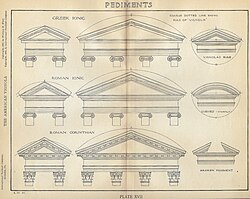
Frieze

Architrave/ epistyle
under frieze

Capital
The topmost part of a column

Column
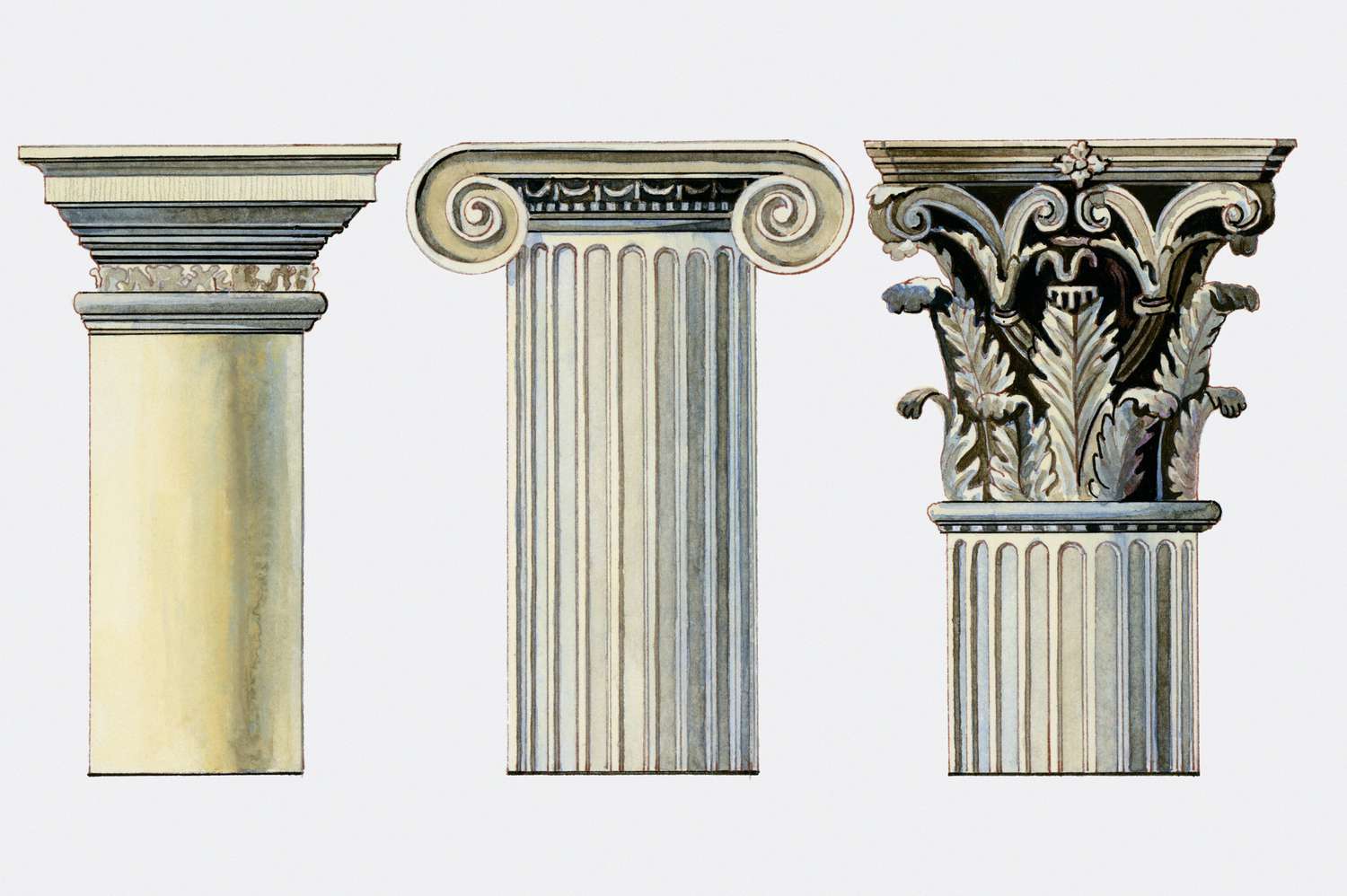
Stylobate
The first step that is connected to the column (or base of it)

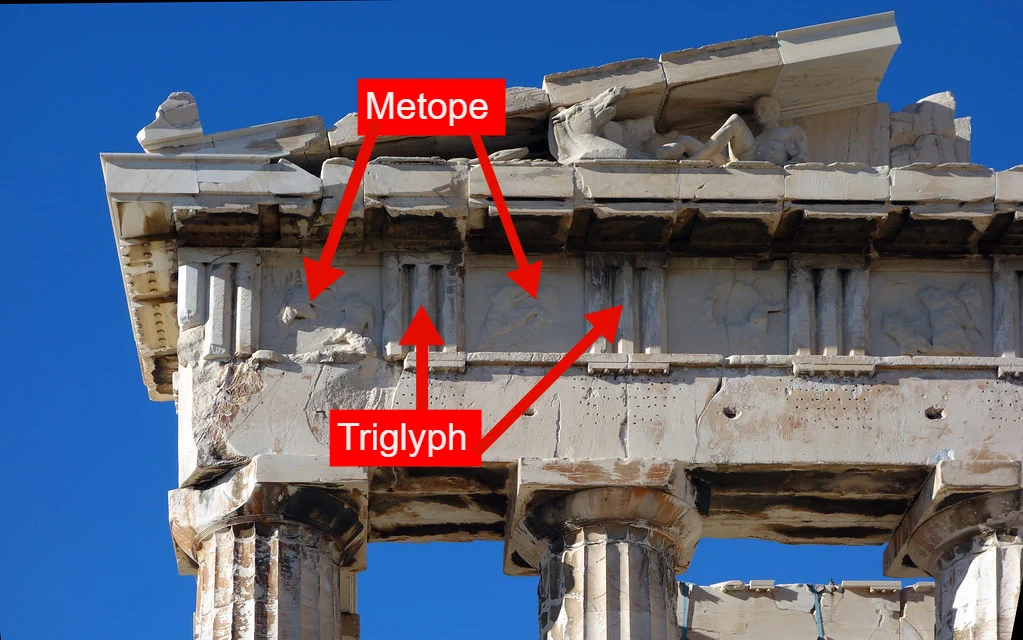
Triglyph and metope
The triglyph is a decorative element in Doric friezes, consisting of three vertical grooves, while the metope is the plain or decorated panel that is situated between triglyphs.
Abacus and Echinus
The abacus is the flat slab that forms the uppermost part of a column capital, while the echinus is the rounded section beneath it. These are elements of doric order temples

Faciae
The faciae are horizontal bands or sections that form part of the architrave in Ionic order temples, right above the columns

Abacus and volutes
The abacus is the flat slab atop a column capital, while volutes are the spiral scrolls that adorn the capitals, particularly in the Ionic order.
