3f03 test 2
 Call Kai
 Learn
 Practice Test
 Spaced Repetition
 Match
 Flashcards
 Knowt Play
1/42

There's no tags or description
Looks like no tags are added yet.
43 Terms
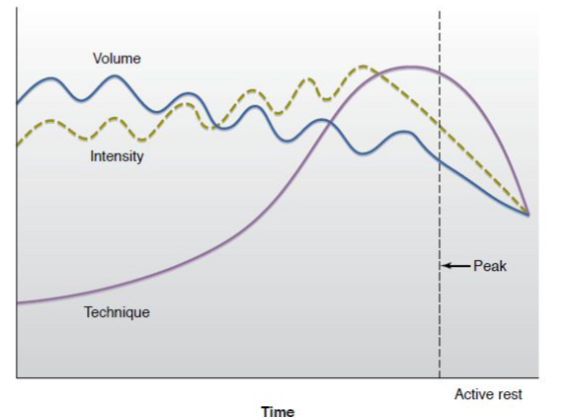
What is periodization, how long long, what periods it contains
periodization requires the application of planned phase and cycles in programming to drive physical and metabolic adaptation improve performance
takes several months to a year (breaking down the year into training blocks)
larger plan for programming (figuring out where you ultimately want to end up)
Periods include: preparatory, competitive, and transition periods

what would the peak in technique and intensity in this curve represent
the peak here could be playoffs
Why do we periodize
prevents performance plateaus
drastically reduce performance decrements
decreases risk of injury
reduces signs and symptoms associated with overtraining
allows coach and staff to be on the same page
balance several components of a team’s monthly t annual plan
plan is fluid and can be adjusted when needed
What are the different cycles within periodization and how long are they
quadrennial cycle- 4+ years
macrocycle- 1 (complete training period)
mesocycle (phase): 3-4 weeks (singular training cycle or block)
microcycle- 1week (unit of a mesocycle)
workouts- hours/minutes (unit of a microcycle)
overview of training phases

What does a general prep phase include in periodization and purpose
high volume of less specialised work which typically lasts 1 to 3 months but may be repeated during a macrocycle
purpose- raise the levels of preparedness to a sport
What does the specific prep phase include in periodization and purpose
relatively high-volume phase in which the exercises selection becomes more specific to the sport performance
purpose- raise the work capacity of the athletes but in a more specific manner than general prep
Name the phases within periodization
general prep
specific prep
competition (in-season)
peaking
transition (active rest)
What does a competition phase include in periodization and purpose
lower volume, higher intensity phase associated with very specific exercise selections
purpose- maintenance of strength/abilities, injury prevention
What does a peaking phase include in periodization and purpose
phase of a climatic sport usually at the end of a mesocycle. usually characterised by lowering volume and either raising or maintaining intensity
purpose: devoted to bringing performance up to maximum levels by dissipating fatigue
What does a transition (active rest) phase include in periodization
period where the athlete recuperates after stressful competition or training to be able to respond optimally to further training
characterized by the absence of traditional training. However it should some activity (ie. sport other than what the athletes is competing in)
What are the variables of periodization
intensity
volume
repetitions
sets
sessions/day
day/weeks
intensity cycle
How does amount of volume, intensity, and technique change through periods
should see progressive variables
however this doesn’t mean just increasing everything

How can periodization help in regards to the adaptation principle
periodization can help facilitate the curve
prevents over training and under training
What are the types of periodization
linear periodization
undulating periodization
multiple adaptations in a program or change is not linear (strength this month, endurance next month, etc.)
allows for multiple peaks
allows for scheduling of a training plan with other aspects involved (practices, school, jobs etc.)
linear periodization plus examples
linear periodization
progression from endurance, strength, power
need a big chunk of training time
progressing towards 1 peak
example
4 week mesocycle
3 summated (loading) microcycles
1 deload microcycle
purpose of dissipating fatigue in the attempt to achieve supercompensation of abilities (ie. strength)
research has found that reduction in volume is the optimal method of achieving deload

undulating periodization
undulating periodization
multiple adaptations in a program or change is not linear (strength this month, endurance next month, etc.)
allows for multiple peaks
allows for scheduling of a training plan with other aspects involved (practices, school, jobs etc.)

what is this an example of
linear periodization, including 3 summating microcyle and 1 deload microcyle
adaptations of periodization
long linear/block
intensity increases within mesocycle, within goal specific range
the training goal will change from one mesocyles to the next; progressing from extensive to intensive workloads (ie. hypertrophy → strength)
extensive - high volumes, low intensity
intensive - low volume, high intensity
of all the methods of periodization, long-linear has the most gradual progression from extensive to intensive workloads. this is beneficial for younger athletes, who may need additional time to adapt to new stimuli

role of a coach and can a player coach relationship can give a coach access to
improve the life and performance of the athlete
results in
trust
hopes and fears
future goals
what re the 5 levels of leadership according to maxwell
position- rights
permission- relationships
production- results
people development- reproduction
pinnacle - respect
it takes years to work up these levels, he thinks he has only reached level 4 once
steps of the coaching process
explain and demonstrate
observe the athlete
identify a priority
cue or provide feedback (either during or after set)
reassess the next attempt
Stages (and details) to consider in motor learning with coaching
cognitive state
learning the task; substantial conscious effort
clear instruction, demonstration, simple cues
associative
refining execution; fewer errors
targeted feedback and specific corrections
autonomous
movement is relatively automatic
focus on outcomes, task demands, and self assessment
overall: know the age, what types of explain/demonstrating makes sense to them
ex. cognitive- visual cues, then transition to auditory cues in associative stage, in the autonomous stage, you are looking for things they haven’t noticed. also in autonomous you could put something on their back so they can actually feel when their bodies start to curve
difference between attention, selective attention and attentional overload
attention: processing information from the environment and from internal thoughts or feelings
selective attention: prioritizing relevant information while filtering out distractions
attentional overload: trying to process too many instructions or stimuli at once
Types of attention
broad external: scanning the environment
does the gym reflect the program you have set up
broad internal: reflecting and developing a strategy
narrow external: focusing on a specific external cue
what do you need to do to execute this specific movement
narrow internal: focusing on a specific internal sensation or though
internal vs. external focus vs. neutral focus
internal focus
primary focus on the body (ex. muscles, joints) and associated movement process (ex. extend hips)
external focus
primary focus on movement outcome (ex. jump high) and associated affect on the environment (ex. push the ground)
neutral focus
no explicit focus (ex. flow state)
internal vs. external cues and examples
internal cue
anything within the body you are trying to focus on
external cue
anything outside the body you are focusing
ex. for a squat
internal: flex at the knee to sit to the ground
external: sit on a chair
in this case the external is easier to do and works together as a whole
the internal cue causes people to hyper fixate on that one movement and forget about the other parts of sitting down/squatting or they may not know what flex means
ex. vertical jump
internal: i want you to extend your hips, knees, and ankles as fast as possible
external: go down as fast as you can and back up trying to hit your head on the ceiling
does internal and external usually end up in higher performance
external focus often ends up in higher performance as it helps the athlete focus on something more understandable
types of feedback and details
concurrent feedback: provided during the movement
terminal feedback: provided after the movement
faded feedback: provide feedback after a series of attempts
learner-determined feedback: allow the athletes to request feedback (helps with trust)
at what points throughout a workout should you provide feedback
during repetition: intervene if an immediate safety or execution concern requires it
after a repetition: give one clear, actionable correction
across sets: look for patterns rather than correcting every minor variation
as the athlete improves: encourage them to assess their own performance
what is red, yellow, green stages of coaching feedback
green: exercises is looking good for the most part, don’t need to say anything at the movement and can let them finish the set. then give summary or faded feedback after
yellow: a couple things going wrong, can give some cues during the exercise, not detrimental
red: full stop, safety, someone is going to get injured, it needs to be stopped
make sure to do it safely
arousal, anxiety, stress
arousal: the athlete’s level of psychological and physiological activation
anxiety: apprehension or worry accompanied by activation
stress: an imbalance between perceived demands and the athlete’s ability to respond when the consequences matter
do you always want to practice at optimal arousal
somteimes you want to practice a bit sub optimal
ex. prepping to compete in louad, hectic arenas
definition of arousal, anxiety, stress
arousal: the athlete’s level of psychological and physiological