APEH Unit 3: Absolutism and Constitutionalism
 Call Kai
 Learn
 Practice Test
 Spaced Repetition
 Match
 Flashcards
1/84

There's no tags or description
Looks like no tags are added yet.
85 Terms
Parliamentary monarchy
A government with a king or queen whose power is limited by the power of a parliament (england)
Absolute Monarchy
A system of government in which the head of state is a hereditary position and the king or queen has almost complete power (France) (really developed bc now monarchs need more money for standing armies and don't want to go through parliament)
Stuarts
(Stuart Dynasty)- the family that ruled England after Queen Elizabeth 1 (Tutor) died with no heir, started with James I of Scotland
King James I
believed in the divine right of kings and feuded with parliament over taxes. thought to have secret catholic sentiments (tried to end war with catholic spain)
Duke of Buckingham
the most influential of King James' favorites; controlled royal patronage and sold title of nobility, angered other nobles
Puritanism
A Calvinist movement that emphasized a personal experience of salvation by Christ; strict moral discipline and purity as the correct form of Christian life; a covenant of obedience to God, who was viewed as absolute sovereign over all; and societal reform, to convert the world to the way of Christ.
King Charles I
the son of James I who alienated the English Parliament (collected taxes without there consent to fight wars with spain) and was beheaded after the English Civil War
Petition of Rights
Parliament forced Charles to sign it to fund his war. Limited the power of Charles I of England. a) could not declare martial law; b) could not collect taxes; c) could not imprison people without cause; d) soldiers could not be housed without consent.
Thomas Wentworth
Lived from, 1593-1641. He was a chief financial advisor of England and imposed strictly efficient administrative centralization in the government. Also had fund-raising to gain revenue for the English state. Earl of Strafford
Archbishop WIlliam Laud
Convinced Charles to impose Anglican episcopacy system on Scotland and make people follow the "book of common prayer". In response the Scots rebelled and Charles was forced to call parliament for funds to put it down, leads to English Civil War.
Short Parliament (1640)
The Parliament that was called by Charles I to address the Scottish rebellion
Disbanded by Charles I when it refused to grant him funds to suppress the Scottish rebellion
Long Parliament (1640-1660)
Parliament who did not trust Charles I, a despotic king with an army, and resisted Charles's religious innovations. This Parliament enacted legislation that limited the power of the monarch and made government without Parliament impossible. It established that it could not be dissolved without its own consent. Parliament also had to meet a minimum of once every three years. Ship money was abolished. Leaders of persecution of Puritans had to be tried and executed. The Star Chamber was abolished. Common law courts were supreme to king's courts. It also refused funds to raise army to defeat Irish revolts. Puritans came to represent the majority in Parliament
January 1642
Charles tries to arrest five prominent members of Parliament as he believed that they were trying to take his power away from him. The five escaped. and the English Civil War began
Militia Ordinance
When Charles I tries to take control of Parliament with military force, hoping the divisions were deep enough to support his actions, Parliament escaped and passed this, allowing them to raise a standing army against him.
Cavaliers
a supporter of King Charles I in the English Civil War (Royalists)
Roundheads
supporters of the Parliament in the English Civil War
New Model Army
The disciplined fighting force of Protestants led by Oliver Cromwell in the English civil war.
January 1649
Trial and execution of Charles I
Protectorate (1653-1658)
The English military dictatorship established by Cromwell following the execution of Charles I
Colonization of Ireland
England struggled to conquer Ireland so they used military conquest, slaughtered civilians, seized land, and introduced English economic practices; described Irish as wild and barbaric
Richard Cromwell
Succeeded his father as Lord Protector when he died in 1658, but was weak and quickly fell from power in 1659.
King Louis XIV
Absolute French monarch who reigned for seventy-two years (1643-1715). During his reign France becomes the standard for culture in Europe.
King Charles II
Restored the monarchy in 1660. Thought to have secret catholic sympathies as he favored religious toleration.
Clarendon Code
Passed by Parliament, these laws imposed penalties for attending non-Anglican services and excluded non-Anglicans from the religious and political life of England
Test Act of 1673
Charles II's Parliament said that only Anglicans could hold military and civil offices (aimed at charles's brother James, parliament didn't want him to be king)
Popish Plot
hysteria over the belief that Charles II's wife was plotting to kill him and put his brother, James, an open Catholic, on the throne
James II
This was the Catholic king of England after Charles II that granted everyone religious freedom and even appointed Roman Catholics to positions in the army and government. Parliament hates him and calls on William of Orange to overthrow him
Glorious Revolution
A reference to the political events of 1688-1689, when James II abdicated his throne and was replaced by his daughter Mary and her husband, Prince William of Orange.
Bill of Rights (England)
The document signed by William and Mary that limited their power as monarchs in England; it stated that the monarch must gain parliamentary approval to pass laws.
Toleration Act
1689 act of British Parliament granting some religious freedoms to non-Anglican Protestants
Act of Settlement (1701)
A law passed by the English Parliament to ensure that no Catholic could sit on the throne. It stated that if Queen Anne died with no surviving children, the throne would go to the German Hannover dynasty, Protestant cousins of the Stuarts. In 1714, George I was crowned the first Hannover monarch of England.
Robert Walpole
Englishman and Whig statesman who (under George I) was effectively the first British prime minister (1676-1745). Under his economic control England flourished.
Universal Monarchy
a political situation in which one state might subordinate all others to its will (opposite of BoP)
Balance of Power
distribution of military and economic power (often through alliances) that prevents any one nation from becoming too strong. developed post 30YW to prevent Louis XIV from taking over. Purpose not to maintain the peace put to preserve independence/liberties of states
Cardinal Richelieu
(1585-1642) Minister to Louis XIII. His three point plan (1. Break the power of the nobility, 2. Humble the House of Austria, 3. Control the Protestants) helped to send France on the road to absolute monarchy.
Cardinal Mazarin
This was the man who served under Cardinal Richelieu and laid the foundations for Louis XIV's expansionist policies
The Fronde
a french noble rebellion that was caused by Mazarin's attempt to increase royal revenue and expand state bureaucracy, caused Louis XIV to distrust the state and turn to absolutism
The Restoration
the period of Charles II's rule over England, after the collapse of Oliver Cromwell's government
Ways in which Louis XIV consolidated power
- Appointed no chief minister (people have to criticize him directly)
- ruled through councils
- makes sure nobles benefit from hir rule
- limits power of Paris Parliament
- Propaganda/grandeur
- versailles
- religious unity (only catholicism, suppresses jansenism)
Jansenism
A branch of Catholicism which resembled Protestantism. Emphasized need for God's grace in achieving salvation and the importance of original sin. Louis XIV took special actions to restrict the rights of this group and force them underground.
Jacques-Benigne Bossuet
Catholic priest who was a strong advocator for Divine right of kings. Meaning that a king was chosen by God to rule. Disobey, and then disobey. Only had God to obey.
Dutch Golden Age
A period of Dutch History (1600s ) in which The Dutch Republic dominated world trade and used that wealth to become the world's center for arts and sciences.
Religious tolerance allowed the republic to flourish (economically and intellectually)
However, they were a seafaring power, NOT a military power. France will emerge in this era as the dominant military power.
Hugo Grotius
He tried to prove that such a thing as a natural law existed and that states were bound by it, first to propose the concept of a "united nations" and believed war should be outlawed. Wrote Law of War and Peace
Baruch Spinoza
1632-1677; philosopher from the Netherlands; excommunicated from Jewish synagogue; pantheist/monist who denied the possibilty of revealed religion and inspiration of scripture; believed all governments to be unjust
Dutch lens grinders
Christian Huygens
Dutch physicist who proposed the wave theory of light
Anna Maria van Schurman
(1607-1678), A German-Dutch painter, engraver, poet and scholar. She was a highly educated woman by the seventeenth century standards. She argued for the education of women in The Learned Maid or Whether a Maid May Be a Scholar (1638)
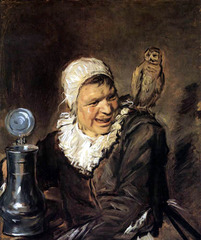
Frans Hals
Portraits of common people (Malle Babbe)
Jan Vermeer
Dutch painter renowned for his use of light and painted everyday scenes (1632-1675) (The milkmaid)

Rembrandt
Dutch painter, who painted portraits of wealthy middle-class merchants and used sharp contrasts of light and shadow to draw attention to his focus (The Anatomy Lesson of Dr. Nicolaes Tulp)

Peter Paul Rubens
is the most famous Baroque artist who studied Michelangelo in Italy and took that Renaissance style to the next level of drama, motion, color, religion and animation, which is portrayed in his paintings. Very baroque and catholic (The Elevation of the Cross)

Arminianism
16th century theology (named after its founder Jacobus Arminius) that opposes the absolute predestinarianism of John Calvin and holds that human free will is compatible with God's sovereignty (prominent in religiously tolerant Dutch Republic)
Dutch West India Company
(1621-1794) Trading company chartered by the Dutch government to conduct its merchants' trade in the Americas and Africa.
Manhattan
Dutch settlement, super economically sucessful
Afrikaners
South Africans descended from Dutch and French settlers of the seventeenth century. Their Great Trek founded new settler colonies in the nineteenth century. Though a minority among South Africans, they held political power after 1910.
Bank of Amsterdam
This innovative bank regulated the exchange rates of different currencies in Amsterdam, which helped stabilize the chaos that resulted from trading many different coins. Having a system minimized things like dishonesty and quickly fluctuating preferences when traders/merchants exchanged currency. Allows checking for first time. Becomes financial center of Europe until the French Rev.
Dutch Government
Each province had a stadtholder, but most provinces usually elected the Prince of Orange in emergencies. Normally the burghers ran the government, keeping Holland decentralized.
Navigation Acts
Says that goods must be imported to England on English ships or ships of the country exporting the goods. Dutch had gotten rich off of shipping for Spain, England, France and more, view this as a direct attack on their economic existence. Leads to Anglo-Dutch Wars
Anglo-Dutch Wars
Three indecisive wars between the British and the Dutch, 1652-1674, England annexed the Dutch colony of New Amsterdam to become New York
Franco-Dutch War
The second war Louis raged in an attempt to take the Spanish Netherlands (for his spanish wife Maria Theresa), English and Dutch align against France but later England goes back to France. France was opposed by Austria, Brandenburg, Denmark, and the United Dutch Republic. Ends with the Treaty of Nimwegen in 1678.
Stadholder
The executive officer in each of the United Provinces of the Netherlands, a position often held by the princes of Orange. William of Orange tries to use it to consolidate his govt but doesn't work, Dutch republic remains decentralized.
War of Devolution
A war between Spain and France over a claim to the Spanish Belgian provinces.
Treaty of Aix-la-Chapelle (1668)
between Louis and Triple Alliance, Louis agreed to peace, gained control of certain towns bordering Spanish Netherlands, ended War of Devolution
Treaty of Dover (1670)
alliance between England and France by which Charles II promised to convert to Catholicism in return for funds from France
Treaty of Nijmegen (1678)
forced the French to stop their ambitions against Holland but the French took the rich province of Franche-Comte from Spain, brought France to Switzerland's border but Durch preserve their boarders.
League of Augsburg
This was a military alliance that was created in 1689 by all of the major European nations except for France. The purpose of the alliance was to prevent France from dominating Europe.
9 Years War
France vs league of Augsburg, ended by Peace of Ryswick
Peace of Ryswick
the secured the borders of Holland and ended Louis XIV's expansion into Germany
Wars of Spanish Succession
Charles II dies, Louis XIV's grandson Philip V of Spain inherits throne, threat to balance of power. England, Holland, and HRE (Grand Alliance) vs France and Spain. Begins in 1701, ends in 1713 with Peace of Utrecht and Rastatt
Peace of Utrecht (1713) and Peace of Rastatt (1714)
The pact concluding the War of the Spanish Succession, forbidding the union of France with Spain, and conferring control of Gibraltar on England. Louis recognises the right of the house of Hanover to the English throne
Wars of Austrian Succession
A war that lasted from 1740-1748 that resulted from Fredrick the Great taking Silesia, an Austrian territory. Other countries wanted in on Silesia, causing a conflict to begin.
Treaty of Aix-la-Chapelle (1748)
This was the treaty that ended the War of Austrian Succession by giving the Prussians Silesia, taking land away from Maria Theresa, but still allowing her to rule
1st Partition of Poland
1772: Weak Poland; loses 30% of land and 50% of population to Russia, Prussia, and Austria
Reasons for HRE's decline
- destroyed by 30 years war
- divided religiously by the Treaty of Westphalia
- only held together by religion before
- didn't expand economically (no sea trade or colonies)
- very decentralized, many different states
Reasons for Ottoman Empire's decline
- lag behind militarily with new tech
- failed to unite people culturally
- extraterritorial rights
- seen as brutal by racist Christian Europe
- fended off by Central Europe, end of their expansion
Peter the Great
(1672-1725) Russian tsar (r. 1689-1725). He enthusiastically introduced Western languages and technologies to the Russian elite, moving the capital from Moscow to the new city of St. Petersburg.
Holy Synod
The replacement Peter the Great created for the office of Patriarch of the Russian Orthodox Church. It was a "bureaucracy of laymen under his supervision."
Austrian Empire
After the defeat of the Turks in 1687 Austria took control of all of Hungary, Transylvania, Croatia, and Slovenia, thus establishing the Austrian Empire in southeastern Europe. It remained a collection of territories held together by the Habsburg emperor, who was archduke of Austria, king of Bohemia, and king of Hungary.
Pragmatic Sanction
Issued by Charles VI of Austria in 1713 to assure his daughter Maria Theresa gained the throne. Habsburgs maintain their power. Prussia gains Selesia
Prussian Empire
The culmination of Brandenburg, Prussia, and various German states along the Rhine river. MILITARISM
Frederick III
1st king of Prussia (1688-1713) whose title indicated the growing importance of Prussia
Junkers
Members of the Prussian landed aristocracy, a class formerly associated with political reaction and militarism.
2nd Partition of Poland
1793: Prussia and Russia take more Polish land
3rd Partition of Poland
1795: Austria, Russia, and Prussia take last of Poland and it ceases to exist as an independent nation
Reasons for Poland's decline
- New republic as of 1569 ----> lack of cultural unity (religious and national divisions)
- decentralized government, nobility hold too much power
- ineffective diet (liberum veto can explode diet)
- can't raise taxes
- kept electing foreigners