PP Ex 4
 Call Kai
 Learn
 Practice Test
 Spaced Repetition
 Match
 Flashcards
 Knowt Play
1/85

There's no tags or description
Looks like no tags are added yet.
86 Terms
How do plants primarily absorb nitrogen
(nitrate) NO3- and ammonium (NH4+)
What does a deficiency in nitrogen cause
chlorosis, reduced growth, and premature leaf senescence
What happens during mineralization, in the soil
microbes convert organic N to NH4+
What happens during nitrification in the soil
oxidation of NH4+ to NO2- and then NO3-
What is the transporter for Nitrate (NO3-)
NRT1/ NPF and NRT2
What is the transporter for Ammonium (NH4+)
AMT
What do H+ ATPases generate
proton gradients that drive activve uptake
Once absorbed N is assimilated
it is stored in vacuoles or transported to shoots
What happens to nitrate before it is incoperated into amino acids
it is reduced to nitrite
How is Nitrate catalyzed
by nitrate reductase (NR) in the cytosol, using NADH
How is NR activity regulated
nitrate induces
light increases
metabolic status modulates
How is nitrite reduced
by nitrite reductase (NiR) into ammonium (NH4+) by using reduced ferredoxin (6 e-) as the electron donor
Where does nitrite get reduced at
in chloroplasts or other plastids
Nitrite is rapidly metabolized as its accumilation is what
toxic
How is ammonium absorbed
via AMT proteins (ammonnium transporter)
What internal sources also produce ammonium
NO3- reduction
photorespiration
protein turnover
Ammonium is assimilated directly into organic
N
What can excess NH4+ disrupt
pH
ion balance
metabolism
What keeps free NH4+ low
rapid assimilation and keeping it low is called cellular homeostasis
What are the two different AMT transporters
AMT1: High-affinity uptake of NH4+ from soil
AMT2: transport and distribution within the plant
How is ammonium assimilated
the GS-GOGAT pathway
What is GS
Glutamine synthetase: adds NH4+ to glutamate to form glutamine
What is GOGAT
glutamate synthase: transfers N from glutamine to 2-oxoglutarate, regenerating glutamate
Glutamate and glutamine are major nitrogen donors for
amino acid biosynthesis
What are amniotransferases
enzyme that transfers amino groups to carbon skeletons, producing other amino acids
What are asparagine(Asn) and glutamine (Gln)
key nitrogen transport and storage compounds
During senescencce, nitrogen is remobilized from
older leaves to seeds and young organs
What is BNF
Biological Nitrogen Fixation: microbial process that converts atmospheric N2 to ammonia (NH3/NH4+) that plants can use
Who perfoms BNF
specialized prokaryotes
ex: rhizobium
How does BNF occur
symbiotic
associateive
free-living
How does BNF reaction happen
with nitrogenase
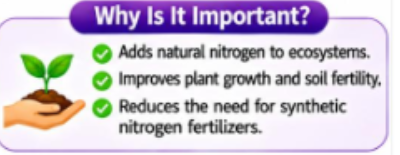
Why is BNF importnat
What does nitrogenase do
converts atmospheric N2 to NH3
requires ATP and electrons
What does the nitrogenase complex have
Fe protein (electron donor)
MoFe protein (reduces N2
How does the environment regulate Nitrogen assimilation and fixation
by light, nutrients, water, temp, and soil pH
What is the seed coat
protects the embryo from physical damage and stress
What is the embryo
embryonic root (radicle), shoot (plumule), and cotyledons
What is the endosperm
stores nutrients or supports embryo development
What is the cotyledon
store or absorb nutrients during germination
When does seed development begin
after fertilization
What is embrogenesis
establishment of embryonic organs and body plan
What is reserve accumulation
storage of carbs, proteins, and lipids
What is maturation drying
water content decreases in many orthodox seeds
Mature seeds aquire desiccation tolerance and prepare for
dormancy or germnination
What is starch’s function
major carb reserve in ceral grains
what are lipid’ function
concentrated energy reserves in oilseeds
What are proteins’ function
supply amino acids and nitrogen for seedling development
When are reserves mobilized
after germination begins
What does reserve compostion influence
seed quality and seedling growth
What do LEA proteins and protective sugars do
stabilize cellular structures
What do antioxidants do
help reduce oxidative damage
What are orthodox seeds
tolerate drying and store well
What are recalcitrant seeds
sensitive to drying and difficult to store
What is needed for seed longevity
low moisture content
cool temp
low oxygen
no premature germination
What is physical dormancy
water-impermeable seed coat
What is physiological dormancy
internal hormonal and physiological constraints
high ABA
low GA
What is morphological dormancy
embryo requires further development
What are the 5 dormancy breaking mechanisms
afier-ripening
cold stratification
scarification
light exposure
hormonal change
What is after ripening
dry storage reduces physiological dormancy
What is cold-stratification
moist chilling releases dormancy
What is scarification
disrupts water-impermeavle seed coats
w/ abrasions, acid, heat
What is light exposure
light regulates germination in photoblastic seeds
What does decreased ABA and increased GA promote
dormancy release and germination
What are the 3 phases of seed germination
rapid imibition
lag phase
radicle emergence
What is rapid imbibition
water uptake and membrane reorganization
What is lag phase
metabolic activtion, DNA repair, and enzyme synthesis
What is radicle emergence
renewed water uptake and embryo growth