Protists
 Note
Note Call Kai
 Learn
Learn Practice Test
 Spaced Repetition
 Match
Match Flashcards
 Knowt Play
1/9

There's no tags or description
Looks like no tags are added yet.
Name | Mastery | Learn | Test | Matching | Spaced | Call with Kai | Chat |
|---|
No analytics yet
Send a link to your students to track their progress
10 Terms
Protists
Diverse group of eukaryotic microorganisms with widespread distribution, medical uses, and significant roles in the food chain.
Van Leeuwenhoek
Scientist who first observed protists in pond water, leading to their discovery.
Last Eukaryotic Common Ancestor (LECA)
The protist that is the common ancestor of all eukaryotic organisms.
Red Algae
Multicellular protists with economic importance, often found in marine environments and used in products like agar and sushi.
Green Algae
Protists with over 7,000 species, some of which are unicellular, filamentous, or multicellular, and are thought to be ancestral to plants.
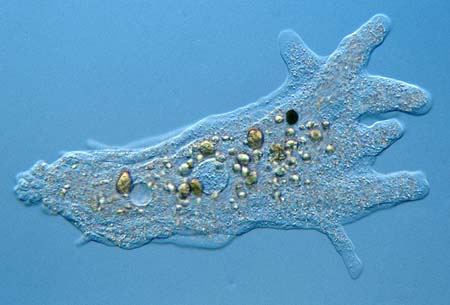
Amoebae
Protists that move and ingest food using pseudopods, including species like Entamoeba Histolytica and Naegleria Fowleri.
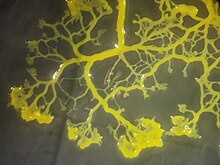
Slime Moulds
Protists that can be plasmodial or cellular, exhibiting behaviors like forming chemical trails and altruistic actions.
Malaria
Disease caused by Plasmodium parasites, transmitted by mosquitoes, with different species like Falciparum, Vivax, Malariae, and Ovale affecting humans.
Immune Cells
Cells like T-cells, macrophages, and neutrophils that work together to identify and destroy pathogens in the body.
Antigenic Variation
Strategy used by pathogens like Plasmodium to evade immune destruction by changing surface proteins, leading to challenges in vaccine development.