162 Ch 9: Musculoskeletal System: Part 1
 Call Kai
 Learn
 Practice Test
 Spaced Repetition
 Match
 Flashcards
 Knowt Play
1/38

There's no tags or description
Looks like no tags are added yet.
39 Terms
axial skeleton
the skull, certebral column, sacrum, ribs, and sternum compose the ___
pelvic curvature (curve)
made up of the sacrum and the coccyx

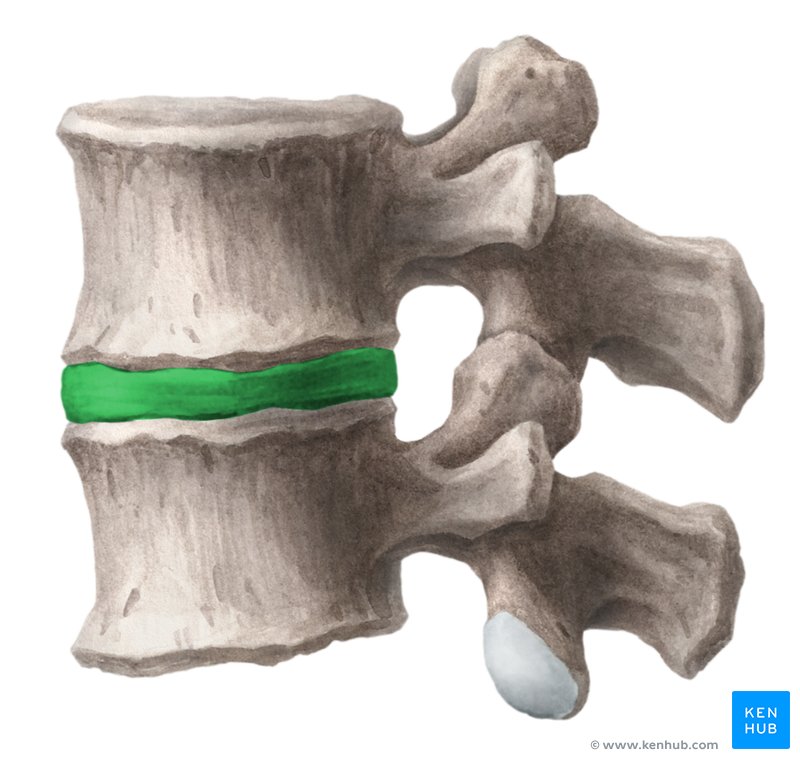
intervertebral disc
these discs of CT separate the bodies of every vertebra and reduce friction as the vertebrae move. They also assist in absorbing shock; however, the curves mentioned aboe are much more effective as shock absorbers
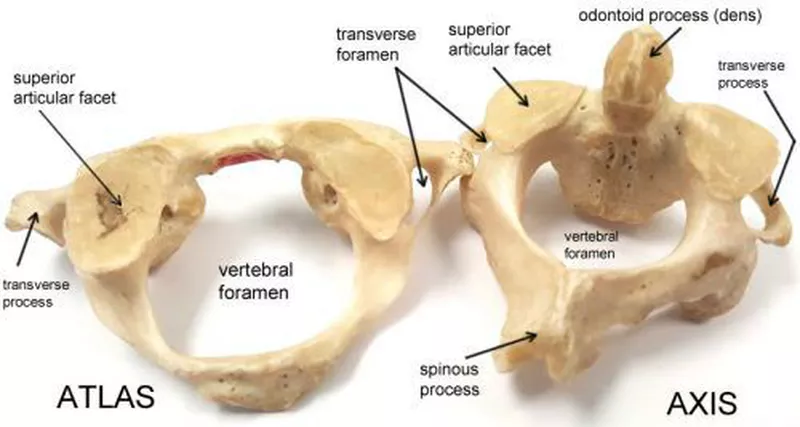
atlas
the first of the cervical vertebrae. It articulates with the skull superiorly and the axis inferiorly. The atlas supports your skull.
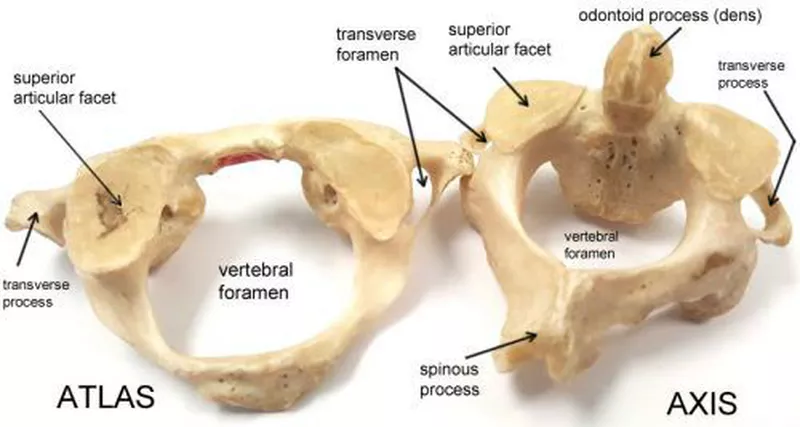
axis
the second cervical vertebrae. This ___ allows your to shake your head back and forth. In other words, the __ allows your head to move along an axis
body
found on all vertebrae except the atlas. The __ transmits weight down the bodies of the vertebrae

superior articular process
these are the bony projections that point superiorly to articulate with the vertebrae above. The surfaces where the two bones physically articulate are called the facets

inferior articular process
these are bony projections that point inferiorly to articulate with vertebrae below. The surfaces where the two bones physically articulate are also called the facets

transverse process
this is the bony region that extends laterally from the body

spinous process
this is the somewhat sharp projection that extends posteriorly, opposite from the body of the vertebra

vertebral arch
the transverse and spinous process arise from this bony arch. The opening formed by the vertebral body and arch is the vertebral foramen. All of the vertebral foramina will line up together and form a long tube called the vertebral (spinal) canal. The nerves of the spinal cord run through the vertebral canal.

rib (coastal) facets
on thoracic vertebrae, ____ can be found on the body and on the transverse processes. Like other articular surfaces, they are covered with articular cartilage and appear smooth in real bone

body (sacrum)
the __ is the main thick medial region of the sacrum. Picture where the bodies of the five fused vertebraw would be-these form the body of the sacrum
median sacral crest
the __ is formed from the spinous processes of the fused vertebrae

sacral canal
the passageway which corresponds with the vertebral canal

auricular surface
on the lateral surfaces of the sacrum, this forms the joint between the sacrum and the ilium

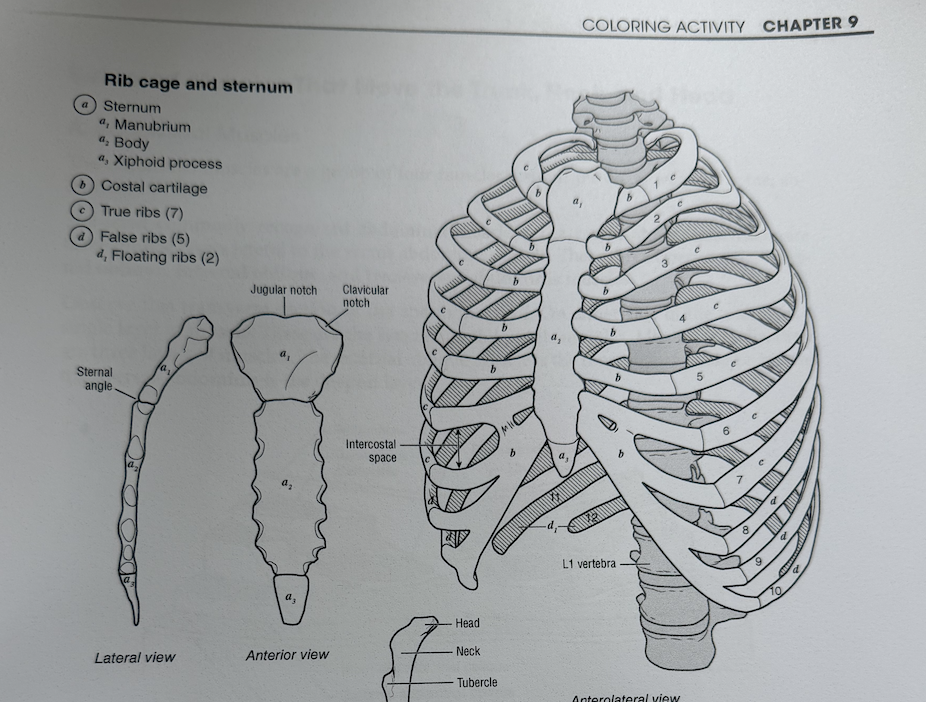
ribs
twelve pairs of ___ that articulate with the thoracic vertebrae
true ribs
#1-7 because they articulate directly with the sternum via coastal cartilage
false ribs
#8-12 because they either articulate with the sternum indirectly (8-10) or not at all (11 &12)
floating ribs
11&12
head
the articular facet on the head of each rib articulated medially with the rib facets of the throacic vertebrae

tubercle
the small bumpy ridge is found just distal to the head
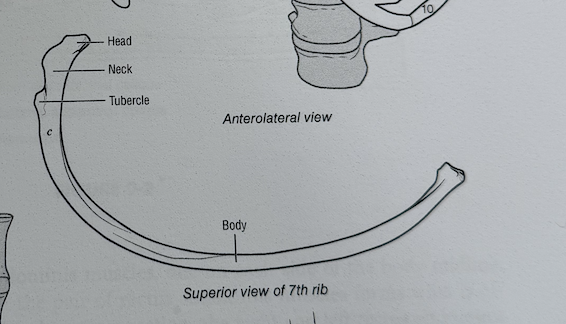
body (rib)
the main part of the rib distal to the neck

angle
just distal to the tubercle, the rib makes a sharp bend.

body (sternum)
this is the large middle portion of the sternum

sternum
sometimes called the “breast bone”. Articulated with the true rubs, and tiogether, they protect the heart and lungs

facets
this is where the coastal cartilage associated with the ribs articulate

manubrium
this is the upper part of the sternum

xiphoid process
this projection can be found inferior to the body of the sternum
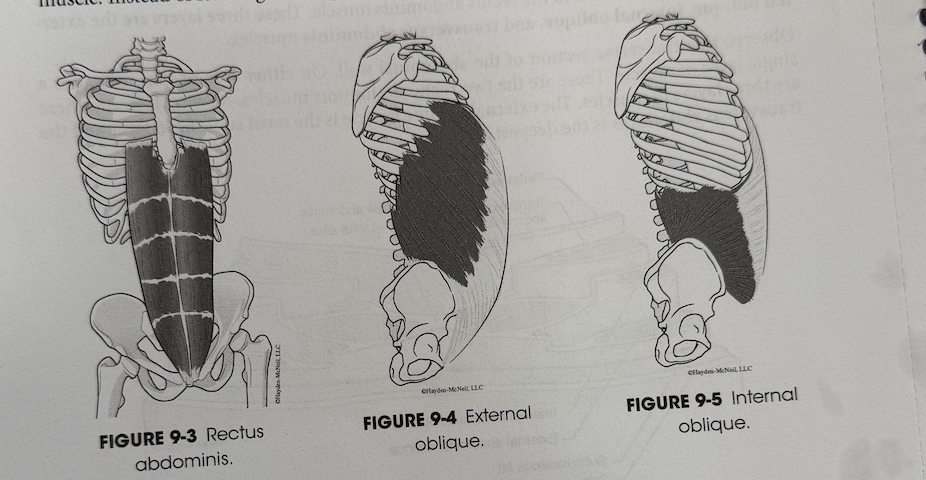
rectus abdominis
most commonly recognized abdominal muscle
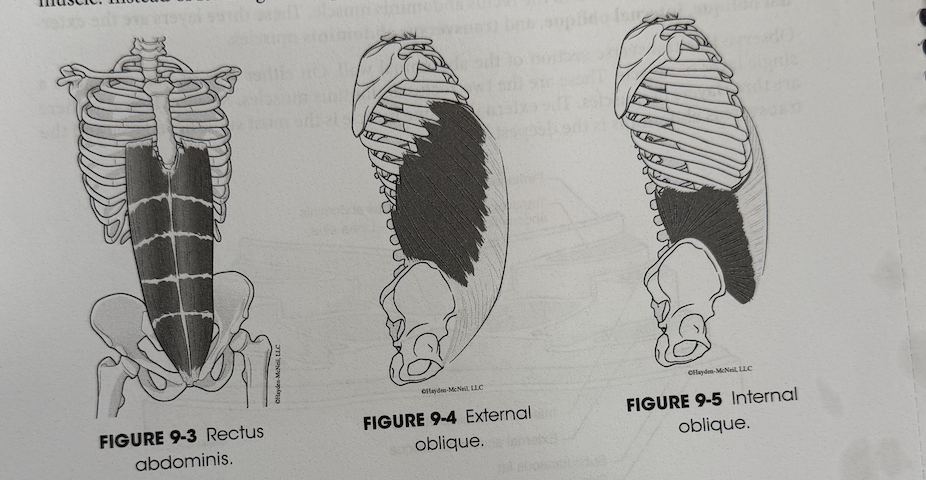
external oblique muscle
2nd in pic
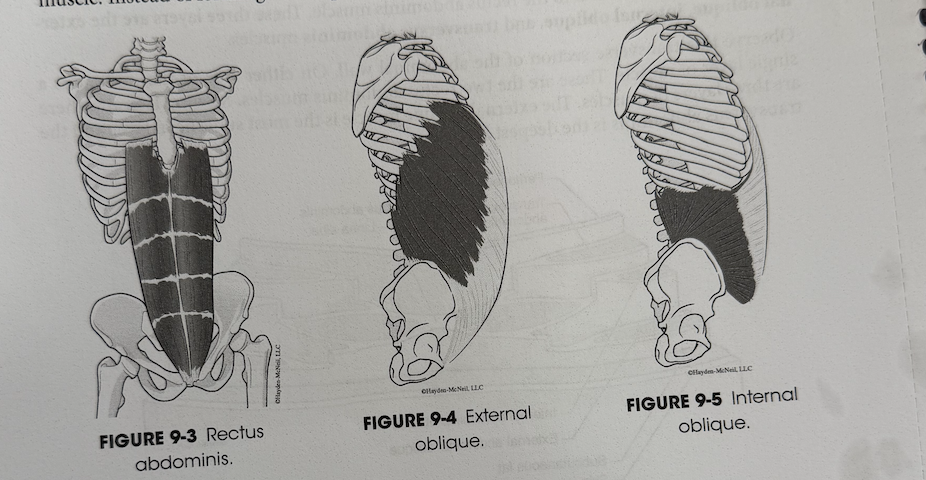
internal oblique muscle
3rd in pic
transversus abdominis muscle
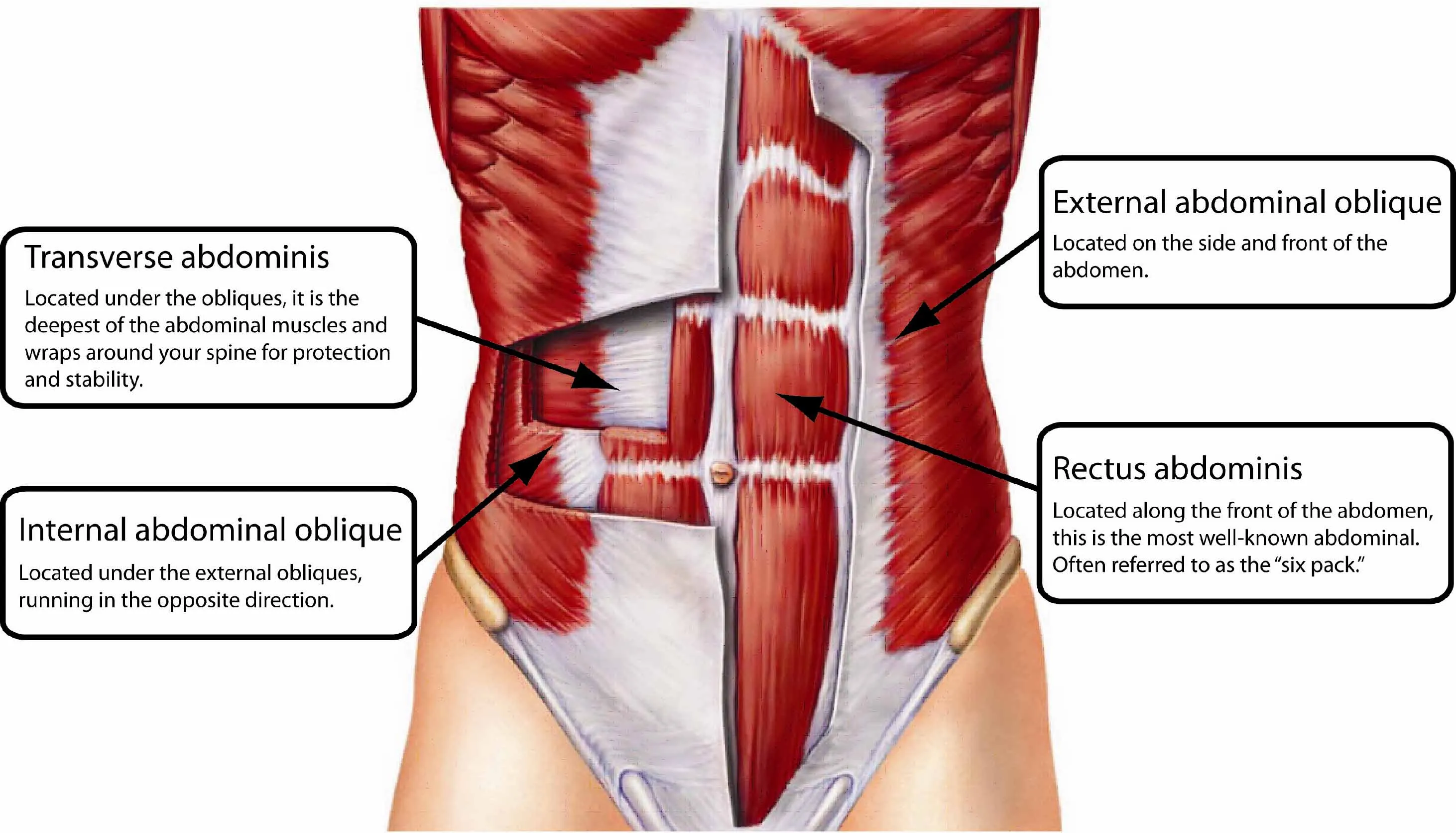
linea alba
the right and left rectus abdominis muscles are connected by a strong column of CT called ___

external intercostal muscles
the fibers of ___ run on either side of your chest from superior-lateral to inferior-medial
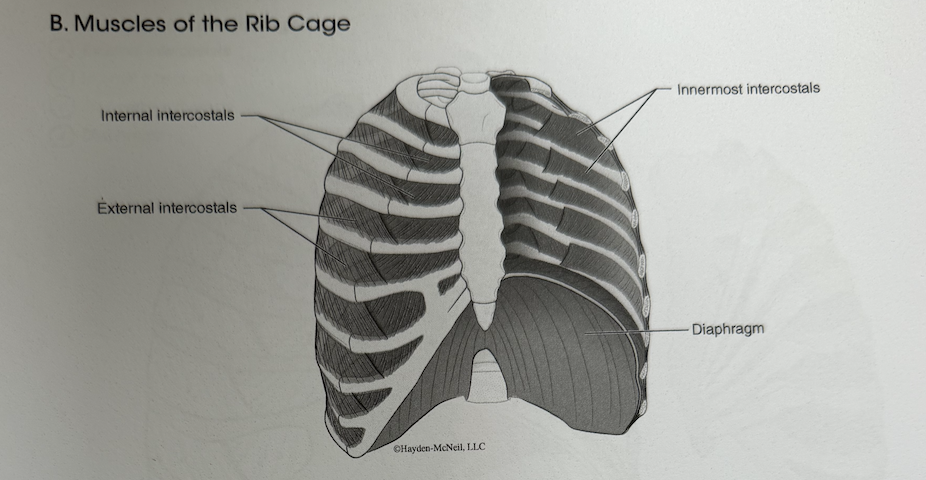
internal intercostal muscles
whose fibers run on either side of your chest like an A shape, from superior-medial to inferior-lateral

innermost intercostal muscles
whose fibers line the inside of your chest and run superior-inferior

diaphragm
the dome shaped muscle responsible for increasing the volume of your thoracic cavity to help you inhale

sternocleidmastoid
moves the head and neck
