Art Hist Unit 1 (Ch 1,2 & 3)
 Call Kai
 Learn
Learn Practice Test
 Spaced Repetition
 Match
Match Flashcards
 Knowt Play
1/27

There's no tags or description
Looks like no tags are added yet.
Name | Mastery | Learn | Test | Matching | Spaced | Call with Kai | Chat |
|---|
No analytics yet
Send a link to your students to track their progress
28 Terms

Uruk vase
made of alabaster, goddess was Inanna, from Sumerian period in uruk city, has agriculture scenes engraved on it, found in a temple as a offering to Inanna for good crops.

Votive figures
Sumerian period, comes in various sizes, image dedicated to the gods, were of ppl who offered or donated to the temple and were facing the god. Were inscribed with cuneiform- the first deciperable language
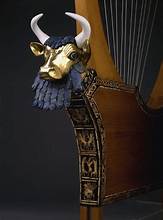
Great Lyre with Bulls head
buried with a woman but was not in her tomb-she was likely sacrificed to play the lyre for the person in the tomb, very decorative and elaborate, made of wood but bulls head is silver and gold with a lapis beard, eyes made of bithumin (a black tar material), inscribed with a pictorial narrative to tell story of celebration of death made of inlaid shell, Sumerian period

Cylinder seal
lapis carving/stamp used to seal and sign something, this one is a combat scene of animals-showing power of the signer

Standart of Ur
a box with an unknown purpose but thought a commemorative piece that shows scenes of a battle, the important figure is larger showing hierarchic scale, box made of wood, lapis, stone, and shell

Head of Akkadian
most likely of Sargon who takes over the Sumerians and adopts their language and temples, first ever bronze cast found, eyes were destroyed and someone tried to destroy the face but couldnt, sumerian period

Stele of Naram-Sin
Naram is saigon ‘s grandson, piece is about his military feats, found in babylonia, cuneioform on relief-adopted sum language, shows more body definition on important person to show power, 3 suns to represent shamash god

Votive statue of Gudea
prince/govenor gudea of lagash, ruled by urmanu, gudea did more, he was distraught by the temple’s destruction from conflict so rebuilt them and dedicated them to geshtiana (interpreter of dreams), made of diorite

Human Headed Lamasu (lion and bull)
guarded the entrance to palace and city, built into wall with 5 legs to look realistic from every angle, made to intimidate, combined 3 powerful animals (lion, bird, man) to display power, head of human royalty to associate power
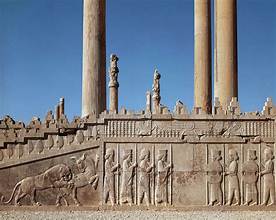
Audience hall of Darius and Xerces
raised and walled city, walls made of alabaster and reliefs, often painted or guilted, on each side of steps is images of Assyrian king and his family, made of limestone

Lion-Human
made of ivory, first sign of imagination, neolithic period, show of power, found in germany

wall painting with horses, rhinos, and aurorchs Panel of Horses
chauvet cave, painted with hair or moss brushes and ochre or charcoal, looks like a herd of animals stampeeding, effort to create perspective and shading, layers of several paintings, some of the best perserved cave paintings, found in france by 4 guys rock repelling, upper paleolithic per

spotted horses and human hands
at pech merle cave, based on real life experiences, upper paleo per, hand prints done by chewing and blowing charcoal or ochre,

stonehenge
megalithic per, in england, deteriorated by time, built in phases of inner and outer circle, there is woodhenge abt a mile away to live in, thought to be religous temple, t shaped pillars

Human figure
found in jordan from neolithic per, unreal hands and feet, fired lime plaster, inlaid eyes, gender roles

Bison- Le Tuc d’Audobert
found in a french cave, found in a hard to reach cave by a father and his sons, upper paleo per, subtr relief, location visited over and over by artists, animals center of cave art world

Figures of a man and a woman
to decor living spaces, rep gender roles, clay used for function and decor, holes in head to put straw as hair, neolithic per,

gold scepters
often found in respected tombs, ppl used metals to decor before used as tools, starts bronze age, neolithic per
woman from willendorf
upper paleo period, by the nomads, stone and ochre

judgement of hunefer before osiris
late kingdom, reps shift in belief system from everyone goes to afterlife to judged for afterlife, heart is weighed against a feather, set of scrolls to tell about your life (book of the dead)-is expensive to do, sales tactic for burial, if heart heavy-eaten by maat (eater of the dead), if pass-introduced to osirus, natron used to mummify, lotus reps upper egypt

temple of ramses
new kingdom, buried in temple and looted quickly, 4 large ramses sculptures and one small of his wife, depicton of ra and horace together, baboon figures to represent rising sun, wife’s tomb Nefertani is small and cheap paintings with one of her offering to isis

funerary mask of tutankhamun
tut hated realism style, mummy was rushed, this is the inner most layer of his coffin, piles of stuff in his tomb, elaborate tomb, new kingdom

akhenaten and his family
sunken relief, still heirarchtic scale but liked to show personability, first piece where ruler embraces child, seen as caring, sun at top for ra, new kingdom

colossal figure of akhenaten
firm beliver of only worshipping ra, changes religon to monotheistc, changes city to be named after him, changes his figure to appear more human an therefore personable, amarna pyramid, new kingdom

Narmer palette
nermer controlls upper then lower egypt-first time egypt under one rule, used to grind pigment only in middle circle, found in temple, needed pigment for makeup, ink, and dyes, bands of symbology, made of shist, bull headed protection god and narmer wearing crown of upper egypt while beheading a man, papyrus from lower egypt, predinastic period

heshepsut kneeling&funerary temple
inside funerary complex, she depicts herself as male-ish to appear powerful, offering jars in hand, dies of natural causes, stepson despises her and tries to destory her memory, majority of rulers buried in complex, queen isnt buried here-she is moved, lined with spynx and murr trees, temples dediated to Anubis and hawthor

Khafre
falcon on back of his neck to protect him -horus, stone was rare and brought from far down nile river, lion paw on throne to represent power, pap and lotus on side to represent uniting upper and lower egypt, made of diorite, most personal tomb, used to know whose tomb it was, osirus headress
Giza and its pyramids
old kingdom→first 10 ruling families, 3 pyr for 3 sucsessing kings (kufu, kahfre, and meneprac), pyramid gleamed from limestone coating over bricks, believed sent to afterlife via nile river so each pyramid has a walkway leading to nile, made false paths and entries to trick looters, sphinx in front of kahfre’s pyramid