final lbbbion
 Call Kai
 Learn
Learn Practice Test
 Spaced Repetition
 Match
Match Flashcards
 Knowt Play
1/219

There's no tags or description
Looks like no tags are added yet.
Name | Mastery | Learn | Test | Matching | Spaced | Call with Kai | Chat |
|---|
No analytics yet
Send a link to your students to track their progress
220 Terms
Base
Stand that supports the microscope
Pillar
A short piece of metal that supports the microscope. it attaches to one end of the base
Handle or arm
Used for holding the microscope
Inclination screw
Tilting the microscope
Body tube
Holds dust shield and nosepiece
Ocular tube/draw tube
Upper end of the body tube that bears the eyepiece or ocular lens
Revolving nosepiece
Permits the shifting of the objective lenses
Dust shield
Above the nosepiece to protect objective lenses
Coarse adjustment knob
Adjusts LPO in focusing
Fine adjustment knob
Delicate focusing in HPO and OIO
Stage
Where slides are placed
Mirror rack
Found below stage and attached to the pillar; holds the mirror in place
10x
Eyepiece magnification
10x
LPO magnification
4x
Scanner magnification
40x
HPO magnification
100x
OIO magnification
diaphragm
Below the stage; regulates entry of light
Iris, plate, fan
Types of diaphragms
Condenser
Lens found immediately below the nose of the stage; concentrates light rays on the specimen
Function of a field diaphragm
Also known as Iris diaphragm; regulates entry of light in the condenser
Gives higher resolution prevents blurs
Why use oil in OIO?
Scanner lens in place
Lower stage
Turn off light source
How to store the microscope?
Inverted
View in the microscope
No, it moves in the OPPOSITE direction
Does the view in the microscope move to the left if you move the slide to the left?
As magnification increases, field of view decreases
Relationship between magnification and field of view
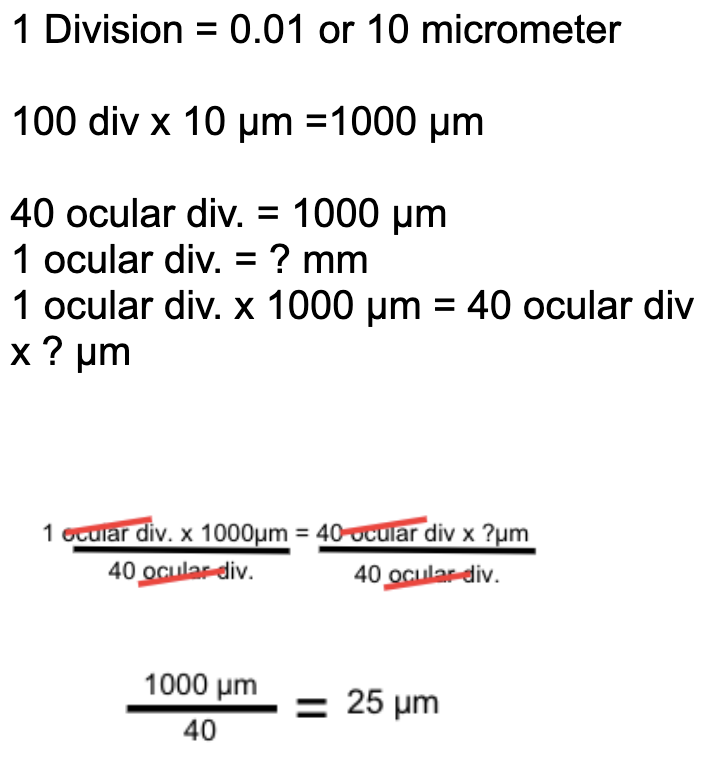
How to calibrate the scanner lens using the stage micrometer
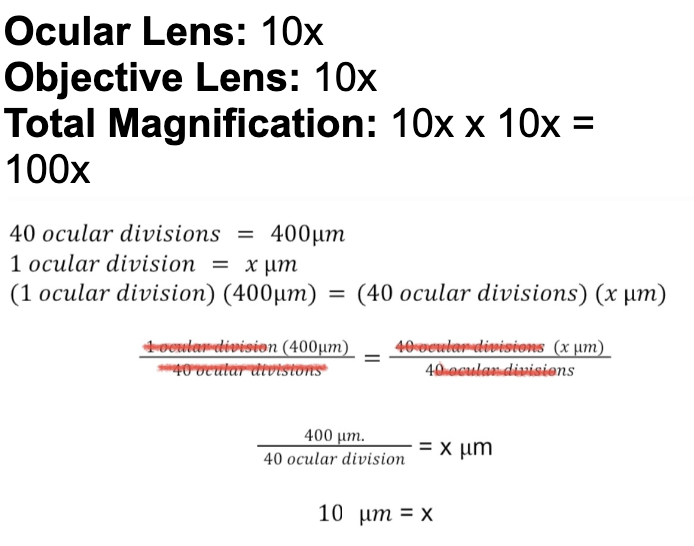
How to calibrate the LPO using the stage micrometer
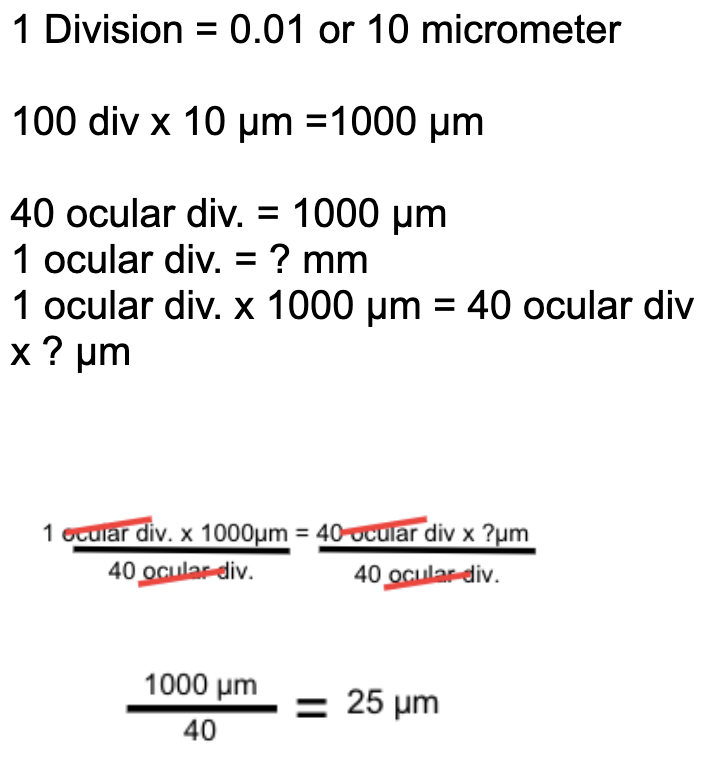
How to calibrate the HPO using the stage micrometer
Size = field of view (in mm)/number of cells across
How to calculate the size of the cell without a stage micrometer?
Size of drawing/actual size
How to compute the magnification of drawing from the size of the drawing and its actual size?
Magnification: small objects are seemingly larger
Resolution: ability to distinguish two objects from each other
Contrast: lightness or colorless or transparent specimens relative to the darkness in the background
Compare magnification, contrast, and resolution
[(fresh weight - dry weight)/fresh weight] x 100
How to compute for the percent water or moisture
[(dry weight - ash weight)/fresh weight] x 100
How to compute for percent organic matter
(actual weight / fresh weight) x 100
How to compute for percent inorganic matter
These results can be important in various fields of plant science, including agriculture, nutrition, and environmental studies, as they provide insights into the composition of living plants and their nutritional content.
Why determine the percent composition of water, organic and inorganic constituents in a living plant?
To determine the presence of reducing sugars.
What is the Benedict’s test used for?
The type of sugar that acts as the reducing agent and can effectively donate electrons to some other molecule by oxidizing it. All monosaccharides and some disaccharides are reducing sugars
What are reducing sugars?
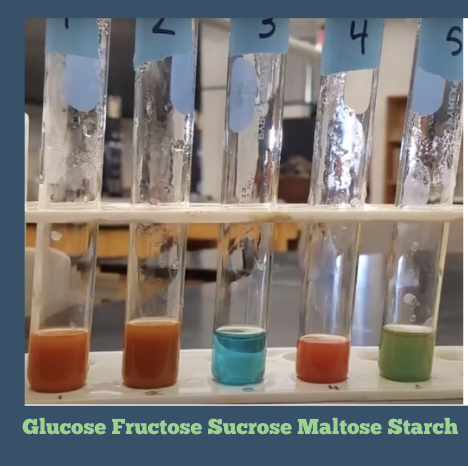
Glucose, fructose, maltose, and very low/faint positive result for starch
What sugars in the experiment exhibited a positive result for the Benedict’s test?
The "hotter" the final color of the reagent, the higher the concentration of reducing sugar. In general, blue to blue-green or yellow-green is negative, yellowish to bright yellow is a moderate positive, and bright orange is a very strong positive
How to interpret Benedict’s test results
Monosaccharides
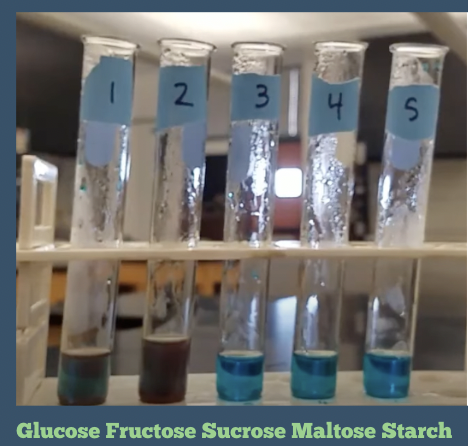
What does the Barfoed’s test assess?
Dark red precipitate formed
What hints at a positive result for the Barfoed’s test?
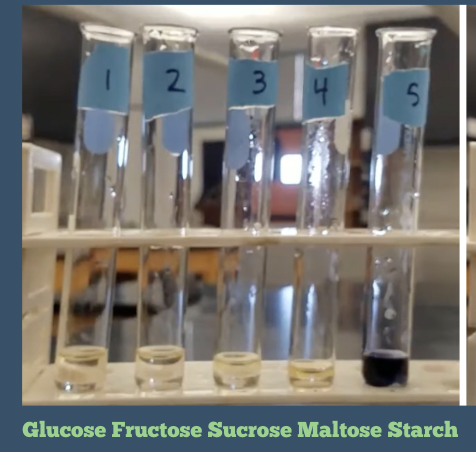
The presence of starch
What does the Iodine test prove?
Dark blue in color
What signifies a positive result for the Iodine test?
The Biuret Test
What tests the presence of proteins?
Pink/purple/pink-purple hue from light blue color
What signifies a positive result for the Biuret test?
Iodine Test
What is the test for starch?
Increases validity and accuracy by having other experts in the field review your paper
Why is peer-reviewing necessary in scientific papers?
Dark blue color from its transparent state
What signifies a positive result for the Iodine test?
Yes, since milk contains protein
Will evaporated milk test positive in the Biuret test?
No, because these are amino acids, not proteins
Will tryptophan and phenylalanine test positive for the Biuret test?
Used to detect the presence of lipids within substances
What does the lipid test (residue test) assess?
No, since glycerol is an alcohol. It may be important in the formation of lipids, but is not a lipid in itself
Will glycerol test positive for the residue test?
Glucose
Fructose
Maltose
Which of these is positive? (Benedict’s Test)
Glucose
Fructose
Which of these is positive? (Barfoed’s Test)
Starch
Which of these is positive? (Iodine Test)
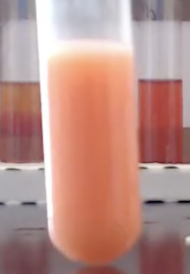
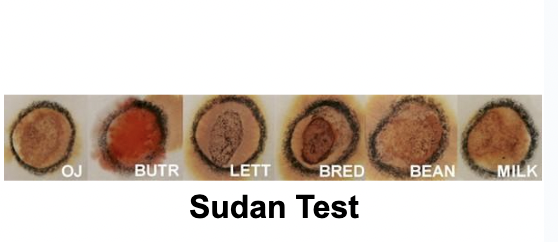
If it contains lipids
Sudan Test is for what?
Yes, the fat is incorporated and mixed well in the solution
Is this positive? (Sudan Test)
Yes, it clearly split into separate layers
Is this a positive result for Sudan Test?
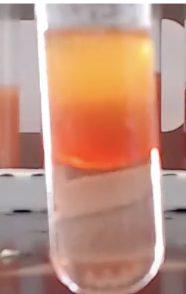
All
Which are positive?
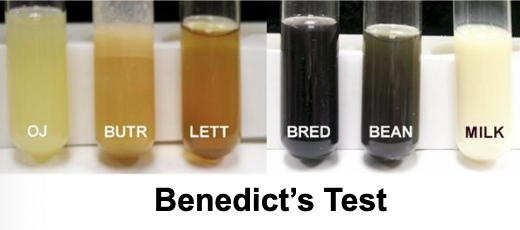
Almond butter, beans
Which are positive?
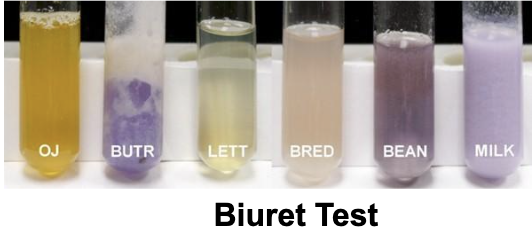
Bread, beans
Which are positive?
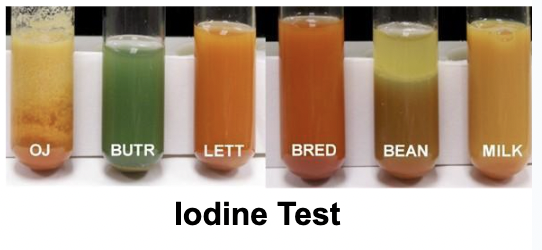
All
Which are positive?
Robert Hooke studied the cork under a microscope, where he named it as “cells” after he noticed how they resembled the cells that monks used to reside in
How did the cell came to be?
Cell wall
Rigid structure that supports the cell
Cellulose, pectin, hemicellulose, and. glycoproteins
The cell wall is made up of what?
Cytoplasm is__________
a gel-like mixture that fills the cell, excluding the nucleus
it is surrounded by the cell membrane
Nucleus
This contains the genetic information of the cell
Increases contrast
Why is staining important?
Increases resolution
Why is adding oil in OIO important?
Nucleolus
Creates rRNA to make ribosome and sends mRNA to the ribosome for protein synthesis
Structural proteins
What helps maintain the cell wall’s structure and shape?
Plasmodesmata
Threads of cytoplasm that passes through cell walls of adjacent cells; enables communication between adjacent cells
Middle Lamella
What glues cells together and is made of calcium and magnesium pectates?
Phospholipid bilayer that has a fluid mosaic model
Structure of the cell membrane
Cell walls
What prevents the cell from bursting due to pressure?
Selective permeability/semi-permeable
Permeability of the plasma membrane
Functions of the plasma membrane
Transport of molecules
Maintains cell homeostasis
Sends and receives signals to/from other cells
Gases (such as O2 and CO2), hydrophobic molecules (such as benzene), and small polar but uncharged molecules (such as H2O and ethanol) are able to diffuse across the plasma membrane
What kind of molecules does the plasma membrane allow to pass through?
Plastids
Contain photosynthetic pigments
Responsible for the production of food within plant cells (photosynthesis), storage of products like starch, and synthesis of many classes of molecules
Needed as cellular building blocks and/or for the function of the plant
Chloroplast
Kind of plastid that has the main function of photosynthesis.
chlorophyll
Green color of chloroplasts come from ________
300 chloroplasts
How many chloroplasts can plant cells hold?
Cyclosis
Circular movement of organelles around the vacuole which can be counter or clockwise; enables better exchange of materials around the cell
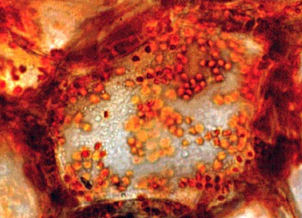
Chromoplasts
Oblong-like bodies that hold carotenoid pigments that exude a bright yellow, orange, or red color
Responsible for signaling other organisms in the environment when it’s ripe or ready to pollinate
Leukoplasts
These do not contain photosynthetic pigments and is often found in plants or parts of plants that require storage for materials
Vacuoles
Organelles that store water, pigment, salt, ions, and nutrients that maintain homeostasis
Tonoplast — largest fluid-filled organelle; facilitate uphill transport of many ions and other materials, making their concentration higher in vacuole than cytoplasm
Vacuoles are surrounded by what membrane? What is its function?
crystals; crystal idioblasts
_______ are materials that are made of calcium oxalate or calcium carbonate found in the vacuoles of specialized cells called __________
Function of crystals
Protecting plants from herbivores, calcium regulation, and metal detoxification
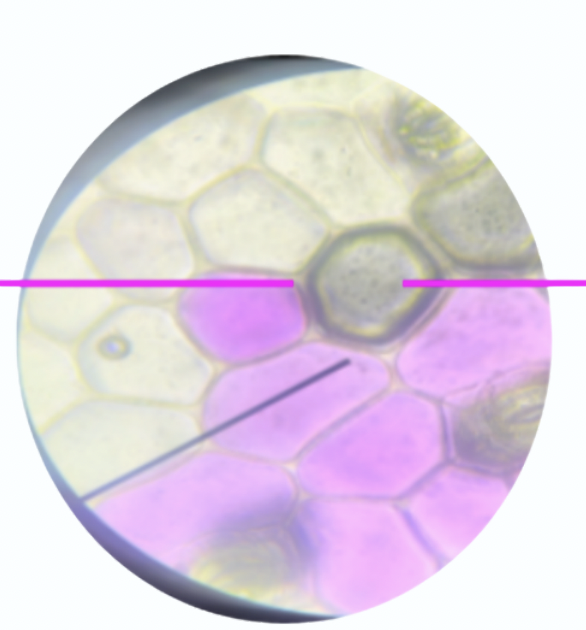
Vacuole
What organelle is the pink line pointing at?
Druse in Portulaca and Begonia
star-like in shape, mechanical irritants in toxic plants that regulate calcium and protect against herbivores
Give the crystal name and its description
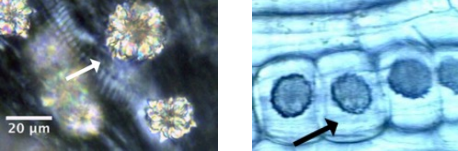
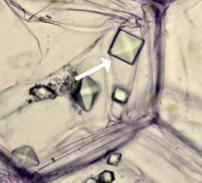
Prismatic in Tradescantia
diamond in shape; protects against herbivores
caterpillars exhibit feeding aversion for plants with these crystals
Give the crystal name and its description
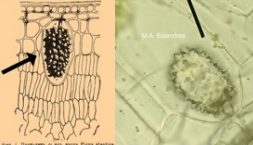
Cystolith in Ficus
Grape cluster; occurs at a peg grown from the lithocyst wall
calcium regulation
Give the crystal name and its description
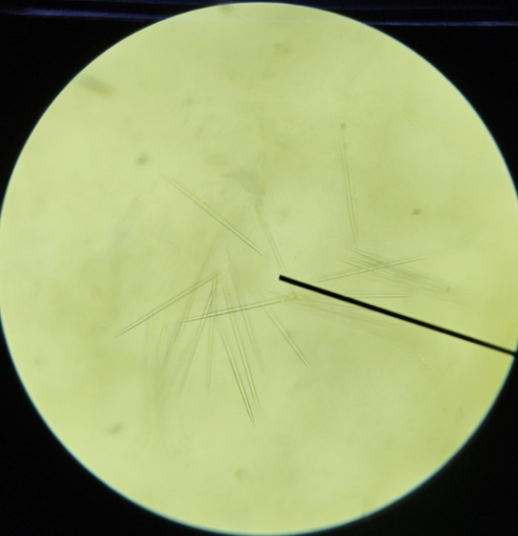
Raphide in Sanseviera
needle-like; defenses against herbivores that leave tears in their throat or esophagus
Give the crystal name and its description
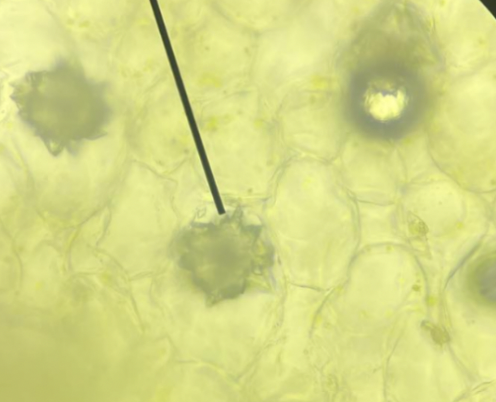
Rosette
star-like; functions in protection against herbivores
Give the crystal name and its description
Parenchyma cell/tissue
Collenchyma cell/tissue
Sclerenchyma cell/tissue
What are the types of fundamental plant tissue types?
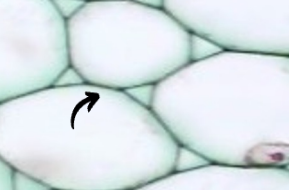
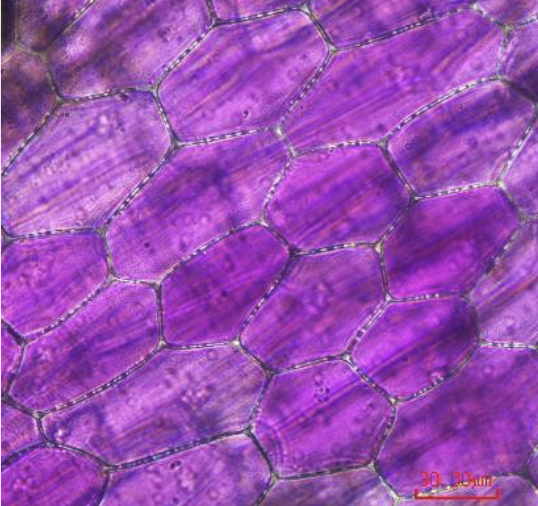
Plasmodesmata
What can be seen in this?
Dermal
Ground
Vascular
General plant tissue types based on location and function:
Type of simple permanent tissue that can divide at maturity and help regenerate and heal wounds
thin cell walls, loosely arranged, circular outline
Parenchyma cells