Biology Lab Practical #1 (Topics 1-7)
 Call Kai
 Learn
Learn Practice Test
 Spaced Repetition
 Match
Match Flashcards
 Knowt Play
1/126

There's no tags or description
Looks like no tags are added yet.
Name | Mastery | Learn | Test | Matching | Spaced | Call with Kai | Chat |
|---|
No analytics yet
Send a link to your students to track their progress
127 Terms
What is a hypothesis?
A proposed explanation, based on observations and assumptions; “educated guesses” that attempt to answer scientific questions
List a good characteristic for a sound scientific hypothesis.
Hypotheses must be falsifiable (or testable); they must be able to be proven false using the scientific method.
Can a hypothesis be proven?
No, they cannot be proven true, but can be accepted if they are not proven false as evidence is gathered over timeH₀
What is a null hypothesis?
“H₀,” a hypothesis that determines that there is no relationship between two or more variables
What is the difference between an observation and an inference?
Observations are what you see; Inferences are taking what you see and know and making an educated guess
What are the steps in the scientific method?
1.) Observation
2.) Question
3.) Hypothesis
4.) Test (experiment)
5.) Evaluate (analyze) results
List a logical hypothesis about Stanleya smithii
If Stanleya smithii is selenium tolerant then Stanleya smithii will grow in soil that is rich in selenium.
What were the independent variables for the experiment with Stanleya smithii?
the soil (selenium concentration, 0 or 100 ppm)
What were the dependent variables for the experiment with Stanleya smithii?
plant growth/biomass
List two nuisance variables.
Placement, Texture, genetic variability
A scientist is testing the effects of temperature on enzyme activity. The enzymes are incubated at each of three different temperatures (25 ºC, 37 ºC, and 50 ºC) for 10 minutes and enzyme activity is assayed immediately following incubation.
(A) Appropriate Negative Control temperature?
0°C (Freezing); Enzymes shut down
A scientist is testing the effect of light intensity on photosynthetic rate. The rate is measured as a function of oxygen evolution at three different light intensities (low, medium, and high) over a 30 minute period.
(B) Light intensity appropriate negative control?
No light/dark
C) What would be an appropriate negative experimental control for Stanleya smithii?
no selenium (0 ppm)
C) What would be a good positive experimental control for Stanleya smithii?
selenium (100 ppm)
C) What are the experimental treatments for Stanleya smithii?
a plant that's selenium tolerant (selenium soil/no selenium soil, or both 0 and 100 ppm)

What is the approximate age of male drivers for which the number of traffic fatalities in 2000 was 500? (Note the line crosses 500 twice, so there should be two ages.)
Ages 18 and 22

About how many more fatalities occurred in 20 year-old females than in 50 year-old females?
100 more fatalities
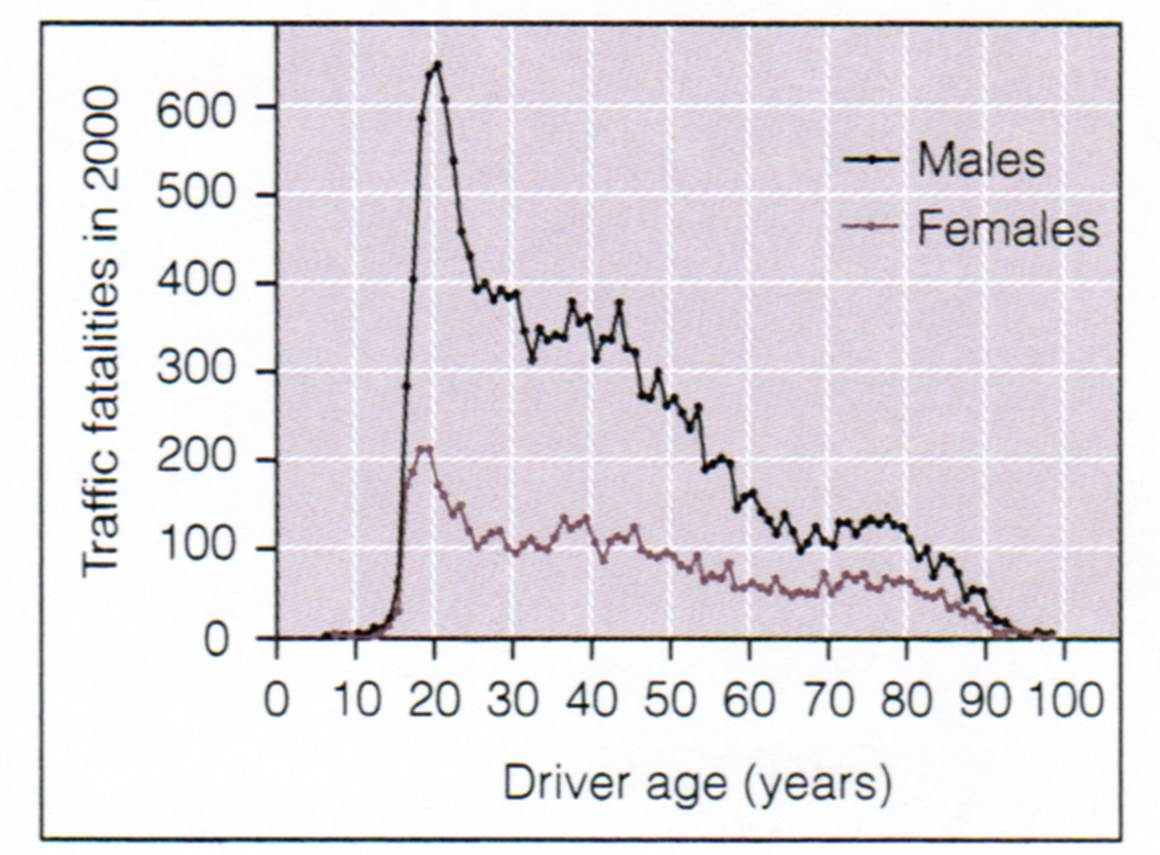
In what age interval is the number of traffic fatalities for males about four times that of females?
Age 30
In what age interval does the number of traffic fatalities show the greatest decline in both males and females?
20s

In which year was the difference in obesity in men and women the greatest? What was the percent difference in that year?
2000s, around 10%

In which two years was the percent obesity in men about the same? What was the percent obesity for those years?
1970s and 1980s; Around 13%
What is the difference between a line graph and a bar graph and when to use each?
-Line graphs are used to present continuous variables. (illustrates the rise and fall in the values of a variable over the range of values)
-Bar graphs are used to indicate quantities that are in specific or discrete categories.
How to identify independent and dependent variables using a graph only?
-Independent is along the x-axis (floor)
-Dependent is along the y-axis (height)
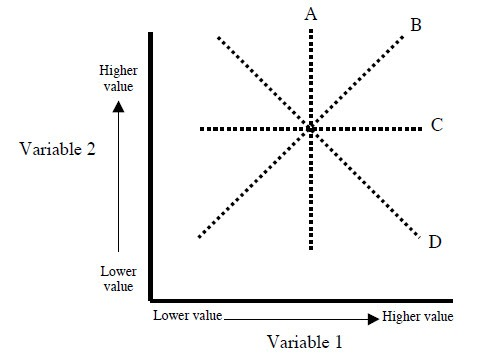
What are direct and indirect relationships in graphs? (Proportional and inversely proportional relationships)
-Proportional: as variable 1 increases, variable 2 also increases by a proportional amount. ex.) line b
-Inverse: as variable 1 increases, variable 2 decreases (and vice versa) by a proportional amount ex.) line d

What are the independent and dependent variables in the Stanleya smithii experiment
-Independent, x-axis: Selenium concentration (0-100 ppm)
-Dependent, y-axis: Seeding/biomass

Based on the bar chart you created, what do these data suggest about selenium tolerance in Stanleya smithii?
Stanleya smithii is selenium tolerant, meaning it will grow in soil rich in selenium.

Does Stanleya smithii look similar to the positive or negative control?
It looks similar to the positive control.
Traffic accidents vs. Driver's age in 2018 could be graphed doing a line graph.
True; A line graph is suitable because it displays how the frequency of accidents changes continuously across an ordered progression of driver ages.
The number of predators and the number of prey are directly proportional.
False; Number of prey is usually higher than number of predators
"Do people who are moral live longer that those who aren't?" is a good scientific question.
False
Soil selenium concentration would be the ______.
Independent Variable
_________ is information that is gathered strictly through the senses without any attempt at interpretation.
Observation
Genetic differences among seedlings would be a(n) ________.
Nuisance Variable
Seedling growth would be a(n) ____________________.
Dependent Variable
Grades and time spend studying would be directly proportional.
True
What is the first step in the Scientific Method?
Observation
The number of computers in each of the buildings on campus would be best represented by a line graph.
False; Campus buildings = separate categories; bar graph would be better to use

Identify the parts of a compound light microscope
1.) Eyepiece lens (looks like binoculars)
2.) Arm
3.) On/off switch (Power switch)
4.) Light intensity (small knob under power switch)
5.) Fine focus (smaller knob, increases detail of specimen)
6.) Coarse focus (Big knob, increases general focus of specimen)
7.) Stage controls (knobs move stage left and right or up and down)
8.) Iris diaphragm (under condenser, bigger piece)
9.) Condenser (connects to iris diaphragm)
10.) Base
11.) Stage
12.) Objective lens (3-4 little tubular things, range from 4x to 100x)
13.) Nosepiece (Attached to objectives; rotates to switch objective lenses)

Know how to calculate the total magnification of the compound light microscope, know the objective names, magnifications, and color bands (the chart on the handout and in lab book) as well as the magnification of the eyepiece or ocular
To calculate total magnification, multiply ocular magnification by objective magnification
1.) Scan - Red (ocular 10x) (objective 4x) (total magnification 40x)
2.) Low Power- Yellow (ocular 10x) (objective 10x) ( total magnification 100x)
3.) High Power- Blue (ocular 10x) (objective 40x) (total magnification 400x)
What happens to the field of view and light as the magnification increases?(Inversely proportional relationship)
The field for view decreases
When to use a compound light microscope versus a stereoscopic microscope and what the advantages and disadvantages are for each?
-A compound microscope is generally used to view very small specimens or objects that you couldn't normally see with the naked eye. (Easy to use, but the magnifying power is limited)
-A stereo microscope is generally used to inspect larger objects such as small mechanical pieces, minerals, insects, and more. (Can provide a 3D view but is very expensive)
What does an electron microscope use for energy vs. a compound microscope?
electron microscope uses a beam of electrons to magnify the image of an object while visible light is used in light microscopes to magnify images of tiny areas of materials or biological specimens
How do you recognize a picture of something magnified using an electron microscope?
Usually in grayscale (no color)
Which of these has a much higher magnification potential? (Electron microscope or compound)
Electron microscope has higher magnification potential.

What are the organelles unique to a eukaryotic plant cell?
-Central vacuole
-Chloroplast
-Rigid cell wall
-Plasmodesmata

What are the organelles unique to a eukaryotic animal cell?
-Centrioles (look like cut in half Twizzlers)

What organelles do both plant and animal cells have?
-Plasma membrane
-Nucleus
-Rough and Smooth Endoplasmic Reticulum
-Golgi body (weird goop)
-Ribosome (dots)
-Cytoskeleton
-Mitochondrion (bean shaped things)

What is the difference between Granum and Stroma in the chloroplast?
Both are in the chloroplast
-Granum = stacked areas with chlorophyll
-Stroma = general liquid area

What is the difference between the mitochondrial matrix and the cristae in the mitochondria?
Both are located in the mitochondrion
-Matrix = general fluid area
-Cristae = in-folded membranes
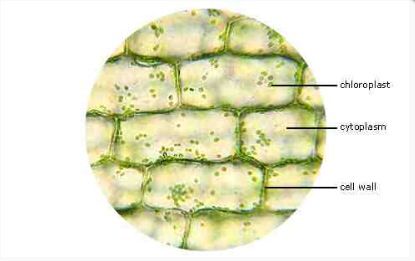
Parts of the Elodea leaf cell
-Cell wall (boundary containing a cell)
-Plasma membrane (not the cell wall, but close to it)
-Chloroplast (little dots, being surrounded by cytoplasm)
What is cyclosis streaming?
Cyclosis is when the chloroplasts of some cells in Elodea are moving around the periphery of the cell in a circular fashion (Prefix cyclo-, think of circle or bicycle moving)
-Movement is called cyclosis or, Cytoplasmic streaming

What is plasmolysis and when it happens?
the clumping of cell cytoplasm and organelles as a result of dehydration
(when added 10% NaCl solution or salt - very hypertonic)
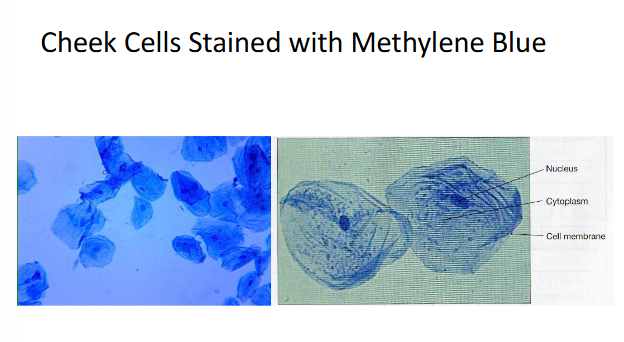
Parts of cheek cell (stained by methylene blue)
-Plasma membrane
-Nucleus (dark, big spot)
-Cytoplasm (fluid inside cell that holds other organelles)
Plasmolysis is the streaming of the chloroplasts that normally occurs in plant cells.
False; it is Cyclosis
What is the total magnification of an object when viewed using the low power objective?
100X
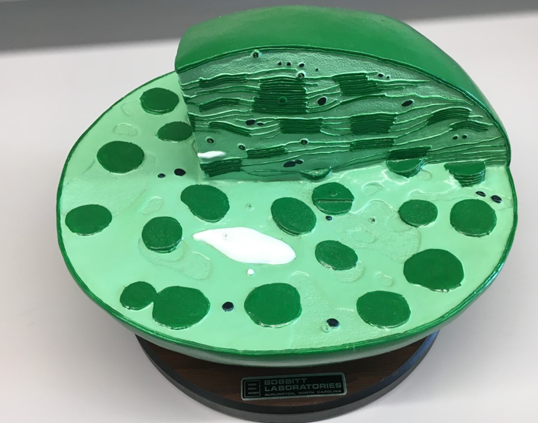
What is this whole structure?
Chloroplast

The _________ is the site of lipid synthesis.
Smooth ER

Which letter on the microscope corresponds to the coarse adjustment knob?
M

What structure is at the tip of the yellow arrow?
Nucleolus
What color band does the high power objective have?
blue

What kind of cell is this?
Animal cell
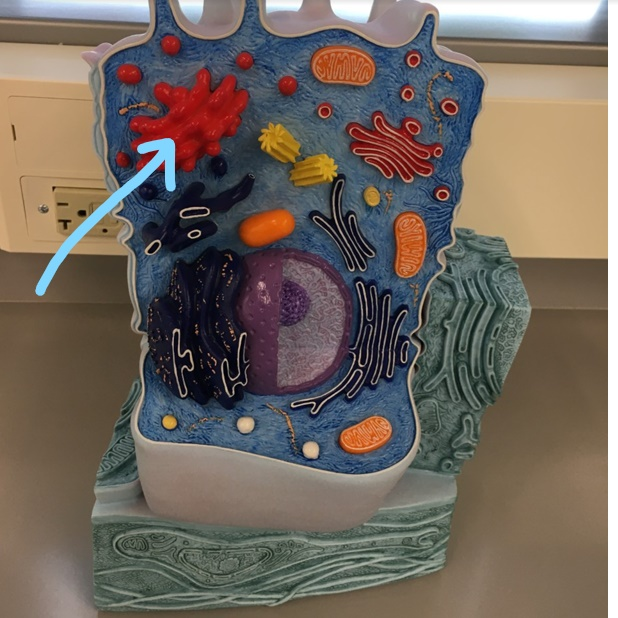
What is the structure at the tip of the arrow?
Golgi Apparatus

The letter "e" looks upside down and inverted when using the stereoscope or dissecting scope.
False; A compound light microscope does this because of the two sets of lenses (objective and ocular)
What molecule did we measure to determine the photosynthetic rate in this experiment? (Topic 5)
Oxygen
Is oxygen produced in the light or the dark reaction of photosynthesis?
oxygen is produced in the light reaction of photosynthesis

Compare the light reaction vs. the dark reaction, including location in the Chloroplasts, reactants, and products. Which one of these involves the Calvin cycle?
Light reaction takes place in the thylakoid
-Reactants: light, water, ADP, NADPH
-Products: O2, ATP, NADPH
Dark reaction takes place in the stroma, and it includes the Calvin Cycle (light-independent reactions)
-Reactants: ATP, NADPH, CO2, RuBP
-Products: G3P, RuBP, NADP+, ADP
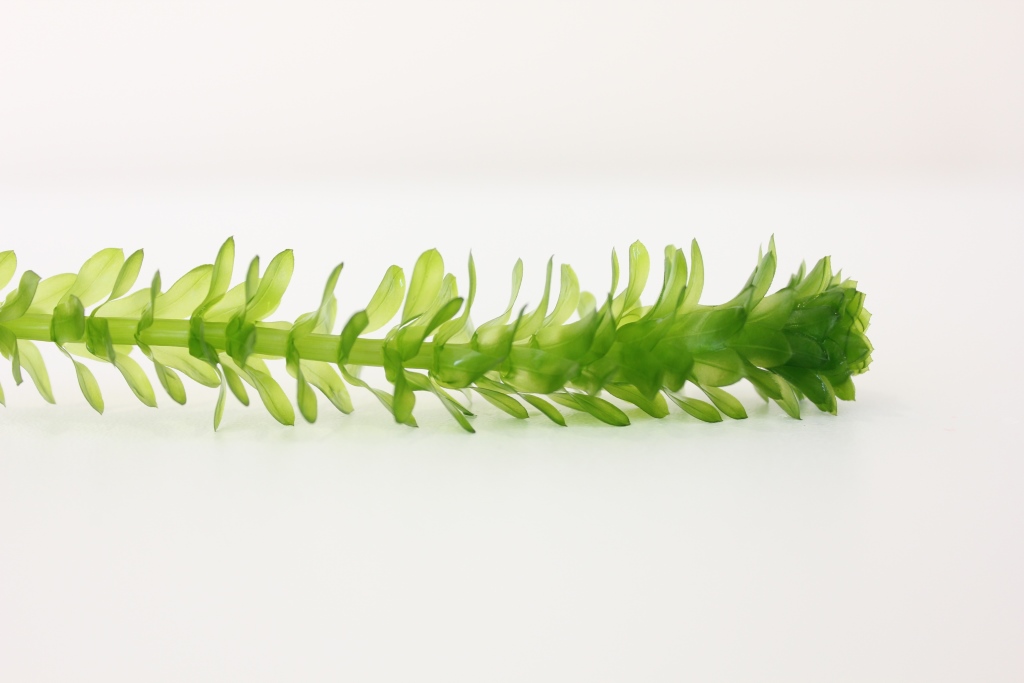
What plant did we use? (Topic 4-5)
Elodea
What is the Independent Variable in this experiment? (topic 5)
light intensity
What is the Dependent Variable in this experiment? (Topic 5)
rate of photosynthesis (photosynthetic rate)
List two possible Nuisance Variables in the experiment (Topic 5)
Genetics, light from other external sources

What was used as a CO2 source for the plant? (The solution the plant was put in)
sodium bicarbonate
What was a logical hypothesis for this experiment?
If more light is added, then the rate of photosynthesis will increase as well
Ambient
the complete surroundings of something; ambient lighting is general lighting, the primary source of light for a certain room.
Did the results support the hypothesis? (Topic 5)
Yes, the results support the hypothesis
What is produced in the light-dependent reaction of photosynthesis?
1.) ATP
2.) NADPH
3.) O2
What was the dependent variable in the photosynthesis lab?
Rate of photosynthesis
What organelle is the site for photosynthesis?
Chloroplast
Which of the following is the reactant in the light-dependent reaction of photosynthesis?
H2O
How many different treatments were used in the photosynthesis experiment?
4
Drying the Elodea sprig before weighing it was unnecessary.
False; Water adds extra weight, so weighing it immediately will affect the results
Why were the Elodea sprigs put in a weak Sodium Bicarbonate solution?
It was a source of CO2.
What is used in the dark reaction (light-independent) of photosynthesis?
1.) G3P
2.) RuBP
3.) NAD+
4.) ADP
What was the independent variable in our photosynthesis lab?
Light intensity
What is the fluid filled area in the chloroplast called? It is the site of the dark reaction (light-indepedent, Calvin Cycle)
Stroma
What are the three measures of central tendency?
Mean, Median, and Mode

What is mean, and how do you calculate it?
The mean or “average” is determined by adding up all the data and dividing by the sample size

What is median, and how do you calculate it?
determined by ordering the data set by least to greatest and picking the middle value (if the sample size is an odd number) or average of two middle values (if sample size is even)
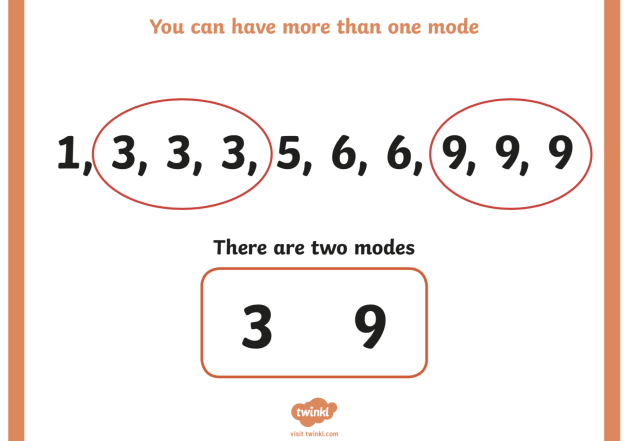
What is mode, and how do you calculate it?
the mode is the number that occurred the most often in a data set

What is a sample size (n)?
The number of sampling units selected from a population.
Represented by the variable ‘n’
-The number of data
What is a common Alpha Value in science? How does this relate to the common confidence interval in science?
-Alpha value: 0.05 (We have a 95% certainty that the mean falls within this range-see bell-shaped curve.)
-Confidence Level % = 1 − α
What does it mean if a p-value is statistically significant (or not)?
-If a p-value is less than Alpha (a) value, then it is significant; Null hypothesis is rejected (H0), and there is evidence to say that an effect or difference exists.
-If a p-value is greater than Alpha value (0.05), then it is not significant; Not enough evidence to prove that there was an effect or difference, null hypothesis (H0)
What does it mean if a T-test compares two means to see if they are statistically different from each other?
T-test compares two means to see if they are statistically different from each other.
Ultimately, after comparing the means for the different light intensities, how was our hypothesis from Topic 5 modified?
Plants do need light to grow, but after an optimal amount of light is added (80 uM), no change can be seen

Which is not true of a normal distribution?
Mean ≠ Median
The ______ is determined by adding up all of the values in a data set and dividing by the sample size.
Mean
______ is used to represent sample size.
N
What is a common Alpha Value in Science?
0.05
What is the sample size for the following data set?
4, 8, 5, 4, 5, 9, 1, 3, 4
9
After running the statistical tests on the data from the photosynthesis lab, the data supports the hypothesis that increasing light increases photosynthetic rate under all light conditions tested.
False
What measure of central tendency is compared when you perform a T-Test?
The mean