Art History Exam 3
 Call Kai
 Learn
 Practice Test
 Spaced Repetition
 Match
 Flashcards
 Knowt Play
1/20

There's no tags or description
Looks like no tags are added yet.
21 Terms

Coin of King Joel—Early Christian Africa Period, Ethiopia
originally used in Rome/Ethiopia and had a universal measurement of weight.
made in the 6th century under King Joel
the obverse (head) shows an abstracted profile of King Joel; he has a crown depicting a cross to show he is a Christian King
the reverse (tail) shows an equal-sided dominating cross

Wall Painting with Martydom of Saints—Early Christian Afrcia Period, Egypt
Stucco wall painting, made from plaster
Cosmas and Damian were twin brothers born in Arabia embraced Christianity and were both doctors who treated people for free
They were in Syria where they were captured, cruscified, stoned, shot with arrows, and beheaded for refusing to denounce Christianity
The tall grass represents Martyrdom and the brothers are represented as praying and having halos
Celebritory painting
The three boys (Shadrak, Neshak, Ibenego) depicted refused to Worship the Golden Idol and were burnt in a furnace, they were saved by God
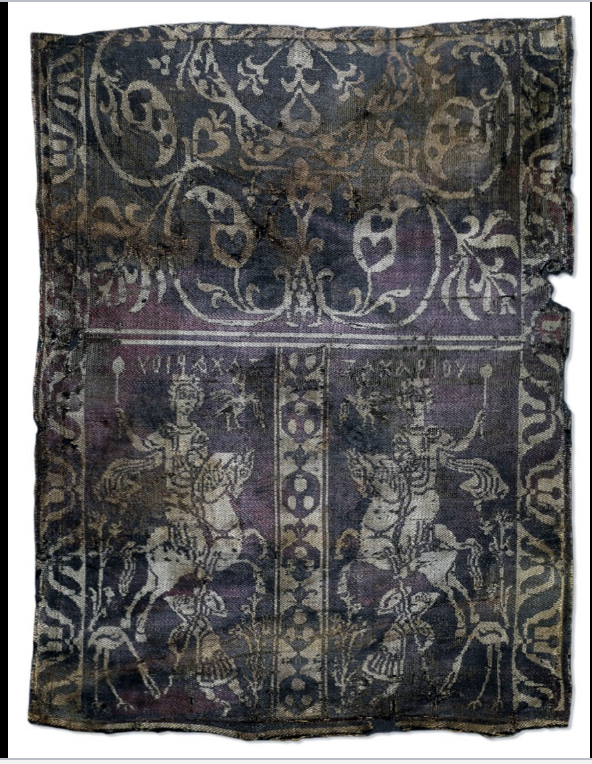
Silk Coptic Panel—Early Christian Africa, Egypt
7th-9th Century
Dense silk imported from China through the Silk Road
Luxury and expensive because the color purple represents kings/gods
A mirrored image of an equestrian figure separated by a column of blossoms (emporers riding over soldiers)
Compare to the Equestrian Statue of Marcus Aurelius
An inscription has Zacharius written which could be the creator or the owner

Good Shepherd, Orants, and Story of Jonah—Early Christian, Italy
From the catacombs where early christian martyrs were buried
a good shepherd is a man carrying a sheep
the center image shows a man with strong legs, a short tunic, and completely ordinary with no marks of Jesus; however, he is still holy/depicting Jesus (it is ambiguous)
Compare to Doryphorus by Polykleitos since they are both standing contrapposto
one circle depicts Jonah who was swallowed by a whale and survived after three days (typological)
one circle shows Jonah again this time reclining with one hand down and one up which was taken from classical greek art (reclining in paradise)

Old Saint Peter’s Basilica—Early Christian, Italy
started as a Roman audience hall and funded by Constantine
Designed to replace an older structure and be built over the death place of Peter (a martyr chosen by Jesus)
he believed he should not be cruscified the same way Jesus was so he was cruscified upside down
This building became a very popular model for many churches afterwards
it was made of marble, painted, and decorated with mosaic stones. It utilized spolia and recycled existing columns/capitals and was even built over the old Roman Empire
Cruciform-shaped (cross-shaped)

Mausoleium of Galla Placidia—Early Christian, Italy
Galla Placidia was the half-sister of the ruler of the west; the mother of an emporer and also ruled as regent for her son.
example of a centrally planned church
plain brick on the outside and mirrors christian beliefs (the inside is what matters)
Crusciform-shape (cross-shaped
A building with a dome

The Good Shepherd, inside the Mausoleum of Galla Placidia—Early Christian, Italy
a more obvious depiction of Jesus
represented with a cross staff, a halo, toga, and fancy robe

Munich Ascenscion Plaque—Early Christain, Italy
Carved in Ivory (comes from Elephant and imported from Africa/India, very expensive)
Ascension=Jesus going to heaven
gods hand reaching down to pull him up
no beard, but fancy robe
walking atop clouds
relief sculpture
shows the tree of life which comes from a different religion
compare to Steele of Naram Sin

Sarcophagus of Junius Bassus—Early Christian, Italy
Made of expensive marble, made for someone rich
the shorter side shows putti (little cherub figures) collecting grapes and making win
wine represents the blood of christ
2 registers on each side that show christain stories (the most important ones being in the middle)
the top middle shows jesus resting his feet atop a personified version of the Earth to show his conquest and he holds a scroll that represents the bible
the bottom middle shows christ riding a donkey into the Jerusalem and Judas lying in weight in the tree above (compare to the equestrian figure of marcus aurelius)
Another carving shows Abraham about to sacrifice his son, another shows Daniel in the lion’s den, and another shows adam and eve after eating the fruit (also standing contrapposto)

Eagle Brooch—Early Medieval Period, Spain
6th century
used to show wealth whilst traveling from place to place (art mobilier)
Made of gold and other expensive gems
it was ambiguous so it could have represented Ra the sun god, imperial rome, or later the evangelist John
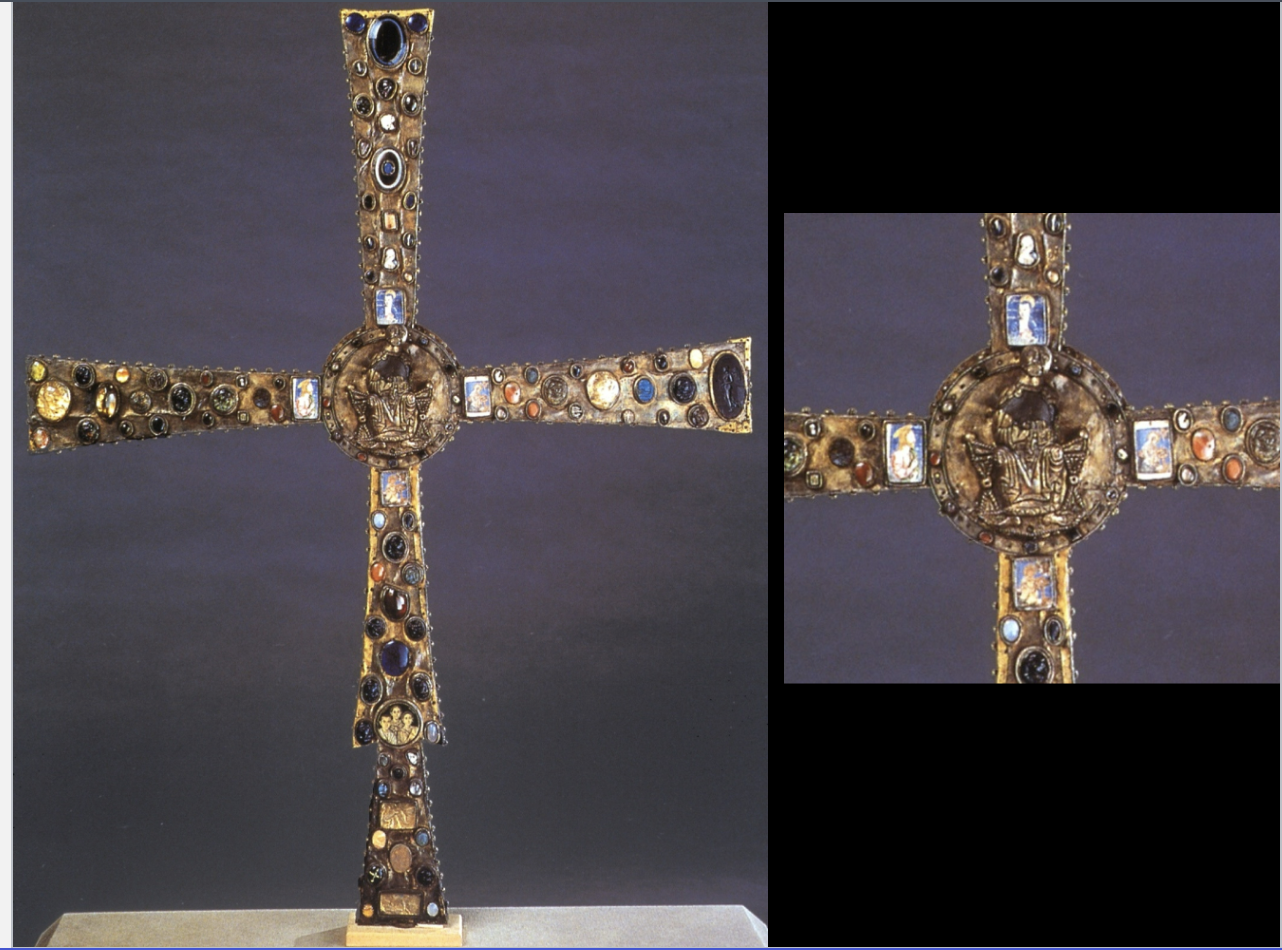
Brescia Cross—Early Medieval Period, Italy
Early 6th Century
Langabard means long beard
Crucifrom: cross-shaped
Made of gold, gemstoes and other materials (cameo: engraved gems, painted christ enthroned on the center)
they believed gemstones flowed down from the rivers of heavens and thought they created a heaven on Earth look (similar to gold)
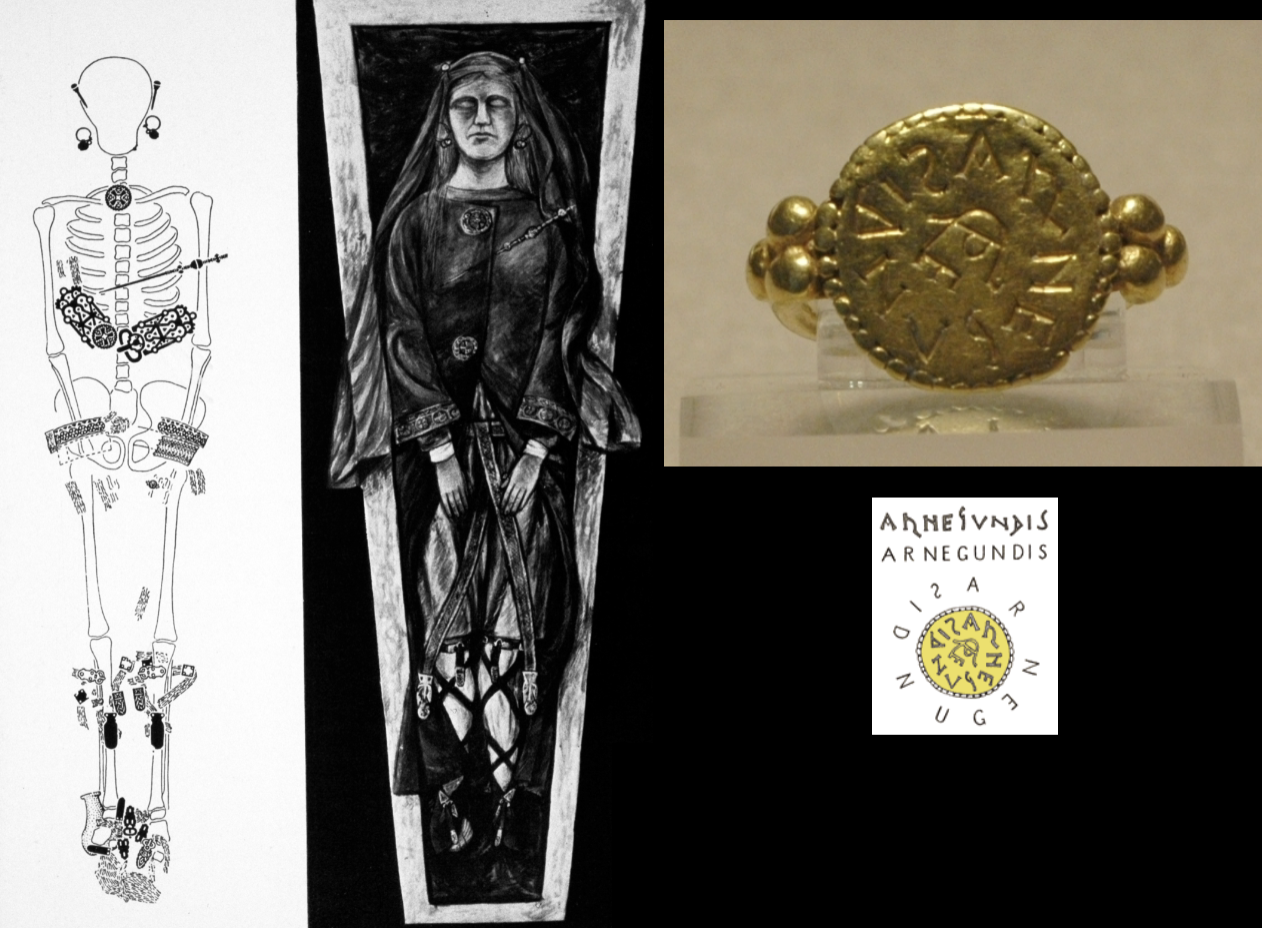
Signet Ring of Queen Arnegunde—Early Medieval Period, France
late 6th century
her tomb was excavated in 1959
she was roughly 5ft tall and around age 70 when she died. she had blond hair and we know her name because it was engraved on her ring. we can assume she was royalty because she was wearing a short purple tunic, and dark red gown woven with golden thread; she was also wearing a leather belt, garters made of silver, and gold/garnet brooches
this is one of the last instances of being buried with wealth since christianity believed you should donate wealth rather than hoard it after death

Brooches of Queen Arnegunde—Early Medieval Period, France
late 6th century
Art mobilier
gold and garnet rings
Cruciform in the center

Buckle of Queen Arnegund—Early Medieval Period, France
Late 6th Century
Art mobiler
she marked the end of burial goods
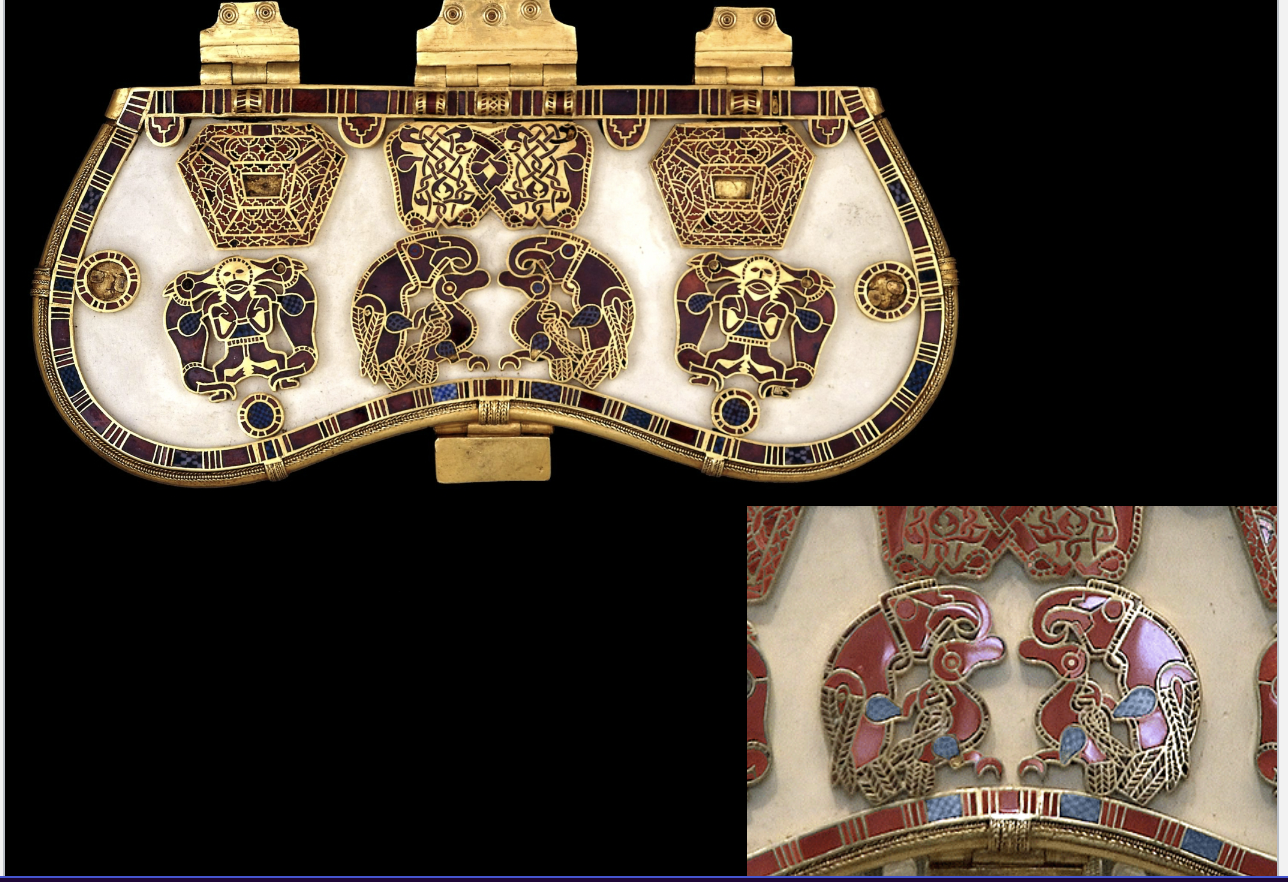
Purse Cover, Sutton Hoo Ship Burial—Early Medieval Period, England
the background was not white originally, it would have either a wooden or leather background
is argued to be a christian symbol
shows a bird with a curved beak (paired eagles) holding the top head of a duck
some believe the other two symbols are a man between two animals (daniel in the lion’s den
made with gold and garnet
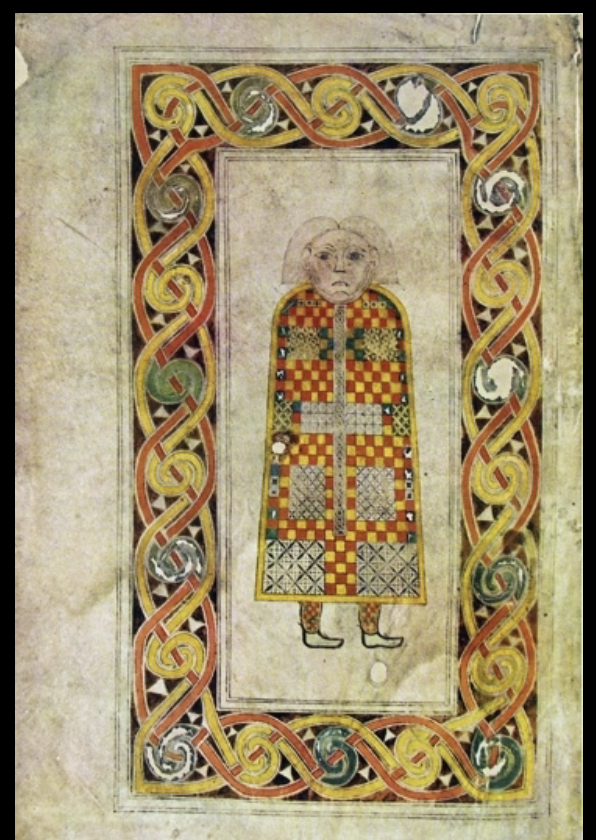
“Matthew” Gospel Book of Durrow—Early Medieval Period, Scotland
Just smaller than a typical 8.5 by 11 size paper
Scriptorium: a room in a monastery for writing or copying manuscripts
essential part connecting people to christianity
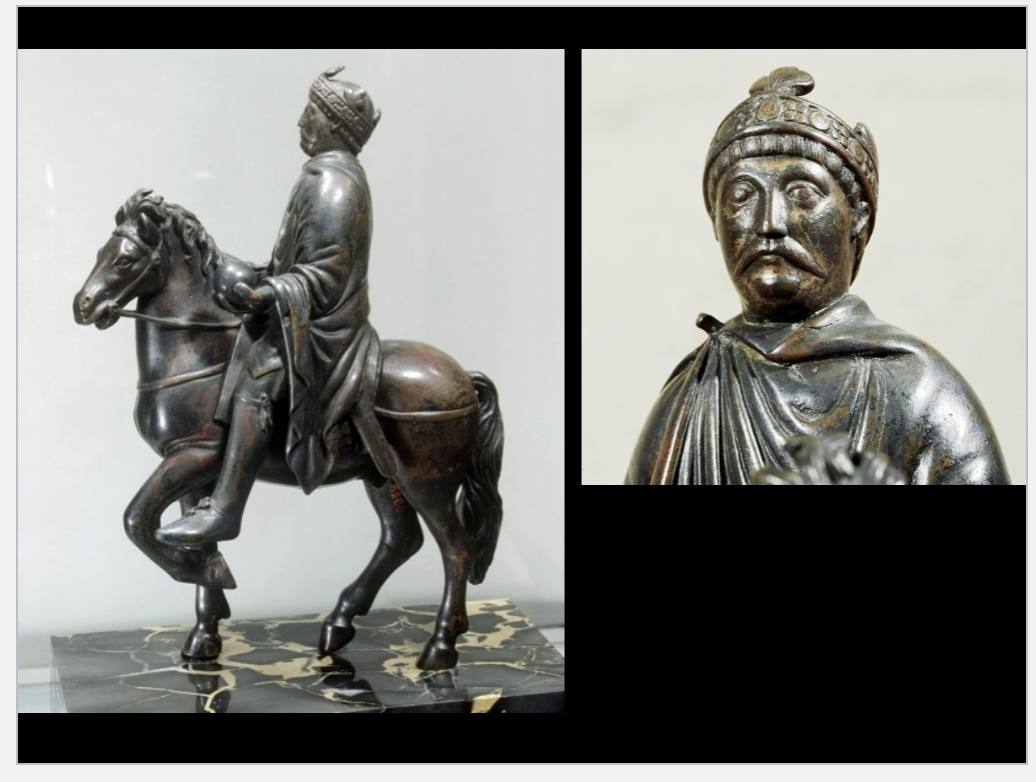
Equestrian Portrait of Charles the Bald—carolingian period, France
10 inches tall
art mobiler
survived because they thought it was charlemagne
compare to the equestrian statue of marcus aurelius
charles the bald is grandson to charlemagne
he wears a mustach to show frankish mobility

Palace Chapel of Charlemagne—Carolingian Period, Germany
served as his private chapel and mausoleum when he died
dedicated to the virgin mary, and housed the shroud of the virgin (a special relic she was wrapped in after she died)
Relics are things that have made physical contact with religous figures
Spoilia: it reused columns from spain in an attempt to make another spain
The central diameter is 144 which is the same lenght as the walls in Jeruesalem (trying to recreate this holy hand)
The dome shows the 24 men of apocolypse and represents the end of the world
Unlike other Christians, Carolingians had two alters to worship both Jesus and the Virgin Mary
Charlemagne kept his throne at the same height as Christ (the building was made with two stories)
It originally had two powers and a speaking platform (for both political/religious reasons)

Vienna Coronation Gospel: St. John—Carolingian Period, Aachen Germany
introduced a more simple and elegant way of writing latin
When Charlagmane’s body was discovered he hadn’t desescrated: he was fully clothed, seated, and his body was whole/in-tact. Saints were considered to decay differently than ordinary people.
He was discovered within the Vienna Coronation Gospel
Made with imperial colors such as purple, and gold

Lindau Gospels: Front Cover—Carolingian Period, Switzerland
the outside was used to protect the inside
represented heaven on the outside and the path towards heaven on the inside
shows jesus cruscified but not dead yet (this is to show his triumph)

Plan of St. Gall—Carolingian Period, Switzerland
created right after Charlamagne died
5 large pieces of parchment (which comes from cows) sewn together
Shows a basilica-style church with two towers on the westwork side (which is a staple of Carolingian Churches)
Although blueprinted, it was never constructed
included many different aspects such as a munk room, cemetary, and fruit tree garden.