8. Ballard Scale (copy)
 Call Kai
 Learn
 Practice Test
 Spaced Repetition
 Match
 Flashcards
 Knowt Play
1/15

There's no tags or description
Looks like no tags are added yet.
16 Terms
what does the Ballard Scale assess? *
gestational maturity using physical and neuromuscular findings
20-44 weeks
which six physical features are assessed with the Ballard Scale? *
skin
lanugo
plantar creases
breast tissue
eyes and ears
genitalia
how does skin differ with gestational maturity?
premature = sticky, and translucent
term = smooth
postterm = dry, cracked, and peeling

what gestational maturity is lanugo most abundant in?
premature
less and less as GA gets older
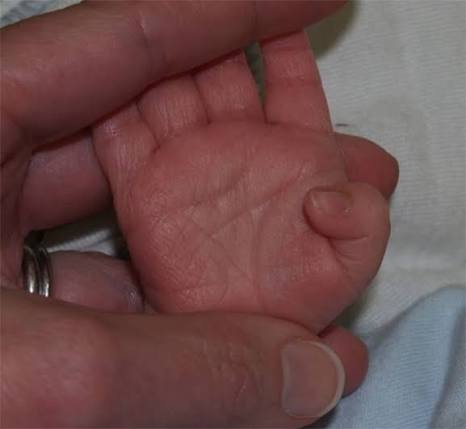
how do plantar creases change with gestational maturity?
premature newborns have few or no creases
creases cover more of the sole as maturity increases
term babies have _____ breast tissue
more
how do ears change with gestational maturity?
preterm: softer, fold easily
term = firmer, recoil
which male genital findings indicate greater gestational maturity?
descended testes and deeper scrotal rugae
which female genital findings indicate greater gestational maturity?
greater labial coverage of the clitoris
preterm = clitoris is prominent
which six neuromuscular findings are assessed with the Ballard Scale? *
posture
square window
arm recoil
popliteal angle
scarf sign
heel-to-ear

what posture indicates greater gestational maturity?
stronger spontaneous flexion
what does the square-window assessment measure? *
the angle of wrist flexion
smaller angle = greater maturity

what does the arm-recoil assessment measure?
how strongly the arms return to flexion after being extended and released
stronger recoil = greater maturity
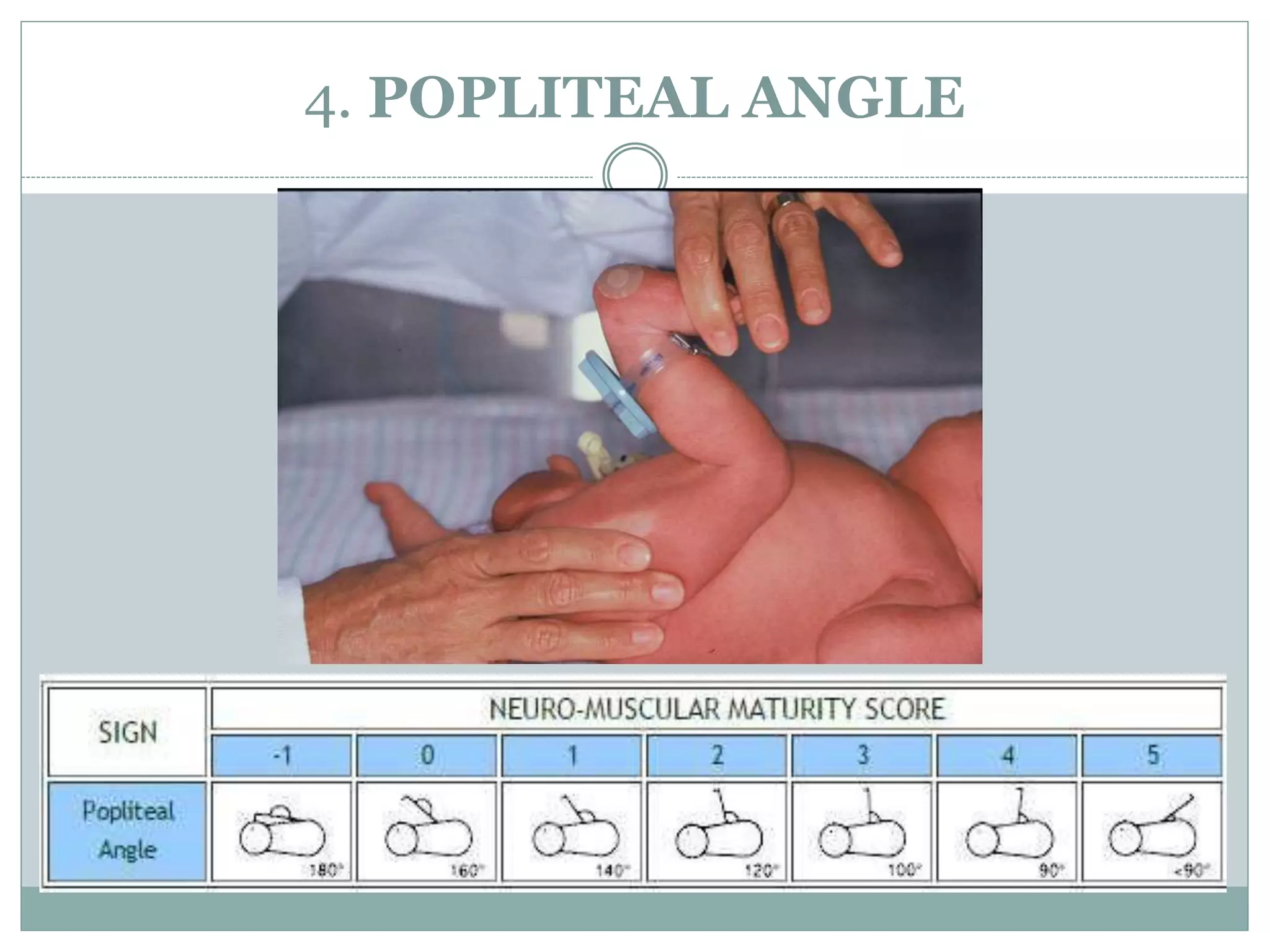
what does the popliteal-angle assessment measure?
resistance to extending the lower leg with the thigh flexed
smaller angle (less extension) = greater maturity
what is the scarf-sign assessment?
drawing the arm across the chest to assess resistance
the elbow crosses the midline more easily in a premature newborn

what does the heel-to-ear assessment measure?
resistance when bringing the foot toward the ear
the heel moves closer to the ear in a premature newborn
